Underbody Coating
REPORT ON UNDER BODY COATING UBC:
UNDER BODY COATING UBC:
Underbody structural components are typically coated to provide a first line of defense against corrosion. Anti-rust coatings help in prevention or delay of rusting of steel and iron objects, or the permanent protection against the corrosion. Underbody anti-rust coatings are chemical compounds basically applied to the undercarriage of vehicles. They may also be applied over other areas such as wheel wells, trunks etc.
Underbody Anti-Rust coatings are extensively applied in vehicles used by transport agencies, which are used to protect a substrate by providing a barrier between the metal and its outside environment, especially in chloride-laden environments and protecting a vehicle from damage due to gravel, road salts, sand and other grime. Coatings must be uniform, pore free, well adhered and self-healing for providing adequate corrosion protection.
Underbody anti-rust coatings not only protect against corrosion, but also improves aesthetic and sound deadening function. Underbody anti-rust coatings are generally composed of polymeric binder, filler and an anticorrosive pigment. Underbody Anti-Rust coatings have attracted many attentions from many years due to its efficiency and simplicity in application.
There are different types of undercoats available in the market which include asphalt based, water based, rubber based etc. Rubberized undercoating is the most commonly used coatings owing to various advantages such as low cost, fast drying, sound deadening, rust proofing, etc.
Underbody anti-rust coatings are generally based upon inhibitive coatings, barrier protection or anodically active metal coatings. In automotive application, basically there are five types of steel corrosion viz. uniform corrosion, cervice corrosion, pitting corrosion, galvanic corrosion and cosmetic corrosion.
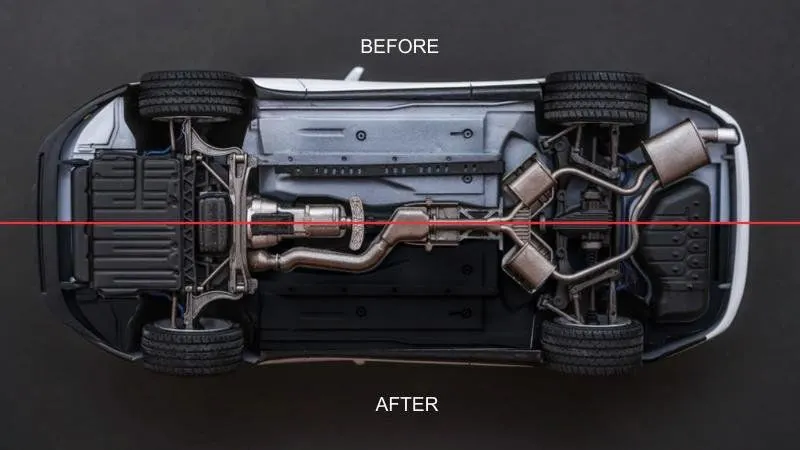
Global Underbody Anti-Rust Coatings Market: Segmentation
| Based on the type |
|
| Based on the method |
|
| Based on the vehicle type |
|
Maintenance & safety of any vehicle is utmost importance in order to maintain the lifetime of the vehicle, hence the metals used in the manufacturing of the vehicle must be prevented from the rusts and corrosions. Aforementioned reason is expected to boost the demand of underbody anti-rust coatings and thus in turn trigger the growth of global underbody anti-rust coatings market.
Stringent environmental regulation regarding the utilization of chemicals for coating is expected to remain as single major challenge for the underbody anti-rust coatings and thus in turn restraining the growth of global underbody anti-rust coatings market.
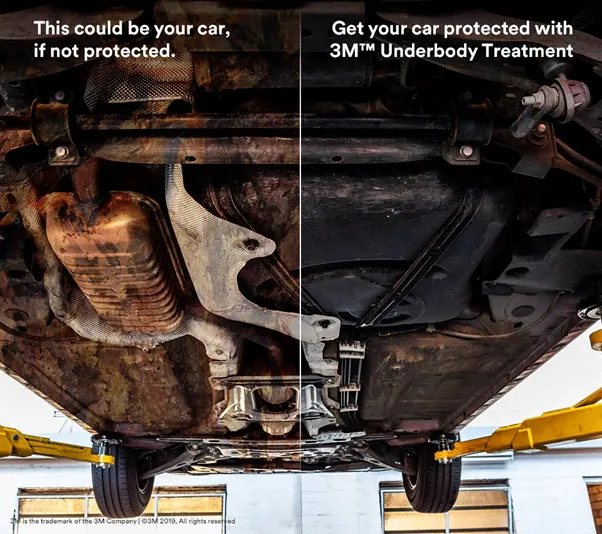
UBC Purposes:
Underbody coating provides long term protection from corrosion to car's underbody. It also protects parts like internal body panels, frame rails and other inner cavities that are not physically accessible but are prone to corrosion.
AUTOMOTIVE COATING
PERFORMANCE:
The performance of an automotive coating can be accessed from different views, e.g., the durability of the exterior & interior paint finishes or the aesthetic features.However, limitations exist on the paint properties, process capabilities, & most importantly, the amount of money that
can be spent to improve the finish. Consequently, each automotive company define its color & appearance standards, which are to meet or exceed the levels reached by competitors & customers expectations. For checking ofcoating performance we consider some features like:
a) Coating Quality: It can be judged on three main criteria:protection against harsh environment; durability; & appearance quality.
b) Color: Uniform & consistent color is essential to achieve the impression of a high-quality finish & avoid customer complaints. This issue is important not only at the time of purchase but also at the time of purchase but also through out the lifetime of a vehicle. Factors that influence color tone are pigment orientation & concentration.
c) Corrosion Protection: Automobile coatings are subjected to a number of different environments & situations during their service life. Degradation of the coating depends onthree main factors: coating formula, the intensities of the environments or situation, & their duration. Exposure to UV
from the sun, heat, & humidity has a long term deleterious effect with different degrees of intensity depending on the climate & weather conditions.
MODERN AUTOMOTIVE COATING PROCESSES:
- PRETREATMENT
- ELETRODEPOSITION
- RUST-PROOF MATERIALS: SEALER/PVC
- PRIMER
- TOPCOAT.
TYPES OF UB COATINGS:
- Rubberized Underbody Coating
-
Wax Based Underbody Coating
-
Asphalt Based Automotive Undercoating
-
Polyurethane Underbody Coating
ADVANTAGES OF UBC:
- Fights Rust
-
Absorbs Noise
-
Reinforcement
-
Prolong Car’s Life.
CONCLUSION:
Automotive coatings confront an almost limitless variety of environments & environmental assaults. Targeting customers, expectations, together with maximizing efficiencies & meeting environmental regulations with new processes, has brought automotive coating to a level not imagined 100 years ago. The appearance of the surface significantly affects a customer’s perception of product quality. Additionally, customer expectations for the
attributes given by the appearance of coating s continue to increase as manufactures compete to provide surfaces that offer enhanced surface characteristics.