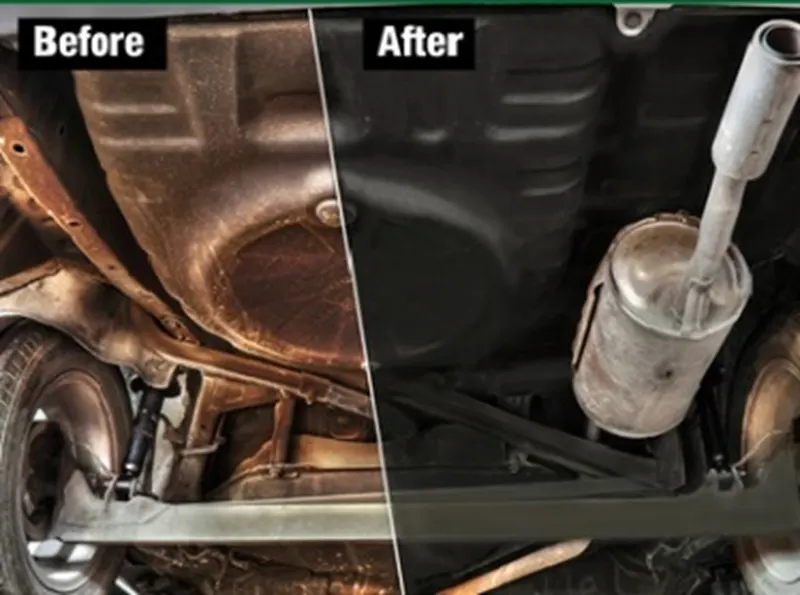
Underbody Coating
Introduction to Underbody Coating:
As we know the car body are made of steel, iron, aluminum alloys etc., A car underbody is most prone to corrosion, wear and tear caused by muddy water, damaged roads, stones and other obstacles on the road. Underbody treatments provides a long-term solution to corrosion and rust. First, the car underbody is washed and degreased. Then the protective coat is applied with Body Schutz gun or under shield gun. The body Schutz/Under shield is a hard coating on the underbody of the car, that is fast-drying, paintable, rubberized, non-toxic and chip-resistant.
It also protects parts like internal body panels, frame rails, minimizes the sound from underneath the vehicle and other inner cavities that are not physically accessible but are prone to corrosion.
Types of underbody coating:
- Polyurethane Undercoating:
- This type of vehicle undercoating is a little bit quicker and easier to apply.
- Polyurethane undercoating will come in canisters ready to preload into an application gun. This type of sealant works by sleeping into all cracks and seams, displacing salts and moisture and oozing around rusty areas to bond with and protect unoxidized metal.
- This type of car undercoating generally requires a little bit more surface preparation work before applying.
- Asphalt-Based Undercoating:
- For large trucks and heavy machinery, asphalt-based undercoating provides a bit of extra durability against rocks, chips and moisture.
- This type of undercoating generally contains a little bit of rubberized material that sets up firmly and helps soften noise.
- This type needs more cure time than the other types and is NOT paintable, making it best to use only for undercarriages.
- Rubberized Undercoating:
- Rubberized undercoating is easy to apply and offers sound-cushioning as well as protection from dust, moisture and dents.
- It is also safe to use on wheel wells and quarter panels and dries to a soft rubbery finish that prevents further rust, damage or moisture seeps.
- If necessary for bodywork, can be easily removed with an undercoating removal spray.
- It generally the best option for protecting your vehicle’s undercarriage, as it provides the simplest and best protective measure against rust and moisture.
- Wax or Paraffin-Based Undercoating:
- A paraffin-based undercoating will be the cheapest and quickest option available with which to protect the undercarriage of your vehicle.
- However, it will wear off quicker than the other types of undercoating and will need to be stripped and reapplied at least once every year.
- Wax – based undercoating’s never truly harden. During application, they drip or flow into seams and cracks to protective properties.
Advantages of underbody Coating:
- Rust Prevention:
- When you correctly apply undercoating to a car, you are giving a layer of protection against mechanical damage on the underbody. Rather than colliding with the vehicles metal components, the debris hits the undercoating, which proactively repels the harmful materials. Although it will ultimately wear away, it a give years of corrosion protection.
- Sound dampening:
- No one enjoys a squeaky ride in their automobile. When your automobile is undercoated, it can minimize internal noise and give you a more pleasant ride. Many automobile owners claimed that when they completed the undercoating, the interior noise was significantly reduced.
- Increase vehicle life:
- Because of its rust-prevention properties, a thorough underbody coating increases the life of the car. Corrosion has an impact on more than just the metals in your car. When you don’t use a car undercoating, even your gearbox and engine are vulnerable to rust.
- Applied to damaged areas, because of the debris you meet while driving, the underside of your car will develop nicks, chips and scratches over time. Unlike previous kinds of undercoating that used asphalt and animal fat, modern undercoating provides an even layer of protection since it can transform into diverse location of minor damage.
Disadvantages of underbody Coating:
- Not Effective on cars with corrosion:
A used vehicle may already have residue on the bottom of the car or even have spots of rust and corrosion. Undercoating will not help you if correction already exists and the corrosion needs to be removed first before it can be applied, which can be expensive for you.
- High Cost:
Underbody coating or rustproofing spray is heavy in pockets.
- Maintenance:
For ongoing protection, you need to make sure you are ready to invest in underbody coating your vehicle every 3 to 5 years.
- It’s made vehicle heavier:
It makes the vehicle 10 to 20 pounds heavier which affects fuel economy.
Image of underbody coating: