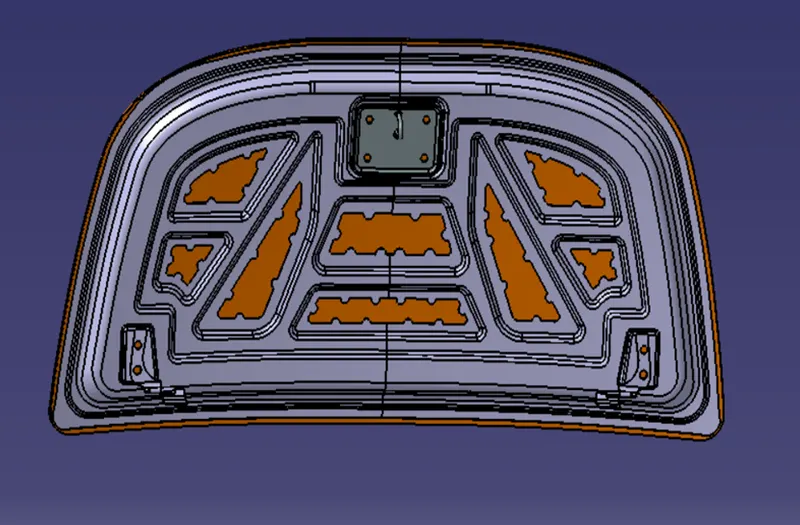
Hood design-Week 2
Hood Design
Introduction:
Here we are going to design the concept of front- mounted engine Hood according to the standards. It consists of an outer and inner panel. The inner panel provides strength while the outer panel functions as metal cover. It’s very critical component because of the frontal crash requirement, Pedestrian and Passenger safety requirements.
Material:
Hood are typically made of steel, aluminum, fiberglass or carbon fiber as same as the rest car parts in vehicle. However, aftermarket some companies provides replacements of fiberglass or carbon fiber instead of steel in order to reduce vehicle weight.
Pedestrian Safety:
- Hoods are designed in accordance with the Euro NCAP (European New Car Assessment Program) The Adult and Child impact zone is taken into consideration and it is calculated by plotting the region with help of side reference line. If the Side reference lines lie on fender, Head Impact zone is less. If it lies on hood, hood is large and the WAD is small, so the Head Impact Zone is large.
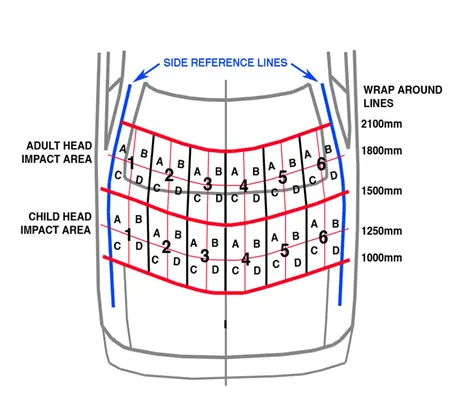
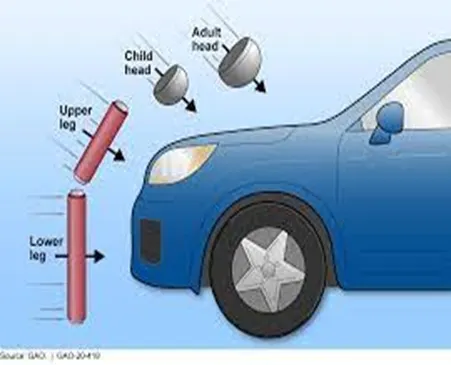
- The share of pedestrian safety criteria for a 5- star rating has increased significantly from 25% in 2009 to 60% in 2012. Implementing these considerations while designing the hood will result in a good rating under EuroNCAP standards under Head Injury Criteria (HIC).
Design:
- Master Section is already provided by the instructor of this course. Master section with inner panel and all embosses are provided under the consideration of Pedestrian Safety.
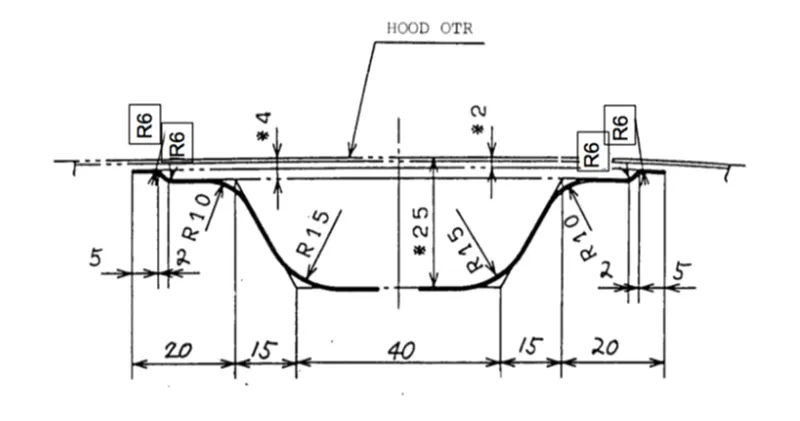
Hood Thickness information:
- Outer Panel Thickness = 0.75mm
- Inner Panel Thickness = 0.75mm
- Reinforcement Thickness = 1.5mm
Process involved in designing hood as a sheet metal operation:
- Punching
- Deep Drawing
- Blanking or Piercing
- Embossing
- Hemming
Components of Hood:
1. Inner Panel and outer panel:
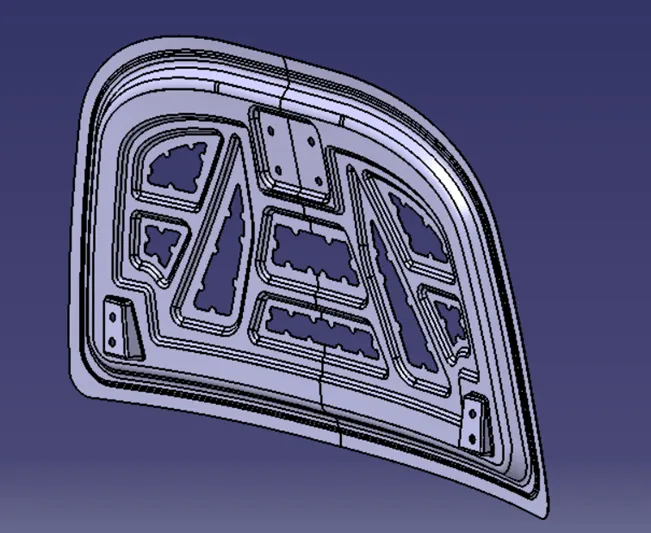
- Hood inner panel is required to have high initial reaction force against the impact exerted on the hood to enhance the energy absorption capacity.
- In the inner panel only we can research and implement reinforcement, embossed, mastic sealants etc.., to improve the safety of pedestrian.
-
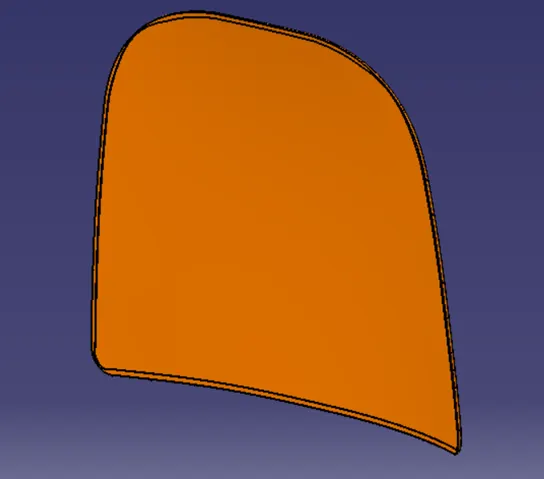
Function of outer panel is to cover the engine area with inner panel. This is attached with inner panel with help of hemming and mastic sealants instead of spot welding. Because of spot welding outer panel aesthetic looks bad.
2. Embossing:
- The metal sheet embossing operation is commonly accomplished with a combination of heat and pressure on the sheet metal, depending on what type of embossing is required.
- Metal sheet is drawn through male and female roller dies, producing a pattern or design on the metal sheet. The pressure and combination of heat actually “irons” while raising the levels of the image higher than the substrate to make it smooth.
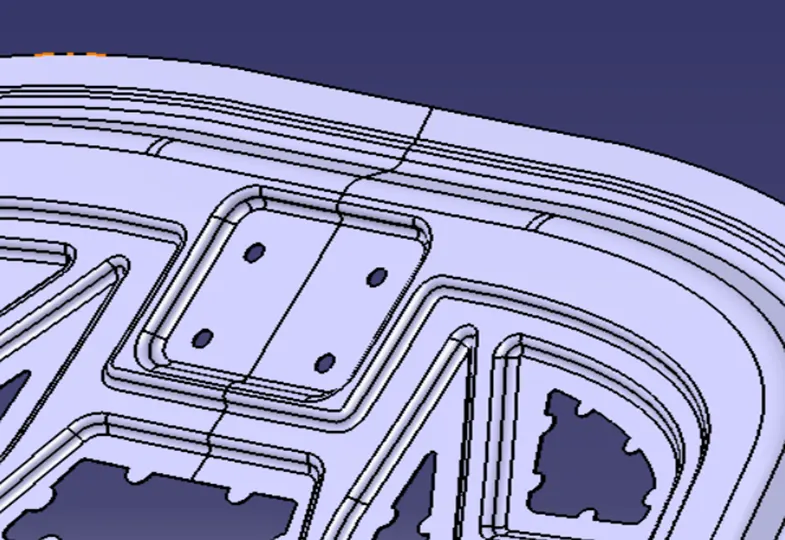
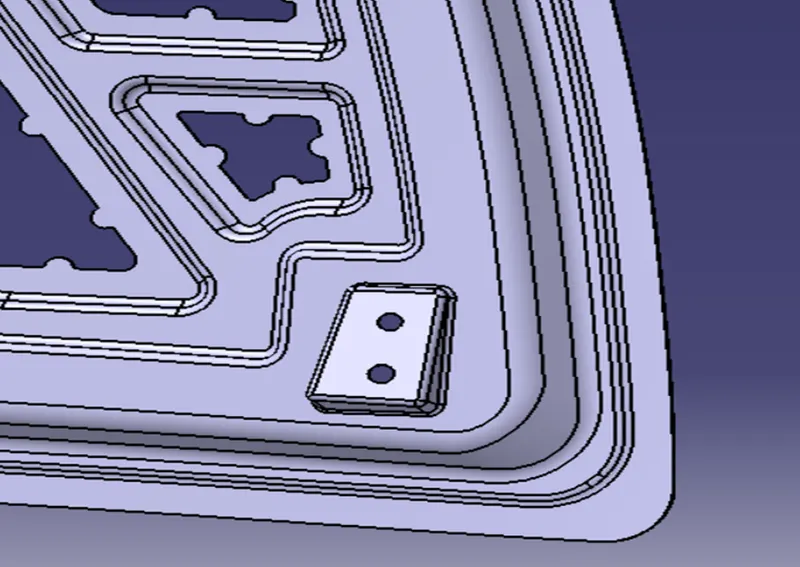
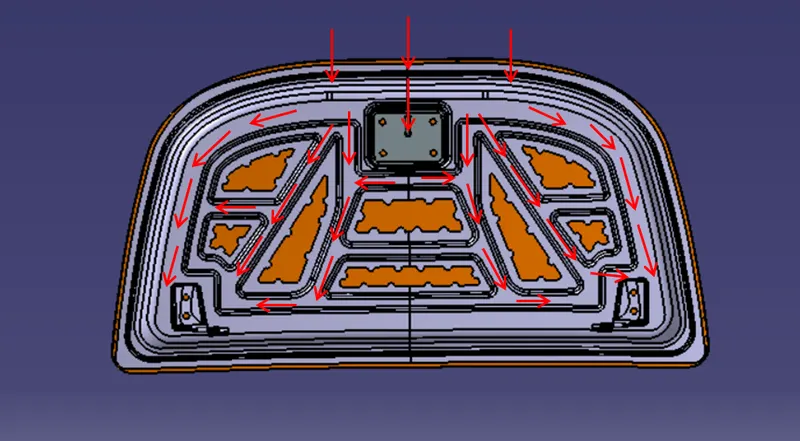
- Design and direction of embosses should be guide the force too travel on case of a collision, dissipating the force away from the passengers to outside and thereby reducing the impact force drastically.
3. Deep Drawing:
- Deep drawing is a manufacturing process that is used extensively in the forming of sheet metal into cup or box like structures. Automobile parts such as panels and gas tanks are among a few of the items manufactured by sheet metal deep drawing.
- Deep drawing of sheet metal is performed with a punch and die. The punch is the desired shape of the base of the part, once drawn. The die cavity matches the punch and is a little tapered to allow for its passage, as well as clearance. The sheet metal thickness is assumed to be constant in calculation, but there is change in thickness in certain areas, due to the forces involved.
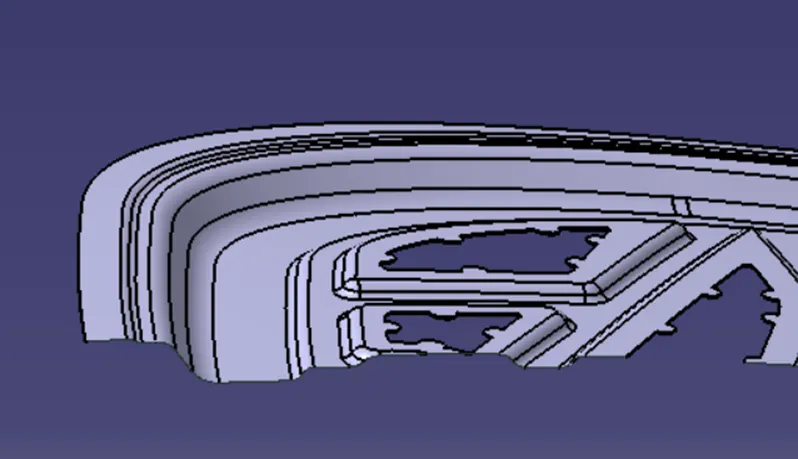
4. Hemming:
- Hemming is a sheet metal forming process in which sheets are rolled by bending it usually to 1800. Automotive parts panels and parts such as trunk-lids, hood and tailgates are formed by hemming process.
- Roll hemming is carried out incrementally with a hemming roller. An industrial robot guides the hemming roller and forms the flange. Roll hemming operation can also be divided into several pre-hemming and final hemming process steps.
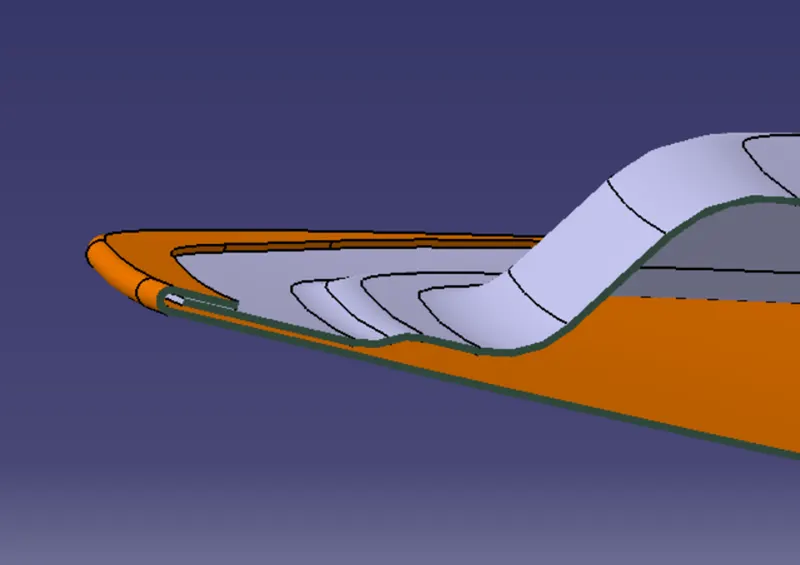
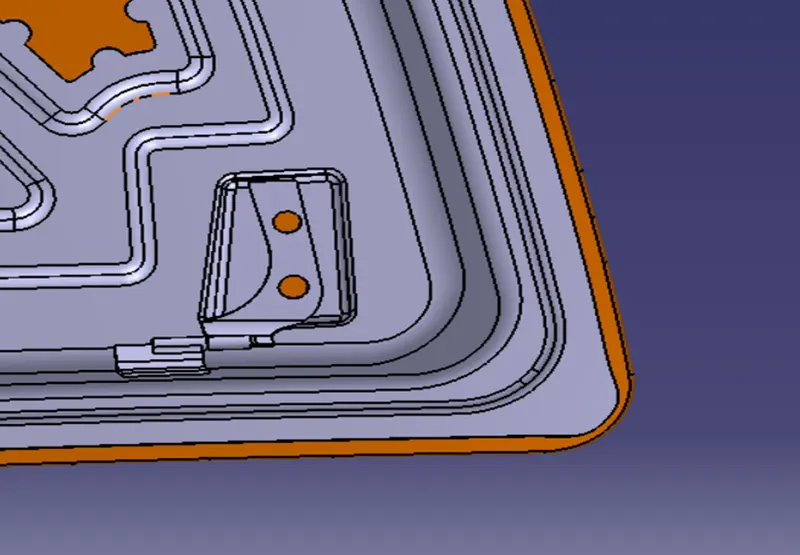
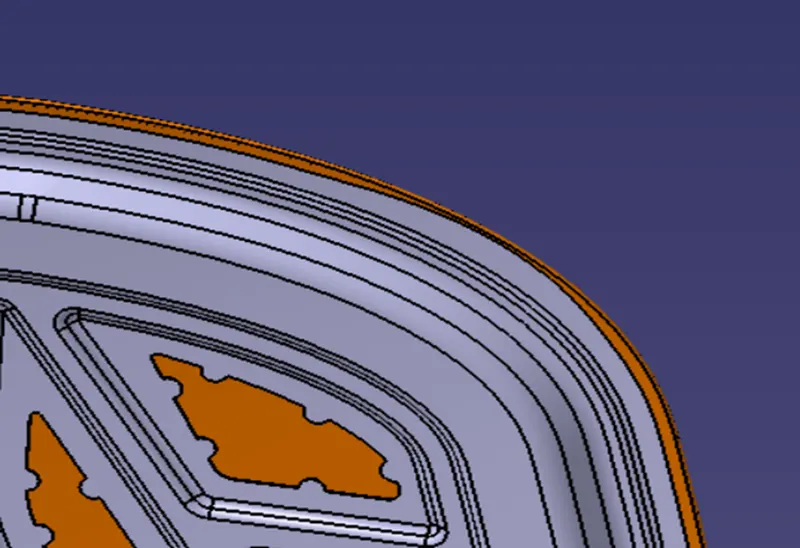
- Relief is providing on the hood corners to avoid the intolerances issues arising while doing the rolling process in hemming operation.
5. Mastic Sealants:
- Mastic sealant is used to combine the hood outer and inner panel. They can provide thermal and acoustical insulation, and may serve as fire barriers.
- Sealant has three basic functions: it fills gap between two or more substrates; it forms a barrier through the physical properties of the sealant itself and by adhesion to the substrate; it maintains sealing properties for the expected lifetime, service conditions, and environment.
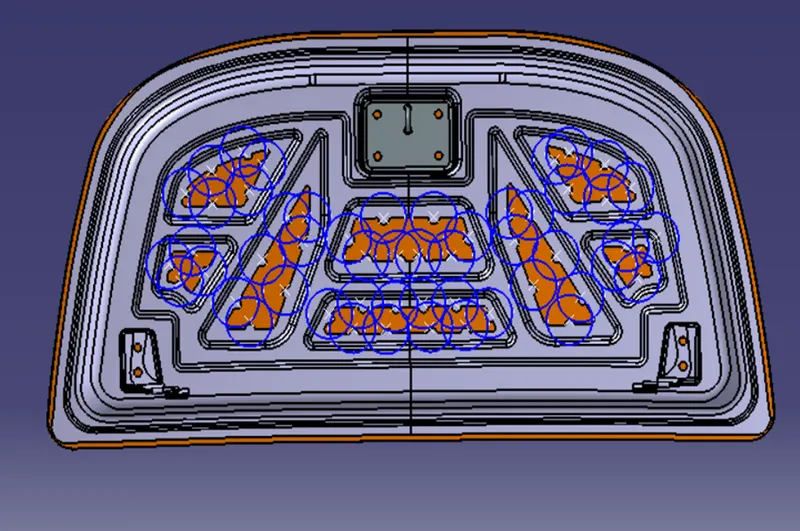
6. Latch:
- A hood latch is a very simple component. It’s basically the fastener that keeps your hood closed shut. This latch ensures that your hood is securely connected to your vehicle and that it doesn’t open accidentally due to wind force.
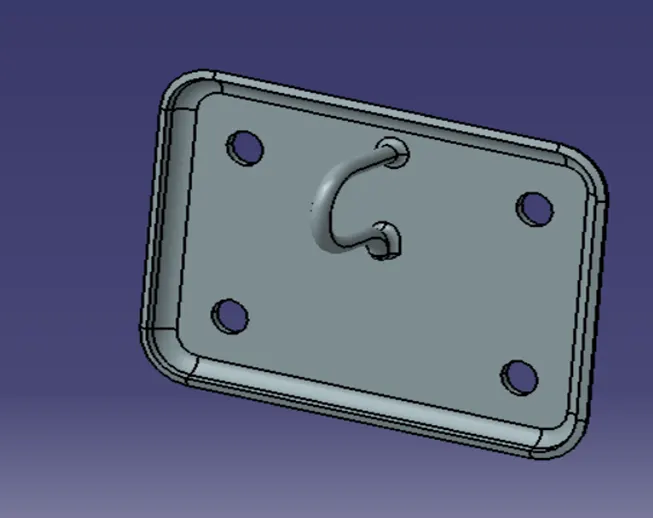
7. Hinge:
- Hinge is a component that fixes the hood to the fender of the car. Hinge enables the opening and closing of hood. Latch and hinge forms the locking mechanism of the hood with the engine component. One part of the hinge is mounted to the engine compartment and the other to the inner panel.
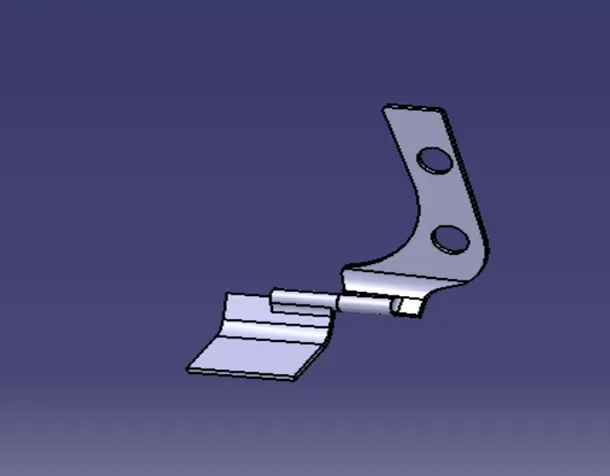
8. Latch trajectory motion:
- Hinge axis point, which is the midpoint of axis of the hinges, should be aligned with latch through the trajectory of the hood opening and closing. If the latch is not exactly perpendicular to the trajectory, then the hinge will be fixed accordingly on the inner panel.
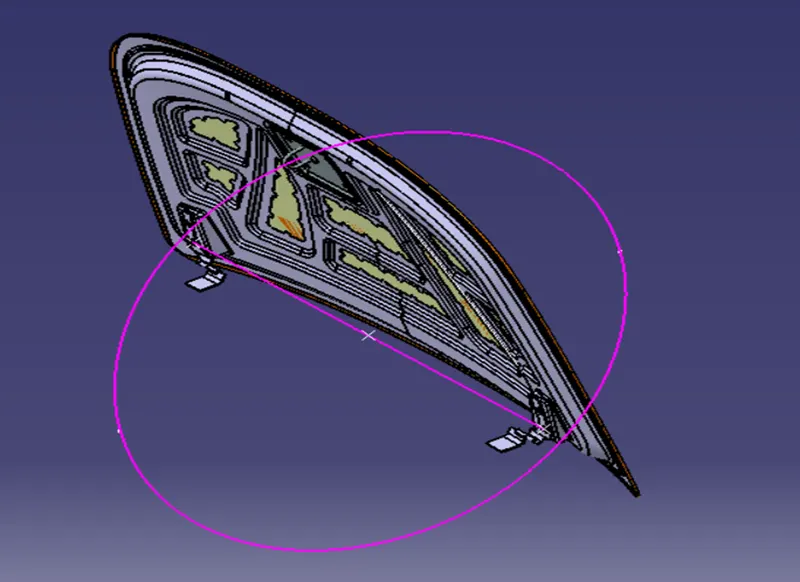
9. Impact Force Distribution In Hood Design:
- Hood design must be made in such way that when a force is impacted in the front of the hood, all the force must be directed outwards from the vehicle. And the distribution of the force must be coontrolled along with the hood.
3D Model Design :