Underbody Coating
UNDERBODY COATING :
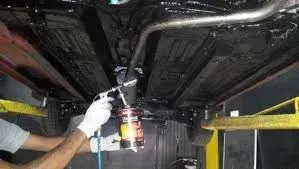
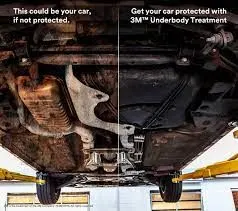
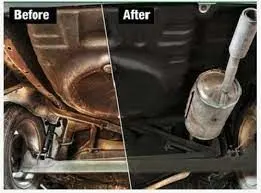
- Underbody coating is used to prevent the bottom of the vehicle from external environment, to ensure the intergrity and sfety of the cars. This plays a major role in the life of a vehicle. It is required to spray such a protective coating while manufacturing a car.
- Underbody coating provides long term protection from corrosion to car's underbody. It also protects parts like internal body panels, frame rails and other inner cavities that are not physically accessbile but are prone to corrosion.
- Protecting the underbody of the car should be the top priority. Espescially during raining season the underbody of the car becomes very prone to heavy corrosion due to water that are stranded in the road.
TYPES OF UNDERBODY COATING :
- Rubberized underbody coating : Used for protecting from dust, moisture and dings and it is safe to apply on the wheels and panels. This would have a thickness of 2-3mm.
- Polyurethane coating : This type of sealant works by seeping into the cracks, displacing the salt and moisture and oozing around rusty areas to bond with and protect the unoxidized metal. It is quick and can be easily applied.
- Paraffin based coating : A paraffin based undercoating will be the cheapest and quickest option available with which to protect the undercarriage of the vehicle.
- Asphalt based coating : It is used for heavy trucks and vans for protection from rocks, chips and moisture. This gives a greater durability.
PROCESS OF UNDERBODY COATING :
- First process is to remove the rust completely in the underbody. It is achieved by sandblasting, depending upon the area and the extent of the rust.
- Using a degreaser to clean the metal first is also good. Once when the rust is removed, to give it a quick rinse and let it dry so that there would'nt be any contaminants on the vehicle's underbody.
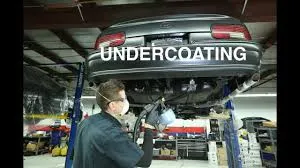
- Most of the underbody coating is generally applied with a spray coating. Once the underbody coating hardens, it becomes very difficult to clean the gun even with a thinner.
- Two coats of underbody coating will be required for a good protection. Dry time between the coats should be in a proper way. It usually get cured in the overnight.
TYPES OF UNDERBODY COATING :
- Spray :
The spray is the most common method used by dealers. The spray consists of tar-like substance that is applied to the undercarriage. It functions as a barrier for salt, moisture and oxygen which causes corrosion.
- Electronic :
Removing the electrical current capacity of items underneath the vehicles is another method for applying to undercoat. A weak electric current circulates through the material, reducing the chances of rusting.
- Drip Oil Spray :
This method is incredibly effective at protecting the undercarriage. It covers every nook and corner of the chassis, forming a robust layer of protection.
- Dripless Oil Spray :
In this method waxy substance is applied to the body and undercarriage, forming a strong protective layer. However, the layer can easily wear and tear than the other counter methods.
ADVANTAGES :
-
To protect the car body externally from corrosion and damage, especially for vehicles in coastal regions it is required, as it may get corroded easily due to salt water.
-
It also protects parts like internal body panels, frame rails and other inner cavities that are not physically accessible but are prone to corrosion.
-
It provides the long term protection.
-
Thicker under body acts as sound dampers, helps in reducing noise.
-
Easy maintainance.
DISADVANTAGES
-
Cost is more.
-
It adds additional weight to the vehicle.
-
Must be re-applied every 3-5 years.