Underbody Coating
Underbody Coating
Underbody coating is usually a dense cladding (often based on rubber) applied uniformly to the undercarriage of the automobile. Underbody coatings are generally composed of polymeric binder, filler and an anticorrosive pigment. Underbody components are typically coated to provide a first line of defense between an automobile’s metallic underside and the elements, and all vehicles receive a coating of this stuff before rolling off the assembly line. It helps in prevention or delay of rusting of steel and iron objects, or the permanent protection against the corrosion. Underbody coatings are used to protect a substrate by providing a barrier between the metal and its outside environment, especially in chloride-laden environments and protecting a vehicle from damage due to gravel, road salts, sand and other grime. Coatings must be uniform, pore free, well adhered and self-healing for providing adequate corrosion protection.
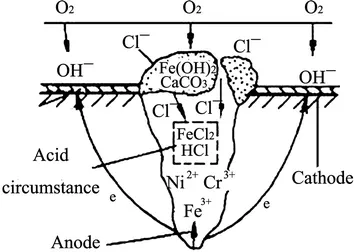
Figure above shows corrosion mechanism
Modern automotive coating methods consists of five main steps which are as follows
- Pre-Treatment
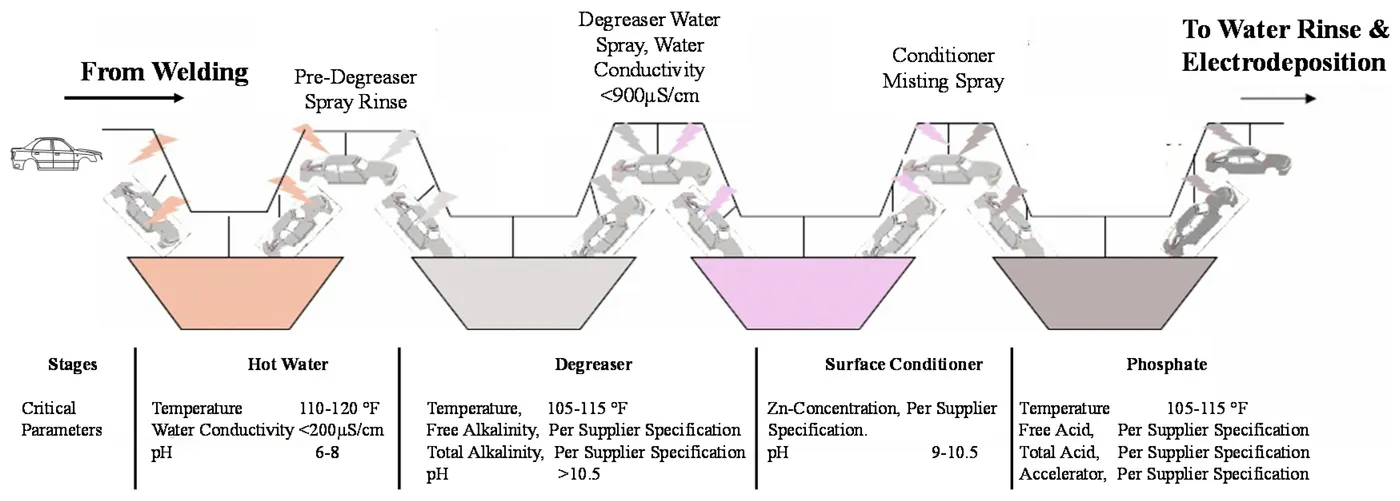
The first step in preparing the BIW for subsequent coating is pre-treatment. Pre-treatment removes & clean excess metal & forms an appropriate surface structure enabling bonding of a corrosion protection layer. Pre-treament helps the primer to bond onto the metal. A phosphate treatment applies an inert layer of metal phosphate, providing resistance to corrosion spread. Figure below shows various steps involved during pre-treatment of a BIW part.
- Electrodeposition(ED)
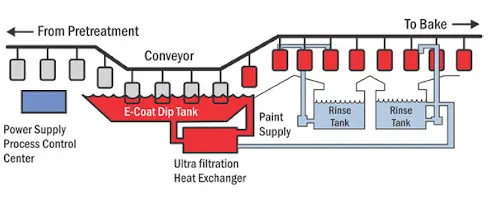
Electrodeposition involves dipping automobile bodies into the coating solution & passing an electric current through the body & the liquid ED paint solution, because of the charged nature of this coating process, the ED paint penetrates into places a spray would not reach.
-
Rust-Proof Materials: Sealer/PVC
The third step is underbody coating & seam sealing using PVC or urethanes. They are applied around the inside doors, hood, trunk, and front dash and onto the exterior and interior of metal joints which gives them an anti-chipping protection.During this step, most of the times a soft tip primer coat is applied that improves the chipping resistance to areas which are prone to chipping shock.
- Primer
The fourth coating step is the primer. It can be water-borne, solvent-borne, or a powder. The primer fills & smoothes minor imperfections & scratches that may be created during prior steps. It also provides additional protection against corrosion & maximizes adhesion between it & the ED coat & basecoat; thereby, the primer increases paint durability.
- Top- coat
The final step in the body coating process is to apply the topcoat, which consists of two layers namely the basecoat & clearcoat. Basecoat contains the primary coloring pigments while clearcoat provides durability, environmental etch, & scratch resistance to the overall coating. Clearcoat protects against damage such as fading that is caused by UV rays from the sun & imparts a gloss & depth. The clearcoat also makes repairs & maintenance easier.
Types of Underbody coatings:
Underbody coatings are categorised into various types based on type of materials used,
- Rubberized Undercoating
Rubberized undercoating is easy to apply and offers sound-cushioning as well as protection from dust, moisture, and dings or dents. In addition to our undercarriage, rubberized undercoating is also safe to use on wheel wells and quarter panels, and dries to a soft rubbery finish that prevents further rust, damage, or moisture seeps. Overall, rubberized coating is generally the best option for protecting vehicle's undercarriage, as it provides the simplest and best protective measures against rust and moisture.
- Polyurethane Undercoating
Applying polyurethane-based sealant is a little bit quicker and easier to apply. This type of sealant works by seeping into all cracks and seams, displacing salt and moisture and oozing around rusty areas to bond with and protect unoxidized metal. On the other side, this type of car undercoating generally requires a little bit more surface preparation work before applying sanding and applying an etching primer to bare metals before using are generally recommended.
- Wax or Paraffin-Based Undercoatings
A paraffin-based undercoating will be the cheapest and quickest option available with which to protect the undercarriage of your vehicle. However, keep in mind that it will wear off quicker than other types of undercoating and will need to be stripped and reapplied at least once every year. Wax-based undercoatings never truly harden. During application, they drip or flow into seams and cracks to provide protective properties. They offer at least a base protection in moderately humid climates.
- Asphalt-Based Undercoating
Asphalt-based undercoating generally contains a little bit of rubberized material that sets up firmly and also helps soften noise. This type of undercoating also needs more cure time than the other three, and is not paintable, making it best to use only for undercarriages. For standard vehicles, any of the aforementioned types of undercoating will provide sufficient protection, for large trucks and heavy machinery, asphalt-based undercoating provides a bit of extra durability against rocks, chips, and moisture.
Advantages of Undercoating
- It provides protection against corrosion & rust.
- It insulates the interior of the car from extreme temperatures from beneath the vehicle providing a comfortable cabin experience.
- It provides stability.
- It improves sound dampening function.
- It will extend the life & value of the vehicle.
- It improves aesthetic of the vehicle.
Disadvantages of undercoating
- It involves high cost.
- It needs reapplication after a specific period of time.
- It is less effective if corrosion is already present.
- It works best on new vehicles.