Underbody Coating
UNDERBODY COATING
Underbody Coating is a thixotropic corrosion preventive which provides long-term resistance against corrosion and abrasion even under difficult conditions. When the solvents have evaporated, a tough, elastic, waxy protective film remains on the sheet metal, giving a high degree of protection.
Process of Underbody Coating:
Underbody coating comes under painting process of BIW Manufacturing process.
There are three manufacturing steps is the most prominently used manufacturing process involved in fabricating a body in white.
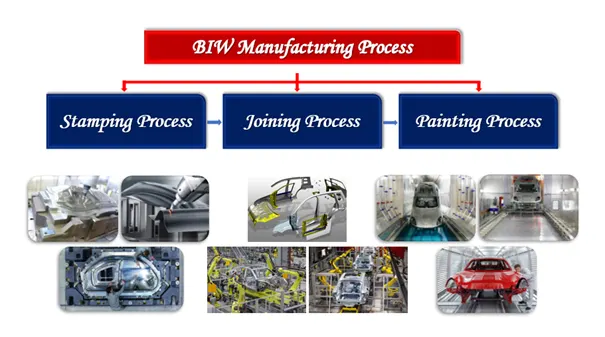
In Stamping process each BIW parts of the automotive is formed and then joined together in Joining process/Welding process. After the BIW is assembled painting process takes place.
- Underbody coating is an automotive body coating process.
Automotive body coating/Paint process of BIW consists of five main steps. They include the following:
- Pre-Treatment
- Electrodeposition
- Underbody coating & Seam Sealing
- Primer
- Top Coat
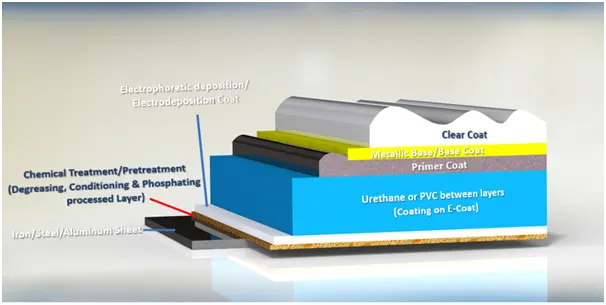
Fig. Layers of Automotive coating.
- Pre-treatment:
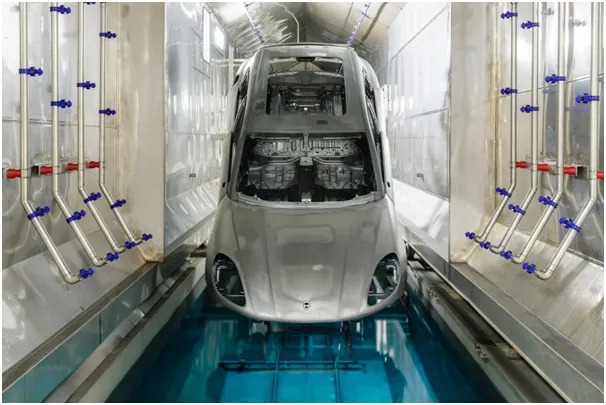
Pre-treatment removes and cleans excess metal and forms an appropriate surface structure enabling bonding of a corrosion protection layer.
This process undergoes four stages:
- Pre-degreasing spray and rinse with hot water.
- Degreasing with water spray and water conductivity
- Surface conditioning with Conditioning mist spray and
- Phosphating
- Electrodeposition:
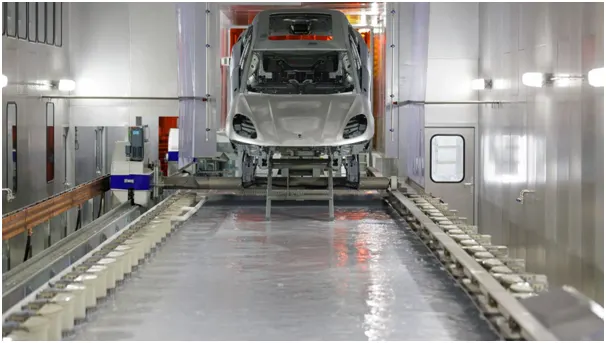
Electrophoretic deposition (Electrocoating, E-coating, Cathodic/Anodic Electrodeposition, Electrophoretic coating or Electrophoretic painting) involves dipping automobile bodies in the coating solution and passing an electric current through the body and the liquid Electrodeposition paint (i.e. ED paint) solution. The charged nature of this coating process provides penetration of the ED paint into the places where a spray wouldn’t reach.
- Underbody coating & Seam Sealing:
Under body coating & seam sealing are the next process to ED painting.
As we seen briefly about underbody coating earlier let’s have an example:
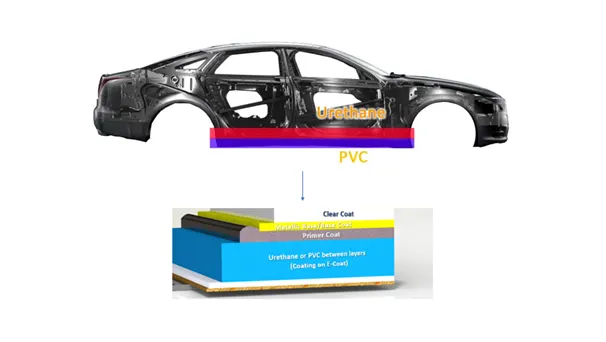
Fig. Underbody Coating
Above fig shows the lower door sections and rocker panel locations where PVC or Urethane is applied for anti-chipping protection and the cross section of that layer with respect to other coatings that it carries.
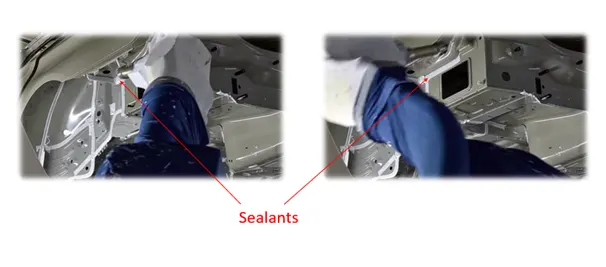
Fig. Robots applying sealants
Sealing is carried out with PVC/Urethane based sealants. It seals and prevents the entry of water, corrosion and dust into the joints of car bodies.
In this process a soft tip primer coat is also applied to improve the chipping resistance.
- Primer:
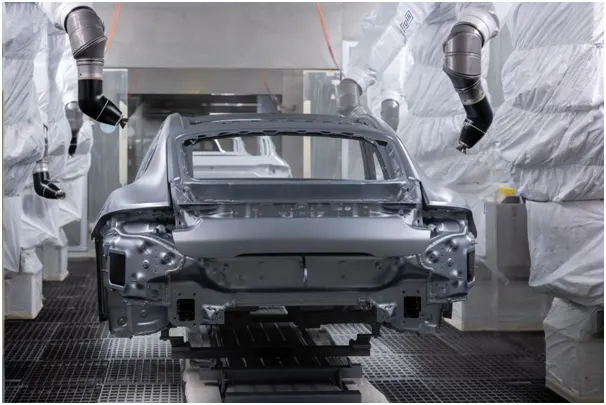
The primer can be water-borne solvent borne or a powder. the primer fills and smooth minor imperfections, scratches that may be created during prior steps and by intermediate sanding or grinding used to remove small imperfections. Primer coating also provides additional protection against corrosion and maximizes adhesion between ED coating and Base coating and increases the paint durability.
- Top Coat:
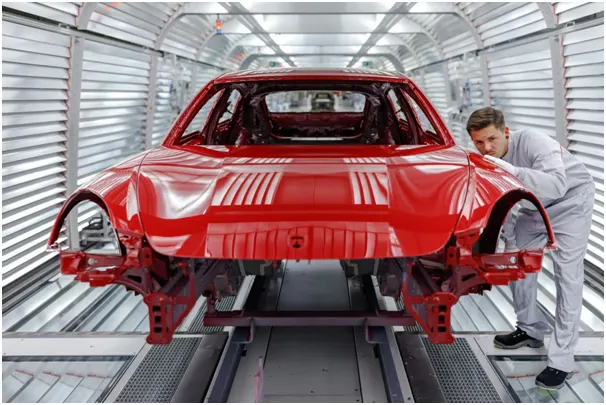
Top coat is the final coating in paint process which includes the Base coat which imparts the automobile colour and Clear Coat which provides scratch resistance and UV protection to overall coating.
After seeing the whole paint process, we can conclude the importance behind underbody coating as it’s the centre part of the whole process.
Uses and Importance of Underbody Coating:
Underbody Coating is an under-body product for treatment of cars, trucks and buses during production, at import plants and in the aftermarket. When applied to a clean, dry surface, it adheres to both painted surfaces and those coated with a layer of PVC or similar product. Zinc, rubber and plastics are completely unaffected by the product. A clean and economic treatment on the line Is assured by the product's easy application and high solid content.
Underbody Coating is also designed to be used on spare parts, machines and Iron and steel structures in highly corrosion Inductive conditions. It is also very suitable as a transport and storage anticorrosive for long term transporting or warehousing under extremely corrosive circumstances.
All the moving parts underneath the vehicle must work in harmony to ensure your driving experience is safe. It is easy to forget about the elements you don’t see every day. That is why a vehicle undercoating provides you with the safety and functionality you need over a long-term basis.
Pros of Underbody Coating:
- It provides a layer of protection against corrosion:
The obvious pros of undercoating are the protection it provides to the carriage of your vehicle. If you live in an area where salt and sand are used on the roadways in the cold weather, these materials can be corrosive to your vehicle. Undercoating gives you an extra layer of protection against rust and corrosion, protecting your car. Undercoating will eventually wear out, but you can get years of protection from it. Even vehicles in warmer climates gain protection as debris is repelled and kept away from eating at the vehicle.
- It could help to reduce interior noise:
When you’re driving, the sounds of the road can be loud. For lightweight vehicles, noise pollution can be overwhelming to the driver in some situations. Applying a layer of undercoating creates a barrier against the sound, which creates an interior that is noticeably quieter. After the service is performed, many drivers notice that audio levels are noticeably lower inside their vehicles.
- It will Extend the Life & Value of your Vehicle:
Good undercoating extends the life of your vehicle. Corrosion does more than affect the integrity of the metals in your vehicle. It can get into your metal wires and cables, affecting any component which is comprised of steel or aluminium. Even your transmission and engine have exposure to rust when there isn’t a vehicle undercoating applied.
Cons of Under body Coating:
- It adds weight to the vehicle:
Although the amount of weight added to a vehicle with an undercoating is minimal (between 10 to 20 pounds for most vehicles), there is a small element of fuel economy to consider. When your vehicle weighs more, the distance you can travel on a single tank of fuel is reduced. The undercoating might reduce your efficiency by up to one mile per gallon, which creates a small additional fuel cost over time. Still, the effect on mileage of this additional weight is negligible compared to the effect a driver can have by the way they drive.
- An undercoating is not impervious to damage:
An undercoating can provide a hardened layer of protection against dirt and debris that may cause corrosion. Depending on where you drive, however, the lifespan of this product may be minimal. If you drive your vehicle on gravel roads or dirty areas frequently, you reduce the integrity of the protective layer.
You might find that your undercoating begins to chip off in as little as 25,000 miles because of this issue. Driving in a salty environment is not the only threat to the integrity of this product.