Underbody Coating
UNDERBODY COATING
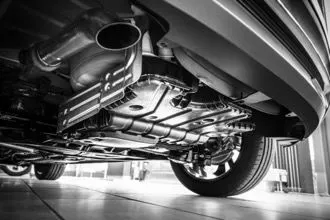
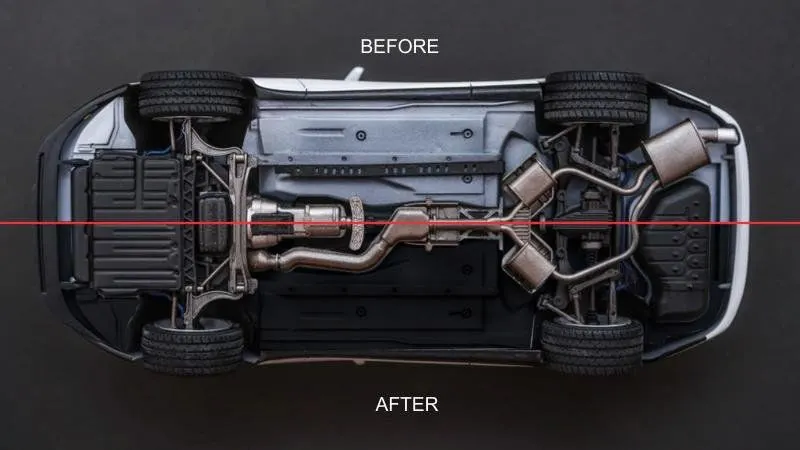
A Car Body is made up of several Metals with
- Cast Iron and Advanced High Strength Steel makes up almost 65% of Car Body Weight
- Other Metals used Aluminium, Copper are then Predominant in Manufacturing Car
Rusting is layman language is Corrosion and Corrosion is what the direct reaction of Iron and its Alloys when comes in contact of Water or Air Moisture. So, essentially to make it simple - Any Iron material when exposed to both oxygen and water is bound to rust - unless a preventive coating is applied on to it.
In Indian road conditions, a cars underbody is most prone to corrosion. Underbody coating provides long term protection from corrosion to car’s underbody. It also protects parts like internal body panels, frame rails and other inner cavities that are not physically accessible but are prone to corrosion.
Underbody coating (if living in coastal region or not) is a must to make sure the underbody is given a layer of protection from all grime and grit and annual clean up and touch up is necessary.
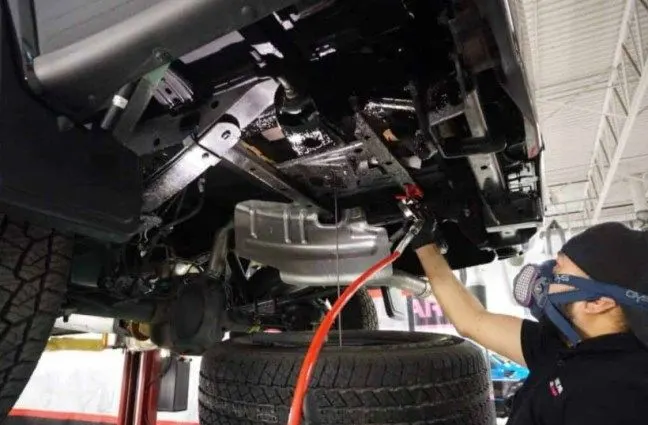
Underbody coating is usually a dense cladding (often based on rubber) applied uniformly to the undercarriage of the automobile. It is normally sprayed or painted on when the car is just out of the dealership and is clean. But even if you are getting the undercoating applied after a couple of years, it’s fine too. This is because it can prevent further damage to the undercarriage
This treatment is designed to provide long-term protection from rust to the under chassis. It protects the underbody substrates from:
- Environmental conditions
- Impacts
- Dampens sound and vibration
- Insulates against cold and heat
- Protects against Corrosion
- Seals off seams
- Hides welds, repairs & bodywork with spray
-
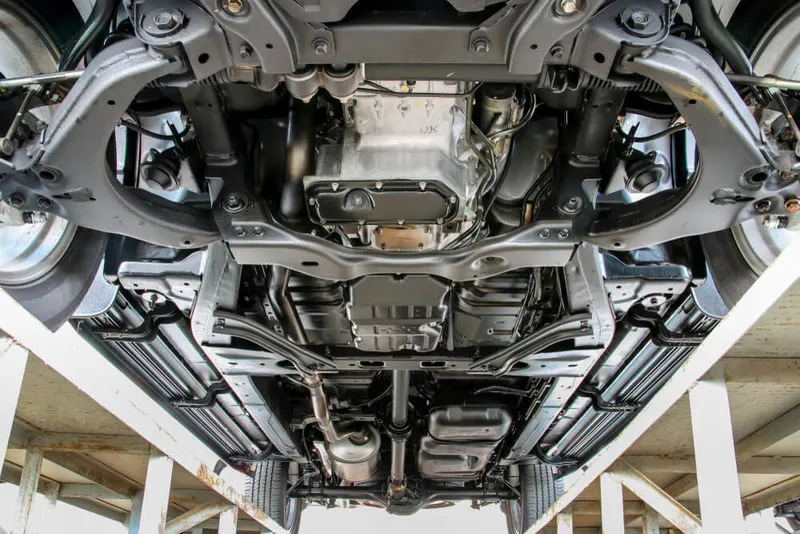
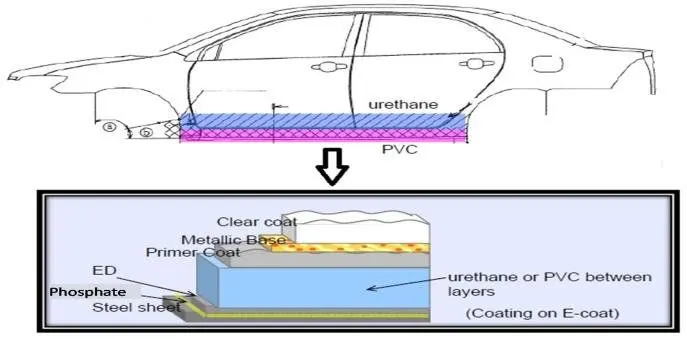
Figure displays the lower door sections & rocker panel locations where PVC or urethanes are applied as an anti-chipping protection, & shows the cross section of this layer with respect to the other coatings on the body parts. During this third step, it is also typical to apply a soft tip primer coat that improves the chipping resistance. This layer is applied to the front edge of the hood, which is an area prone to chipping shock, using a high elastic resin that resides between the ED & primer coats. Also, during this process, the radiator supports, wheel housing, & under rar areas of the body are coated with a relatively dull black pigment called a blackout coating.
Types of Underbody coating:
- Rubberized Underbody Coating This is generally thought of as the best underbody coating for your car. It preserves the underbody well, protecting it from scratches. Applying this to the undercarriage is not much of a hassle either.
- Wax Based Underbody Coating This – more or less – ephemeral undercoating will wear away in a few months’ time. On the upside, wax-based undercoating puts up a big fight against moisture. It is also the most affordable option out there.
- Asphalt Based Automotive Undercoating Best suited for lorries, trucks and large vehicles this provides a greater degree of protection compared to rubber-based coatings. However, asphalt-based coatings contain little amounts of rubber for sound-insulation purposes. The process of applying this coating is a bit time-consuming though.
- Polyurethane Underbody Coating This coating closes up splits and fractures on the underbody of the vehicle. It offers up good protection against corrosion and also bonds with the metal. Unlike in the case of asphalt-based coating, you can paint over the polyurethane coating.
Benefits of Underbody coating:
- Fights Rust It plays an important role in keeping corrosion at bay. Underbody coating can come in handy especially if you live near the sea, where there is too much humidity, and rusting is just one of those everyday things. You should also seriously consider undercoating if you reside in a place where it snows in winter.
- Absorbs Noise [Reduces NVH (Noise Vibrations Harshness) Levels] Believe it or not, very thick undercoating can soften the noises that reach the cabin. Since the undercoating is often made up of rubber it absorbs some of the rackets. The occupants of the car could spare themselves of the road noises – at least up to certain extent.
- Reinforcement If your car comes with stock underbody coating, using another coating on top of it is not going to hurt. It will offer additional reinforcement, protecting the underbody from water, road debris, gravel and small pebbles. There would also be a lesser chance for the factory coat to flake away.
- Prolong Car’s Life & Protects Vital Components Good undercoating not only defends the underbody from corrosion but also protects the engine and transmission as well! Less rusting coupled with slower wear and tear can surely add years to the lifespan of your vehicle. There would be fewer dents, dings and scratches on the undercarriage for you to fret about.
- Other Perks [Heat Insulation & Easy maintenance] Underbody coatings can also make it easier for you to clean the car. Besides these, the coating provides a bit of thermal insulation making travelling by road easier even during summers.
There are some of the downsides to underbody coating. They are,
- High cost The cost of underbody coating has reduced over the years, but it is still expensive.
- Risk of damage during application Care must be taken while applying underbody coating. This thick rubberized paint if not applied properly, can get into moving mechanical parts and cause premature failure