Underbody Coating
Title: Under-Body Coating: Enhancing Vehicle Protection
Introduction:
- Under-body coating is an automotive protective treatment that helps safeguard the underside of a vehicle from damage caused by various external factors. It serves as a preventive measure to extend the lifespan of the car, enhance its durability, and minimize maintenance costs. This one-pager explores the purpose of under-body coating, its different types, and the pros and cons associated with each.
- Purpose of Under-Body Coating: The primary objective of under-body coating is to provide a protective layer that shields the vehicle's undercarriage from potential hazards, such as road debris, moisture, rust, chemicals, and corrosion. It acts as a barrier between the metal components of the undercarriage and the harsh elements encountered on the road, including salt, gravel, and water.
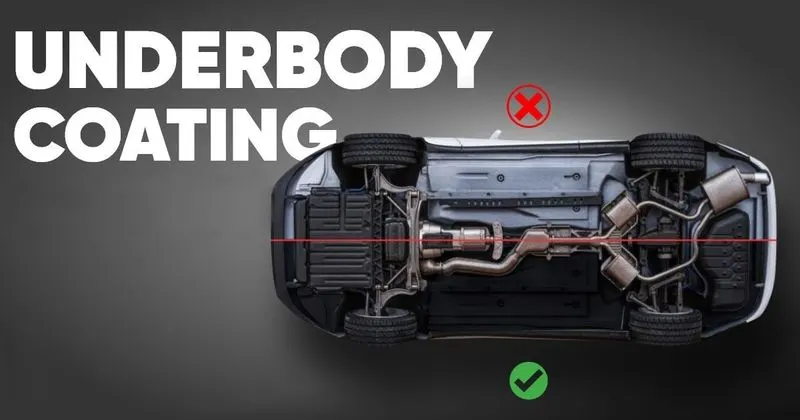
Types of Under-Body Coating:
-
Rubberized Under-Body Coating:
- This type of coating is formulated with rubber compounds or polymers.
- It offers excellent sound insulation, reducing noise from the road.
- Provides a flexible, thick, and durable layer that can withstand impacts and abrasions.
- Helps minimize the risk of rust and corrosion.
-
Wax-Based Under-Body Coating:
- Wax-based coatings are typically made of a blend of synthetic wax, solvents, and corrosion inhibitors.
- Forms a protective film that seals the undercarriage and repels moisture.
- Offers good resistance against rust, corrosion, and road salt.
- Requires periodic reapplication to maintain its effectiveness.
-
Bitumen-Based Under-Body Coating:
- Bitumen-based coatings consist of bitumen, resins, solvents, and additives.
- Provides a thick, durable, and water-resistant layer.
- Excellent protection against stone chips, scratches, and impact damage.
- Offers sound and heat insulation properties.
- Requires reapplication after a certain period to maintain its protective properties.
-
Polyurethane Under-Body Coating:
- Polyurethane coatings are a combination of polyurethane, elastomers, and solvents.
- Offers high resistance to impact, abrasion, and chemicals.
- Provides excellent protection against rust, corrosion, and road debris.
- Forms a flexible and long-lasting protective layer.
- Requires professional application due to the complex nature of the coating.
Pros of Under-Body Coating:
- Protects the undercarriage from rust, corrosion, and damage caused by road debris.
- Helps maintain the structural integrity of the vehicle.
- Enhances the resale value by preserving the condition of the undercarriage.
- Reduces noise and vibration from the road, improving driving comfort.
- Extends the lifespan of the vehicle and reduces maintenance costs.
Cons of Under-Body Coating:
- Improper application may lead to uneven coverage and reduced effectiveness.
- Some types of coatings require periodic reapplication for long-term protection.
- Professional application may be necessary for certain types of under-body coatings.
- The cost of under-body coating varies depending on the type of coating and quality of application.
Conclusion: Under-body coating serves as a crucial protective measure for vehicles, safeguarding the undercarriage from various external factors and extending their lifespan