Underbody Coating
UNDERBODY COATING:
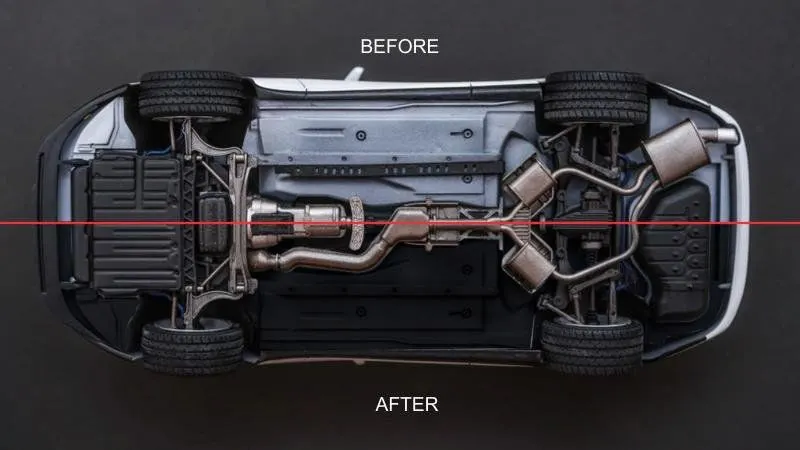
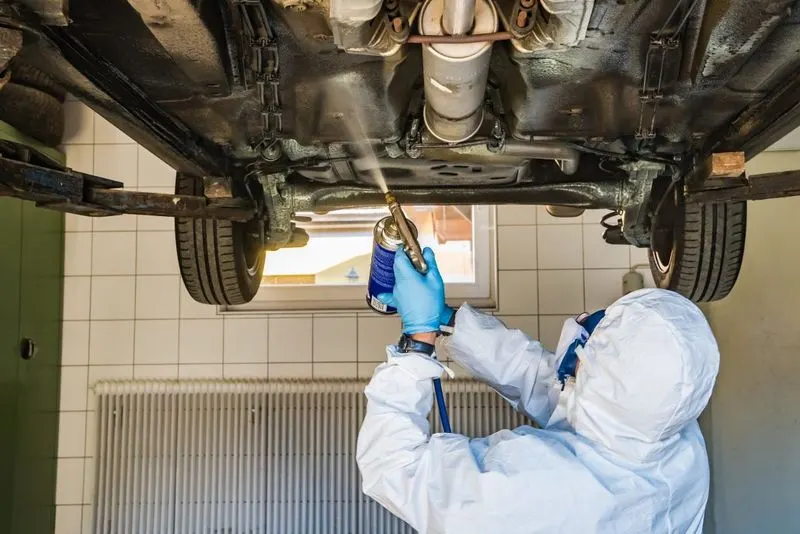
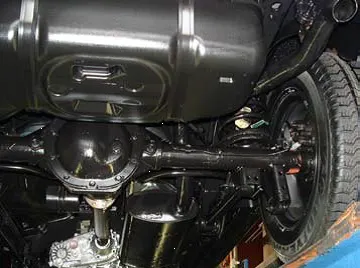
Underbody coating is usually a dense cladding (often based on rubber) applied uniformly to the undercarriage of the automobile. It is normally sprayed or painted on when the car is just out of the dealership and us clean. But even if you are getting the undercoating applied after a couple of years, it's fine too. This is because it can prevent further damage to the undercarriage.
The main purpose of undercoating is to check rust especially in the body components like frame rails along with other exposed metal parts. Underbody coating can also reduce wear and tear.
MODERN AUTOMOTIVE COATING PROCESS:
The modern automotive coating consists of five steps:
- Pre-Treatment
- Electrode Deposition (ED)
- Rust proof materials: Sealer/PVC
- Primer
- Top-Coat
Pretreatment:
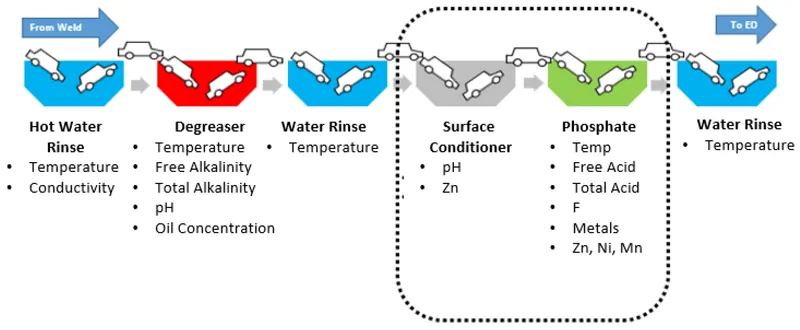
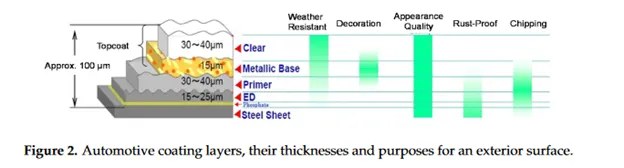
The first sequence in preparing the BIW for subsequent coating is pretreatment. This process removes & clean excess metal & forms an appropriate surface structure enabling bonding of a corrosion protection layer. It consists of cleaning the body surface to remove remaining oils from the staming process & welding residues through three primary liquid dip processes of degreasing, conditioning & phosphating.
Electrode Deposition (ED):
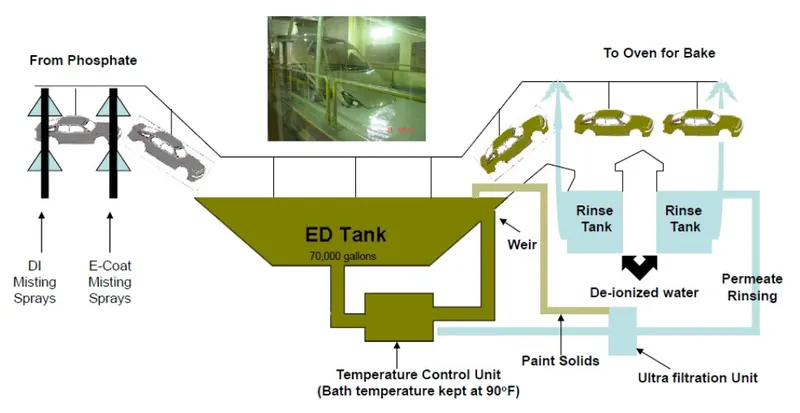
E-coating involves dipping automobile bodies into the coating solution and passing an electric current through the body and the liquid ED paint solution. Because of the charged nature of this coating process. the ED paint penetrates into places a spray would not reach.
Rust proof materials - Sealer/PVC:
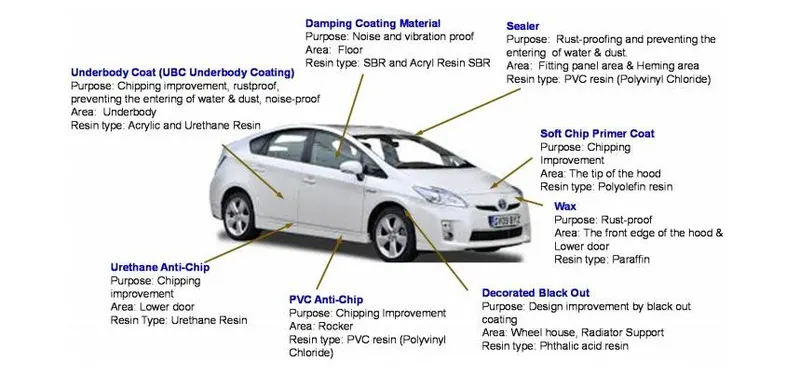
The third step is underbody coating and seam sealing using PVC. It displays the lower door sections and rocker panel locations where PVC or urethanes are applied as an anti chipping protection and shows the crpss section of this layer with respect to the other coatings on the body parts.
Primer:
The fourth coating step is the primer. It can be water borne, solvent-borne or a powder. The primer fills and smoothers minor imperfections and scratches that may be creared during prior steps and by the intermediate sanding or grinding used to remove small imperfections. It also provides additional protection against corrosion and maximizes adhesion between it and the E-coat and basecoat; thereby, the primer increases paint durability.
Topcoat:
The final step in the body coating process is to apply the topcoat, which consists of two layers the basecoat and clearcoat.
Basecoat: It contains the primary coloring pigments. As part of the topcoat, the basecoat is third layer added to the car after the primer and before the clearcoat. It imparts the automobiles color; roughly 40000 base coat color are known today and approximately 1000 new colors are added to this list each year. Three different types of basecoats are used for automobiles, including solvent-borne medium solids, solvent borne high solids and water borne.
Clearcoat: The final coating on an automobile surface is the clearcoat. It provides durability, environmental etch and scratch resistance to the overall coating. It protects against damage such as fading that is caused by UV rays from the sun and imparts a gloss and depth that otherwise are not as vivid. The clearcoat also makes repairs and maintenance easier. Environmental etch is an appearance issue associated with the formation of permanent water spots or non-removable marks from bird droppings, tree resin, or other chemicals after contact with an automobiles surface. The physical damage resulting from etching is associated with a localized loss of material and deformation or pitting of the clearcoat surface.
TYPES OF UNDERBODY COATING:
- Rubberized Underbody Coating: This is generally thought of as the best underbody coating for your car. It preserves the underbody well, protecting it from scratches. Applying this to the undercarriage is not much of a hassle either.
- Wax based Underbody Coating: Wax or paraffin based undercoating will be the cheapest and quickest option available in the market. But these coatings last olny for one year of duration.
- Asphalt based Automotive Undercoating: Best suited for lorries, trucks and large vehicles this provides a greater degree of protection compared to rubber based coatings. However, asphalt based coatings contain little amounts of rubber for sound insulation purposes. The process of applying this coating is a bit time consuming though.
- Polyurethane Underbody Coating: This coating closes up splits and fractures on the underbody of the vehicle. It offers up good protection against corrosion and also bonds with the metal. Unlike in the case of asphalt based coating, you can paint over the polyurethane coating.
PROS OF UNDERBODY COATING:
- Protection against Corrosion and Rust: Undercoating offers a layer of protection against corrosion and rust. Any debris will be repelled by the undercoating. We can expect years of protectionfrom undercoating although it wears out in the end. It plays an important role in keeping corrosion at bay. Underbody coating can come in handy especially if you live near the sea, where there is too much humidity, and rusting is just one of those everyday things. You should also seriously consider undercoating if you reside in a place where it snows in winter.
- Reduce noise: Believe it or not, very thick underecoating can soften the noises that reach the cabin. Since the undercoating is often made up of rubber it absorbs some of the rackets. The occupants of the car could spare themselves of the road noises at least up to a certain extend.
- Reinforcement: If your car comes with stock underbody coating, using another coating on top of it, is not going to hurt. It will offer additional reinforcement, protecting the underbody from water, road debris, gravel and small pebbles. There would also be a lesser chance for the factory coat to flake away.
- Extend life of vehicle: Good undercoating not only defends the underbody from corrosion but also protects the engine and transmission as well less rusting coupled with slower wear and tear can surely add years to the lifespan of your vehicle. There would be fewer dents, dings and scratches on the undercarriage for you to fret about.
CONS OF UNDERBODY COATING:
- If your vehicle already has some corrosion it isn't as effective. Applying undercoat over rust means that although we are stopping more moiture and airflow tot he rusted area, the rusting process will still keep happening. We should attempt to remove the rust before applying an undercoat.
- Underbody coating doesn't work so well on old cars because the residue from under the car has to be removed before the undercoating is applied.
- It makes the vehicle 10 to 20 pounds heavier which affects fuel economy.
- Although you can expect a hard layer of protection against debris, driving on dirty or gravel roads often means the protective layer's integrity will be reduced over time.
- Reapply it every 3 to 5 years. This is the only way to ensure your vehicle is protected properly.