Underbody Coating
What is an Underbody coating?
Underbody coating provides long-term protection from corrosion to the car’s underbody coating. It also protects parts like internal body panels, frame rails, and other inner cavities that are not physically accessible but are prone to corrosion.
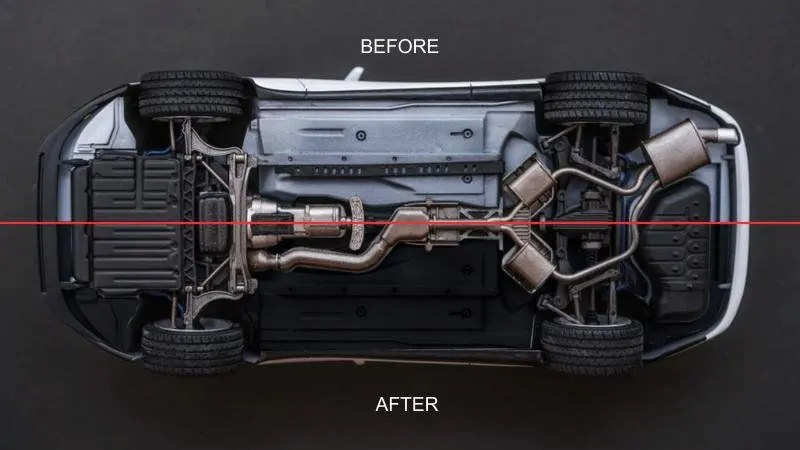
Benefits
• Minimizes Sound: It minimizes the sound from underneath the car resulting from a noiseless, smooth driving experience.
• Heat Insulation: It insulates the interior of the car from extreme temperatures from beneath the vehicle providing a comfortable cabin experience.
• Anti-chipping property: If any stone hits the coating it does not get chipped away hence protects the underbody coating from exposure to water.
Types of Vehicle Underbody coating
RUBBERIZED UNDERCOATING
Rubberized undercoating is easy to apply, and generally offers the best protective coating for your car’s undercarriage. It cushions surfaces against moisture, rust, dings, and dents. Rubberized undercoating is safe to use on quarter panels and wheel wells and dries with a soft rubbery finish.
ASPHALT-BASED UNDERCOATING
Asphalt-based undercoating offers a higher level of protection suitable for large trucks, recreational vehicles, and heavy machinery. It’s formulated with some bits of rubberized material to aid in noise reduction. It offers extra protection against chips and moisture but is not paintable and, therefore, only suitable for undercarriages.
POLYURETHANE UNDERCOATING
Polyurethane coating is easy to apply and works by sealing up cracks and seams. The compound displaces salt and moisture and protects the unoxidized metal from rust. It’s often sold in canisters that are ready to preload into an application gun. It, however, requires some surface prep work before application, like degreasing, and applying an etching primer to the bare metal.
WAX OR PARAFFIN-BASED UNDERCOATING
Wax or paraffin-based undercoating sprays are the cheapest and quickest options available. However, their results don’t last long, and you may have to apply a fresh coat after only a few months. In addition, the wax isn’t very adhesive on a metal surface. Its main advantage is that it seeps quickly into cracks and seams, and offers moderate protective properties against moisture.