Assembly of Yacht
DESIGN OF SUNSEEKER PREDATOR YACHT
Aim:
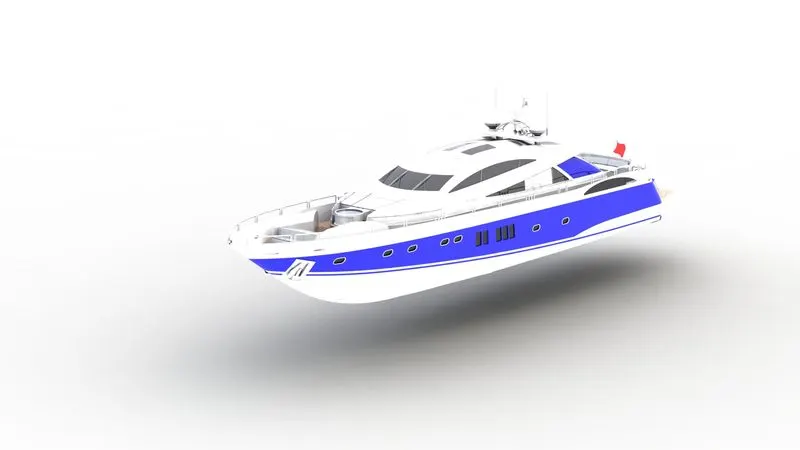
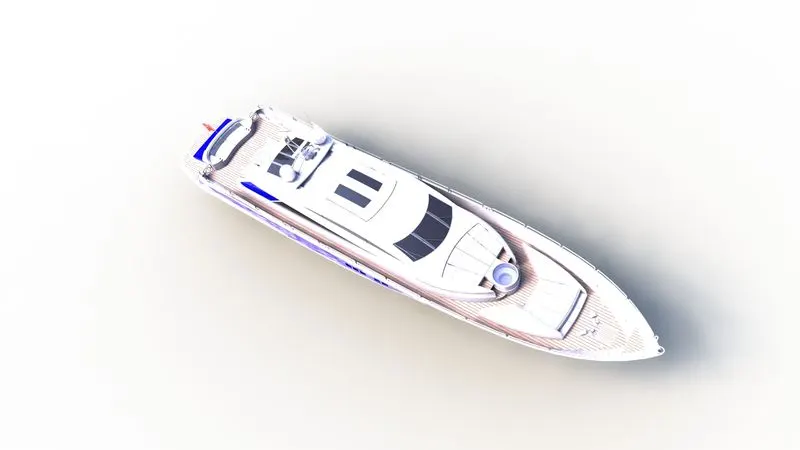
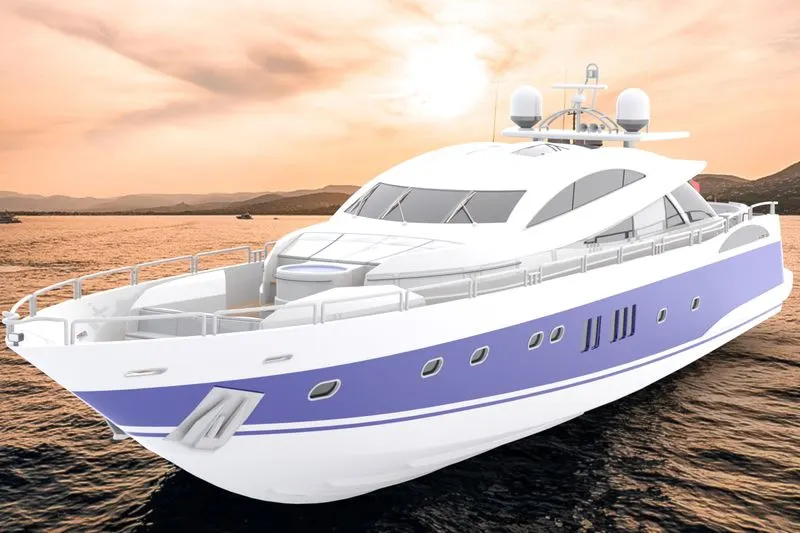
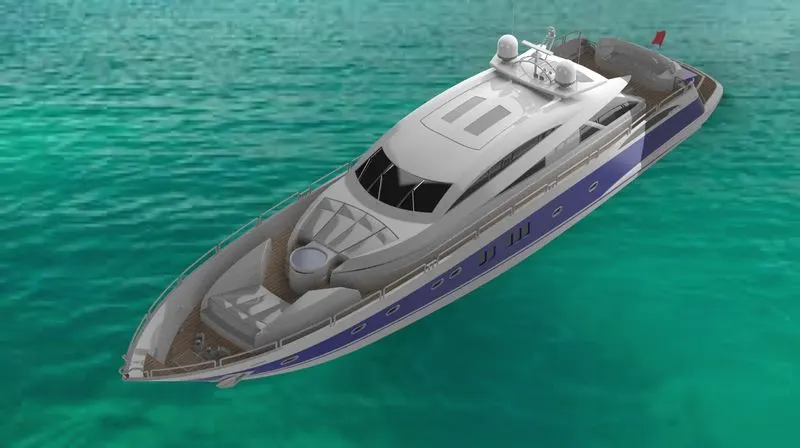
To design, assemble & render of sunseeker predator yacht in solidworks
Objective:
To design the different parts of the yacht.
To assemble the parts in part assembly
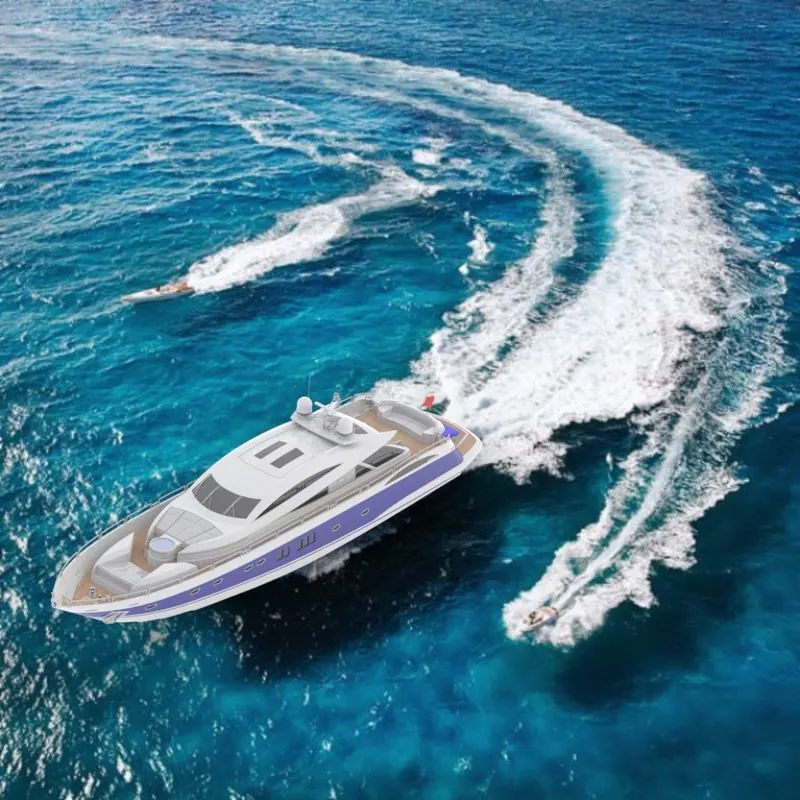
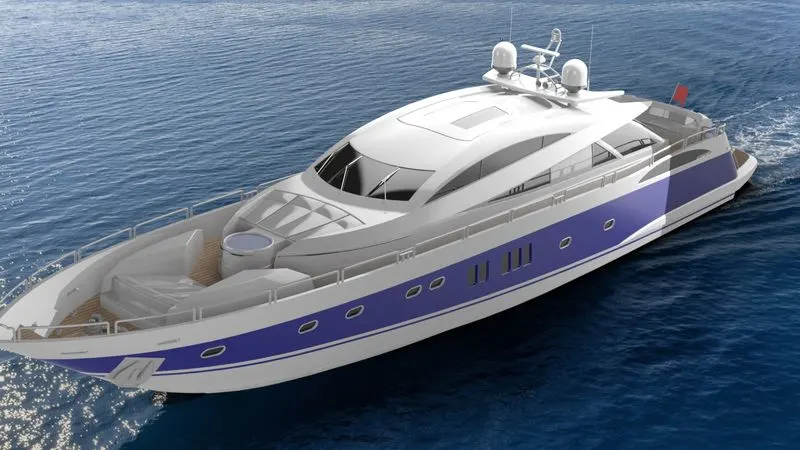
To create a photorealistic rendering of assembled parts of a sunseeker predator yacht in photoview 360.
Introduction:
The SOLIDWORKS CAD software is an application for mechanical design automation that helps designers to easily sketch designs, experiment with features and dimensions, and create models and informative drawings.
A 3D approach to modelling is used by SOLIDWORKS. Since we can design a component, we can construct a 3D model from the inítial sketch of three dimensions when designing a model using SOLIDWORKS, the way the model appears until it is manufactured.
In this report we had discussed the modelling, assembling and rendering of SUNSEEKER PREDATOR YACHT and included tools which are used to model the Yacht as well as the quick explanation of each part.
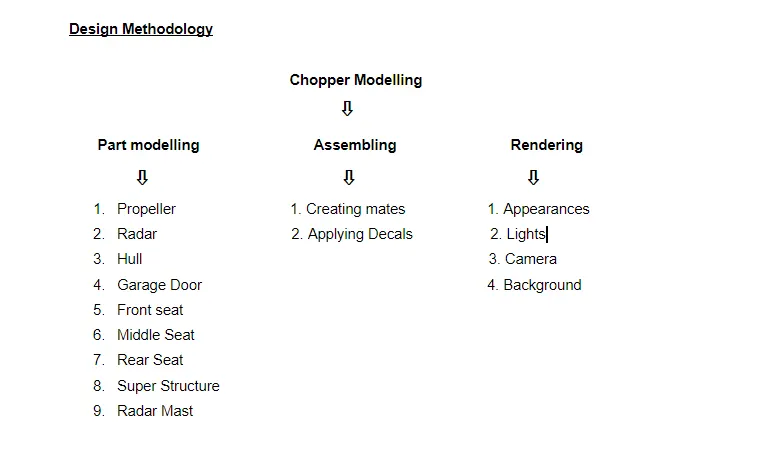
Parts to be modelled for Yacht.
The following parts are modelled in Solidworks & assembled together.
- Propeller
- Radar
- Hull
- Garage Door
- Front seat
- Middle Seat
- Rear Seat
- Super Structure
- Radar Mast
Now we will see each and every part in detail.
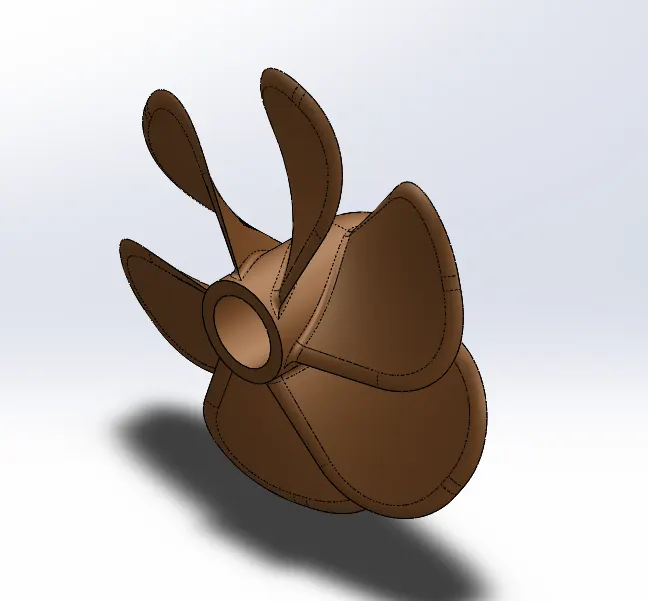
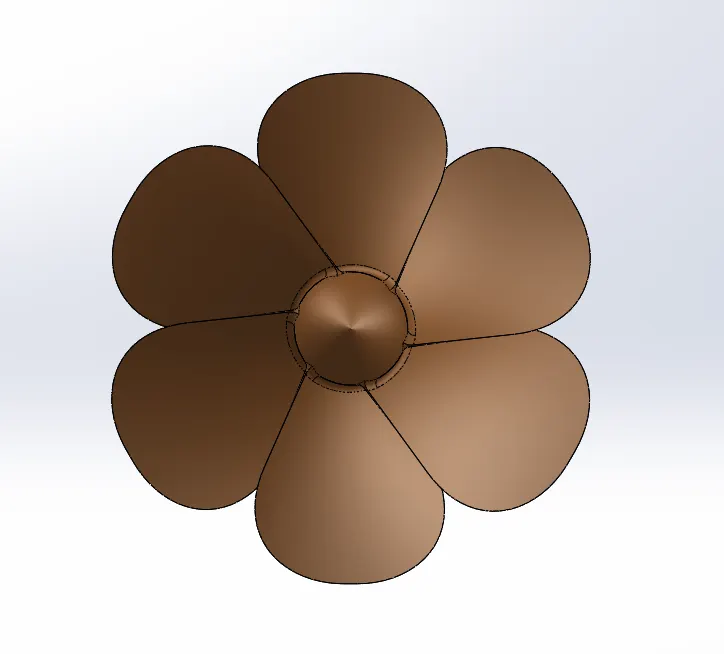
- Propeller
A propeller is a device with a rotating hub and radiating blades that are set at a pítch to form a helical spiral that, when rotated, performs an action which is similar to Archimedes screw. It transforms rotational power into linear thrust by acting upon a working fluid, such as water or air.
The rotational motion of the blades is converted into thrust by creating a pressure difference between the two surfaces. A given mass of working fluid is accelerated in one direction and the craft moves in the opposite direction.
Features used:
- Sketch
- Revolve
- Loft
- Cut Extrude
- Circular Pattern
- Fillet
- Radar
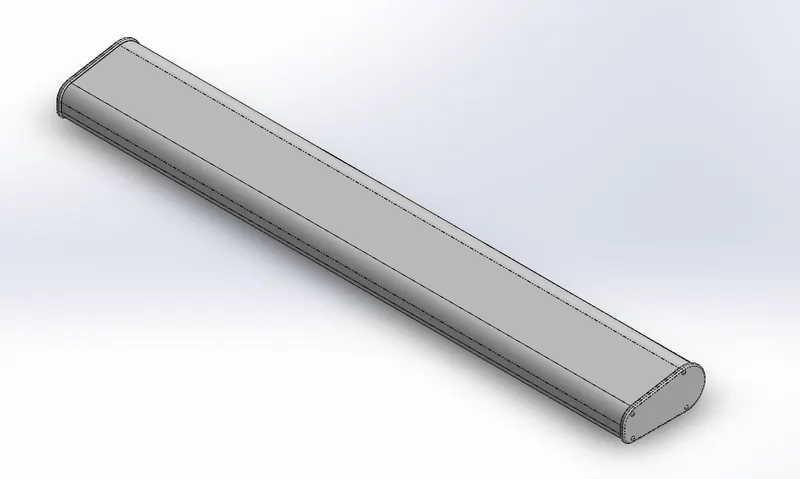
Radar is a detection system that uses radio waves to determine the range, angle, or velocity of objects. It can be used to detect aircraft, ships, spacecraft, guided missiles, motor vehicle, weather formation, and terrain. A radar system consists of a transmitter producing electromagnetic waves in the radio or microwaves domain, a transmitting antenna, a receiving antenna (often the same antenna is used for transmitting and receiving) and a receiver and processor to determine properties of the objects.
Features used:
- Boss Extrude
- Cut Extrude
- Sketch Pattern
- Split Line
- Mirror
- Fillet

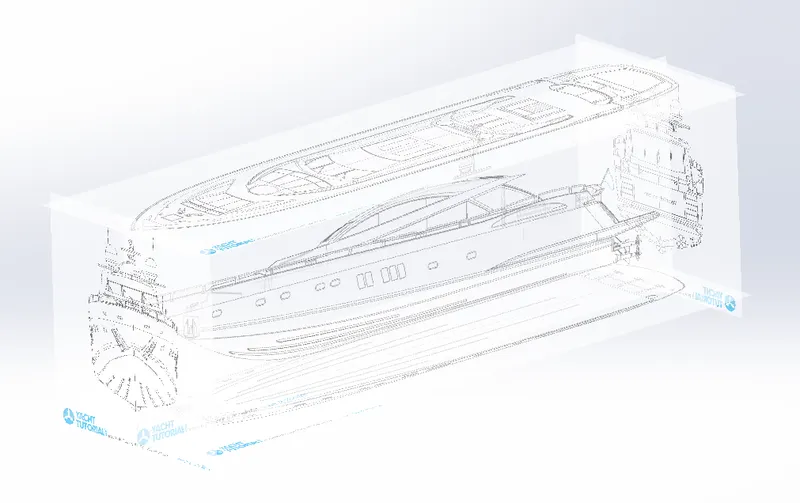
Blueprints Setup:
A blueprint is a guide for making something; it's a design or pattern that can be followed.
- Hull
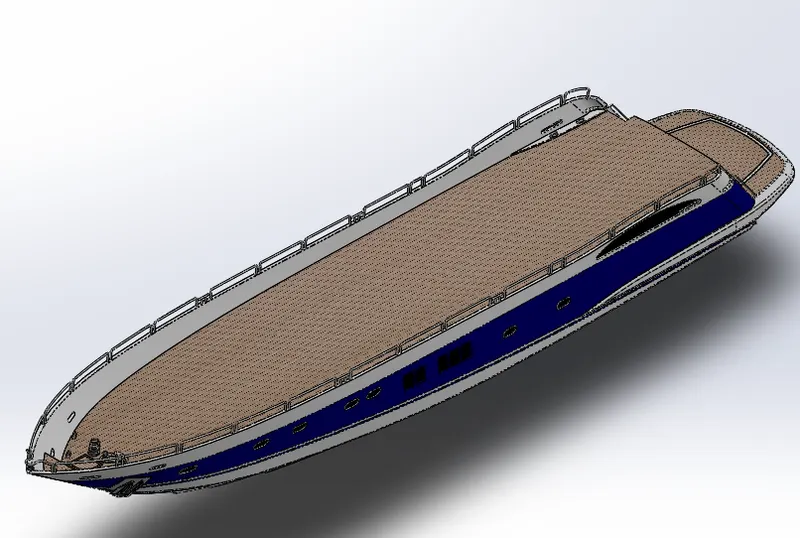
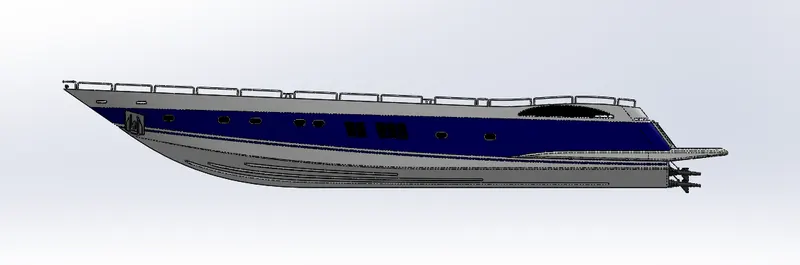
A hull is the watertight body of a ship or boat. The hull may open at the top (such as a dinghy), or it may be fully or partially covered with a deck. Atop the deck may be a deckhouse and other superstructures, such as a funnel, derrick, or mast. Line where the hull meets the water surface is called the waterline. There is a wide variety of hull types that are chosen for suitability for different usages, the hull shape being dependent upon the needs of the design. Shapes range from a nearly perfect box in the case of scow barges, to a needle-sharp surface of revolution in the case of a racing multihull sailboat. The shape is chosen to strike a balance between cost, hydrostatic considerations (accommodation, load carrying and stability), hydrodynamics (speed, power requirements, and motion and behavior in a seaway) and special considerations for the ship's role, such as the rounded bow of an ice breaker or the flat bottom of a landing craft.
Features used:
- Sketch
- 3D sketch
- Project Curve
- Surface Loft
- Surface Trim
- Surface Extrude
- Surface Knit
- Surface Fill
- Shell
- Cut Extrude
- Fillet
- Chamfer
- Sweep
- Boss Extrude
- Revolve
- Dome
- Helix/Spiral
- Linear Pattern
- Add/Delete Face
- Thin Extrude
- Thin cut Extrude
- Split
- Split Line
- Offset Surface
- Mirror
- Decals
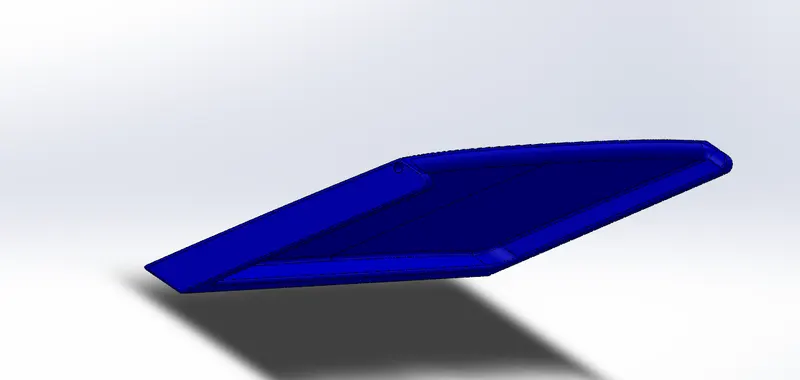
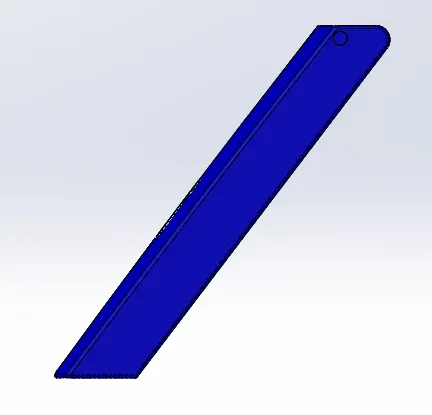
- Garage Door
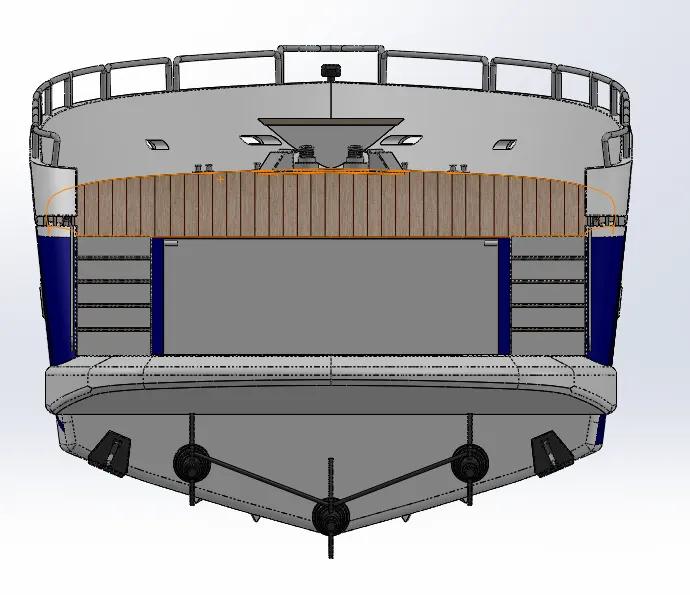
A garage door is a large door on a garage that opens either manually or by an electric motor. Garage doors are frequently large enough to accommodate automobiles and other vehicles. Small garage doors may be made in a single panel that tiits up and back across the garage ceiling. Larger doors are usually made in several jointed panels that roll up on tracks across the
garage ceiling, or into a roll above the doorway. The operating mechanism is spring-loaded or counterbalanced to offset the weight of the door and reduce human or motor effort required to operate the door.
Features used:
- Cut Extrude
- Shell
- Mirror
- Fillet
- Front Seat
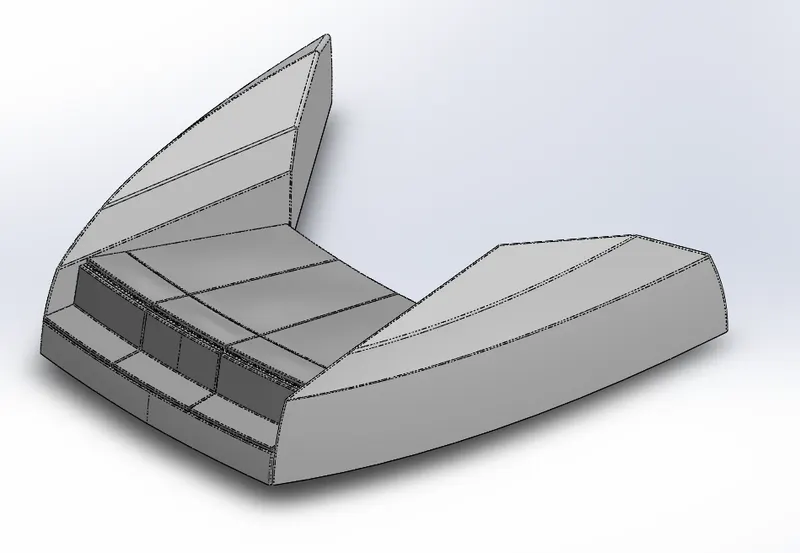
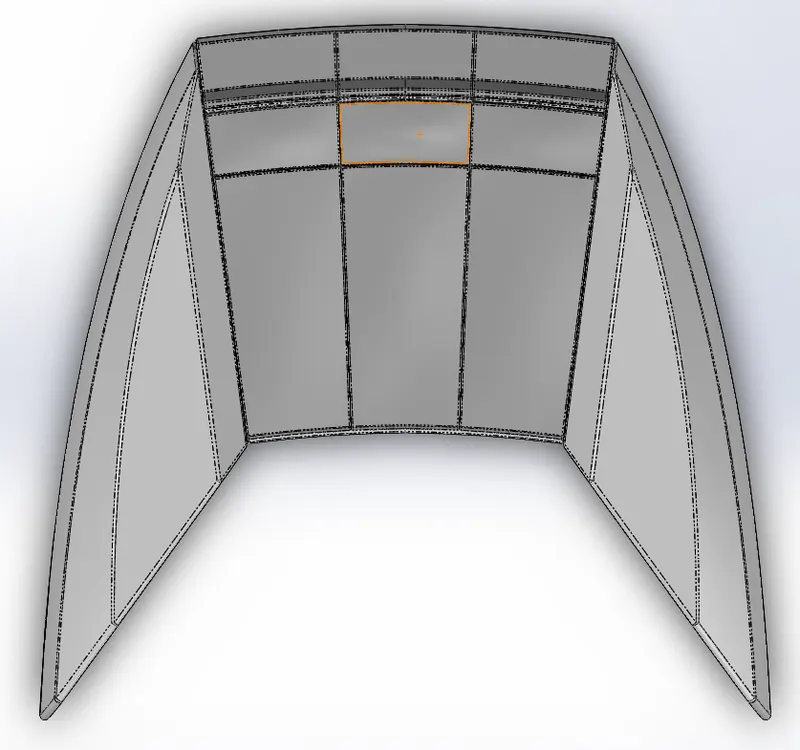
The seat creates white lines that connect it to whatever ability block it is bound to. While it is useful for setting up controls, it can often throw off a boat's aesthetic looks.
Features used:
- Surface Sweep
- Surface Extrude
- Surface Fill
- Surface Trim
- Surface Loft
- Surface Knit
- Revolve
- Cut Extrude
- Cut Thin Extrude
- Chamfer
- Fillet
- Mirror
- Dome
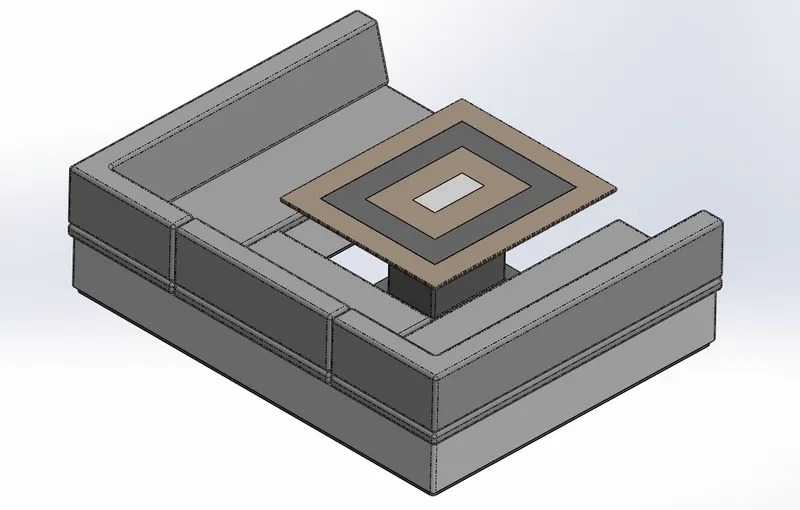
- Middle Seat
Middle seat was placed close behind the back door of the Superstructure in the shaded area. Unlike the front and rear seats, the middle seat was designed using the Solid Modeling commands. It was designed as an interface surface after importing the deck surface of the Hull.
Features used:
- Boss Extrude
- Mirror
- Cut Extrude
- Chamfer
- Fillet
- Rear Seat
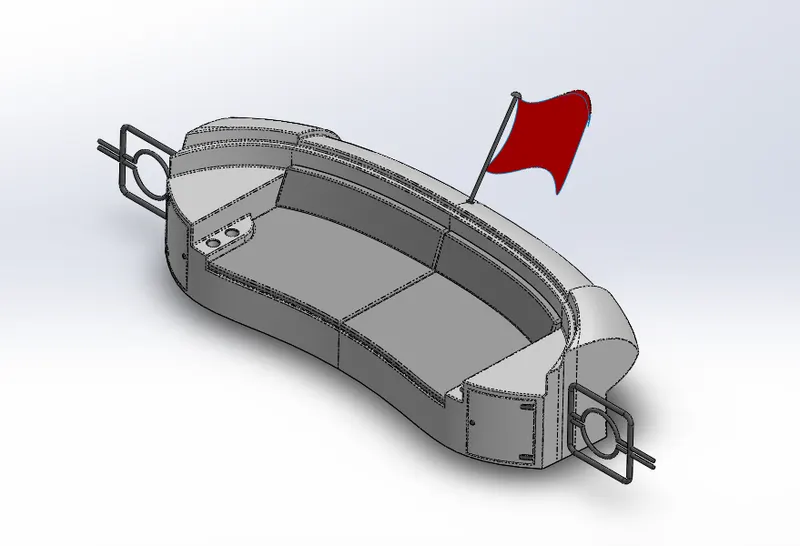
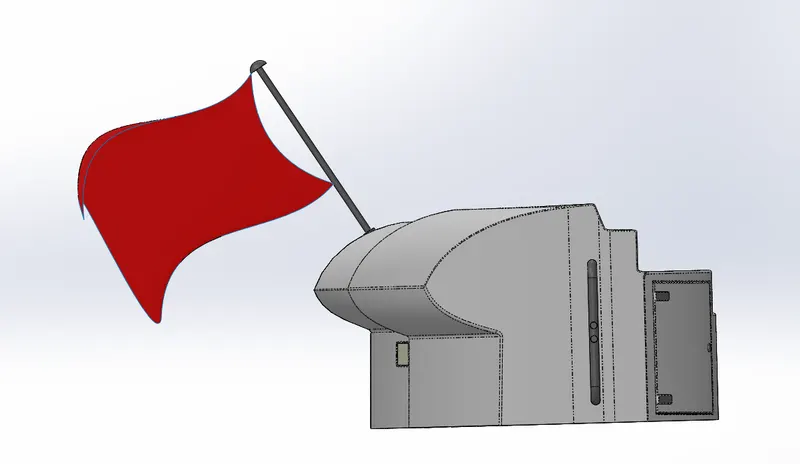
Rear seat was placed over the garage behind the Superstructure. It was designed after importing the deck surface of the Hull as interface surface.
Features used:
- Surface Sweep
- Surface offset
- Surface Trim
- Ruled Surface
- Surface Knit
- Surface Extend
- Surface Extrude
- Surface Loft
- Boss Extrude
- Cut extrude
- Chamfer
- Boss Sweep
- Mirror
- Revolve
- Fillet
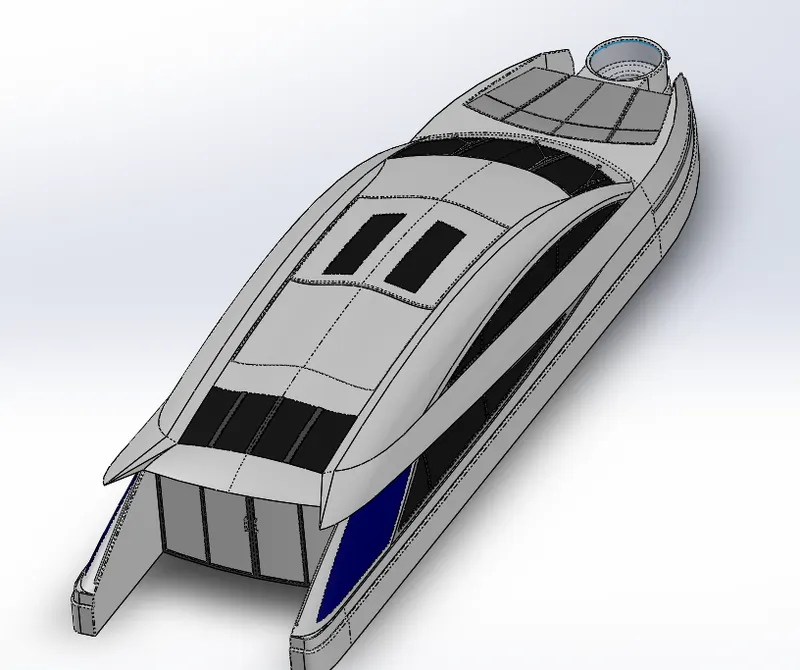
- Superstructure
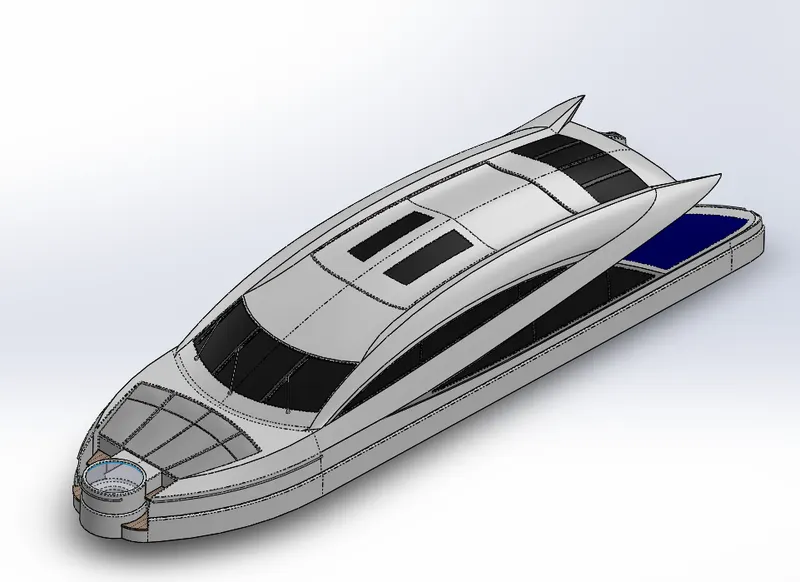
A superstructure is an upward extension of an existing structure above a baseline. This term is applied to various kinds of physical structures such as buildings, bridges, or ships having the degree of freedom zero (in the terms of theory of machines). Superstructure consists of the parts of the ship or a boat, including sailboats, fishing boats, passenger ships, and Submarines, that project above her main deck. This does not usually include its masts or any armament turrets.
Features used:
- Surface Sweep
- Surface Knit
- Project Curve
- Surface loft
- Surface Fill
- Surface Extrude
- Surface Trim
- Ruled Surface
- Surface Extend
- Fillet
- Cut-Extrude
- Face Delete
- Boss Extrude
- Surface offset
- Thickness
- Dome
- Boss Sweep
- Extrude Thin
- Split Line
- Mirror
- Chamfer
- Radar Mast
The Radar mast supports the radar, antennas, satellite domes and lights. It was designed after importing the top surface of the Superstructure as interface surface.
Features used:
- Boss Extrude
- Revolve
- Fillet
- Boss Sweep
- Mirror
- Project Curve
- Chamfer
- Mirror
ASSEMBLY:
As all the parts are designed using solidworks, now in the Assembly is used to assemble the parts of the YACHT by giving appropriate MATES with required relative conditions. YACHT is assembled in the assembly workbench with fixed positions by the help of applying mates.
Assembly Mates used:
- Concentric,
- Coincident,
- Distance,
- Limit angle.
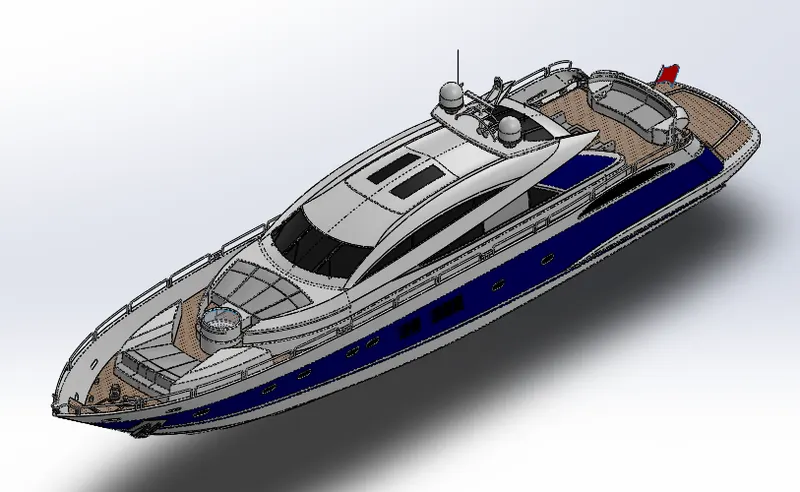
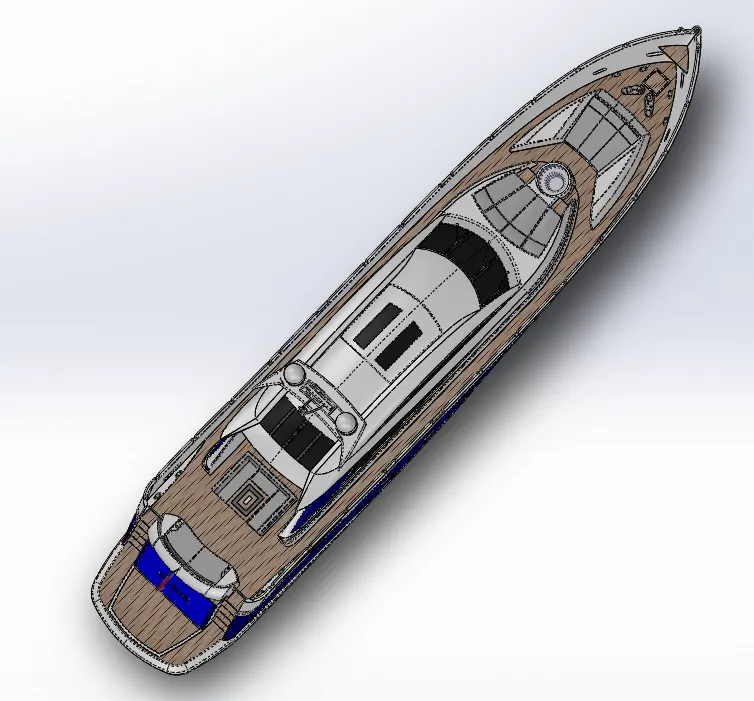
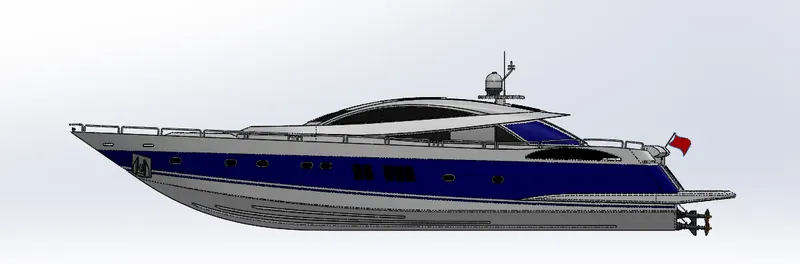
The entire assembly of the Yacht is created. That assembled yacht is taken into Solid Works Visualize or using Photo-view 360. Here various aspects such as camera, external lightnings, background scenes, etc. are taken into consideration before the creation of the final rendering. The final rendered images of the Yacht are derived.
Render tool used:
- Camera,
- Lights,
- Appearance,
- Photo-view 360,
- Solidworks visualize.
Conclusion:
Thus the Sun seeker Predator Yacht was modelled, assembled and rendered in solidworks software.