Underbody Coating
AIM : To Write a one-pager about Under-Body Coating and its purpose, its types in detail, and its pros and cons.
Underbody Coating :Underbody Coating is a sprayable coating, which protects the under surface of the vehicle from corrosion.
Its a coating done on car under body to protect it from corrosion. Just like how people require shelter and additional care, cars need them too. Just parking your car inside a garage will not solve the problem as the car is exposed to ever-changing weather conditions especially in a country like India. Cars need to be given additional care especially during monsoon seasons. A car’s underbody is exposed the most to muddy terrains, potholes, debris and stones, and wet and even flooded roads that lead to corrosion of the underbody. Since the underbody is hard for us to inspect by ourselves, it is important to have an underbody coating in order to ensure your car is protected during these times.
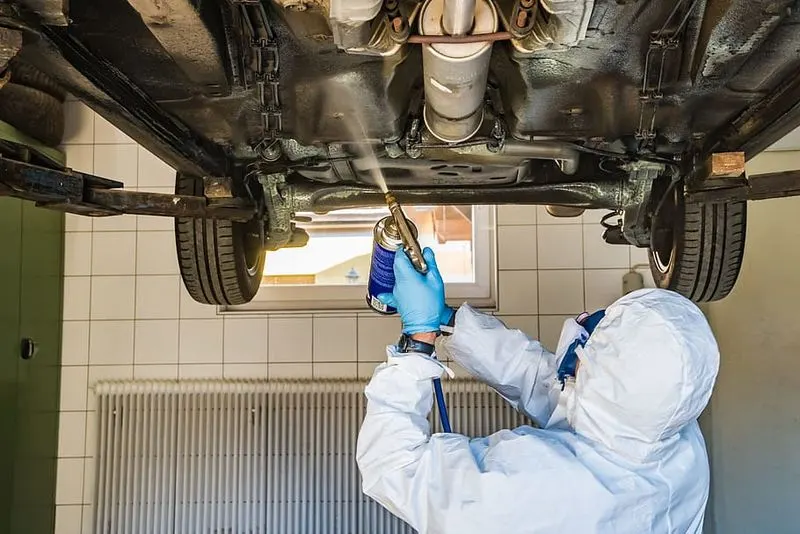
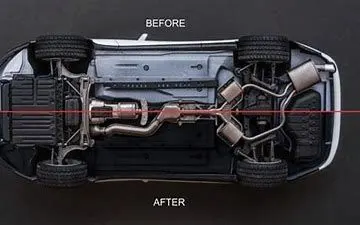
Underbody coating provides long term protection from corrosion to car's underbody. It also protects parts like internal body panels, frame rails and other inner cavities that are not physically accessible but are prone to corrosion.
Protecting the underbelly of the car should be our top priority. Especially during monsoon when heavy precipitation causes the roads to become mini-rivers and our cars are left stranded there. This makes them prone to heavy corrosion in the underbody region.
- A protective coating composition for motor-vehicle underbodies and gravel guards, characterised in that it comprises, in percentages by weight of the total weight of the composition:
|
PVC (PVAc) Resin |
20-40% |
|
Plasticiser |
30-50% |
|
Adhesion promoter |
0.5 - 1.5% |
|
Natural coated fillers |
20-30% |
|
Additives and Pigments |
1-3% |
|
Swelling Agent |
1-3% |
|
Phenolic resin (resorcin) |
0.2-1.2% |
|
Solvents |
1-3% |
- And thickness of the coating varies for different vehicle. For example Ford figo have:
|
Sl no. |
Part name/area |
Coating thickness (µm) |
|
A |
Front floor |
665 |
|
B |
Side extension member FR |
127 |
|
C |
Extension member rear floor |
184 |
|
D |
Front sill |
321 |
Tata indica vista have (1.5 to 9) mm, Hyundai i10 underbody spray has (1 to 6) mm, while A-Star have (1.5 to 7) mm.
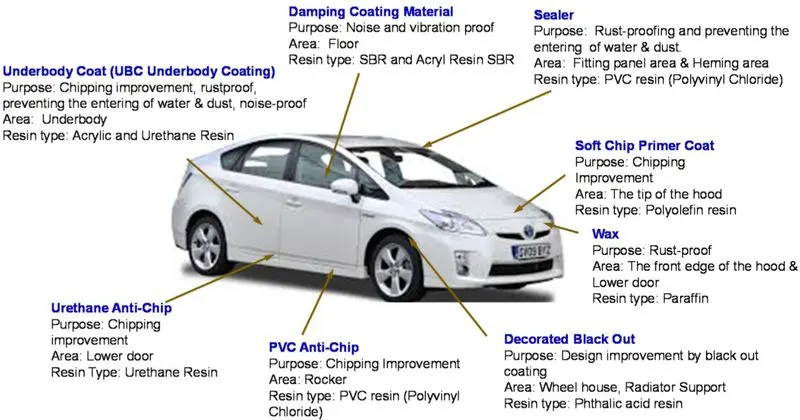
Purpose :
It protects the underbody substrates from:
-
Environmental conditions
-
Impacts
-
Dampens sound and vibration
-
Insulates against cold and heat
-
Protects against Corrosion
-
Seals off seams
- Hides welds, repairs & bodywork with spray
Process :
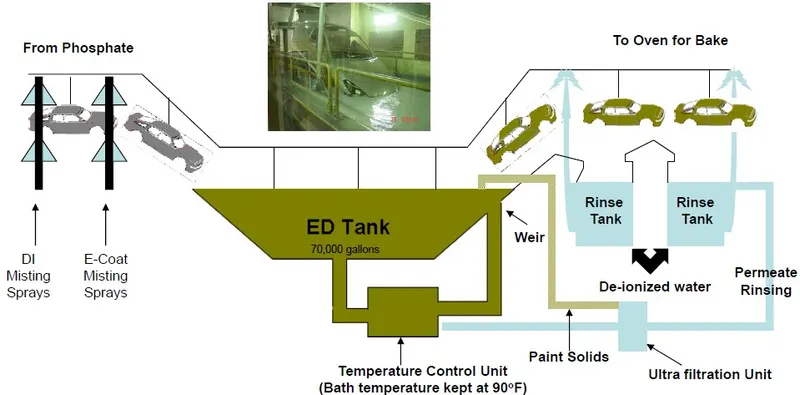
First, the BIW body is placed on the rails .The rails carrying the BIW takes it into the Paint bath . The angle at which it is inclined into the paint bath and the time at which it is there in the Electroyte deposition bath is decided with respect to the weight and the facility of the plant . The angle at which it is rotated in the paint bath is the angle at which all the electrolyte deposition droplets let out . It means there cannot be any droplets stored inside the body which implies that it will additionally react and gives more coating surface even if it is not the part of design intention(The body is rotated in such a way so that there is no droplets found inside the or every part of the body should be completely electrolyte deposited . This is the process usually all will follow for ED Coating of the car . Afterwards ,it goes to the Sealant and the paint process .The more better coating is provided ,the better paint absorption takes place and the more Corrosion resistant the car possess .
Later it goes into next level where Heating chamber is loacated . The heating chamber is the area where further little droplests if present are drained out and finally the BIW body goes out as a dry body .
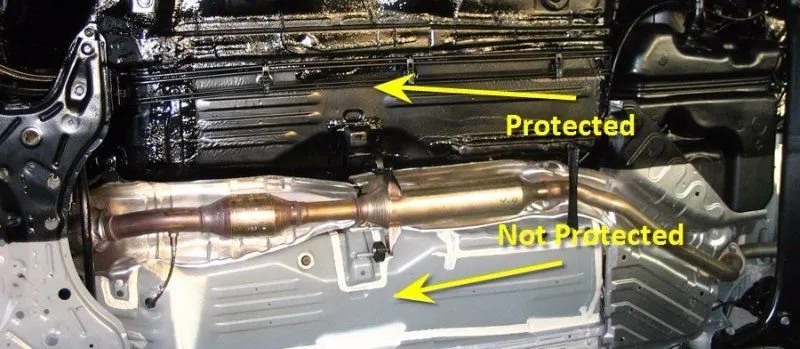
Types of Undebody Coating :
1) Rubberized Undercoating :
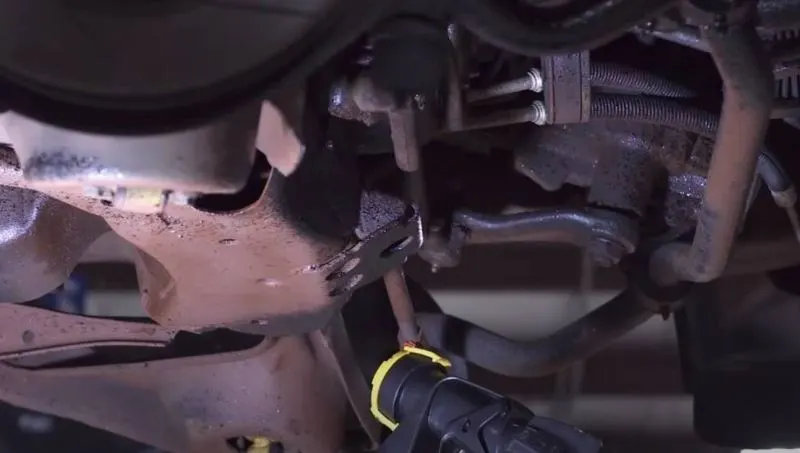
Rubberized Undercoating is easy to apply and offers sound-cushioning as well as protection from dust, moisture, and dings or dents.
In addition to your undercarriage, rubberized undercoating is also safe to use on wheel wells and quarter panels, and dries to a soft rubbery finish that prevents further rust, damage, or moisture seeps. The coating can be painted over and, if necessary for bodywork, can be easily removed with an undercoating removal spray.
Overall, Rubberized Undercoating is generally the best option for protecting your vehicle's undercarriage, as it provides the simplest and best protective measures against rust and moisture.
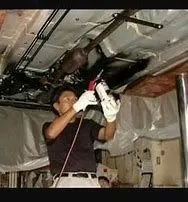
2)Wax based underbody coating :
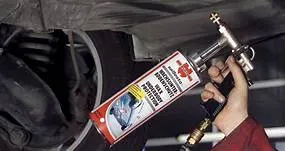
A Wax based or paraffin-based undercoating will be the cheapest and quickest option available with which to protect the undercarriage of your vehicle. However, keep in mind that it will wear off quicker than other types of undercoating and will need to be stripped and reapplied at least once every year.
Wax-based undercoatings never truly harden. During application, they drip or flow into seams and cracks to provide protective properties. They are usually available in a spray gun canister or in an aerosol can and offer at least a base protection in moderately humid climates.
3) Asphalt based underbody coating :
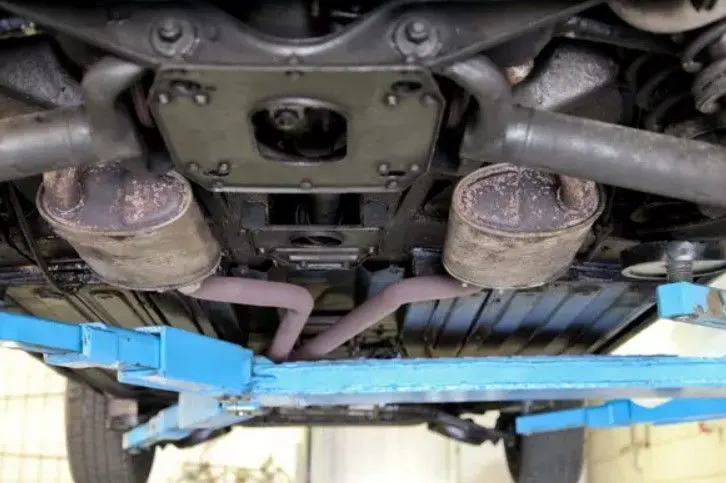
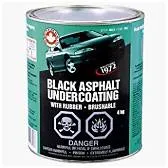
Asphalt-based undercoating generally contains a little bit of rubberized material that sets up firmly and also helps soften noise. Generally sold in five gallon containers, this type of undercoating also needs more cure time than the other three, and is NOT paintable, making it best to use only for undercarriages.
Asphalt Based Undercoating does provide some benefits over Waxed Based Undercoating. They both stick well to most any surfaces and do a great job sealing out moisture, road chemicals and oxygen. But mainly, Asphalt undercoating has the benefit of being less expensive. They protect anywhere up to 5 years and dry to a Firm to Hard coating.
Asphalt Based Undercoating does require a thicker film thickness meaning you will have to apply more product to the surface to be protected then if you use a Wax Based Undercoating. Additionally, Asphalt based products require more surface preparation because they can actually seal in rust and moisture allowing it to continue to grow. Finally, Asphalt based products continue to dry out over time causing cracks in the coating surface.
4) Polyurethane underbody coating
Oftentimes, polyurethane undercoating will come in canisters ready to preload into an application gun. This type of sealant works by seeping into all cracks and seams, displacing salt and moisture and oozing around rusty areas to bond with and protect the unoxidized metal. It also sands quickly in case you'll need to perform bodywork and can be painted over.
On the flip side, this type of car undercoating generally requires a little bit more surface prep work before applying to sand, and applying an etching primer to bare metals before using is generally recommended. This type of coating is easier and quicker to apply.
There are some popular vendors who manufacture underbody coatings such as-
- 3M
- Elvi Bardahl
- Horizon
- Wuerth, etc..
Pros of Undercoating :
- Fights rust
It plays an important role in keeping corrosion at bay. Underbody coating can come in handy especially near the sea, where there is too much humidity, and rusting is just one of those everyday things. Also it should be considered seriously a place where it snows in winter.
- Absorbs noise or Minimizes sound
Very thick undercoating can soften the noises that reach the cabin. Since the undercoating is often made up of rubber it absorbs some of the rackets. The occupants of the car could spare themselves of the road noises, at least up to a certain extend.
- Reinforcements or Anti-chipping property
If the car comes with stock underbody coating, using another coating on top of it, is not going to hurt. It will offer additional reinforcement, protecting the underbody from water, road debris, gravel and small pebbles. There would also be a lesser chance for the factory coat to flake away.
- Car life
Good undercoating not only defends the underbody from corrosion but also protects the engine and transmission as well! Less rusting coupled with slower wear and tear can surely add years to the lifespan of your vehicle. There would be fewer dents, dings and scratches on the undercarriage for you to fret about.
- Heat Insulation: It insulates the interior of the car from extreme temperatures from beneath the vehicle providing a comfortable cabin experience.
Cons of Underbody Coating :
- It is very costly to do underbody coating process .
- Undercoating will not help you if corrosion already exists and the corrosion needs to be removed first before it can be applied(i.e It is less helpful if corrosion layer is already present on the body ) .
- It adds weight to the vehicle.