Underbody Coating
A Report On 'Underbody Coating' Of An Automobile Vehicle
Objective:
- To understand the purpose of Underbody Coating for the Automobile Vehicle's body, types of underbody coating and it's pros and cons.
Underbody Coating:
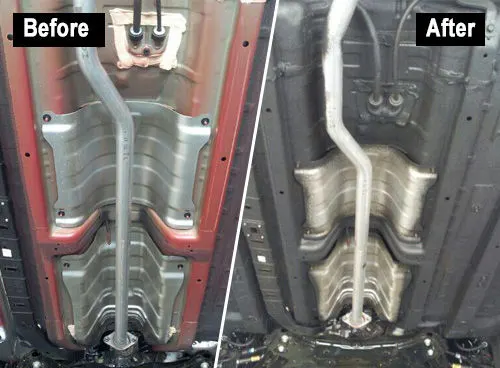
- Underseal or undercoating is a thick resilient coating applied to the underbody or chassis of an automobile to protect against the impact damage from small stricking stones, which would rapidly chip ordinary paint, allowig rusting to begin.
- The underbody of an automobile has great exposure to get damage form small stones, sometimes collision due to large road irregularities, road salt, water effect during washing and monsoons which results in corrosion.
- The underbody is the one which can be easily overlooked because of it's position which is less visible in most of the times. However it is the base foundation of the whole vehicle and plays major role in providing safety during crash.
- Vehicles for sale in some territories are not undersealed, because the climate is not sufficiently aggressive to warrent it. If such a vehicle is subsequently imported into a country with high rainfall, cold winters, and where salting of the roads is common, application of underseal is strongly recommended to ensure the vehicle has a long life.
Types Of Underbody Coating:
- Polyurethane Coating
- Automotive Coating With Asphalt
- Rubberized Underbody Coating
- Bitumen Based Underbody Coating
- Wax Based Underbofy Coating
1. Polyurethane Coating:
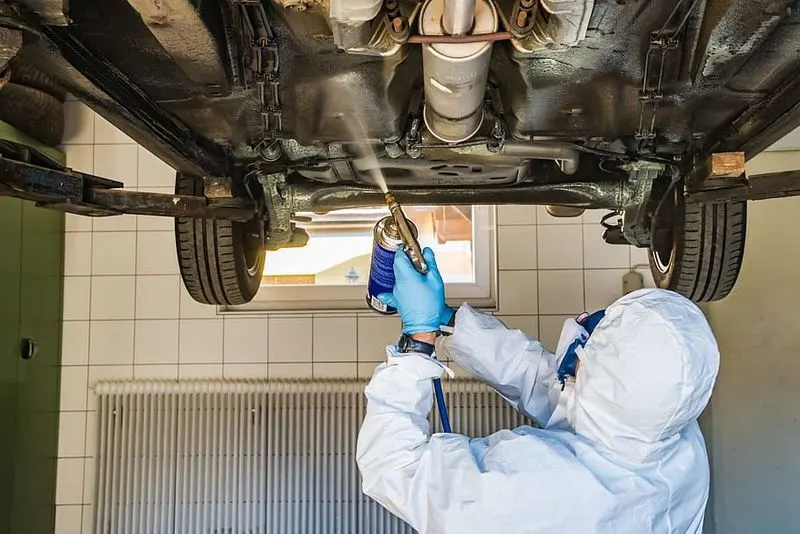
- Application guns are typically packed with polyurethane undercoating canisters. This type of sealant works by seeping into all seams and cracks, displacing moisture and salt, and ozzing around rusted areas in order to connect with and shield unoxidized metal. In the event that bodywork is necessary, it may also readily sanded and painted over.
- The alternative way to undercoat the car is to use a sealer with a polyurethane base. This type of automotive undercaoting is easier to apply and takes a bit less time.
- It is normally advisable to sand and apply an etching primer to bare metals before applying this form of automobile undercoating, as it tyoically requires a bit more surface preparation.
2. Automotive Coating with Asphalt:
- This type of coating is highly suitable for large vehicles such as trucks and cargo containers. As compare to rubber based coatings, this provides more durability against chips, pebbles and moisture.
- Asphalt base coating contains some rubber material which becomes good noise insulator hence requires more curing time as compare to other coatings.
- Asphalt base coating is not suitable for paint application therefore it becomes feasable for undecarriage.
3. Rubberized Underbody Coating:
- This is generally the best underbody protection for a car. It prevents scratches and preserves the quality of the underbody. Applying this coating to the undercarriage is not so difficult.
- It offers great sound cushioning and protection against dust, moisture and dents. Rubberized coating also can be use for wheel house and quarter panels which later dries to soft rubbery finish that prevents further rust, damage, moisture seeps.
- In case of some future bodywork after the coating, it can be easily removable by undercoating removal spray.
4. Bitumen Based Underbody Coating:
- Fast-drying underbody coating made of bitumen is intended to permanently protect the underbody from rust. After drying, the product leaves a securely adherent covering layer that provides good mechanical protection in a variety of climates. Additionally it has exceptional soundproofing capabilities.
5. Wax Based Underbody Coating:
- Wax based coating is the cost effective and quick method than all types of undercoatings therefore it becomes best option financially.
- This type of coating vanishes in faster rate and hence need to stripped of and reapply again within few months.
- Wax base coating drips and flows into the seams and cracks of the underbody and gives protection against rust, moisture and dampness.
- They are generally available in a spray gun canister or in an aerosol which provides at least a base protection in moderately humid climates.
Pros And Cons Of Undercoating:
Pros:
- Heat insulation - it improves the comfort of the trip by shielding the cabin of the car from internal temperatures that rises rapidely.
- A portion of the rackets are absorbed by the regularly utilized rubber undercoating. The people in the car might somewhat isolate themselves from the sound of the road.
- The covering won't chip away if a stone impacts it, preventing the underbody from becoming wet.
- Fight against rust.
- Prolongs car's life.
Cons:
- Applying undercoating won't have any effect on the previously rusted area.
- Undercoating is costly.
- An undercoating is not impervious to damage.
- Mostly it is effective for new cars only.
- It must be reapplied every 3 to 5 years for the best results.