Underbody Coating
' A STUDY ON UNDERBODY COATING'
Introduction:
One may wipe up the water or sand particles in the upper portion of cars which is visible to eyes and reachable to hands thus making it less prone to corrosion ,wear and tear etc. But the parts or the area underneath the car such as internal body panels, frame rails and other inner cavities that are not easily accessible but are more prone to corrosion due to water present on pot holes and stones that come in direct contact with those areas needs extra care and protection. Due to this underbody coating is done which makes a protective film layer on that area to protect the metal from foreign particles. Usually underbody coating is done on BIW( Body in white). Body in white refers to the stage when cars body sheet metal components have been welded together.These have some steps to follow which i will be discussing further. But these days most of the manufacturing companies producing cheap cars have given underbody coating in form of spray at the dealership so as to reduce cost of the vehicle and lifespan of vehicle which is not at all fair. But premium cars won't come in that package they will be having all the coating from factory itself.
Process:
Modern automotive coating methods consist of five main steps. They include the following:‚
- Pretreatment: It removes and cleans excess metal and forms an appropriate surface structure
enabling bonding of a corrosion protection layer.Pretreatment consists of cleaning the body surface to remove remaining oils from the stamping process and welding residues through three primary liquid dip
processes of degreasing, conditioning, and phosphating
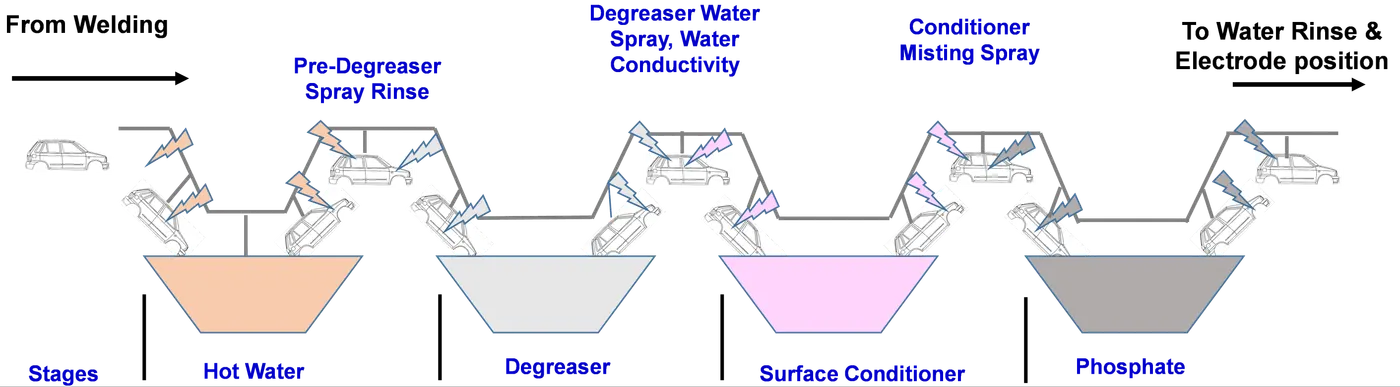
- The next step is electrodeposition (ED) of the anti-corrosion or rust prevention layer.E-coating involves dipping automobile bodies into the coating solution and passing an electric current through the body and the liquid ED paint solution. Because of the charged nature of this coating process, the ED paint penetrates into places a spray would not reach. The ED paint is promoted to bond with the metal substrate, and a uniform coating thickness is produced.The result is an insoluble, deposited layer with a very high solids content and firm adherence to the penetrated body.
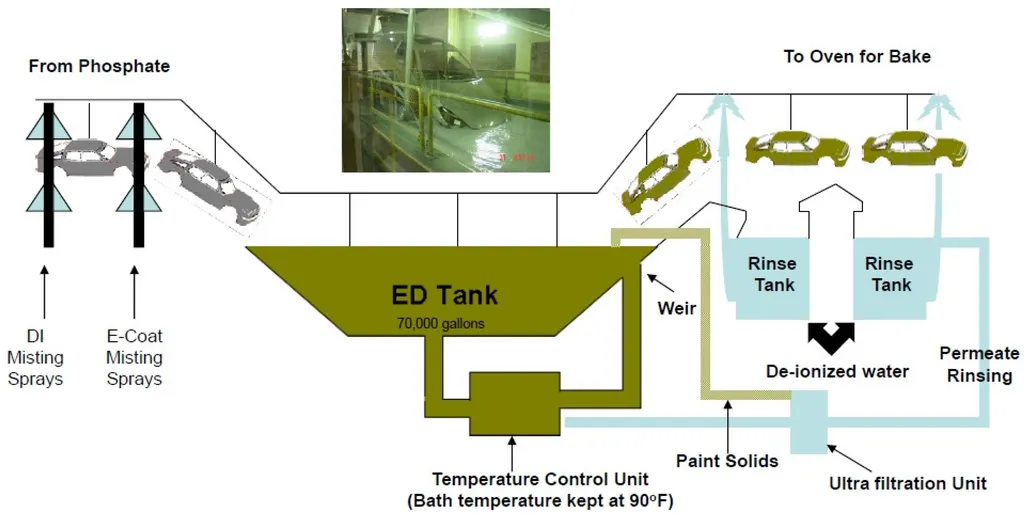
- The third step is underbody coating (UBC) and seam sealing using PVC (Polyvinyl Chloride) and
urethane,A sealer like Poly Vinyl Chloride (PVC) is applied for anti-corrosion, elimination of water leaks,
and minimization of chipping and vibrational noise.The sealant is applied around and inside the doors, hood, trunk, and front dash, and onto the exterior and interior of metal joints and outer area of the back wheel well; application of the sealant is accomplished either manually or with robots and prevents air and water ingress and inhibits rust formation. Recently, PVC and acryl/urethane sealants have also been used in the underbody to reduce viibration and noise due to power train,suspension or braking to passengers compartment.
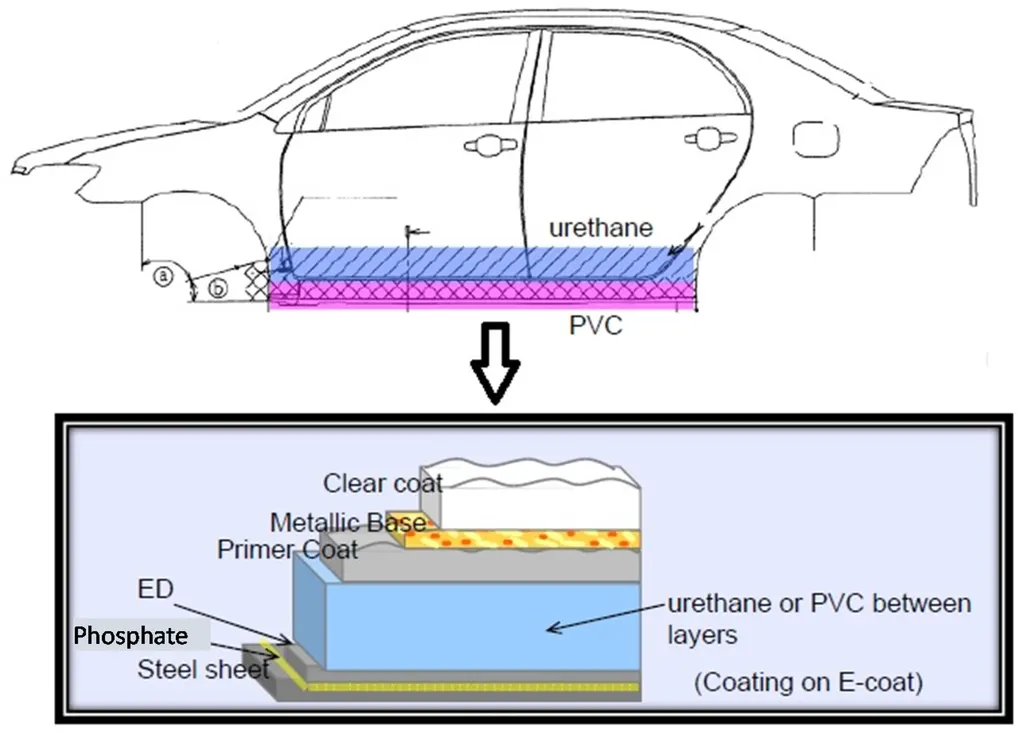
- The fourth step is application of primer .A primer is then applied to promote adhesion between the surface and the basecoat; it also imparts a smoother surface for subsequent layers and has anti-chipping properties.
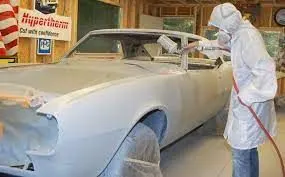
- The final step in the body coating process is to apply the topcoat, which consists of two layers—the basecoat and clearcoat. The basecoat contains the primary coloring pigment, and the clearcoat providesa protective coating against environmental effects, corrosion, and UV light degradation, promotes unmatched color retention, and provides a smooth, unblemished, and even finish
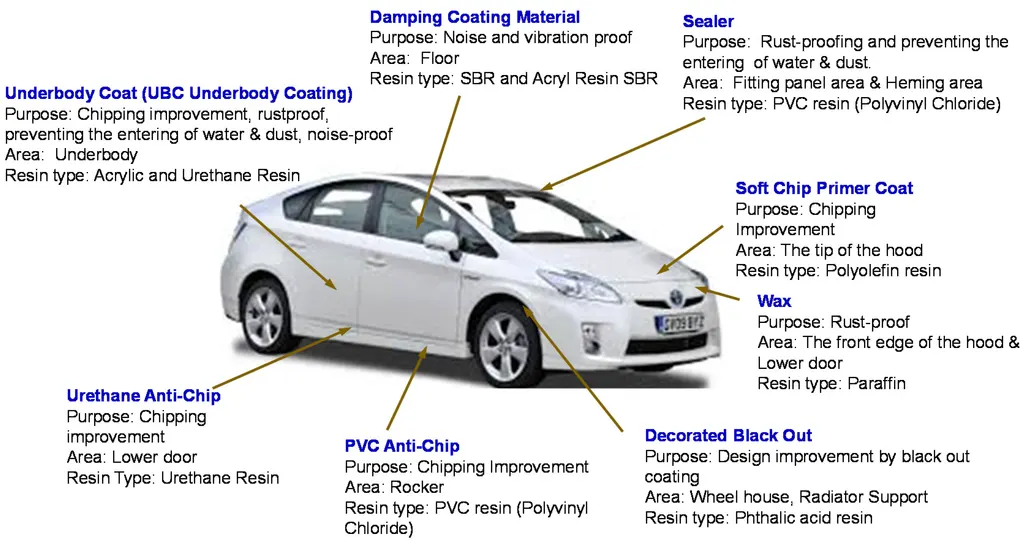
The areas of an automobile depicted in Figure above shows us these five steps of coating and other
additional coatings that are used
Types of Undercoating :
Polyurethane Undercoating
One of the option for undercoating vehicle is to use a polyurethane-based sealant. This type of vehicle undercoating is a little bit quicker and easier to apply.This type of sealant works by seeping into all cracks and seams, displacing salt and moisture and oozing around rusty areas to bond with and protect unoxidized metal. It also sands quickly in case we'll need to perform bodywork and can be painted over.
This type of car undercoating generally requires a little bit more surface prep work before applying sanding and applying an etching primer to bare metals before using are generally recommended.
Rubberized Undercoating
Rubberized Undercoating is easy to apply and offers sound-cushioning as well as protection from dust, moisture, and dents.In addition to one's undercarriage, rubberized undercoating is also safe to use on wheel wells and quarter panels, and dries to a soft rubbery finish that prevents further rust, damage, or moisture seeps. The coating can be painted over and, if necessary for bodywork, can be easily removed with an undercoating removal spray. Rubberized Undercoating is generally the best option for protecting one's vehicle's undercarriage, as it provides the simplest and best protective measures against corrosion.
Wax or Paraffin-Based Undercoatings
A paraffin-based undercoating is one of the cheapest option available to protect the undercarriage of one's vehicle. However, it has a disadvantage of wearing off quickly than other types of undercoating and there will be a need to reapply at least once every year. Wax-based undercoatings never truly harden. During application, they drip or flow into seams and cracks to provide protective properties. They are usually available in a spray gun canister or in an aerosol can and offer at least a base protection in moderately humid climates.
Asphalt-Based Undercoating
For standard vehicles, any of the above mentioned types of undercoating will provide sufficient protection. For large trucks and heavy machinery, asphalt-based undercoating provides a bit of extra durability against big stones, chips, and corrosion. Asphalt-based undercoating generally contains a little bit of rubberized material that sets up firmly and also helps soften noise this type of undercoating also needs more cure time than the other three, and is NOT paintable, making it one of the best to use only for undercarriages.
Pros & Cons of Underbodycoating:
Pros : The obvious pros of undercoating are the protection it provides to the carriage of one's vehicle. If we live in an area where salt and sand are used on the roadways in cold weather, these materials can be corrosive to our vehicle. Undercoating gives us an extra layer of protection against rust and corrosion, protecting our car. Undercoating will eventually wear out, but we can get years of protection from it. Even vehicles in warmer climates gain protection as debris is repelled and kept away from eating at the vehicle.
Apart from these it functions for:
-
Minimizing Sound: It minimizes the sound from underneath the car from drivetrain,brakes and suspension resulting a noiseless, smooth driving experience.
-
Insulation of heat: It insulates the passenger compartment of the car from extreme temperatures which can flow from underneath the vehicle providing a comfortable cabin experience.
-
Anti-chipping property: If any pebbles hits the coating it will not get chipped away hence it will protect the underbody from exposure to water and mositure.
Cons: When examining the vehicle undercoating there are also potential downsides to getting undercoating. Undercoating will work best on new vehicles that have not been exposed to road conditions. A used vehicle may already have residue on the bottom of the car or even have spots of rust and corrosion. Undercoating will not help you if corrosion already exists and the corrosion needs to be removed first before it can be applied, which can be expensive for us.
Hence it will not be suitable to :
-
Apply underbody coating to corroded part.
- Or the parts that have dents on it.
One of the major cons of undercoating is that it is too costly .
Conclusion: Different cars will have different thickness of undercoating and areas on which it is applied for the premium brands like ford will cover a larger area and the thickness of coating will also be more than the other segments of the same car. Thus undercoating is very important and every manufacturer must have it on their products for better quality and performance.