Underbody Coating
UNDERBODY COATING:
DEFINITION:
Underbody coating is a spray-type coating, which protects the vehicle's underbody from corrosion
It provides long-term protection from corrosion to the underbody of the car and it protects all the inner body panels, rails, frames, etc...
EXAMPLE:
during in rainy season, the roads are getting dirty and the underbody of the car is getting some rust, which can be protected from underbody coating.
UNDER-BODY COATING IS USEFUL FOR:(protects from)
- Environmental condition
- seal off seams
- corrosion
- insulates against cold and heat
- sounds and vibration
- impacts
- hide welds,repais&bodywork with spray
(not coated surface) (coated surface)
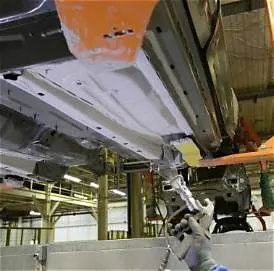
There are four types of underbody coating.
They are:
- Rubberized Underbody Coating
- Wax Based Underbody Coating
- Asphalt Based Underbody coating
- Polyurethane Underbody Coating
Rubberized Underbody Coating:
It is easy to apply and offers sound cushioning as well as protection from dust, moisture, and dings or dents.
rubberized undercoating is also safe to use on wheel wells and quarter panels, and dries to a soft rubbery finish that prevents further rust, damage, or moisture seeps.
The coating can be painted over and, if necessary for bodywork, can be easily removed with an undercoating removal spray.
it provides the simplest and best protective measures against rust and moisture.
Wax-Based Underbody Coating:
It is also called paraffin-based undercoating.
it is the cheapest and quickest way to protect the undercarriage of your car
It will be reapplied at least once every year
During application, they drip or flow into seams and cracks to provide protective properties.
They are usually available in a spray gun canister or in an aerosol can and offer at least a base protection in moderately humid climates.
Asphalt-Based Underbody coating:
it is mainly for large trucks and heavy, machinery vehicles.
asphalt-based undercoating provides a bit of extra durability against rocks, chips, and moisture.
it requires more cure time than the other three underbody coating
generally contains a little bit of rubberized material that sets up firmly and also helps soften noise.
It is NOT paintable, making it best to use only for the undercarriage.
Polyurethane Underbody Coating:
This type of vehicle undercoating is a little bit quicker and easier to apply.
It is stored in a canister ready to preload into an application gun.
This type of sealant works by seeping into all cracks and seams, displacing salt and moisture, and oozing around rusty areas to bond with and protect the unoxidized metal.
generally requires a little bit more surface prep work before applying -- sanding and applying an etching primer to bare metals before using are generally recommended.
Process:-
- remove the rust completely first and then proceed.
- gives a quick rinse and let it dry. Using a degreaser to clean the metal first is also recommended.
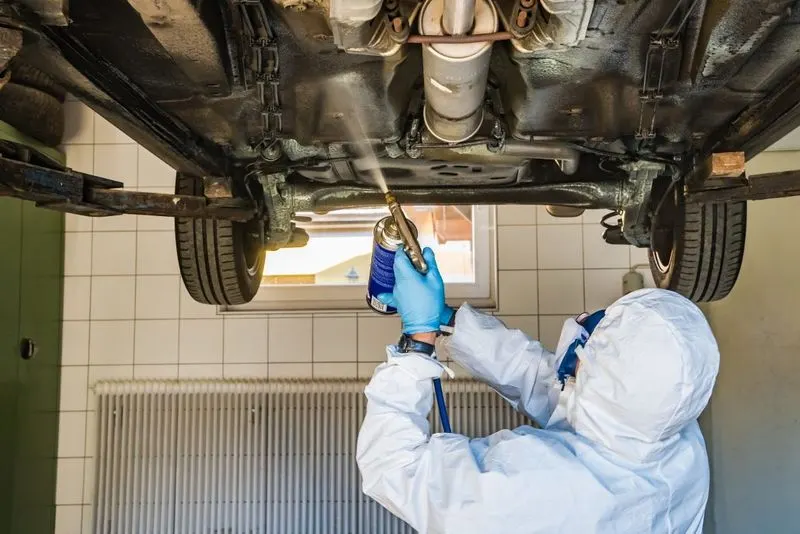
- A disposable spray gun will work best. A Schutz disposable spray gun is the best option.
- For the type of vehicle undercoating you've selected, two coats will provide the optimum protection. Allow ample dry time between coats.
-
Let the undercoating cure completely (usually overnight) before driving your vehicle on the road.
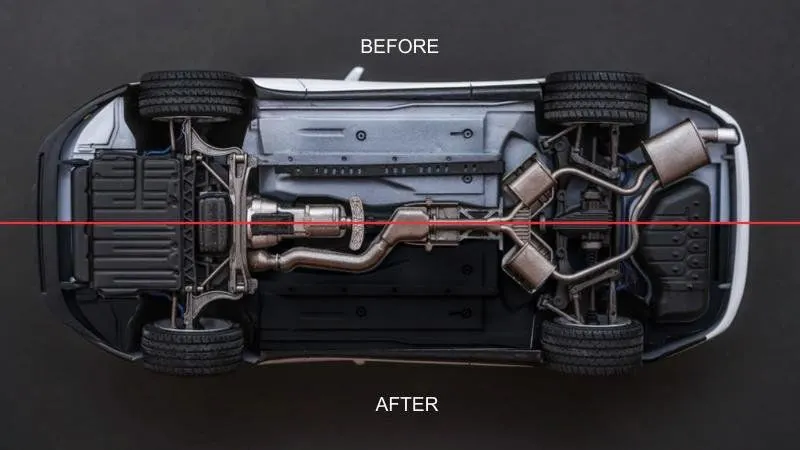
Advantages of Undercoating:
- It provides a carriage of a vehicle.
- If you live in an area where salt and sand are used on the roadways in cold weather, these materials can be corrosive to your vehicle.
- it gives an extra layer of protection.
- it reduces the noise. (NVH)
- HEAT INSULATION: It insulates the interior of the car from extreme temperatures from beneath the vehicle providing a comfortable cabin experience
- prolong car life
- It protects from rust
Disadvantages of an undercoating:
- Undercoating will not help you if corrosion already exists
- It is expensive
- It requires more time to apply and the cure time is also more.
- The life span of the coating is generally about 3-5 years, to get the benefits to need to reapply the coating after a time period.
- (it added weights )underbody coating may add a minimal amount of weight to the vehicle's body
- It works best on new cars.