Underbody Coating
INTRODUCTION
Underbody caoting is a thick resilient coating applied to the underbody or chassis of an automobile to protect against impact damage from small stones, which would rapidly chip ordinary paint, allowing rusting to begin.
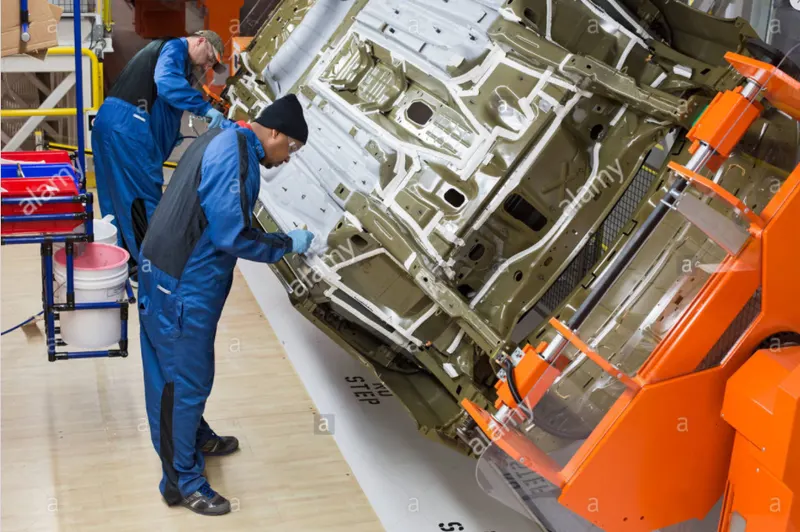
- Underbody coating provides long term protection from corrosion to car’s underbody. It also protects parts like internal body panels, frame rails and other inner cavities that are not physically accessible but are prone to corrosion.
- A car’s underbody is exposed to the most wear and tear caused by muddy water, potholed roads, stones and other obstacles on the road. Because it’s not in plain sight, we often do not see the damage.
- In Indian road conditions, a car’s underbody is most prone to corrosion. Underbody coating provides long term protection from corrosion to the car's underbody. It also protects parts like internal body panels, frame rails and other inner cavities that are not physically accessible but are prone to corrosion.
- Underbody protective coating is used to protect the vehicle chassis from external environment, to ensure the integrity and safety of the car. The use of underbody coating plays a very important role in the service life of the vehicle. In general, it is required to spray such a protective coating in the manufacturing of the new car
TYPES OF UNDERBODY COATING:
1) Rubberized underbody coating :-
This is generally thought of as the best underbody coating for your car. It preserves the underbody well, protecting it from scratches. Applying this to the undercarriage is not much of a hassle either.
2) Wax based underbody coating:-
This – more or less – ephemeral undercoating will wear away in a few months’ time. On the upside, wax-based undercoating puts up a big fight against moisture. It is also the most affordable option out there.
3) Ashphalt based automotive undercoating:-
Best suited for lorries, trucks and large vehicles this provides a greater degree of protection compared to rubber-based coatings. However, asphalt-based coatings contain little amounts of rubber for sound-insulation purposes. The process of applying this coating is a bit time-consuming though
4) Polyurethane underbody coating:-
This coating closes up splits and fractures on the underbody of the vehicle. It offers up good protection against corrosion and also bonds with the metal. Unlike in the case of asphalt-based coating, you can paint over the polyurethane coating.
why do we need underbody coating ?
To understand the science behind how undercoating protects the vehicle from rusting, you should know about rusting first.
Rusting occurs when the current passes through anode (a piece of metal that gives up electrons like a dude making it rain at a strip club) to the cathode (metal piece that accepts electrons – like that aforementioned stripper on the pole) through the electrolyte (a liquid supporting the movement of electrons).
The electrolyte provides the fuel, which is oxygen in this case, to the anode. Oxygen reacts with the anode, releasing some electrons free. The electrons move from the electrolyte to cathode. The metal at anode starts disappearing and depositing as rust. This rusting of iron or steel results in corrosion
COCLUSION:
As a final conclusion we can say that Underbody coating is a must to make sure the underbody is given a layer of protection from all grime and grit and annual clean up and touch up is necessary.