Underbody Coating
Underbody Coating
INTRODUCTION
In Indian road conditions, a car's underbody is most prone to corrosion. Underbody coating provides long-term protection from corrosion to the car’s underbody. It also protects parts like internal body panels, frame rails, and other inner cavities that are not physically accessible but are prone to corrosion.
Underbody coating is usually a dense cladding (often based on rubber) applied uniformly to the undercarriage of the automobile. It is normally sprayed or painted on when the car is just out of the dealership and is clean. But even if you are getting the undercoating applied after a couple of years, it’s fine too. This is because it can prevent further damage to the undercarriage.
The main purpose of undercoating is to check rust especially in the body components like frame rails along with other exposed metal parts. Underbody coating can also reduce wear and tear.
The main thing to notice is that one should only go for underbody coating if the car model is 2-3 years old and there is some kind of rust that is being detected.
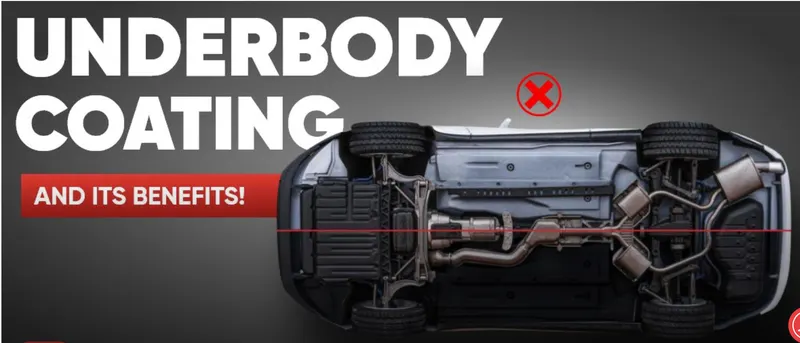
Underbody Coatings - These coatings come in thin-film and foamy varieties and are meant to offer a crucial protective barrier between the road and the susceptible underbody surfaces. The foaming-type solutions provide excellent sound dampening capabilities in addition to protecting against moisture and damage.
Process of undercoating: the whole process of underbody coating can be divided into 3 steps
Cleaning the Underbody: First of all, in the process of underbody coating, the car is washed from down under and let it dry for a few minutes. This is done to remove any kind of dirt impurities from under the car. To begin the undercoating procedure, we must remove any dirt and impurities from the chassis. It's yet another technique to keep your automobile in good working order. This will necessitate the use of a hydraulic hoist or lift to accomplish this stage properly. Here's how to clean the underneath of the car.
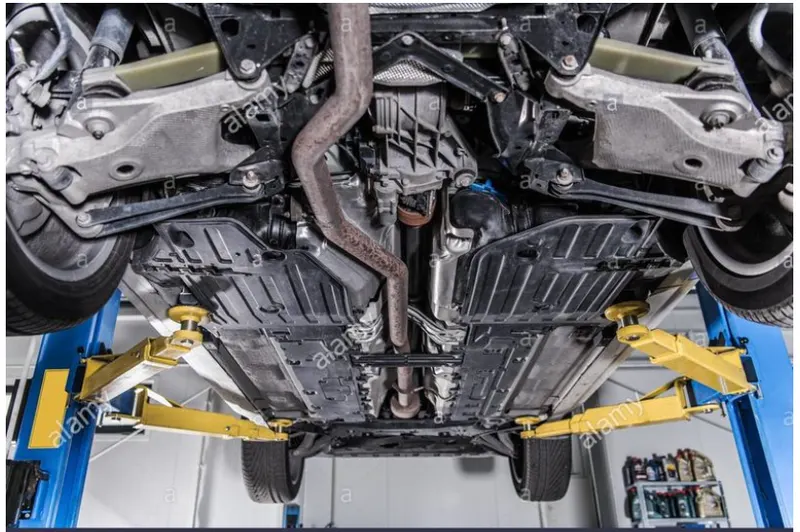
grease remover: To remove oil and dirt from the undercarriage, use a high-quality commercial-grade grease remover. Follow the instructions on the cover or as suggested by the manufacturer. Allow the remover to soak for a few moments before wiping it away with a microfiber cloth or shop rag.
scuffing: Using a 200 to 400 grit, remove scratches and other stubborn impurities.
Grinding: Grind away any existing hard impurities or rust from the undercarriage and other components that need to be repaired. You may simply remove the debris using a gentle grinding pad, but remember to wear eye protection while doing so.
Coating Primer: Applying DIY consumers will necessitate the use of a primer. Primers are used as a foundation coat. To get the best results, you must follow the manufacturer's recommendations. Zinc is generally present in high concentrations in the primers that are suggested. Even if the protective layer is breached, zinc helps to prevent corrosion.
After this, the silencer is wrapped in a sheet since its coating will be done separately. as it is one of the hottest car parts hence normal rubberized coating is not applied on it, a special zinc coating is done on it.
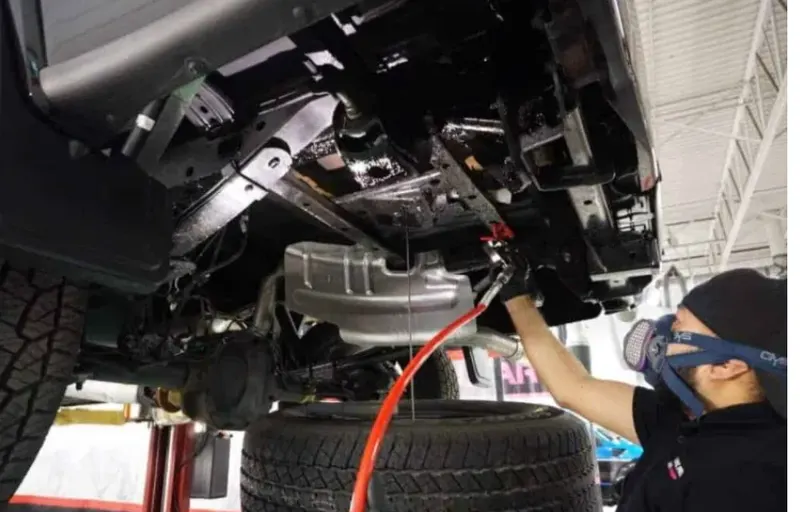
Applying Undercoating For the rest of the car underbody a rubber-like coating is applied most probably the 3M UNDERBODY TREATMENT.3M™ Underbody Treatments offers a long-term solution for issues related to corrosion and rust.This is the last stage in the process. Bed liners are comparable to the undercoating sprays. The majority of products are applied in two layers, one on top of the other.The initial layer should be thin and completely cover the surface. Allow for at least an hour of drying time, especially if you're using a rubberized undercoat. After the first coat has dried, add the second coat liberally. Don't forget to use it according to the instructions. Then, the 3M™ Protective Coat is applied with Body Schutz Gold Gun or Undershield gun. The 3M™ Body Schutz/Undershield is a hard coating on the underbody of the car, that is fast-drying, paintable, rubberized, non-toxic, and chip-resistant. It also minimizes sound from underneath the vehicle and insulates against the heat and cold.
rubberized undercoating
This Underbody Treatment protects the car underbody from rust, increasing the longevity of the car .now for the silencer part zinc coating is done since zinc has anticorrosive properties in it.
The whole process is done. After you've completed the procedure, you'll need to protect the undercarriage from seawater, road filth, and mag chloride, since these pollutants are corrosive and cause oxidation and corrosion.
Some of the safety regards that one must follow if doing the undercoating process:
Clean the underside of your body. Begin by washing the vehicle's undercarriage.This necessitates the use of a hoist to lift the car.
Clean the vehicle's underbelly using a degreaser.
Using a grinder, remove any rust from the undercarriage. When doing so, make sure to wear eye protection.
Sand any residual rust using metal-specific sandpaper. A sandpaper with a grit of at least 220 is required.
The underbody should be painted and primed. It's time to prime and paint the vehicle's underbelly after removing any corrosion.
Begin by priming all of the places that were previously rusted. A high zinc primer is one of the best primers to use. Allow the primer to dry completely.
The next step is to paint black automotive paint over the primer. Allow time for the paint to dry.
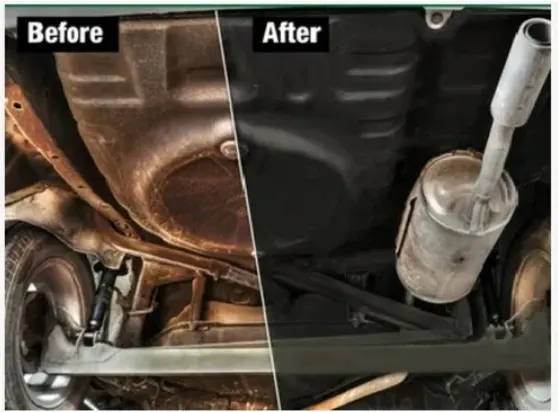
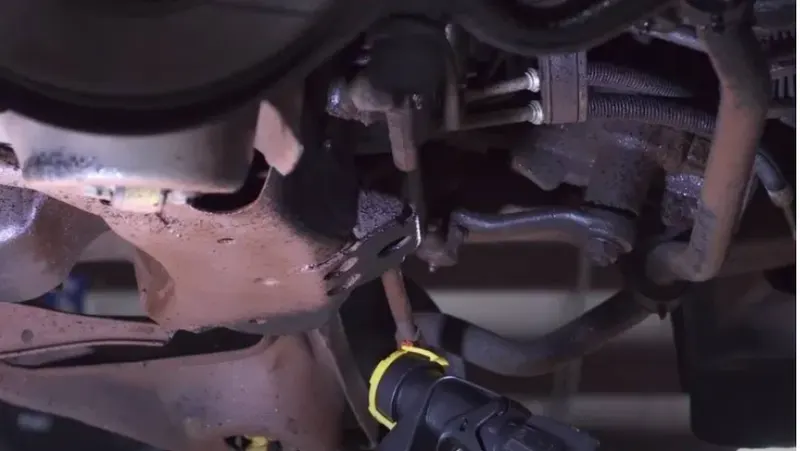
Before:
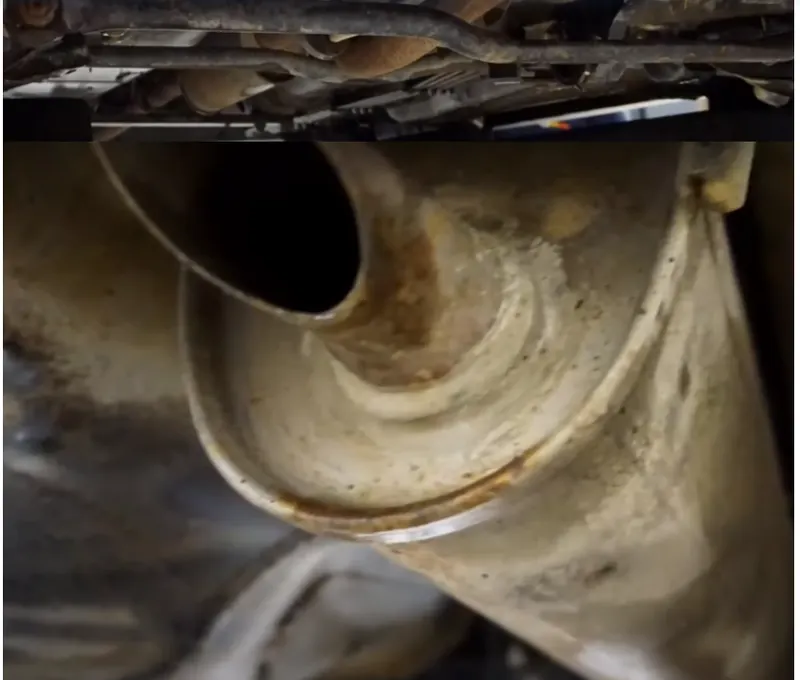
AFTER:
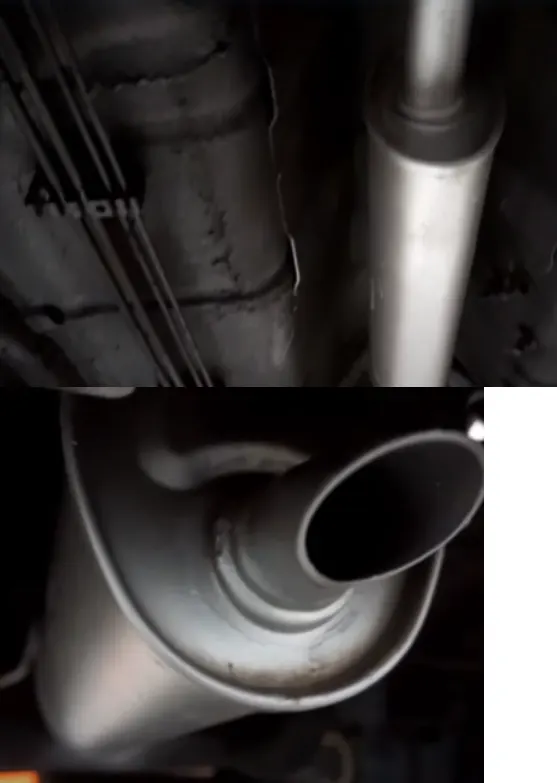
types of undercoating:
Underbody Coating
You have a few alternatives when it comes to getting your car rustproofed or having an undercoating done. Whether you choose cutting-edge technology or a tried-and-true approach, understanding the many alternatives should help you select the best one for your car.
Dripless oil spray method: It is a wax-like material that is applied to the whole body of the car and hardens after drying.
One disadvantage of dripless oil sprays is that they require holes to be bored into the car's body at precise places to be effective.
The spray also has a high viscosity, which means it doesn't always go into all of your vehicle's nooks and crannies.
Drip oil spray method: This is the most popular rust prevention method.
Once sprayed, drip oil sprays have a tendency to leak until they dry. This dripping might persist up to 48 hours after being applied.
The more liquid nature of drip oil sprays, as opposed to dripless types, allows it to reach more parts of your car, however, holes must still be made in your vehicle's fenders, doors, and other locations.
Spray method:
The most frequent method utilised by dealers is a spray. The spray is a tar-like material that is sprayed onto the vehicle's underside. It acts as a barrier against corrosion caused by salt, moisture, and oxygen.
You can also buy it as a DIY product, but because the whole magic is in the application process, it's best to have it done by a dealer, especially if you have a new vehicle.
Electronic method:
This tiny gadget may halt the corrosive effects of rust by using a modest electric current.
You have the option of having these electrical gadgets installed at the dealership or saving money by purchasing them elsewhere.
Because this is a relatively new technology, the evaluations on these gadgets are varied.
ADVATAGES OF UNDERBODY COATING:
Fights Rust
Rust
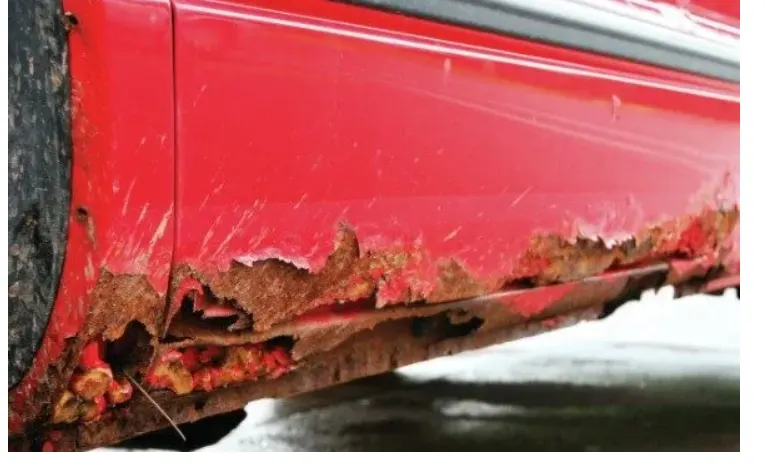
It plays an important role in keeping corrosion at bay. Underbody coating can come in handy especially if you live near the sea, where there is too much humidity, and rusting is just one of those everyday things. You should also seriously consider undercoating if you reside in a place where it snows in winter.
Absorbs Noise
Noise in the cabin is reduced. The flexible foaming type underbody covering creates a strong, sound-deadening barrier that lowers stone and cinder noise, resulting in a more pleasant driving experience., very thick undercoating can soften the noises that reach the cabin. Since the undercoating is often made up of rubber it absorbs some of the rackets. The occupants of the car could spare themselves of the road noises – at least up to a certain extend.
Reinforcement
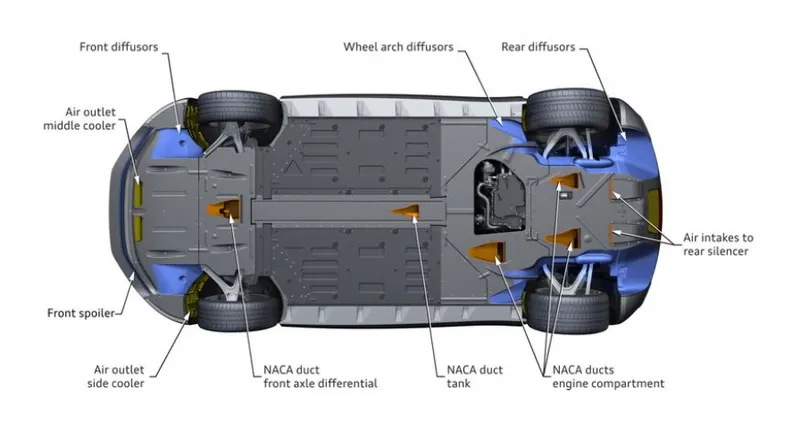
If your car comes with stock underbody coating, using another coating on top of it, is not going to hurt. It will offer additional reinforcement, protecting the underbody from water, road debris, gravel, and small pebbles. There would also be a lesser chance for the factory coat to flake away.
Prolong Car’s Life 
Wall Poster - Fast and Furious Vin Diesel With Car Paper Print - Personalities posters in India - Buy art, film, design, movie, music, nature and educational paintings/wallpapers at Flipkart.com
Good undercoating not only defends the underbody from corrosion but also protects the engine and transmission as well! Less rusting coupled with slower wear and tear can surely add years to the lifespan of your vehicle. There would be fewer dents, dings, and scratches on the undercarriage for you to fret about.
The thin-film type underbody coating has a thinner application and lowers specific gravity, yet owing to its improved composition, it performs as well as thicker, heavier coatings.
The Disadvantages of Undercoating
Most cars last five years before showing signs of rust.
It will have no effect on the corrosion that is already there.
It is most effective on new automobiles.
Your vehicle's warranty may be invalidated if you use a third-party undercoating provider.
It adds to the vehicle's weight.
An undercoating is not indestructible.
For optimal results, it should be administered every 3 to 5 years.
Conclusion:
The underbody coating can be an effective way to make the car last longer hence it is a good protection for the car.