Underbody Coating
Underbody Coating:
In Indian road conditions, a cars underbody is most prone to corrosion. Underbody coating provides long term protection from corrosion to car’s underbody. It also protects parts like internal body panels, frame rails and other inner cavities that are not physically accessible but are prone to corrosion.
Fig: Underbody coating process Before and After
Underbody coating is usually a dense cladding (often based on rubber) applied uniformly to the undercarriage of the automobile. It is normally sprayed or painted on when the car is just out of the dealership and is clean. But even if you are getting the undercoating applied after a couple of years, it’s fine too. This is because it can prevent further damage to the undercarriage.
The main purpose of undercoating is to check rust especially in the body components like frame rails along with other exposed metal parts. Underbody coating can also reduce wear and tear.
Purpose of applying underbody coating:
Some of the factors that make underbody Anti-rust coating essential before stepping into the monsoon season.
- Protect against rust & corrosion
- Reduces NVH(Noise Vibrations Harshness) Levels
- Prevents Paint Chipping,scratches
- Protects Vital Components- Work as Reinforcement
- Protecting its most exposed area from moisture,dirt,salt and more.
- Working as Heat Insulation
- Making your car smooth
- It extends the lifespan of your car
Major Reasons why undercoating process required:
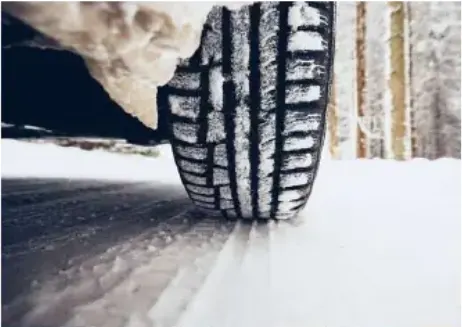
Corrosive road salt
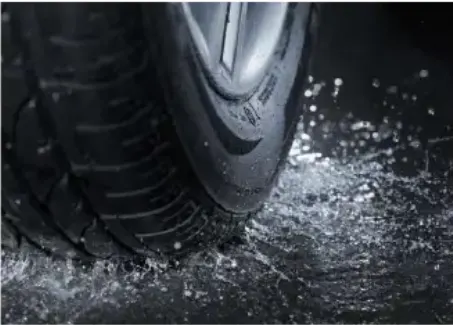
surface water ingress
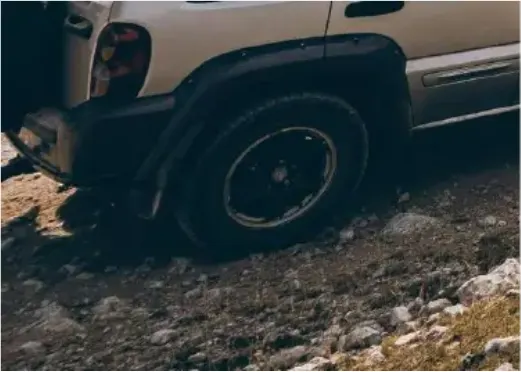
stone chipping
Methods used for the undercoating applicatiion process:
- Spray-On "Rubberized" Undercoating
- Electronic Rust Inhibitors
- Lanolin Wax/Wool Grease
- Dripless Oil Spray
1. SPRAY-ON "RUBBERIZED" UNDERCOATINGS
Spraying an automotive undercoating may be time consuming, expensive, and potentially dangerous, but it's your best option for keeping rust and corrosion at bay. Perhaps the most common method of undercoating a vehicle, is via the use of a "rubberized" spray-on product. Utilizing a tar-like substance that has been infused with solvents and protectants, spray-on undercoatings stick to whatever they touch.
Once cured they act as a barrier against salt, moisture, oxygen, and any other foreign substance that may lead to rust and corrosion. We'll delve a bit deeper into the grimy details of what makes these opaque products so popular a bit later.
2. ELECTRONIC RUST INHIBITORS
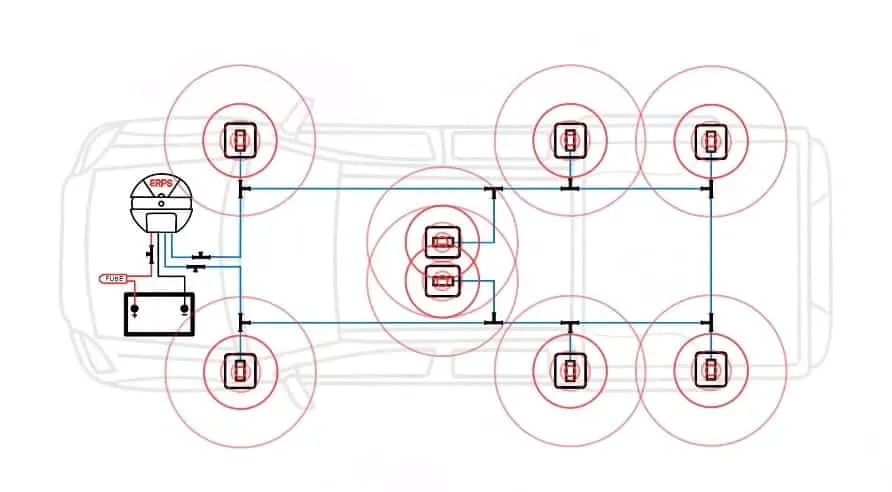
A diagram showing how electrical current emanates throughout a vehicle's chassis. Electronic rust inhibitors are marketed as a permanent, discreet, easy to install solution to corrosion. It may sound crazy, but this is actually a brilliant idea, if you are able to get it to work.
While the notion of electrical current coursing along the underbelly of a vehicle is undeniably odd, it has been proven to work, but not in the way that one might expect. More on that a bit later as well...
3. LANOLIN WAX/WOOL GREASE
When choosing an undercoating, the lanolin approach remains a proven, if not slightly unusual rust prevention solution. Commercially, lanolin coatings are used as both a rustproof coating and as a lubricant, with everything from ship hulls and rigging equipment, to heavy-duty excavation machines and production facilities relying upon this water-repelling corrosion inhibitor.
On automobiles, lanolin fills in all of the nooks and crannies of the chassis with a sticky, wax-like substance that's been derived directly from... sheep glands. It may sound strange, spraying sheep funk across your vehicle's underbelly, but it really does work.
On the downside, curing times will vary depending upon air temperature and how heavy of a coating has been applied. So be ready for some downtime between car rides after this stuff has been sprayed.
4. DRIPLESS OIL SPRAY
The final common undercoating option is dripless oil spray. Once allowed to harden on a surface, this wax-like, colorless substance boasts the ability to repel moisture and corrosion for years on end.
Just note that dripless undercoating oil sprays typically require holes to be drilled into the body of the vehicle at specific points in order for the product to penetrate areas that are prone to rusting-out.
Different Types of Vehicle Undercoating:
Having undercoating professionally applied to your vehicle can be expensive, but fortunately, if your budget is tight, you can do it yourself for a fraction of the price. Here are some of the various types of undercoating available.
1)Rubberized Undercoating:
Rubberized vehicle undercoating is easy to apply and offers sound-cushioning as well as protection from dust, moisture, and dings or dents.
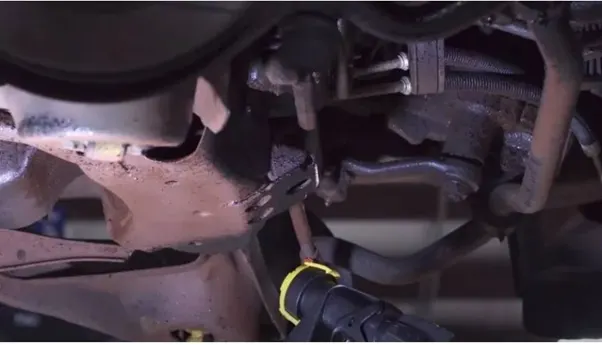
In addition to your undercarriage, rubberized undercoating is also safe to use on wheel wells and quarter panels, and dries to a soft rubbery finish that prevents further rust, damage, or moisture seeps. The coating can be painted over and, if necessary for bodywork, can be easily removed with an undercoating removal spray.
Overall, rubberized coating is generally the best option for protecting your vehicle's undercarriage, as it provides the simplest and best protective measures against rust and moisture.
2)Polyurethane Undercoating:
The other option for undercoating your vehicle is to use a polyurethane-based sealant. This type of vehicle undercoating is a little bit quicker and easier to apply.
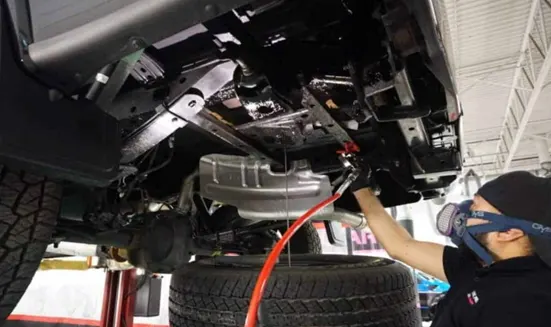
Oftentimes, polyurethane undercoating will come in canisters ready to preload into an application gun. This type of sealant works by seeping into all cracks and seams, displacing salt and moisture and oozing around rusty areas to bond with and protect unoxidized metal. It also sands quickly in case you'll need to perform bodywork and can be painted over.
On the flipside, this type of car undercoating generally requires a little bit more surface prep work before applying -- sanding and applying an etching primer to bare metals before using are generally recommended.
3)Wax or Paraffin-Based Undercoatings:
A paraffin-based undercoating will be the cheapest and quickest option available with which to protect the undercarriage of your vehicle. However, keep in mind that it will wear off quicker than other types of undercoating and will need to be stripped and reapplied at least once every year.
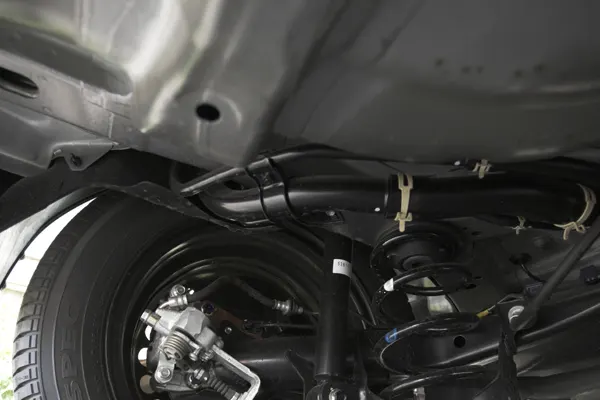
Wax-based undercoatings never truly harden. During application, they drip or flow into seams and cracks to provide protective properties. They are usually available in a spray gun canister or in an aerosol can and offer at least a base protection in moderately humid climates.
4)Asphalt-Based Undercoating:
For standard vehicles, any of the aforementioned types of undercoating will provide sufficient protection. For large trucks and heavy machinery, asphalt-based undercoating provides a bit of extra durability against rocks, chips, and moisture.
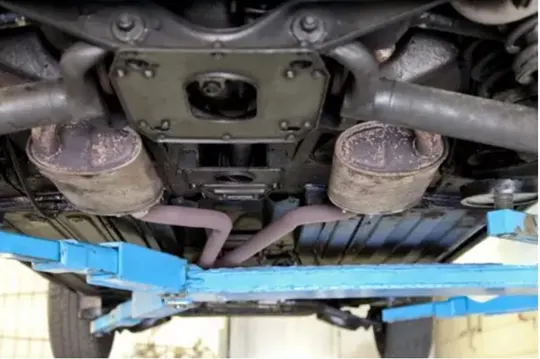
Asphalt-based undercoating generally contains a little bit of rubberized material that sets up firmly and also helps soften noise. Generally sold in five gallon containers, this type of undercoating also needs more cure time than the other three, and is NOT paintable, making it best to use only for undercarriages.
Pro's of Undercoating:
Fights Rust
It plays an important role in keeping corrosion at bay. Underbody coating can come in handy especially if you live near the sea, where there is too much humidity, and rusting is just one of those everyday things. You should also seriously consider undercoating if you reside in a place where it snows in winter.
Absorbs Noise
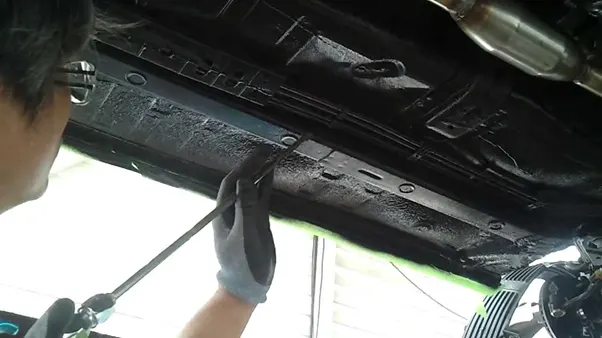
Believe it or not, very thick undercoating can soften the noises that reach the cabin. Since the undercoating is often made up of rubber it absorbs some of the rackets. The occupants of the car could spare themselves of the road noises – at least up to a certain extend.
Reinforcement
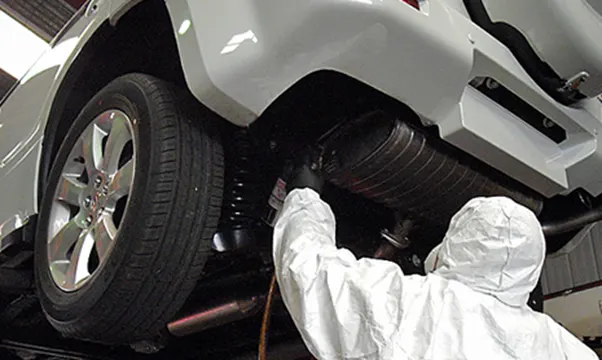
If your car comes with stock underbody coating, using another coating on top of it, is not going to hurt. It will offer additional reinforcement, protecting the underbody from water, road debris, gravel and small pebbles. There would also be a lesser chance for the factory coat to flake away.
Prolong Car’s Life
Good undercoating not only defends the underbody from corrosion but also protects the engine and transmission as well! Less rusting coupled with slower wear and tear can surely add years to the lifespan of your vehicle. There would be fewer dents, dings and scratches on the undercarriage for you to fret about.
Heat Insulation:
It insulates the interior of the car from extreme temperatures from beneath the vehicle providing a comfortable cabin experience.
Con's of Undercoating:
It is less helpful if corrosion is already present.
It works best on new cars.
Most vehicles make it five years before corrosion begins to show.
It adds weight to the vehicle.
An undercoating is not impervious to damage.
A third-party vehicle underbody coating may void warranty.
References:
https://avalonking.com/blogs/guides/undercoating-the-good-the-bad-and-the-rusty
https://gomechanic.in/blog/underbody-coating/
https://www.scribd.com/document/502049283/Underbody-coating-and-its-purposes