Underbody Coating
UNDER BODY COATING
Under body coatings are the protective method of vehicles from external environment. It protects the parts likes internal body panel, frame rails and other inner cavities. These are not visible parts so long time these are get proper maintains it will be corroded. It is the major issue for the vehicle chassis. The underbody coating also helps in reducing the noise and vibration hardness level of car. Under body coating protect against rust and corrosion, stone chips external nfluence.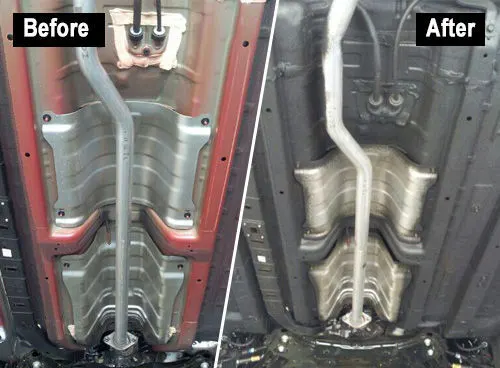
TYPES OF UNDER BODY COATING
Rubberized under body coating
Rubberized under body coating is generally best of your car. It protects under body from rust, scratches, damages and moisture seeps. It is the combination of rubber and paint. Its like soft rubbery finish and easily removable coating.
Wax Based Underbody Coating
This coating almost enamel underbody coating. It is easily wear in few months. It protects surely against moisture. They are usually available in spray gun canister or in an aerosol can and offered base protection in moderately humid climates.
Asphalt Based Underbody Coating
For large trucks and heavy machinery, asphalt-based underbody coating provides a bit of extra durability against rocks, chips and moisture. Best suited for lorries, trucks and large vehicles this provides highly compared to rubber-based coating.
Polyurethane Underbody coating
This coating closes up splits and fractures on the underbody of vehicles. It offers good protection against corrosion and bold with the metal. This under body coating will come in Canister ready to preload inti an application gun.it also sands quickly in case you will need to perform body and can be painted over.
Modern Automotive Coating Process
Pre-treatment
It consists of cleaning the body surface to remove remaining oil from the stamping process and welding residues through three primary liquid dip processes of degreasing, conditioning, and phosphating. Pre-treatment helps the primer to bond onto the metal. A phosphate treatment applies an insert layer of metal phosphate, providing resistance to corrosion spread. The degreasing solution is composed of alkaline salts and surfactants and can include caustic soda, trisodium phosphate, and sodium carbonate. The surface conditioning also called activation which creates nucleation sites for phosphate crystal growth. It increases the number of crystallization nuclei on the metal surface that enhance bonding mechanisms for the sub sequent phosphate sequence.
.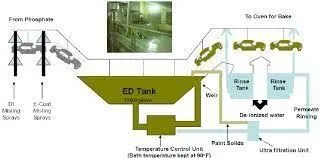
The metal under body and frames of automobile are coated to prevent corrosion, whereas other areas like the roof are not rust-proofed. When not coated to prevent corrosion, the structural metals are primed before applying additional coating. The E-coat solution consists of a mixture of resin, binder, a paste containing the pigment, and a solvent. It involves dipping automobile bodies into the coating solution and passing an electric current through the body and liquid ED paint solution. Because of charged nature of this coating process, the ED paint penetrates into places a spray would not reach. The ED paint is promoted to bond with the metal substrate and a uniform coating thickness is produced. The result is an insoluble deposited layer with a very high solids content and firm adherence to the pre-treated body.
Rust proof material
The third step is under body coating and seam sealing using PVC and displays the lower door section and rocker panel locations where pvc or urethanes are applied as an anti-chipping protection. During this third step, it is also typical to apply a soft tip primer coat that improves the chipping resistance.
Primer
Once the anti-corrosive layer has been electroplated on, primer is applied to add smoothness and allow a top paint layer to stick to the body. Frist, the body is lowered off the chains to rest on a floor apparatus attached to a track. To apply primer the body moves down track into a special sealed room called flow chamber. The flow chamber features a constant flow of air that takes vaporized primer particles from opening in the ceiling where they gently deposit on the exterior for a uniform thickness. Meanwhile, the bottom of the chamber has several outlet openings attached to a vacuum removing excess primer to be collected and reused. After about 10minutes, the body is moved down the track to another drying room.
Base coat
Once the primer has dried, the body moves into another flow chamber for the application of the base coat. The base coat constitutes the actual colour of the car, including textual details like aluminium flakes for a sparkle effect.
Clear Coat
Just as the electrocoating protects metal from corrosion, the clear coat protects the base coat against light scratches, organic solvents, water and UV sun damage. As the name suggest, it is transparent, show casing the basecoat like glass does a picture.