Hood design-Week 2
Hood Design in UG NX
Objective:
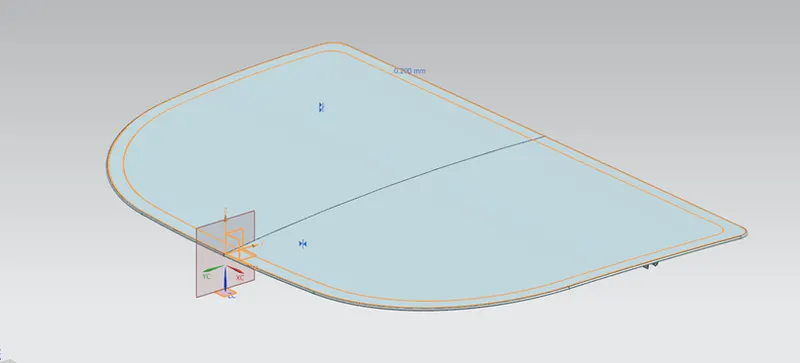
Design a hood outer panel, hood inner panel, hinge and latch with its reinforcements and to draw a trajectory of hinge assembly and latch.
Introduction
The Hood or bonnet is a hinged cover of engine compartment. Hoods need easy to access for any repair and maintenance. In design view hood should meets some specific condition like pedestrian safety, hood head zone for the lock Stricker, force distribution when front collision and manufacturability etc.
A hood assembly consist of hood outer panel, hood inner panel, latch and Stricker, hinge, support rod or gas stay. Support rod or gas stay is component to hold a hood when opening position. Support rod is just a rod it can developed some structural ideas like bends and mounting part open and closed condition. In support rod used vehicles the hood was opened by manually by a man power. So, it is cost effective and simple to design. But gas stay requires no man power but they are costly.
Design Parameters:
Hood Thickness Information
Outer Panel thickness =.75mm
Inner Panel thickness =0.75mm
Reinforcement Thickness =1.5mm
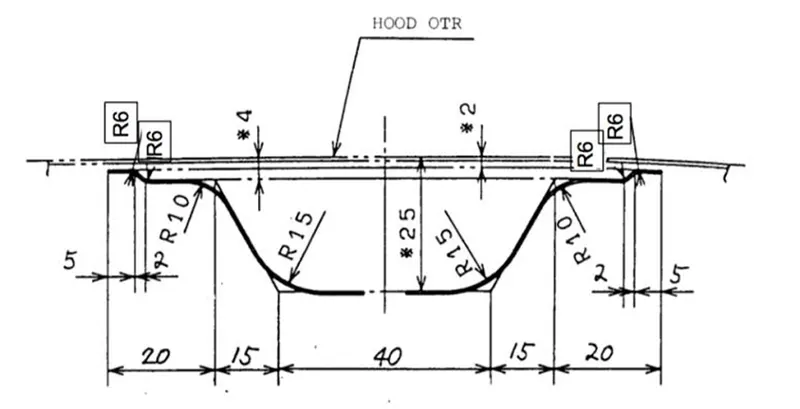
Master Section
Hood outer panel
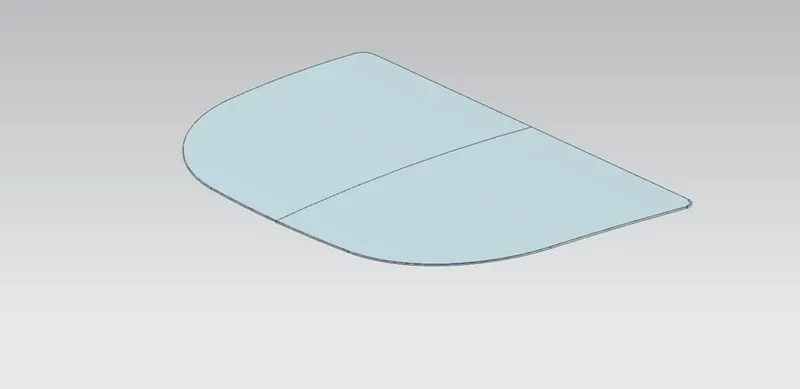
Outer panels are the aesthetic elements of a car. It is the styling team who provide the skin for the outer panel. Its shape position, dimensions are already predefined or else to get from the styling team. While designing the hood we should give more importance to pedestrian safety and frontal crash. The outer panel was attached to the inner panel by hemming operation. So, we should give hemming flange and relief to outer panel. We also provide mastic sealants between outer panel and inner panel to avoided vibration.
Hood Inner panel
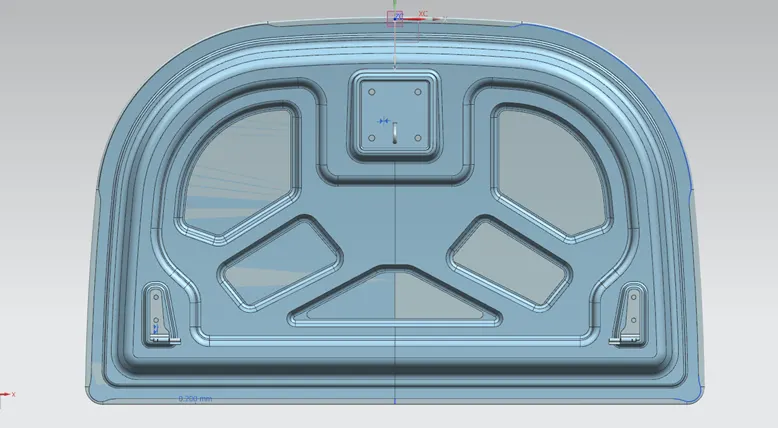
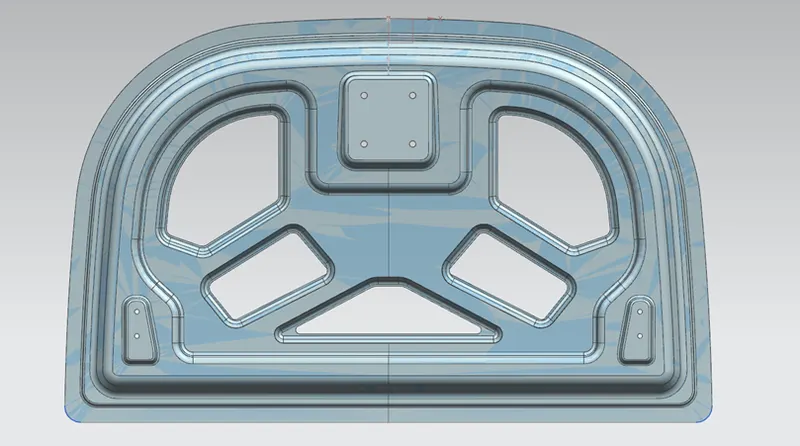
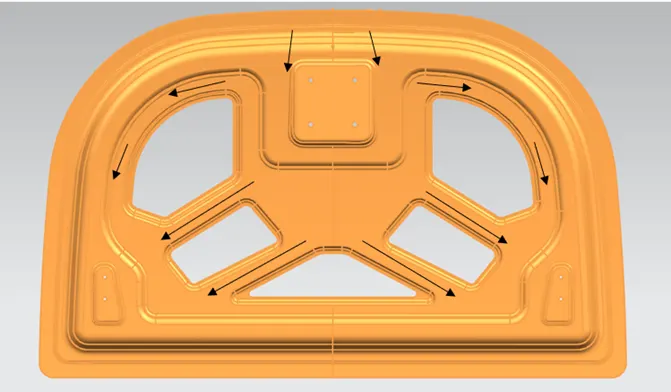
Inner panel is strengthening element of outer panel, because these are very thin sheet. In inner panel we have provide some embosses shape to improve the stiffness of the panel and also its position and shapes also determines the direction of the force distribution during frontal collision. The force always away from the passengers toward side of the car. Then we provide embosses for latch and hinge elements after fixing the location.
REINFORCEMENT
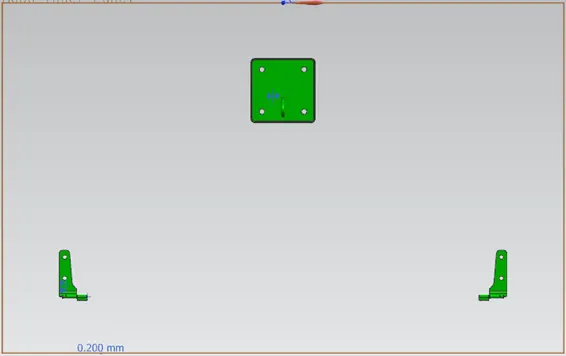
Reinforcements are provided to improve strength locally. Usually, it was used in hinge and latch fixing area. Thickness of reinforcements are usually higher than the inner panel. According to the design requirement and cost effective are determine the thickness of reinforcement.
LATCH TRAJECTORY
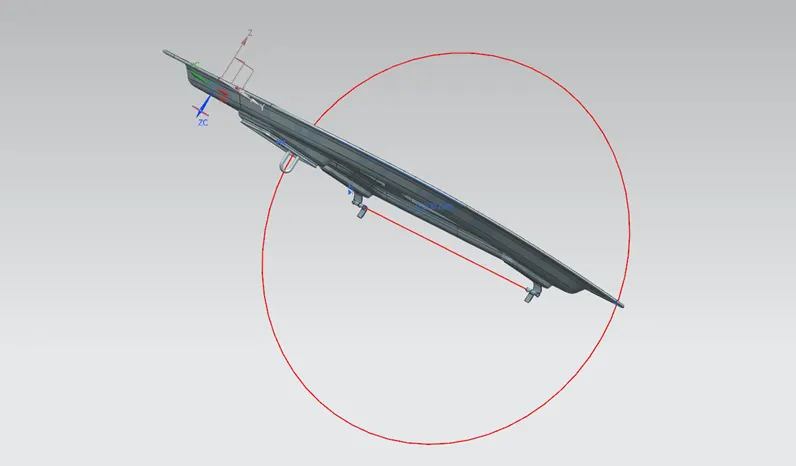
Latch trajectory is given by the circle drawn from the hinge axis point. Hinge axis point is the centre point of the hinge axis. Frist, we have fixed the hinge position then we should plot the trajectory circle for the latch. For proper mating condition the Stricker axis through the tip of the Stricker should be tangential to the latch trajectory.
Mastic Data
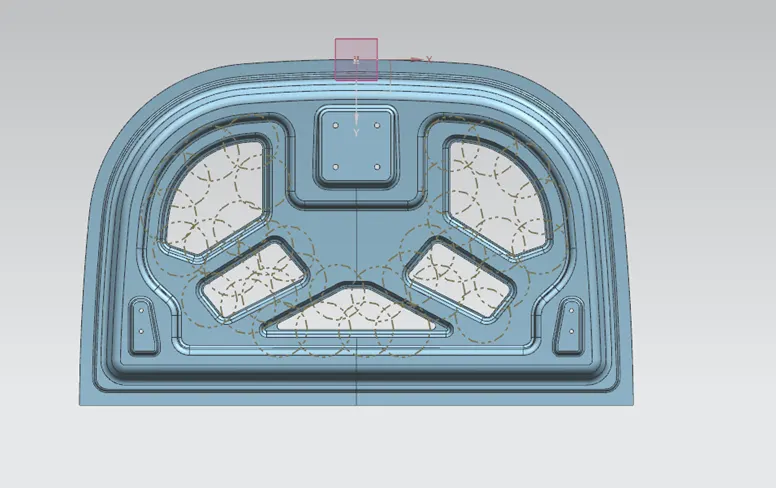
Mastic sealants are the elastic compound like rubber.it is applied between inside of outer panel and inner panel. Hood commonly possess large surface area and hemming can only be provided through its boundary. We can’t use other techniques like welding, riveting etc. because these are leave mark on the outer panel and spoil the aesthetic look. Each mastic sealants are placed in specified spots. Each spot of mastic sealants has its effects around a circle region of 80mm diameter Thus the mastic points are arranged in such a way that it covers the areas away from the hemming which are more vulnerable to vibrate.
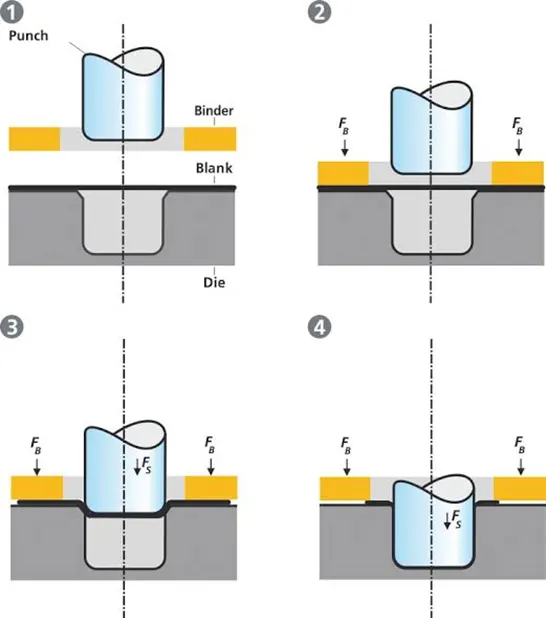
Deep Drawing
Deep drawing is a sheet metal forming process in which a sheet metal blank is radially drawn into a forming die by the mechanical actin of a punch. It is thus a shape transformation process with material retention. The process is considered “deep” drawing when the depth of the drawn part exceeds its diameter
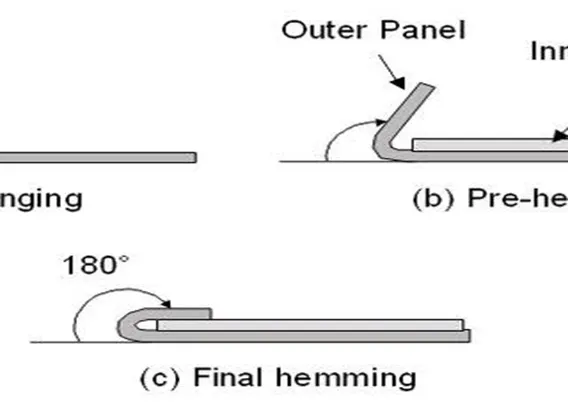
Hemming
Hemming and seaming are to similar metal working processes in which a sheet metal edge is rolled over onto itself. Hemming is the process in which the edge is rolled flush to itself while a seam joins the edges of two materials. In car part production hemming is used in assembly as a secondary operation after deep drawing, trimming and flanging operation to joint inner and outer panels. Typical parts for this type of assembly are hoods, doors, trunk lids and fenders
Final assembly