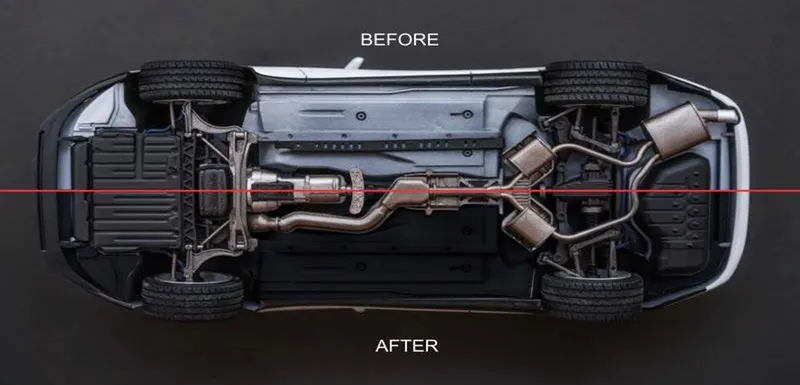
Underbody Coating
UNDERBODY COATING
Underbody Coating is a sprayable coating, which protects the under surface of the vehicle from corrosion.
Underbody coating provides long term protection from corrosion to car's underbody. It also protects parts like internal body panels, frame rails and other inner cavities that are not physically accessible but are prone to corrosion.
Protecting the underbelly of the car should be our top priority. Especially during monsoon when heavy precipitation causes the roads to become mini-rivers and our cars are left stranded there. This makes them prone to heavy corrosion in the underbody region.
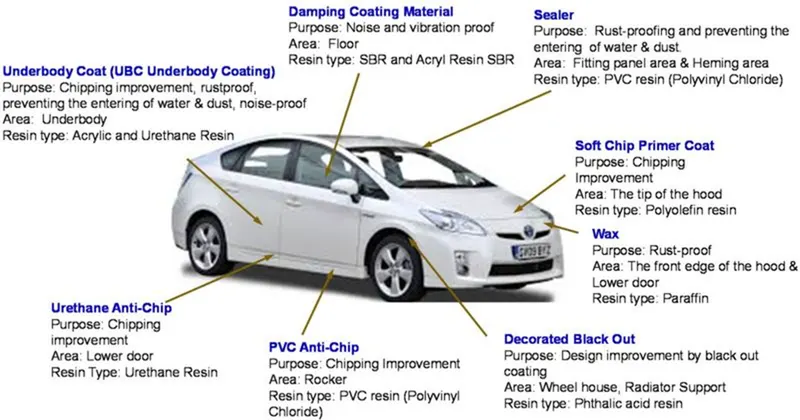
>> It protects the underbody substrates from:
1) Environmental conditions
2) Impacts
3) Dampens sound and vibration
4) Insulates against cold and heat
5) Protects against Corrosion
6) Seals off seams
7) Hides welds, repairs & bodywork with spray
A protective coating composition for motor-vehicle underbodies and gravel guards, characterised in that it comprises, in percentages by weight of the total weight of the composition:
|
PVC (PVAc) Resin |
20-40% |
|
Plasticiser |
30-50% |
|
Adhesion promoter |
0.5 - 1.5% |
|
Natural coated fillers |
20-30% |
|
Additives and Pigments |
1-3% |
|
Swelling Agent |
1-3% |
|
Phenolic resin (resorcin) |
0.2-1.2% |
|
Solvents |
1-3% |
- Thickness of the coating varies for different vehicle. For example Ford figo have:
|
Sl no. |
Part name/area |
Coating thickness (µm) |
|
A |
Front floor |
665 |
|
B |
Side extension member FR |
127 |
|
C |
Extension member rear floor |
184 |
|
D |
Front sill |
321 |
Tata indica vista have (1.5 to 9) mm, Hyundai i10 underbody spray has (1 to 6) mm, while A-Star have (1.5 to 7) mm.
TYPES OF UNDERBODY COATING:
Different types of underbody coating are: -
1.Rubberized Underbody Coating
This is generally thought of as the best underbody coating for your car. It preserves the underbody well, protecting it from scratches. Applying this to the undercarriage is not much of a hassle either.
2.Wax Based Underbody Coating
This – more or less – ephemeral undercoating will wear away in a few months’ time. On the upside, wax-based undercoating puts up a big fight against moisture. It is also the most affordable option out there.
3.Asphalt Based Automotive Undercoating
Best suited for lorries, trucks and large vehicles this provides a greater degree of protection compared to rubber-based coatings. However, asphalt-based coatings contain little amounts of rubber for sound-insulation purposes. The process of applying this coating is a bit time-consuming though.
4.Polyurethane Underbody Coating
This coating closes up splits and fractures on the underbody of the vehicle. It offers up good protection against corrosion and also bonds with the metal. Unlike in the case of asphalt-based coating, you can paint over the polyurethane coating
- Process-
- When it comes to updating your vehicle or using any sort of coating, remove the rust completely first and then proceed. Rust removal is easily achieved by sandblasting or sanding, depending on the area and the extent of the rust.
- Once you've removed the rust and prepped your undercarriage for coating, give it a quick rinse and let it dry to ensure you aren't further trapping any contaminants on your vehicle's underbelly. Using a degreaser to clean the metal first is also recommended.
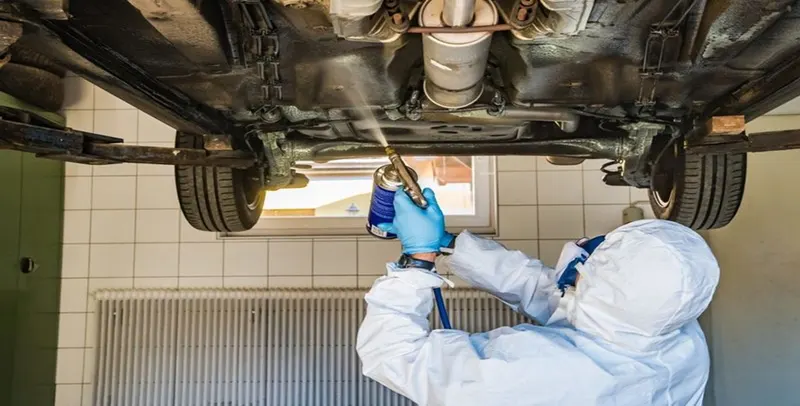
- Most undercoating is generally applied with a spray gun. A disposable spray gun will work best; once the undercoating hardens, it becomes very difficult to clean the gun even with a lot of thinner. A Schutz disposable spray gun is the best option.
- No matter what type of vehicle undercoating you've selected, two coats will provide the optimum protection. Allow ample dry time between coats.
- Let the undercoating cure completely (usually overnight) before driving your vehicle on the road.
- Advantages of Undercoating:
1.Fights Rust:
- It plays an important role in keeping corrosion at bay. Underbody coating can come in handy especially if you live near the sea, where there is too much humidity, and rusting is just one of those everyday things. You should also seriously consider undercoating if you reside in a place where it snows in winter.
- 2.Absorbs Noise:
Believe it or not, very thick undercoating can soften the noises that reach the cabin. Since the undercoating is often made up of rubber it absorbs some of the rackets. The occupants of the car could spare themselves of the road noises – at least up to a certain extend.
3.Reinforcement:
If your car comes with stock underbody coating, using another coating on top of it, is not going to hurt. It will offer additional reinforcement, protecting the underbody from water, road debris, gravel and small pebbles. There would also be a lesser chance for the factory coat to flake away.
4.Prolong Car’s Life:
Good undercoating not only defends the underbody from corrosion but also protects the engine and transmission as well! Less rusting coupled with slower wear and tear can surely add years to the lifespan of your vehicle. There would be fewer dents, dings and scratches on the undercarriage for you to fret about
>> Disadvantages of an undercoating:
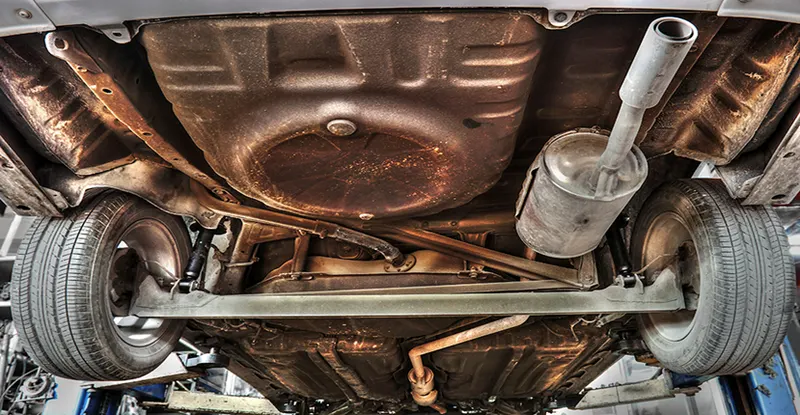
1.It is less helpful if corrosion is already present.
For an undercoating to be the most effective, it should be in place before the underbelly of your car begins to rust. If you apply it over corrosion, you will still isolate the metal from further moisture and airflow, which is good, but the existing oxidizing/rusting process will still continue to occur. After rust is already present, applying an undercoating will slow the continuation of the corrosion process and will make your vehicle look better… until the rust breaks its way through the layer of undercoating you’ve applied. If you have rust present, it is better to remove the rust and then apply the undercoating.
2.It works best on new cars.
If you’ve purchased a used vehicle, then the cost of preparing the underbelly for an undercoating might be more than the value of the car. You must remove all the residue from the bottom before it can be applied. Failing to do so will seal in the debris that is present already, which can lead to more problems. The best time to have an undercoating applied is when a vehicle is purchased new because it offers a superior level of protection then.
3.Most vehicles make it five years before corrosion begins to show.
For vehicle owners who purchase something new every 3 to 5 years, then rustproofing may not be a good use of your cash. Although an undercoating does add value to a used car, that only applies when the rustproofing product used provides a transferrable lifetime warranty. Most vehicles that are on the road today are able to make it five years before any corrosion begins to show. It may be 7 to 10 years before the functionality of the vehicle is negatively impacted by the lack of an undercoating. If you wash your vehicle regularly, especially during the winter months, then you might be able to save the time and money required for this service.
4.A third-party undercoating service might void your vehicle’s warranty.
Some new cars no longer need the undercoating service provided because the structure of the vehicle has it built-in already. If you hire a third-party provider to apply an undercoating, you could void the corrosion-perforation warranty that is factory-provided. Most vehicles today that leave the factory floor are all provided with included rust-proofing.
If you are purchasing a used vehicle, an undercoating to a clean underbelly could extend the life of the vehicle and give it more value. For new vehicle purchases, you should ask the dealer what rustproofing options are included before paying for a separate undercoating option. Ask for documentation of what is provided instead of taking the word of the salesperson or the service personnel.
Many dealers have language in their terms and conditions that only written agreements are binding.
5.An undercoating is not impervious to damage.
An undercoating can provide a hardened layer of protection against dirt and debris that may cause corrosion. Depending on where you drive, however, the lifespan of this product may be minimal. If you drive your vehicle on gravel roads or dirty areas frequently, you reduce the integrity of the protective layer. You might find that your undercoating begins to chip off in as little as 25,000 miles because of this issue. Driving in a salty environment is not the only threat to the integrity of this product.