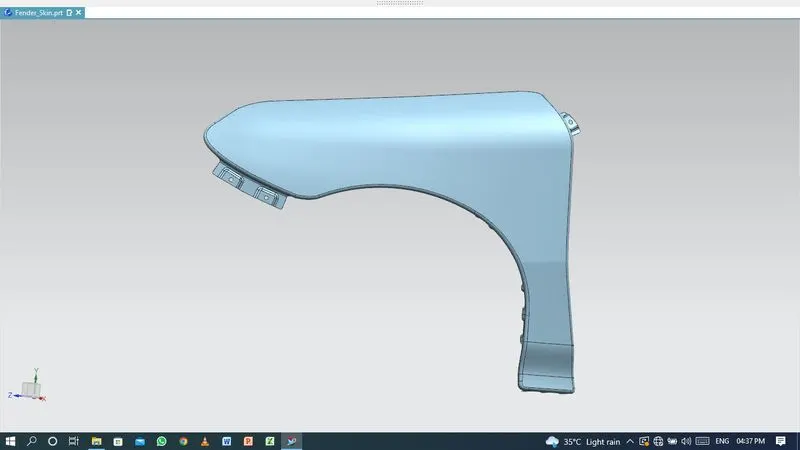
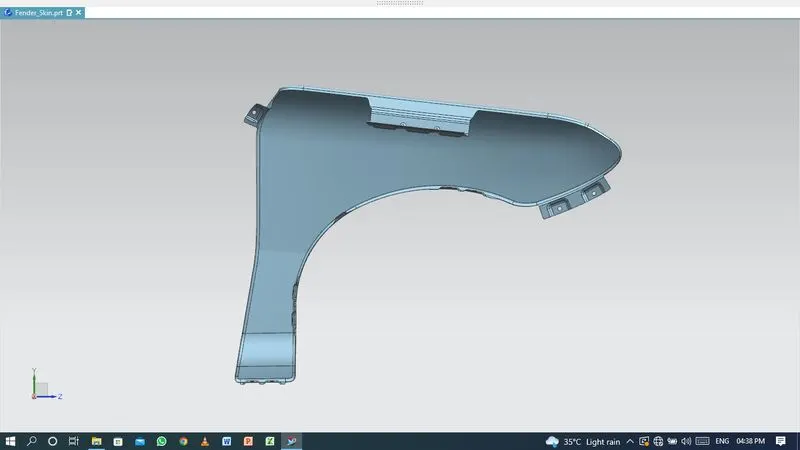
Fender Design
FENDER
- Fender is the US English term for the part of an automobile (vehicle body) that frames a wheel well (the fender underside).
- Its primary purpose is to prevent sand, mud, rocks, liquids, and other road spray being thrown into the air by the rotating tire.
- When vehicle is moving, tires pick up stones and other hurl them in all directions. Fenders are basically present to prevent any injuries to pedestrians and contain the motion of these particles.
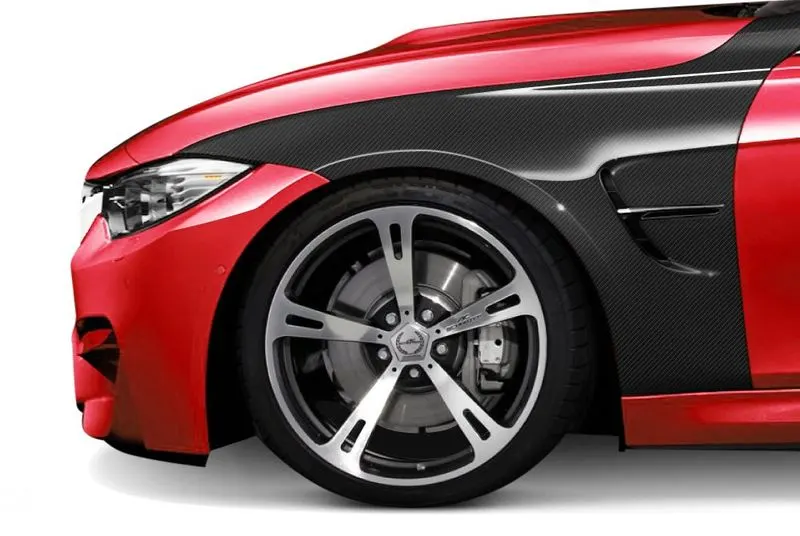
Front Fender
Front fender panels are located on the sides of each front wheel. These panels typically cover the sides of the headlights to the hinge of the driver and passenger doors on the A-pillar. A car front fender runs vertically from the hood to the wheel well.
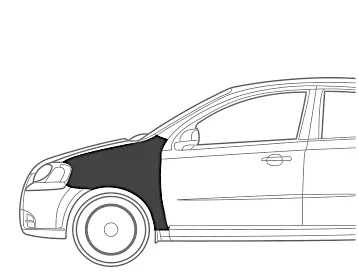
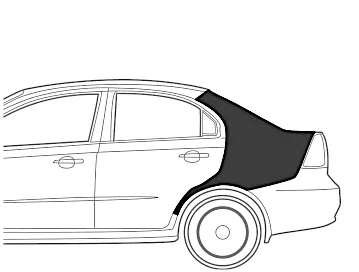
Rear Fender
Rear fender panels are located on the sides of each rear wheel. They extend from the edge of the rear doors on the C-pillar all the way towards the edge of the taillights. Rear fenders also usually feature a fuel hole with a gas cap. These features can be found on either the driver or passenger rear panels, depending on the year and model of the vehicle.
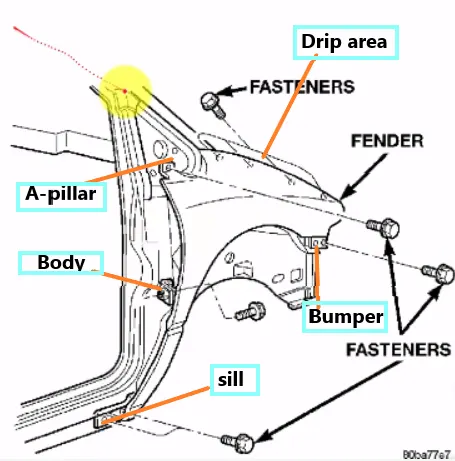
MOUNTING AREAS OF FRONT FENDER
The different areas of front fender are as follows
- Drip area mounting
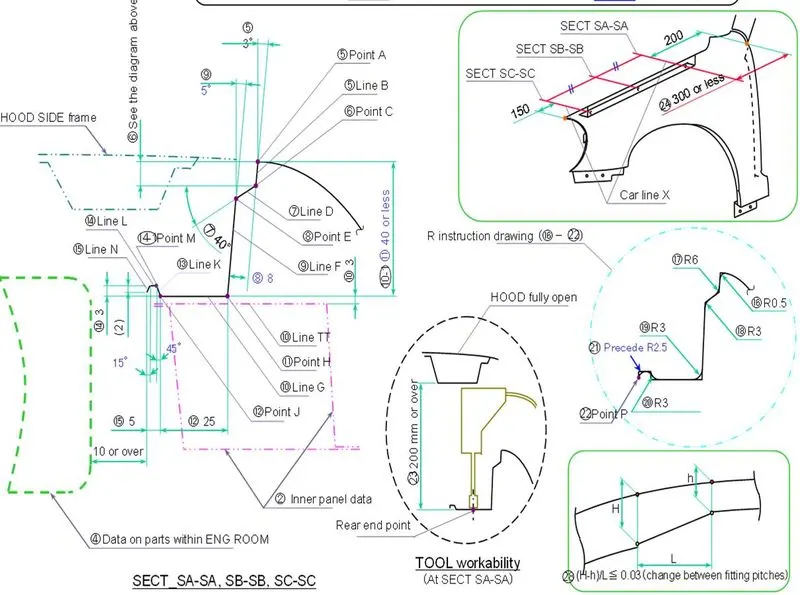
Drip area mounting is the important part in the fender. This mounting is attached to the engine compartment of the car. Fender drip area is mounted via weldnuts to the engine compartment a minimum of 150mm distance is kept from the front side and a distance 300mm or less can be kept on the rear side. The total length of drip area from the top of fender should be less than 40mm, this is to avoid the springback during the manufacturing. The edge of the mounting should atleast 10mm away from any nearby component in the engine. Darts are provided to increase the strength of the mounting.
-
A-Pillar mounting
A-pillar is the first pillar of a car which is used to join the roof with the body and this makes the side of windshield rests. Front fenders are fastened to the A-pillar to form a robust structure.
-
Baffel mounting
For improvement of NVH in car, usually a baffle is mounted on the fender of the car. Baffel or mudguard is used to guard the fender and the lower side from the mud. Baffel mounting is used to combine or fasten the fender with the baffel.
-
Bumper mounting
Bumper mounting is used to fasten the fender with the frontal plastic part/bumper.
- Sill mounting
Sill is used to fasten the fender with the base part, fender lower and the body together. The sill mounted area are designed with emboss and holes, emboss is for giving the strength and the holes are used to fasten. M5 fastener is used to fasten the fender.
MANUFACTURING PROCESS OF FENDER
The manufacturing process includes the following steps,
- Firstly, unfolding and shearing are carried out on a plate, wherein a proper cold roll specification is selected at first, a cold roll is unfolded, and then the unfolded cold roll is sheared to an iron plate of the corresponding size according to production material specifications.
- Secondly, oil pressing and punching are carried out, wherein the iron plate is extended at first, then side shearing and punching are conducted on the iron plate, folding and shaping are carried out on the iron plate, and finally reshaping is carried out on the iron plate.
- Thirdly, small first parts of the fender are machined, wherein first of all, the iron plate is punched to a needed outer contour blank, then the iron plate completing the outer contour blank is further shaped, and the iron plate is punched at last.
- Fourthly, installation and welding of a metal plate are conducted. The manufacturing process for the car fender is simple and high in production efficiency; a body of the fender and the small parts can be separately machined, so waiting time is shortened; working efficiency of production is improved.
DESIGN PARAMETERS OF FRONT FENDER
- Master Section:
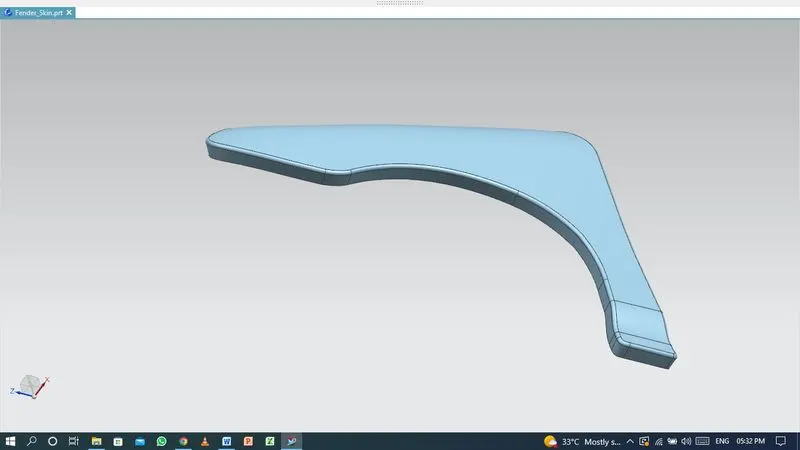
- Fender Skin:
- Drip Area Mounting
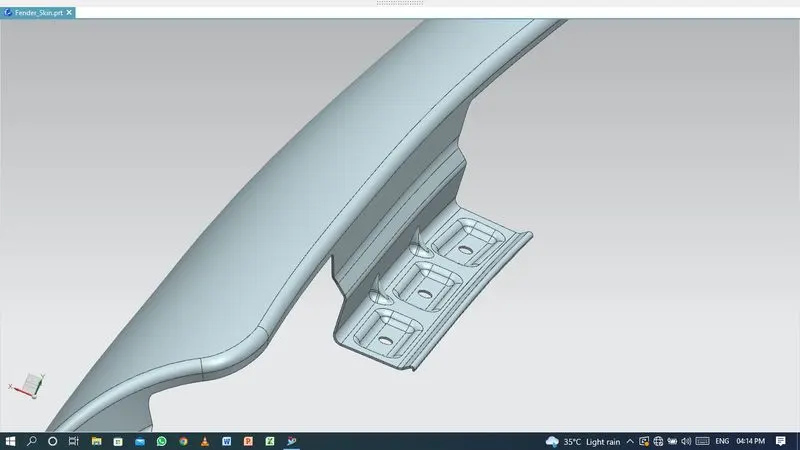
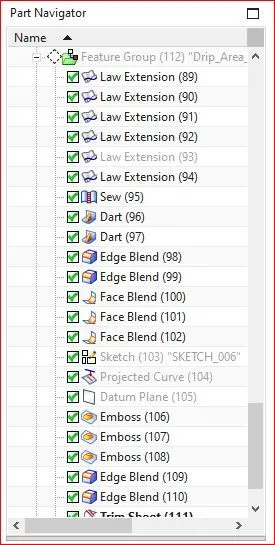
- A-Pillar Mountings
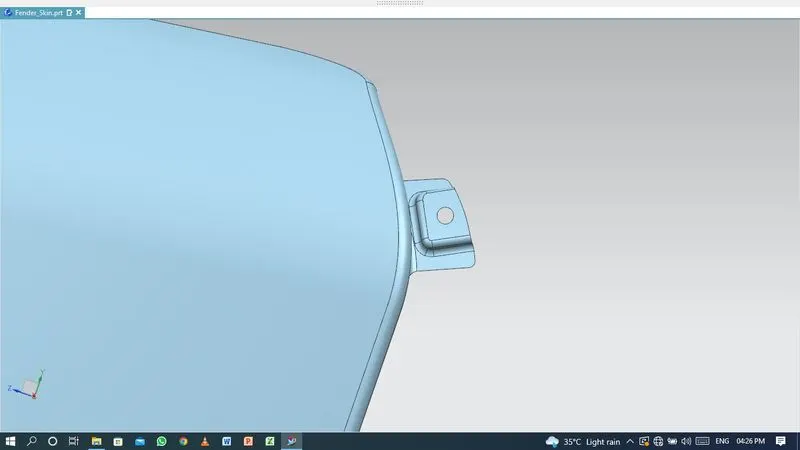
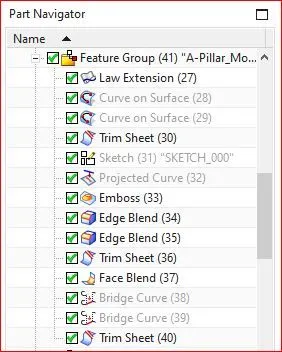
- Sill Mountings
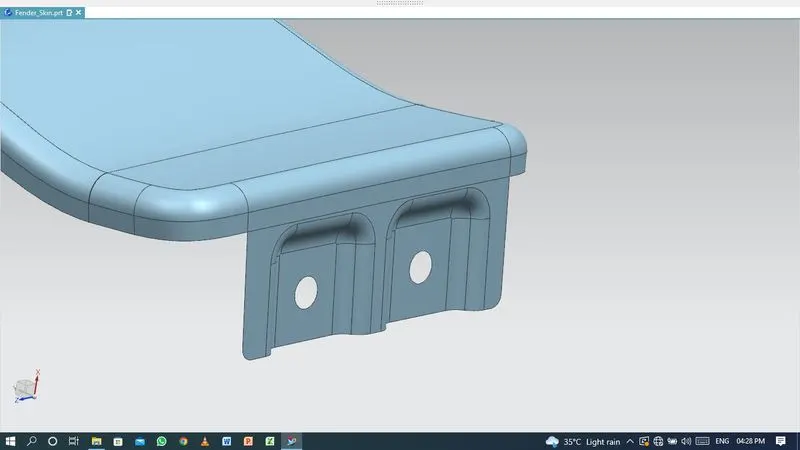
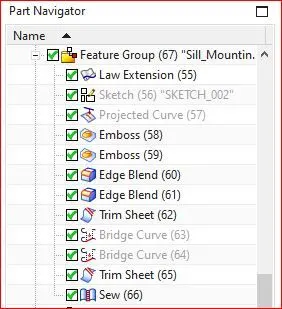
- Baffel Mountings
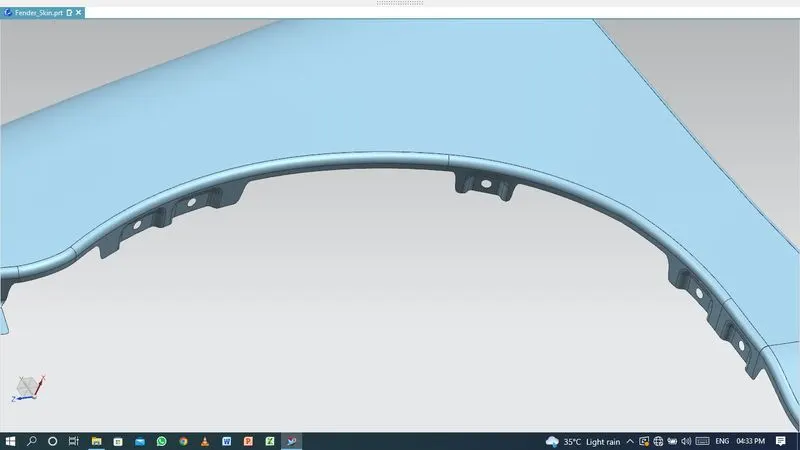

- Bumper Mountings
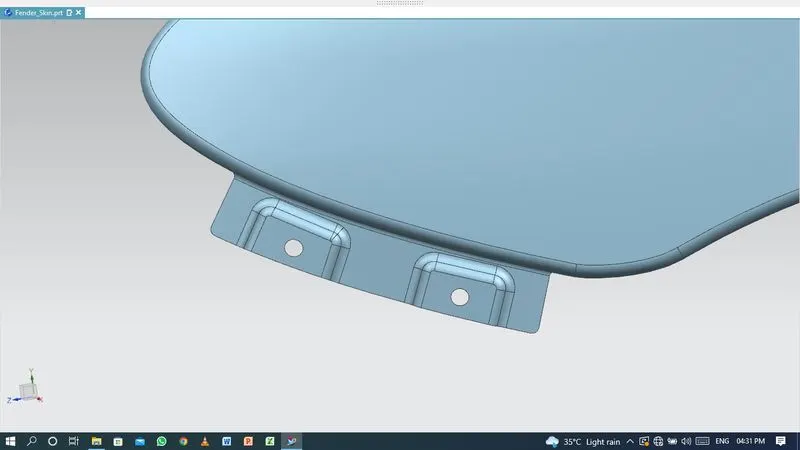
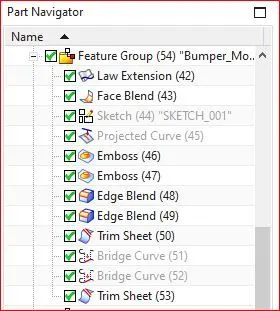
Design criteria
- Embosses are provided to increase strength.
- Smooth curves are designed for easy manufacturing of panels.
- Darts are provided to the drip area mount to give structural support and extra strength.
- Maintain an extra 10mm from the flat surface for the fastener holes.
- All fillets should be maintained to a radius of 2 or 4-mm in most regions.
- The thickness of the fender is 0.75mm.
CONCLUSION
Thus the front fender is designed with necessary mountings and considering the design parameters using Siemens NX CAD.