Underbody Coating
UNDERBODY COATING
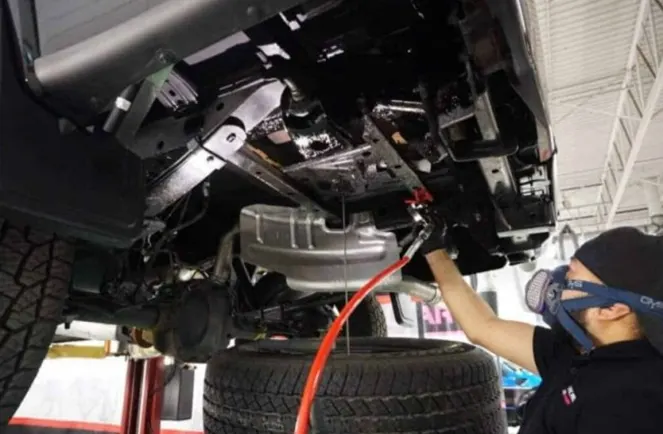
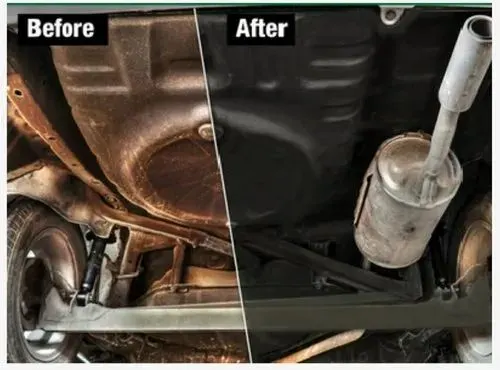
A car’s underbody is more exposed and is prone to corrosion. Especially in Indian road condition corrosion is more evident.
Underbody coating provides long term protection for the car from corrosion. It is normally sprayed or painted on when servicing. Some amount of coating already applied by manufacturer. But It can be done for any car at any time during service.
Typical Causes for Corrosion in underbody are:
- Exposure to moisture (High Humidity)
- High Atmospheric temperature
- Presence of Salt in the moisture around coastal areas
- Exposure to Dirt
- Stagnation of liquid in Gaps.
Underbody coating protects the parts such as Internal body panel, Frame rails and inner gaps which are not physically accessible while regular cleaning.
Key Benefits:
- Protects the vehicle from rust.
- Minimizes the noise inside cabin by acting the sound proofing
- Protects the cabin from high temperature by acting as a Insulation
- Also, the coating doesn’t chip away, hence providing good waterproofing.
- Reduces wear and tear.
Cons:
- it protects the surface only for New cars or the surface is corrosion free. Coating over a already corroded or Rusted body is of new use.
- Some manufacturer voids warranty of the car if third party coating is applied.
- it has has effect on vehicle weight.
- It must reapplied for between the interval of 3 to 5 years depending on manufacturer.
Types of underbody Coating:
- Rubber Based: Most commonly used underbody coating for Cars. Application is car.
- Wax Based: Good protection against moisture, but wears of over time.
- Asphalt Based: Used for Heavy vehicles such Trucks. Offers better protection than asphalt based.
- Polyurethane Based: It can be used to cover minor splits and fractures. Offers good bonds for the metal surface. We can provide another layer of coating over polyurethane coating.