Underbody Coating
#Challenge 2 Underbody Coating
Name: Sri Gokul P
Course: Automotive Sheet Metal Design using Siemens NX CAD / CATIA V5
The underbody coating protects a car's underbody from corrosion over the long term. In addition, it protects parts such as internal body panels, frame rails, and other internal cavities that are not physically accessible but prone to corrosion.
Underbody coatings are subjected to a number of different environments & situations during their service life. Degradation of the coating depends on three main factors:
- coating formula.
- The intensities of the environments or situations.
- Depending on the climate & weather conditions.
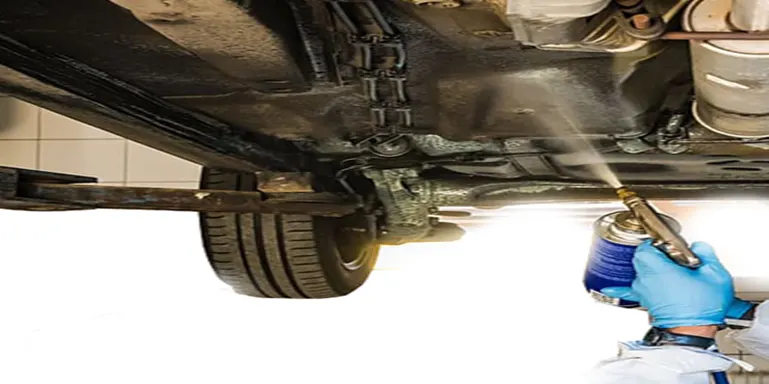
Purpose of underbody coating:
- It will resist rust and corrosion.
- A thick layer of underbody will help for accelerating while the car is running and protects against stones attack.
- The car will be protected from climate and weather changes.
- Help to reduce noise from NVH (Noise Vibration Hardness).
- Increase resale value because all parts are protected from risk factors from underbody coating.
Types of underbody coating:
- Rubberized underbody coating: -
- It is easy to apply and offers sound-cushioning as well as protection from dust, moisture, and dings or dents.
- Heavy-duty undercoating seals protect & insulate.
- They are rubberized for maximum durability.
- Drying Time: First touch painting-30 minutes at 25 °C
- Recoat Paint-2 minutes at 25 °C.
- Full Dry-24 hours at 25 °C.
- Polyurethane underbody coating.
- This type of vehicle undercoating is a little bit quicker and easier to apply.
- This sealant works by seeping into all cracks and seams, displacing salt and moisture and oozing around rusty areas to bond with and protect the unoxidized metal.
- It is a two-pack modified polyurethane based on the chemical reaction of polyfunctional acrylic and isocyanate-based material.
- Drying Time: Surface dry - 30 minutes at 25 °C
- Hard dry - 6 hours at 25 °C.
- Overcoating Time: 8 hours based on normal conditions.
- Wax or paraffin-based underbody coating.
- It is the cheapest and quickest option available to use.
- It seeps quickly into cracks and seams and offers moderate protective properties against moisture.
- Drying Time: First touch painting-30 minutes
- Full Dry-24 hours at 25 °C.
- Asphalt-based underbody coating.
- this type of undercoating also needs more cure time compared to the other three.
- Extra durability against rocks, chips, and moisture so it is used in large trucks and heavy machinery.
- Drying Time: First touch painting-30 minutes
Process of underbody coating:
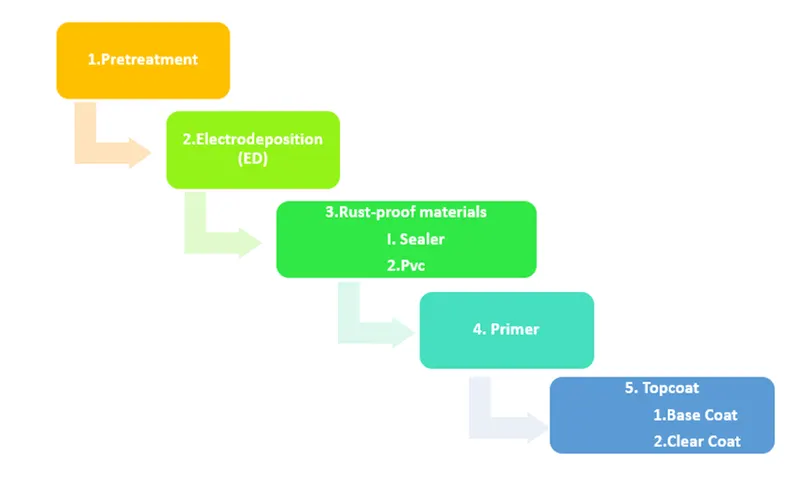
- Pretreatment:
- The first sequence in preparing the BIW for subsequent coating is pretreatment.
- Pretreatment helps the primer bond to the metal.
- The solution comprises alkaline salts and surfactants and can include caustic soda, trisodium phosphate, and sodium carbonate.
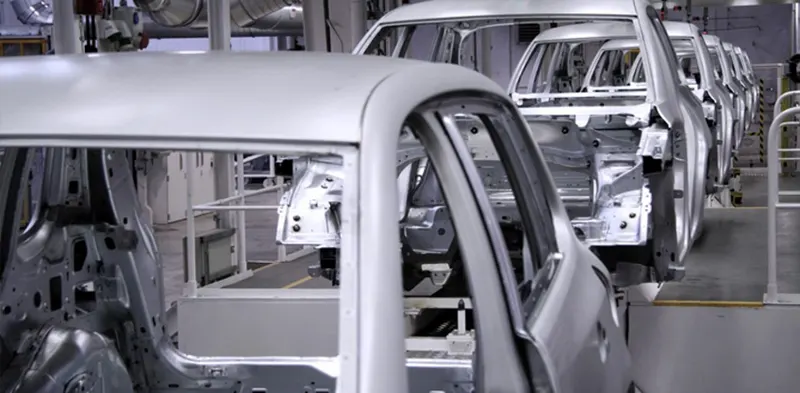
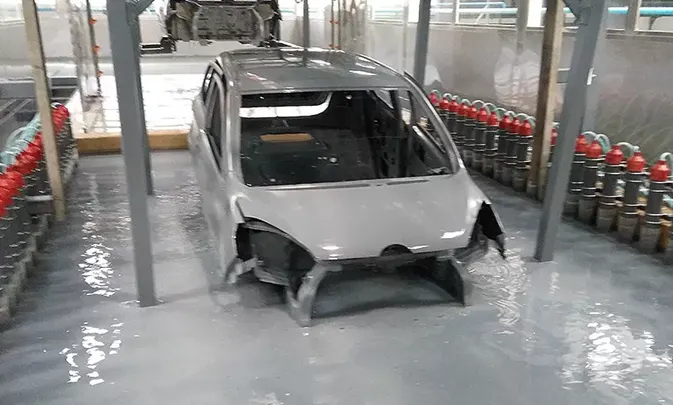
2.Electrodeposition (ED):
It is a method of painting, which uses electrical current to deposit the paint. This process is also known as electro-deposition. The sides of the tank, which is connected to the rectifier's positive potential.
3. Rust-Proof materials:
- In this method, seam sealing uses PVC (Polyvinyl Chloride) and urethane.
- Sealant is applied to the interior and exterior it will protect them from rust.
- It will reduce NVH in car
- Primer:
- It can be water-borne, solvent-borne, or a powder used to improve.
- The primer layer is important for stone chip resistance.
- Topcoat:
- In this process, there are two coating processes done.
1. Base coat.
2. Topcoat.
- Base coat: Three different types of basecoats are used for automobiles, including solvent-borne medium solids (MS), solvent-borne high solids (HS), & water-borne.
- It imparts the automobile's colour.
- Clear coat: It protects against damage such as fading that is caused by UV rays from the sun.
Advantage:
- It insulates the interior of the car from extreme temperatures.
- It minimises the sound from underneath the car resulting in a noiseless, smooth driving experience.
- It is easy to maintain and clean the underbody.
- Customer satisfied with finished appearance.
- Less time spent reworking poor sprayed appearance.
- Reduce comebacks for abrasion and corrosion.
Disadvantage:
- It is very expensive to use.
- Undercoating will not help you if corrosion already exists.
- It will not help damaged parts in the car.
- We want to give recoating after a year.