To Study the Torque Speed Characteristics of DC machine in MATLAB script file.
AIM : To Study the Torque Speed Characteristics of DC machine in MATLAB script file.
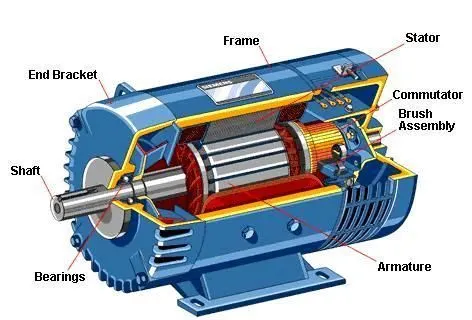
DC Motor :
- A DC motor is any of a class of rotary electrical motors that converts direct current electrical energy into mechanical energy. The most common types rely on the forces produced by magnetic fields. Nearly all types of DC motors have some internal mechanism, either electromechanical or electronic, to periodically change the direction of current in part of the motor.
- DC motors were the first form of motor widely used, as they could be powered from existing direct-current lighting power distribution systems.
- A DC motor's speed can be controlled over a wide range, using either a variable supply voltage or by changing the strength of current in its field windings.
- Small DC motors are used in tools, toys, and appliances. The universal motor can operate on direct current but is a lightweight brushed motor used for portable power tools and appliances.
- Larger DC motors are currently used in propulsion of electric vehicles, elevator and hoists, and in drives for steel rolling mills. The advent of power electronics has made replacement of DC motors with AC motors possible in many applications
OBJECTIVE :
-
To Implement DC machine torque speed characteristics equations in MATLAB script file.
-
Distinguish between power cables and signal cables used in wiring of an electric vehicle.
-
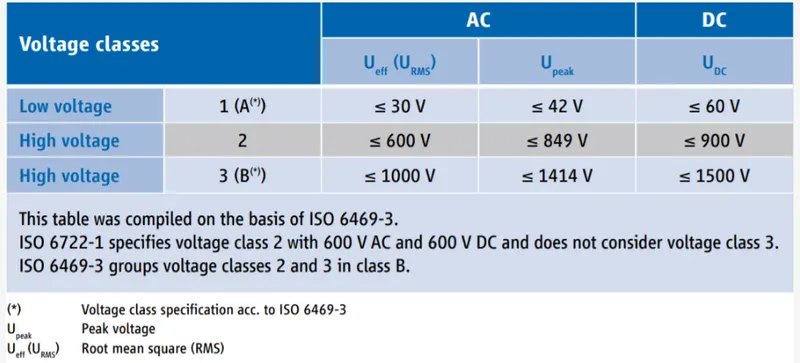
To know which levels of voltage are considered as high & low for a battery pack of electric vehicle.
STUDY - 1 :
Torque Speed Characteristics of DC Motor :
- Understanding the Torque equation and the relationship between speed and torque is an important part of selecting and operating a DC motor.
- When the load on the motor is constant, speed is proportional to supply voltage and when supply voltage is constant, speed is inversely proportional to the load on the motor.
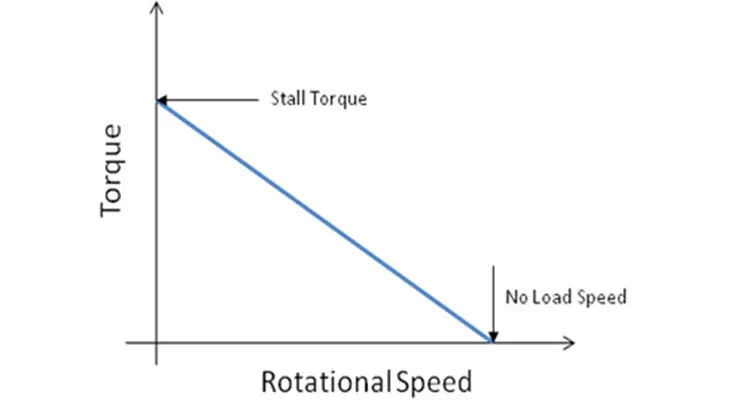
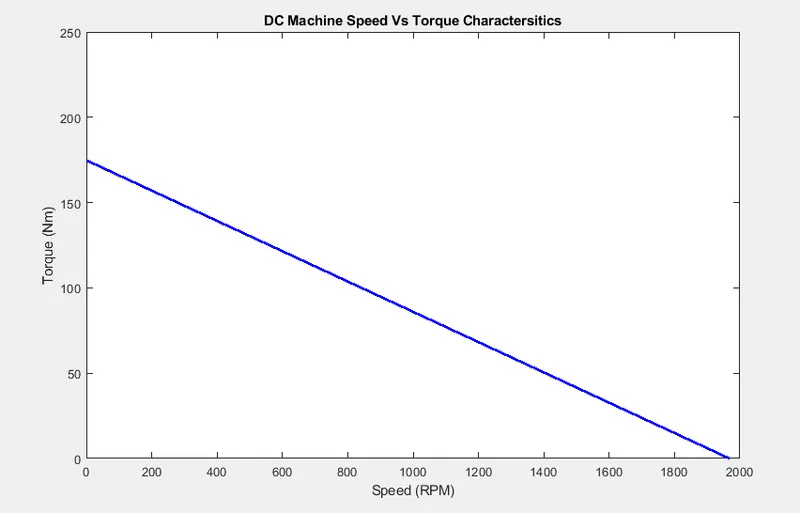
- The inverse relationship between speed and torque means that an increase in the load (torque) on the motor will cause a decrease in speed. This means that the torque-speed curve is a descending line, with a negative slope.
- The torque-speed curve begins at the crossing of the Y axis, where torque is maximum and speed is zero.
- The line falls downward until it intersects the X axis—that is, zero torque and maximum speed and it is known as the no-load speed (the speed when running at nominal voltage and zero load).
Torque Speed equation of DC Motor :
T = V (Kϕ) / Ra - ((Kϕ)^2 / Ra ) * ω
Where,
T = motor torque
V = supply voltage
ω = rotational speed
Kϕ = motor constant
Ra = Armature resistance
- Using this relation we can find the torque that the motor can produce at a given speed, or find the motor’s speed for a given load (torque) on the shaft.
Matlab Code to Evaluate the Torque Speed Characteristics of DC Motor :
clear all;
close all;
clc;

% Motor Speed (Rad/sec)
Speed = linspace(0,1000,50);

% Constant Motor Speed (RPM/V)
N = input ('Motor Speed Value - ');

% Voltage Supply (Volts)
V = input ('Supply Voltage - ');

% Resitance Value of Armature (Ohms)
Ra = input ('Armature resistance - ');

% Back EMF Inputs
EMF = 1;

% To calculate Motor Constant
K = ((EMF*60)/(N*2*3.14))

% To calculate torque by using DC machine equation
T = ((V*K)/Ra) - (((K)^2/Ra)*Speed)

% To calculate Total Current
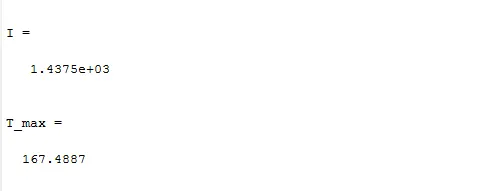
I = (V-EMF)/Ra

% To Calculate the torque
T_max = K*I

% Converting Motor Speed Rad/Sec to RPM
Speed = Speed * (60/6.28)

% Plotting DC Machine characteristics wrt Speed Vs Torque
plot(Speed,T,'color','b','linewidth',2);
xlabel ('Speed (RPM)');
ylabel ('Torque (Nm)');
title ('DC Machine Speed Vs Torque Charactersitics');
axis ([0 2000 0 250]);
Code Explanation :
- In this program we have taken the inputs from the user for, The Speed constant (Kϕ), Voltage Supply from battery (V), Resistance value (Ra).
- After getting all the user inputs we are giving the motor speed values in terms of (Rad/Sec) which will be used in the Torque equation and for which the plot is going to be made.
- From the relation Back EMF ∝ ω , we can say Back EMF = Kϕ * ω , where "Kϕ" is the motor constant value.
- Then we are substituting all the values in the Torque equation and here for the motor speed values "ω" , we are substituting the input values of the motor speed one by one in Rad / sec.
- So by doing this and solving the Torque equation we can find the torque value changes with respect to different speed "ω" and then we can plot these values to visualize the speed and torque characteristics of DC motor.
- Also we are finding the current supply value . If "V" is the supply voltage, "EMF" is the back emf produced and "I" , "Ra" are the armature current and armature resistance respectively then the voltage equation is given by,
V = EMF + (I*Ra)
The armature current, I = (V - EMF) / Ra
- Using the armature current value we can find the Maximum Torque produced,
T_max = Kϕ * I
User Inputs :

Total current and Torque value :
Plot of Speed (Rpm) vs Torque (Nm) :
STUDY - 2 :
CABLES :
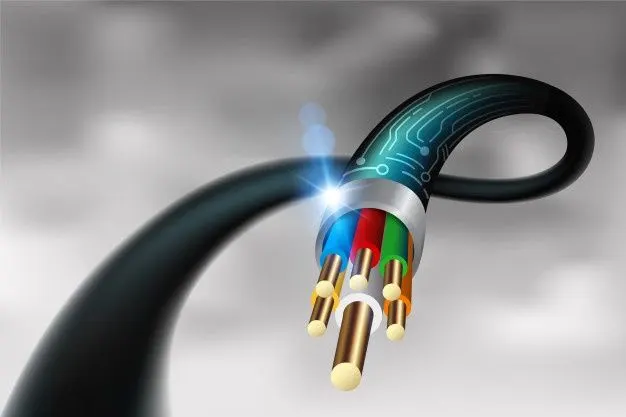
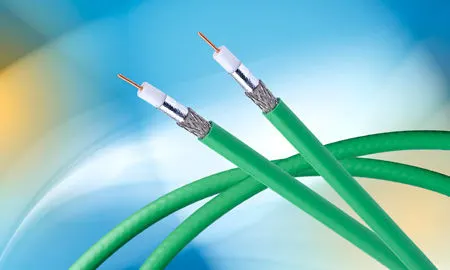
- A cable assembly is the composition of one or more electrical cables and their corresponding connectors. A cable assembly is not necessarily suitable for connecting two devices but can be a partial product (e.g. to be soldered onto a printed circuit board with a connector mounted to the housing). Cable assemblies can also take the form of a cable tree or cable harness, used to connect many terminals together.
- Cables are made up of 3 basic parts- conductor, shielding and connector. The conductor is the wire that actually carries the signal. One or more layers of shielding prevent the wire fiom acting as an antenna that picks up the radio frequency interference and electromagnetic interference. The connector is the plug at the end of the cable that connects to your device.
Distinguish between Power Cables and Signal Cables :
| POWER CABLES | SIGNAL CABLES |
|
|
|
|
|
|
|
|
|
|
|
|
|
|
|
|
Wiring of Electric Vehicles :
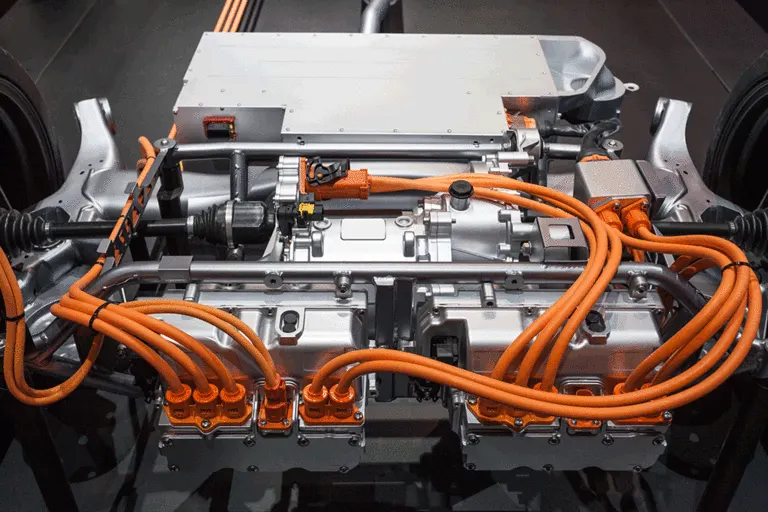
- Electric vehicle wiring is similar to battery cables in conventional vehicles, except that EV cables are shielded. The shield is typically foil covered by a tinned-copper braided shield. The shielding is required to reduce electromagnetic and radio frequency interference (EMI/RFI) caused by the electrical noise generated by the high frequency switching that takes place in the inverter.
- In traditional vehicles, the most cost-effective method of suppressing EMI/RFI noise is through the use of components such as capacitors, inductors and diodes. But, shielding electronics and wiring becomes more cost-effective solution in HEV's because the traditional suppression components required would be too large and heavy to be practical. Hence this brings us to the need of having perfect wiring, to make the manufacturing productive.
Distinguish between Power Cables and Signal Cables used in wiring of an Electric Vehicle :
| POWER CABLES | SIGNAL CABLES |
|
|
|
|
|
|
|
|
|
|
|
|
|
|
STUDY - 3 :
Battery Pack of Electric Vehicles :
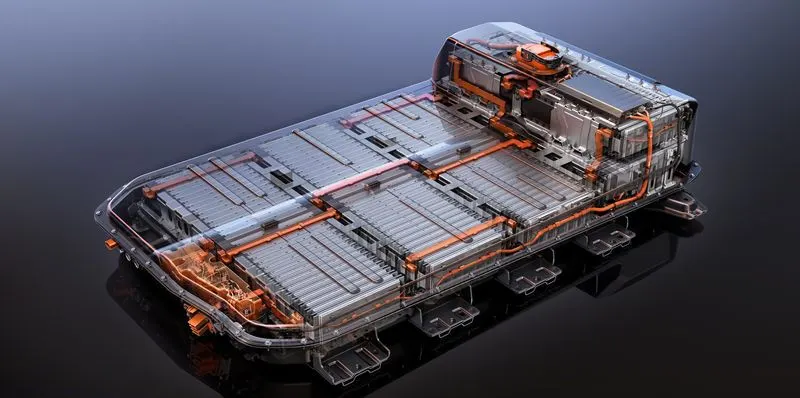
- An electric-vehicle battery (EVB) (also known as a traction battery) is a battery used to power the electric motors of a battery electric vehicle (BEV) or hybrid electric vehicle (HEV). These batteries are usually rechargeable (secondary) batteries, and are typically lithium-ion batteries. These batteries are specifically designed for a high ampere-hour (or kilowatt-hour) capacity.
- Electric-vehicle batteries differ from starting, lighting, and ignition (SLI) batteries as they are designed to give power over sustained periods of time and are deep-cycle batteries. Batteries for electric vehicles are characterized by their relatively high power-to-weight ratio, specific energy and energy density; smaller, lighter batteries are desirable because they reduce the weight of the vehicle and therefore improve its performance. Compared to liquid fuels, most current battery technologies have much lower specific energy, and this often impacts the maximum all-electric range of the vehicles.
Voltage levels of Electric Vehicles Battery Pack :
- Voltage of a battery means the potential difference between the positive and negative terminal of a battery. It simply means the current capacity of the battery.
- If the potential difference is higher then the current flow will be higher. It is because the movement of electrons that produces the current, will be fast in such a case, so higher the potential difference in the battery more will be the current flow.
- It is obvious why higher voltages are being adopted. Higher voltages boost the efficiency.
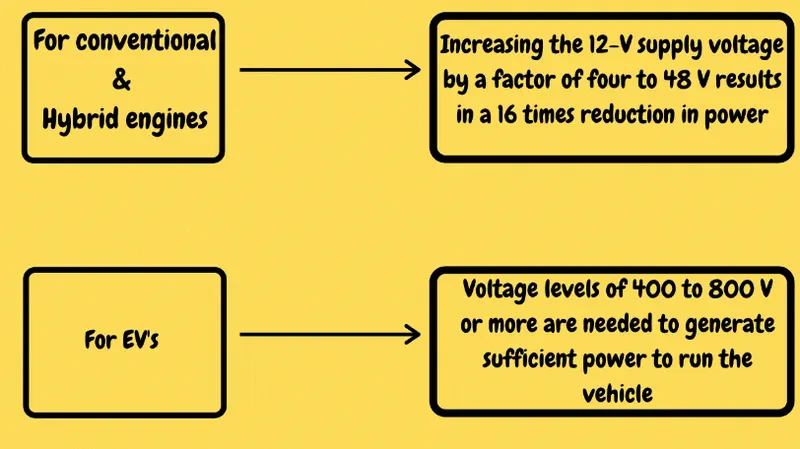
- The dramatic increase in electronics designed into vehicles over the years has revealed the weaknesses of standard 12-V electrical systems.
- The advanced driver assistance systems (ADAS) now in most new vehicles have added multiple processors and high current sensors and actuators, in addition to other devices.
- The Traditional Internal combustion engine powered car uses batteries which is of 12 V across the car and it was sufficient enough to serve the electrical demands of those cars.
- In case of the New generation Hybrid electric vehicle the battery voltage became even more higher to an level of 48 V.
REFERENCES :
https://en.wikipedia.org/wiki/DC_motor