Study of cell arrangements in battery module of a battery pack in matlab.
Aim: Study of cell arrangements in battery module of a battery pack in matlab.
Objectives:
01.
To build a battery pack with 3S4P configuration with generic battery block.
02.
To configure the batteries as per a Lithium ion battery datasheet.
03.
To study the parameters of configured battery pack.
04.
To simulate the model and study the results for SOC, voltage, current in detail.
05.
To configure battery pack with 4S3P cells and simulate the model.
06.
To compare the results for both models.
Introduction:
First we will look into the precise definitions of EV battery’s “cell”, “module” and “pack”.
Electric Vehicle Battery is Composed of “Cell → Module → Pack”
To operate an electric vehicle, an enormous amount of power thousand times stronger than that of a smart phone is required. That is why EVs need from dozens of battery cells up to as many as thousands. The composition of an EV battery might vary slightly depending on the types of electric vehicles, but generally EV batteries are composed of cells, modules and a pack.
In fact, to safely and efficiently manage the countless battery cells mounted in one EV, the cells are installed in forms of modules and packs. Simply put, cells, modules and packs are units of gathered batteries. A cluster of cells make up a module and a cluster of modules make up a pack. Ultimately, in an electric vehicle, one form of battery is installed: a pack.
Let’s take a look at the example of a typical pure electric vehicle. In a BMW i3, a total of 96 battery cells are installed. Twelve cells are combined into one module and eight modules are put together to go into the vehicle in the form of a pack.
Let's examine each term one by one. A cell which is the basis of a battery must possess high capacity per unit volume in order to show maximum performance in a restricted area inside a vehicle and the cell also needs to have much longer lifespan compared to batteries used in general mobile devices. Furthermore, cells must endure shocks transmitted during the drive and possess high reliability & stability to the extent of being able to withstand high and low temperatures. When a number of cells are put into a frame to protect them better from external shocks such as heat or vibration, this is called a module. And when a number of modules come together with a BMS (Battery Management System) and a cooling device that control and manage battery’s temperature, voltage, etc., this is called a pack. This is how numerous cells are installed in an electric vehicle through the form of a pack.
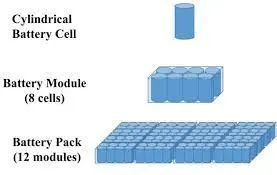
Fig01: Assembling a battery pack.
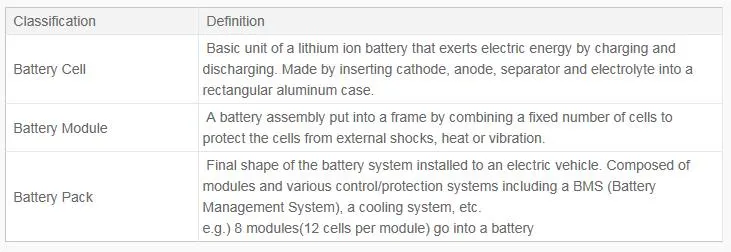
Fig02: Definition of Electric Vehicle’s Battery Cell – Module – Pack.
Li-ion battery datasheet: Link for datasheet of Li-ion battery.
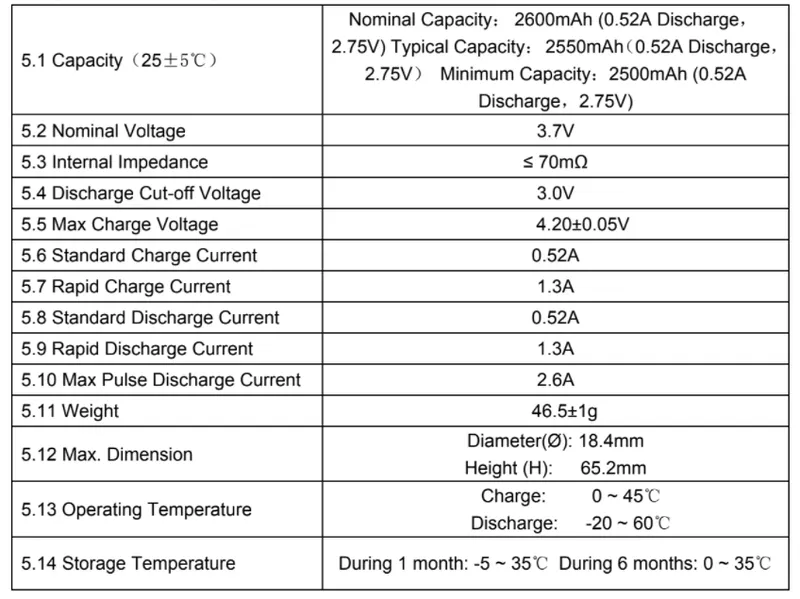
Fig03: Parameters of Li-ion battery cell from datasheet.
Battery Connections:
There are two basic types of batteries connection:
01. Series Connection.
02. Parallel Connection.

Fig04: Series, Parallel & Series-Parallel Connection of Batteries.
Below is the comprehensive detail about each connection.
Series connection of batteries:
If we connect the positive (+) terminal of battery to negative (-) and negative to positive terminal as shown in the below fig, then the batteries configuration would be in series.
In series connection of batteries, current is same in each wire or section while voltage is different i.e. voltages are additive.
e.g.
V1 + V2 + V3….Vn

Fig05: Series Connection of Batteries.
In figure05, two batteries each of 12V, 200Ah are connected in Series. So the total effective Ampere-hour (Ah) would be same while Voltage is additive.
i.e.
= 12V + 12V = 24V, 200Ah
When we need and How to connect batteries in series?
When you need to double the voltage level according to your system needs while maintain the same capacity or ampere hour (Ah) rating of batteries.
For example, If you have two 12V, 200Ah hour batteries and you need 24V system for installation. Simply, connect both of the batteries in series where you will get 24V and the same ampere hour rating i.e. 200Ah.
Keep in mind that battery discharge slowly in series connection as compared to parallel batteries connection.
You can do it with any number of batteries i.e. to get 36V, 48V, 72V DC and so on by connecting batteries in series.
This system is used in different solar panel installations and other applications.
Parallel connection of batteries:
If we connect the positive terminal (+) of battery to positive and negative (-) to negative terminal. Then the batteries configuration would be in parallel.
In parallel connection, voltage will be same in each wire or section, while current will be different i.e. current is additive.
e.g.
I1+I2+I3…+In
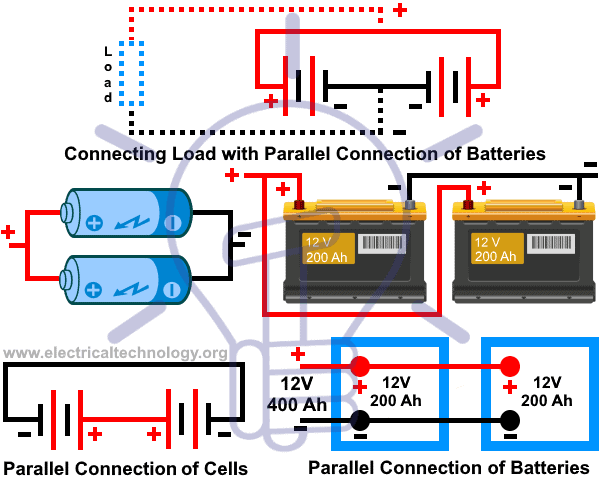
Fig06: Parallel Connection of Batteries.
In figure06, two batteries each of 12V, 200Ah are connected in parallel. So the total effective Voltage would be same while Ampere-hour is additive.
i.e.
= 200Ah +200Ah = 400Ah, 12V.
When we need and How to connect batteries in Parallel?
When you need to double the battery capacity or ampere hours (Ah) rating according to your system needs while maintain the same level of voltages.
For example, If you have two 12V, 200Ah hour batteries and you need 12V system for installation. Simply, connect both of the batteries in parallel where the overall battery capacity would be 400Ah and the same voltage level i.e. 12V.
Keep in mind that battery discharge quickly in parallel as compared to series batteries connection.
You can do it with any number of batteries i.e. to get the same level of voltage while increase the battery capacity in ampere hours in parallel batteries connection.
This system is used in different solar panel installations and other applications.
Series and Parallel connection of batteries:
If we connect two pairs of two batteries in series and then connect these series connected batteries in parallel, then this configuration of batteries would be called series-parallel connection of batteries.
In other words, It is series, nor parallel circuit, but known as series-parallel circuit. Some of the components are in series and other are in parallel or complex circuit of series and parallel connected devices and batteries.
In figure07,.
Six (6) batteries each of 12V, 200Ah are connected in Series-Parallel configuration.
i.e.
B1 & B2 in Series … 12V + 12V = 24V, 200Ah …Series Connection
B3 & B4 in Series … 12V + 12V = 24V, 200Ah …Series Connection
B5 & B6 in Series … 12V + 12V = 24V, 200Ah …Series Connection
And then the pair of these batteries are connected in parallel i.e. two parallel sets of three batteries are connected in series.
i.e.
Set 1 = B1, B3, B5 = Parallel
Set 2 = B2, B4, B6 = Parallel
So the effective voltage and Ampere-hour would be
Ampere hour (Ah )= 200Ah + 200Ah + 200Ah = 600Ah
Voltages = 12V + 12V = 24V.
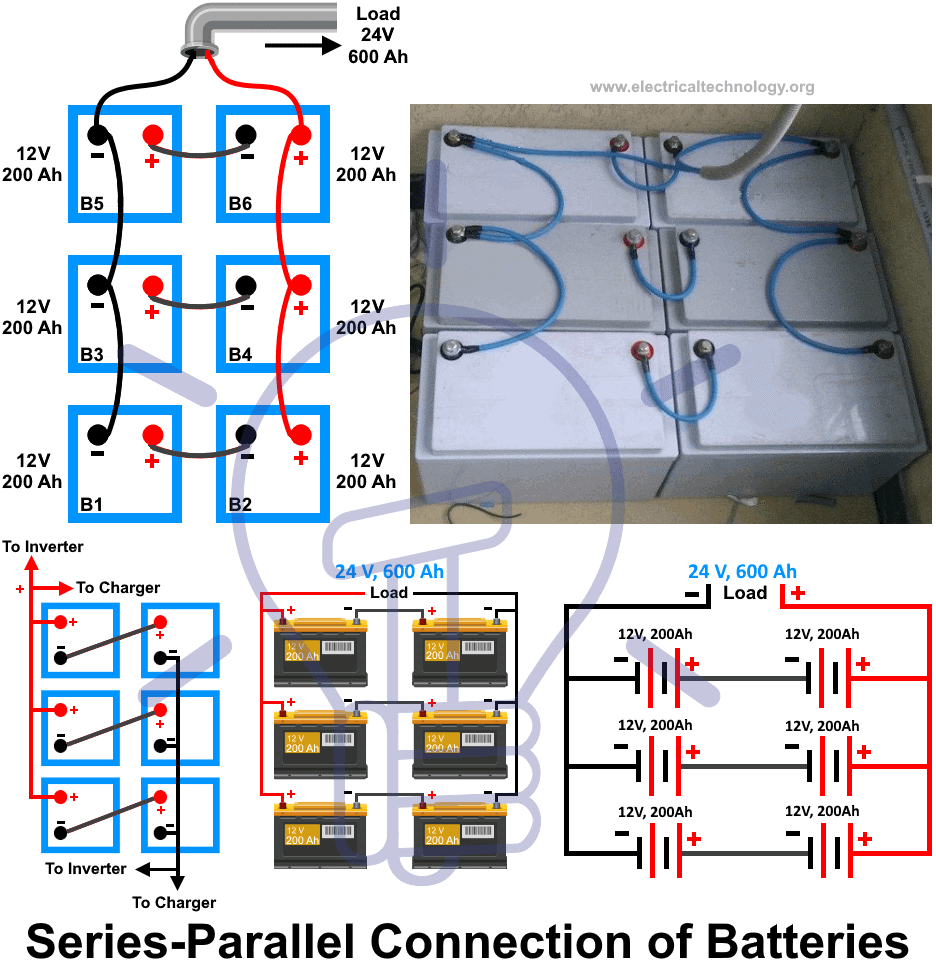
Fig07: Series-Parallel Connection of Batteries.
Problem statement:
01.
Build a battery pack with 3S4P configuration with generic battery block.
02.
Configure the batteries as per a Lithium ion battery datasheet.
03.
Explain your parameters.
04.
Simulate the model and comment on the results for SOC, voltage, current in detail.
05.
Change the configuration to 4S3P and simulate the model.
06.
Compare the results for both models and give your explanation for the results.
Solution:
A. Configuration of 3S4P battery pack geniric model:
Firstly we will call out the 'Drive Cycle Source block' and open it, to get the following interface.
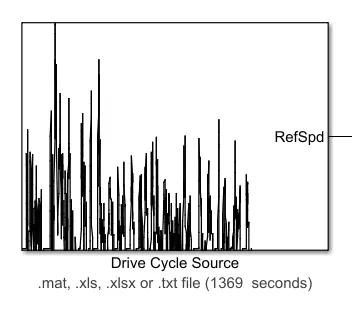
Fig08: Drive Cycle Source block.
With Drive Cycle Source block it is very easy to feed the data of the drive cycle in any format for further simulation.
To feed the data file we must open the block and select the type of file required and the file itself from it's destination.
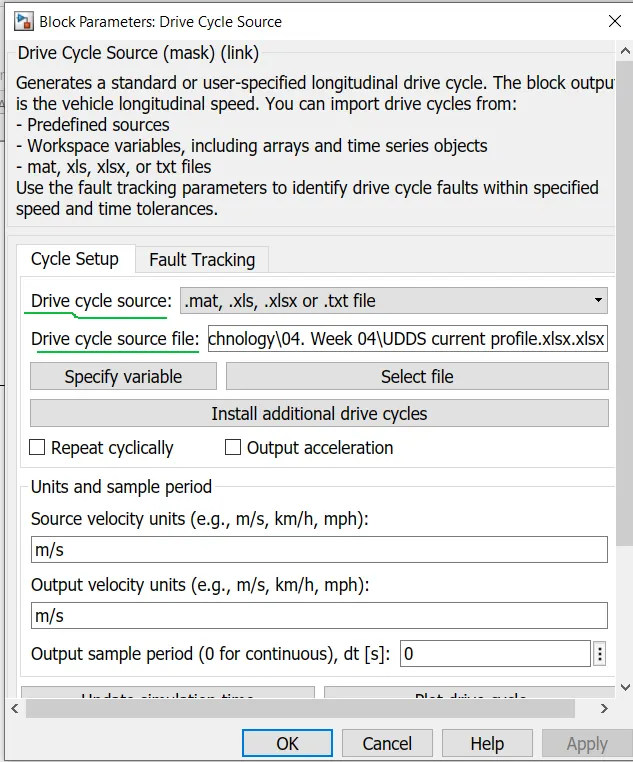
Fig09: Drive Cycle Source block for selection of the data file.
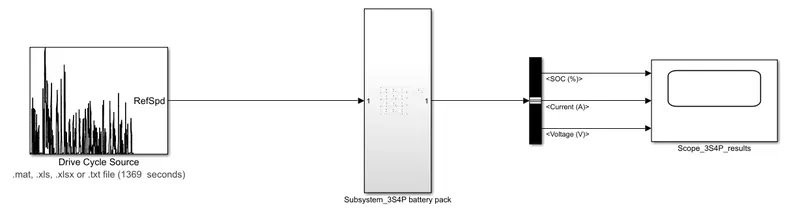
Fig10: Generic battery models for 3S4P cell arrangement of battery module.
Above figure10 shows the generic model of the battery module-three series four parallel (3S4P) arrangement of cells.
UDDS stands for Urban Dynamometer Driving Schedule (Drive cycle) is used to define the input signal.
The 'Subsystem_3S4P battery pack' consists of 12 number of battery cells arranged in 3S4P arrangement.
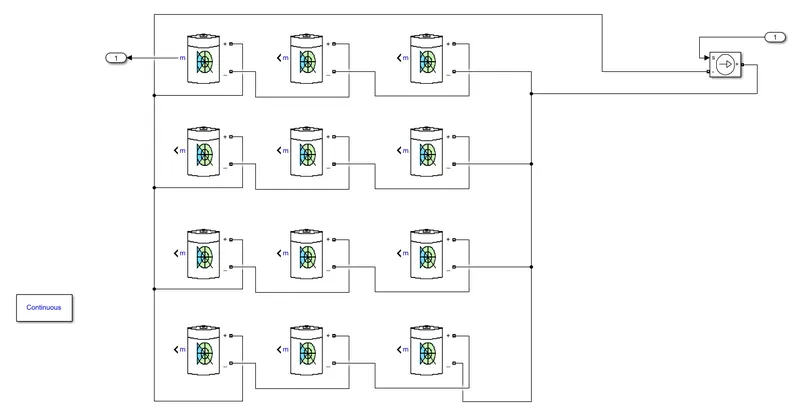
Fig11: 3S4P cell arrangement of battery module.
Above figure11 shows the 3S4P arrangement of battery cells from the 'Subsystem_3S4P battery pack'.
Each cell with of Maximum charged voltage of 4.32 V and Rated capacity of 2.55 Ah.
As we have three cells in each series we get total 12.96 V of voltage and total 2.55 Ah of capacity across each series.
As we have four parallel series each consists of three cells we get total 12.96 V of voltage and total 10.2 Ah of capacity across whole battery pack.
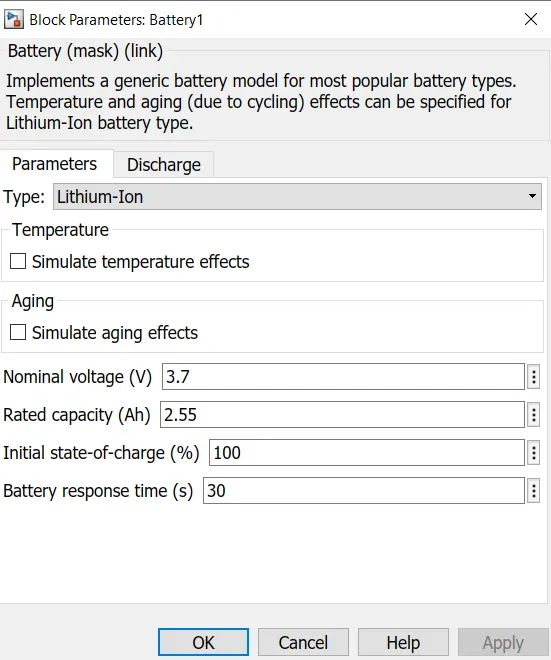
Fig12: Entering values of basic parameters of battery according to the datasheet.
Here figure12 shows the entered values of basic parameters of Li-ion battery from it's datasheet and further calculations are gonna be according to the entered values and the arrangement of the cells.
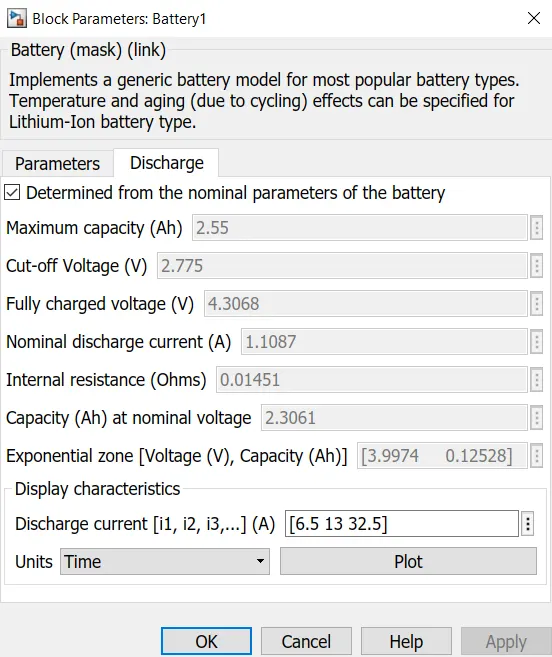
Fig13: Determining discharge parameters of battery according to the datasheet values.
Figure13 shows the discharge parameters of the battery pack automatically determined by the simulink from the already entered basic parameters of the battery pack.
Maximum capacity (Ah):
The maximum capacity (or theoretical capacity) of a Storage Component is the total amount of energy it contains when fully charged.
Cut-Off voltage (V):
The cut-off voltage is the voltage at which a battery is considered fully discharged, beyond which further discharge could cause harm.
Fully charged voltage (V):
Fully charged voltage is the voltage at which a battery is maintained after being fully charged to maintain that capacity by compensating for self-discharge of the battery.
Capacity (Qn) at nominal voltage:
The nominal capacity Qn is defined as the amount of charge delivered by a fully charged battery under specified conditions of temperature and load.
What is Internal resistance(R) of the battery?
All batteries have some internal resistance to some degree.
Batteries have internal resistance (ohms) because the elements that make it up aren't perfect conductors. The electrodes and electrolytes aren't 100% conductive. So they will have some resistance (internal resistance) in them.
What is State of Charge (SoC)?
State of charge (SoC) is the level of charge of an electric battery relative to its capacity. The units of SoC are percentage points (0% = empty; 100% = full). An alternative form of the same measure is the depth of discharge (DoD).
What is Depth of discharge (DoD)?
Depth of discharge (DoD) is the fraction or percentage of the capacity which has been removed from the fully charged battery. It is an alternative method to indicate a battery's State of Charge (SoC). The depth of discharge is the complement of state of charge: as one increases, the other decreases.
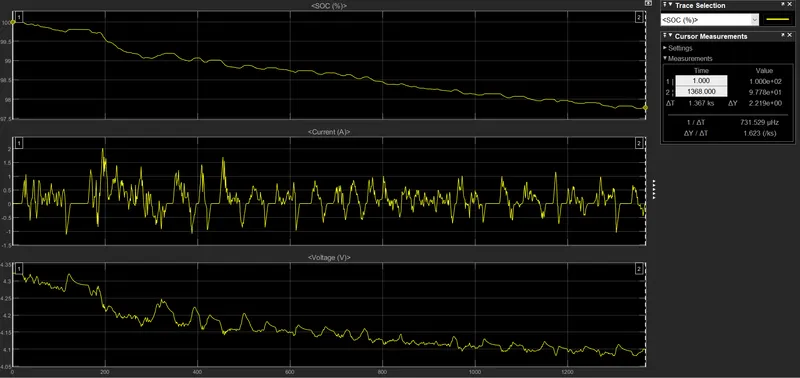
Fig14: Results for 3S4P battery module.
As discussed earlier this battery pack is with three series four parallel configuration where, we get total 12.96 V of voltage and total 10.2 Ah of capacity across whole battery pack.
SOC of the battery falls from 100% to 97.78% after one cycle (1369 seconds) of UDDS.
Maximum current fetched from the battery 2.7 A.
Maximum voltage and Minimum voltage of the battery pack are 4.32 V and 4.08 V respectively.
B. Configuration of 4S3P battery pack geniric model:
Firstly we will call out the 'Drive Cycle Source block' and open it, to get the following interface.
Fig15: Drive Cycle Source block.
With Drive Cycle Source block it is very easy to feed the data of the drive cycle in any format for further simulation.
To feed the data file we must open the block and select the type of file required and the file itself from it's destination.
Fig16: Drive Cycle Source block for selection of the data file.
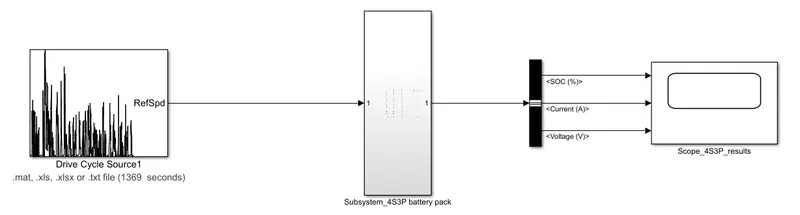
Fig17: Generic battery models for 4S3P cell arrangement of battery module.
Above figure17 shows the generic model of the battery module-four series three parallel (4S3P) arrangement of cells.
UDDS stands for Urban Dynamometer Driving Schedule (Drive cycle) is used to define the input signal.
The 'Subsystem_4S3P battery pack' consists of 12 number of battery cells arranged in 4S3P arrangement.
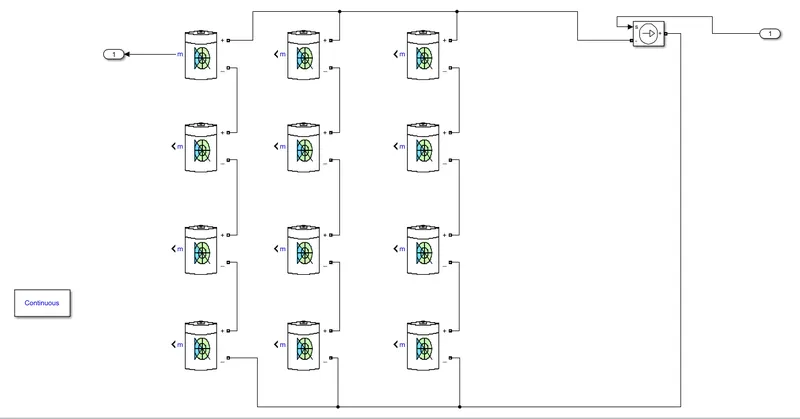
Fig18: 4S3P cell arrangement of battery module.
Above figure18 shows the 4S3P arrangement of battery cells from the 'Subsystem_4S3P battery pack'.
Each cell with of Maximum charged voltage of 4.32 V and Rated capacity of 2.55 Ah.
As we have four cells in each series we get total 17.28 V of voltage and total 2.55 Ah of capacity across each series.
As we have three parallel series each consists of four cells we get total 17.28 V of voltage and total 7.65 Ah of capacity across whole battery pack.
Fig19: Entering values of basic parameters of battery according to the datasheet.
Here figure19 shows the entered values of basic parameters of Li-ion battery from it's datasheet and further calculations are gonna be according to the entered values and the arrangement of the cells.
Fig20: Determining discharge parameters of battery according to the datasheet values.
Figure20 shows the discharge parameters of the battery pack automatically determined by the simulink from the already entered basic parameters of the battery pack.
Maximum capacity (Ah):
The maximum capacity (or theoretical capacity) of a Storage Component is the total amount of energy it contains when fully charged.
Cut-Off voltage (V):
The cut-off voltage is the voltage at which a battery is considered fully discharged, beyond which further discharge could cause harm.
Fully charged voltage (V):
Fully charged voltage is the voltage at which a battery is maintained after being fully charged to maintain that capacity by compensating for self-discharge of the battery.
Capacity (Qn) at nominal voltage:
The nominal capacity Qn is defined as the amount of charge delivered by a fully charged battery under specified conditions of temperature and load.
What is Internal resistance(R) of the battery?
All batteries have some internal resistance to some degree.
Batteries have internal resistance (ohms) because the elements that make it up aren't perfect conductors. The electrodes and electrolytes aren't 100% conductive. So they will have some resistance (internal resistance) in them.
What is State of Charge (SoC)?
State of charge (SoC) is the level of charge of an electric battery relative to its capacity. The units of SoC are percentage points (0% = empty; 100% = full). An alternative form of the same measure is the depth of discharge (DoD).
What is Depth of discharge (DoD)?
Depth of discharge (DoD) is the fraction or percentage of the capacity which has been removed from the fully charged battery. It is an alternative method to indicate a battery's State of Charge (SoC). The depth of discharge is the complement of state of charge: as one increases, the other decreases.
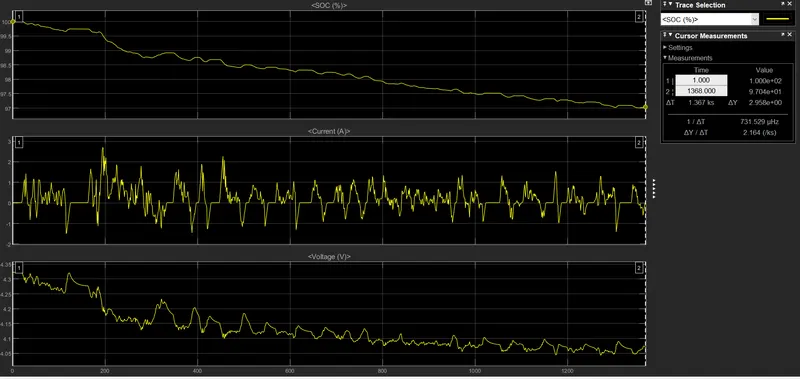
Fig21: Results for 4S3P battery module.
As discussed earlier this battery pack is with four series three parallel configuration, where we get total 17.24 V of voltage and total 7.65 Ah of capacity across whole battery pack.
SOC of the battery falls from 100% to 97.04% after one cycle (1369 seconds) of UDDS.
Maximum current fetched from the battery 2.7 A.
Maximum voltage and Minimum voltage of the battery pack are 4.32 V and 4.04 V respectively.
C. Comparision of 3S4P battery pack with 4S3P battery pack:
| Parameter | 3S4P battery pack. | 4S3P battery pack. |
| Depth of Discharge (DoD) | Depth of Discharge is less 2.22% due higher rated capacity of 10.2 Ah. | Depth of Discharge is greater 2.96% due to lower rated capacity of 7.65 Ah. |
| Capacity of the battery pack (Ah) | Higher rated capacity of 10.20 Ah. | Lower rated capacity of 7.65 Ah. |
| Voltage of the battery pack (V) | Lower voltage of 12.96 V. | Higher voltage of 17.24 V. |
Conclusion:
In this study we configured the battery pack models for 3S4P and 4S3P and discussed their characteristics and behaviour on the basic parameters of the battery pack.