Structural dynamics
1. Differentiate Static analysis and Dynamic analysis with proper representing pictures
ANS.
| STATIC ANALYSIS METHOD | DYNAMIC ANALYSIS METHOD |
| Static approach is normally refered to Pseudo static approach | Dynamic approach is referred to Response spectrum method |
| At least 3- degree of Freedom is required for static analysis | Single degree of freedom is sufficient for dynamic analysis |
| Motion is disregarded in static snalysis | Motion cannot be disregarded in dnamic analysis |
| Inertial and damping forces are not acounted | Inertial and damping forces are taken into acount |
| More degree of freedom is required in static analysis | less degree of fredom sysstem is required fo dynamic analysis as compare to static analysis |
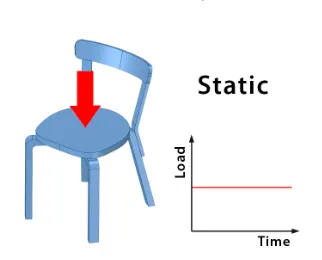 |
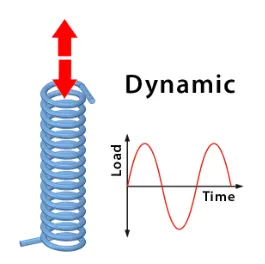 |
-----------------------------------------------------------------------------------------------------------------------------------------------------------------------------
2. Explain the following with relevant force-displacement graph
- Elastic behavior
- Inelastic behavior
- Plastic behavior
- Non-linear Inelastic behavior
ANS.
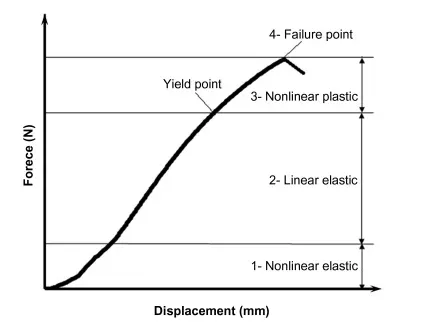
1. Elastic behaviour :
- When a structure is subjected to a external force it moves which is called displacment and after removal of force the structure comes to its original position is called Elastic behaviour.
- In above graph we can see the structure is moving in same direction and when it comes to its original position it is said to be elastic.
2. Inelastic behaviour :
- In elastic behaviour the structure gets diplaced and comes to its original position just like elastic behaviour but it losses it strength is called Inelastic behaviour.
3. Plastic behaviour :
- When force is applied to structure and it goes beyond its yeild point ,then structure losses it elastic behaviour that means it does not comes to its original position is called as Plastic Behaviour.
4. Non-Linear Inelastic behaviour :
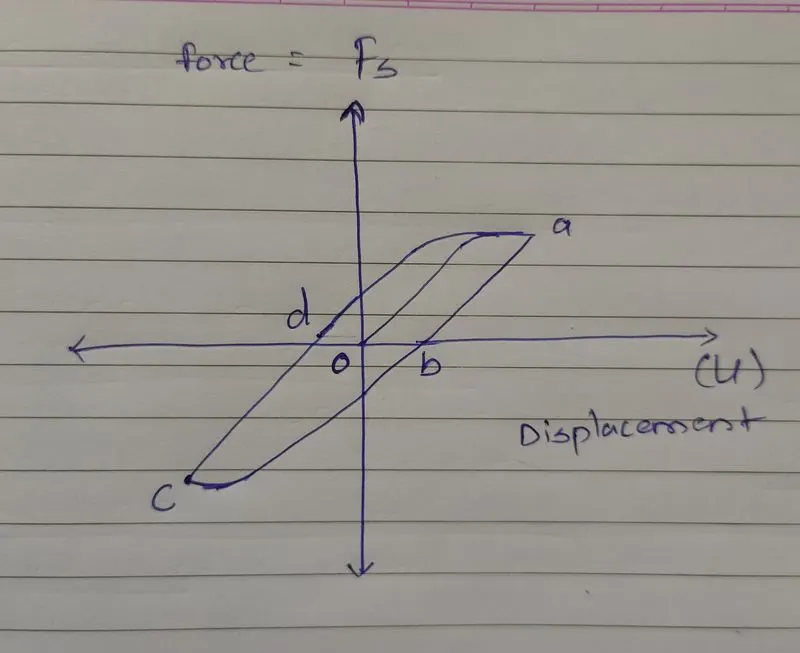
- In above frrce displacement graph we can se that the structure is subjected to force and from Origin point (o) to a the structure is said to be in elastic behaviour.
- After point (a) it changes it direction and goes in opposite direction upto (b), and then goes in to point (c).
- Then it goest to point (d).This cycle is called as Non-Linear Inelastic behaviour.
- The earthquake force acts in such oscilaating cycle on structure.
-----------------------------------------------------------------------------------------------------------------------------------------------------------------------------
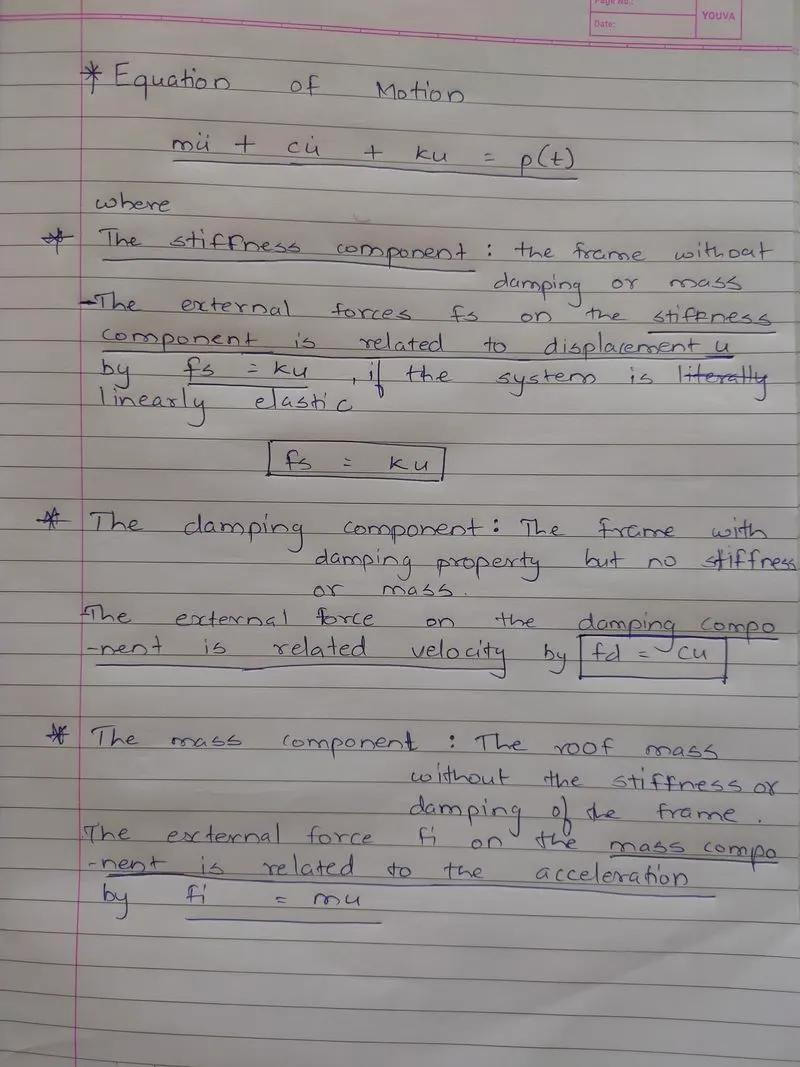
3. Explain Mass, Stiffness & Damping components in the equation of motion
ANS.
-----------------------------------------------------------------------------------------------------------------------------------------------------------------------------
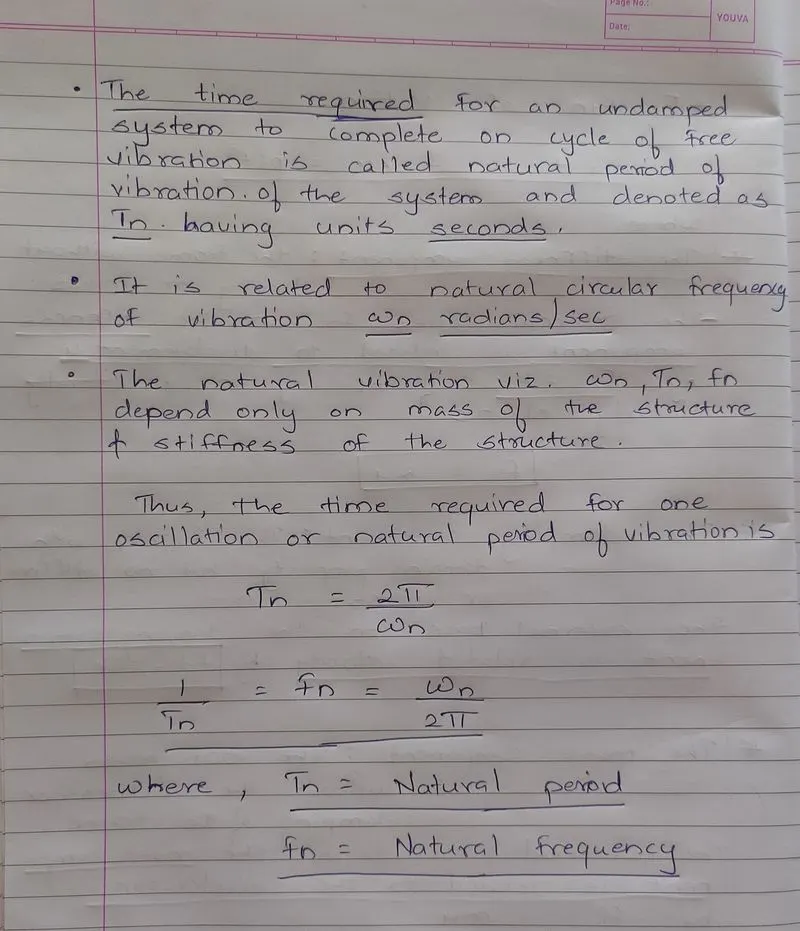
4. Provide relationship between Natural period (Tn) & Natural frequency (f) and provide their definitions
ANS.
-----------------------------------------------------------------------------------------------------------------------------------------------------------------------------
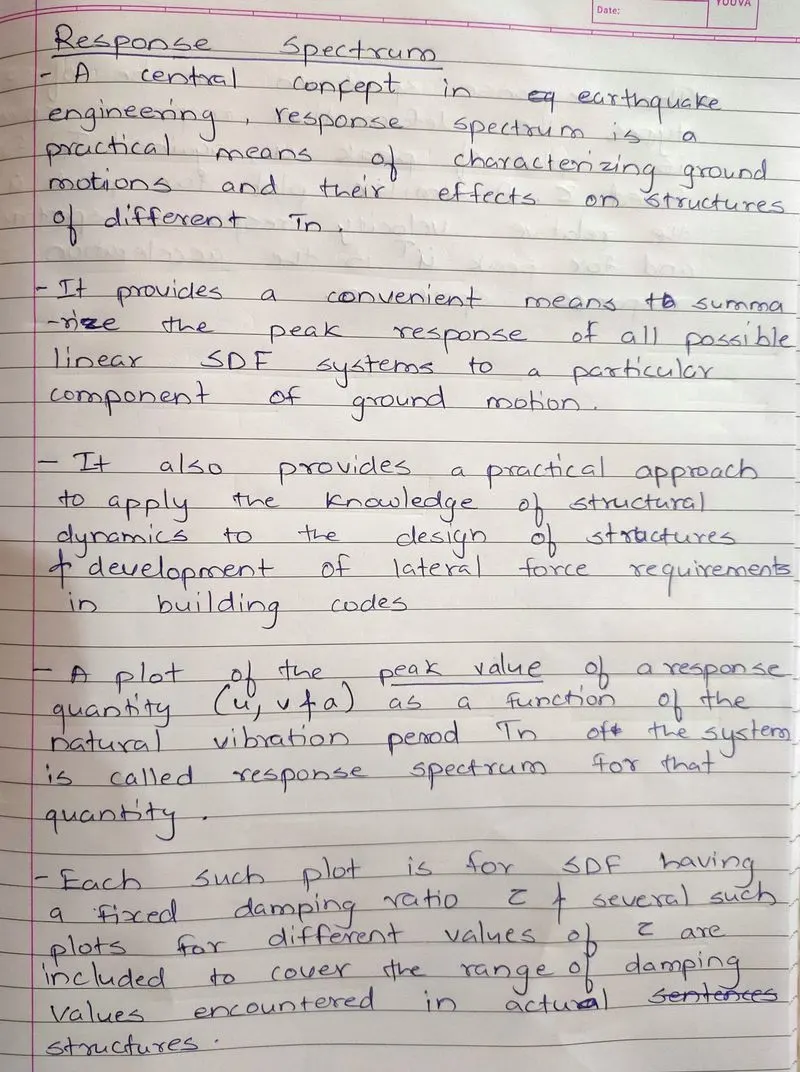
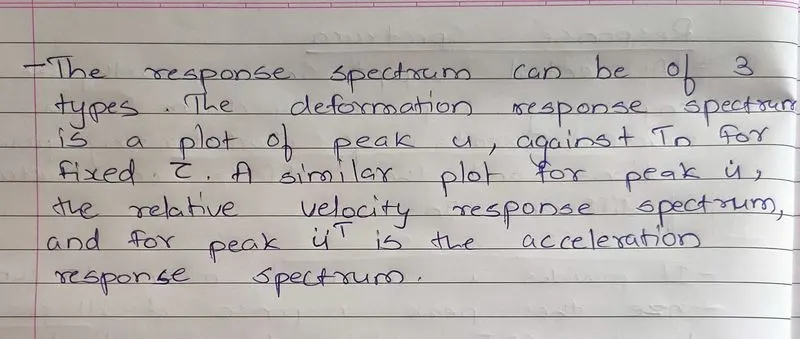
5. Explain in detail about Response spectrum & its Graph
ANS.
- RESPONSE SPECTRUM GRAPH
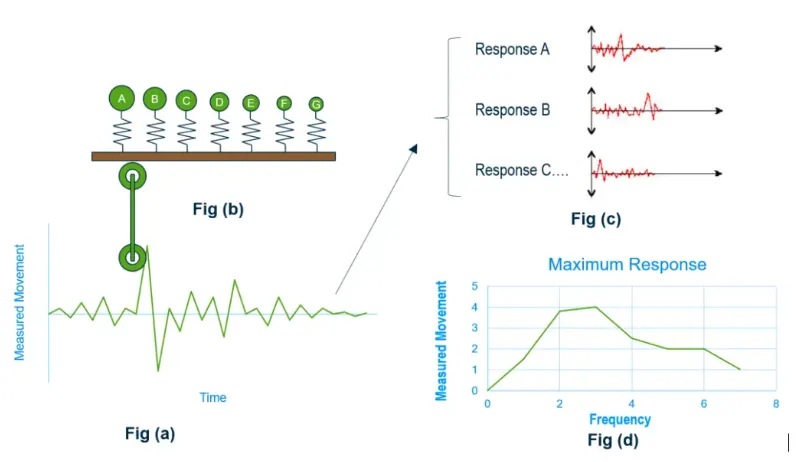
- Calculating the maximum response for a range of values of frequency and damping and then plotting results graphically to get spectrum chart that shows the maximum response for all possible single degree of freedom system to that component of earthquake. This maximum response can be maximum displacements, maximum velocity or maximum acceleration.
- This combined response is made up of many peaks and troughs. The envelope of the broadened peaks is shown in fig (d), which is a conservative approach. The idea is that even though all earthquakes are different, the maximum response of similar earthquakes should be the same even though the time the maximum response occurs may differ i.e. timing of the event is not considered.