Section Modulus calculation and optimization
Section modulus:-
- For general design, the elastic section modulus is used, applying up to the yield point for most metals and other common materials.
- The elastic section modulus is defined as S = I / y, where I is the second moment of area (or area moment of inertia) and y is the distance from the neutral axis to any given fibre. It is often reported using y = c, where c is the distance from the neutral axis to the most extreme fibre. It is also often used to determine the yield moment (My) such that My = S × σy, where σy is the yield of the material.
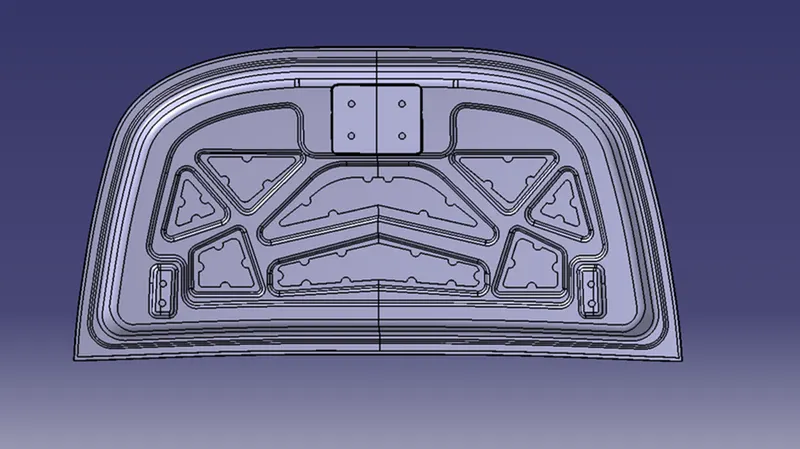
To calculate section modulus need to find Y(distance between the neutral axis and the extreme end of the object )
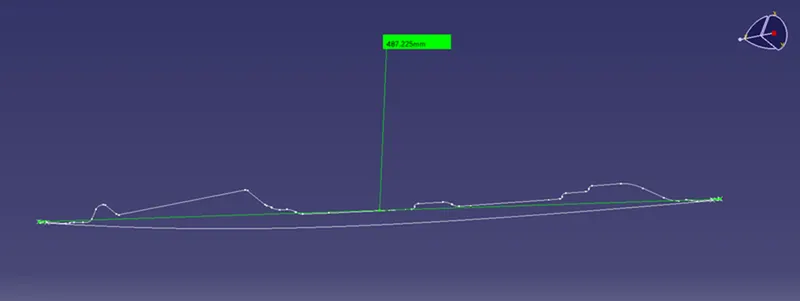
Y=487.225 mm
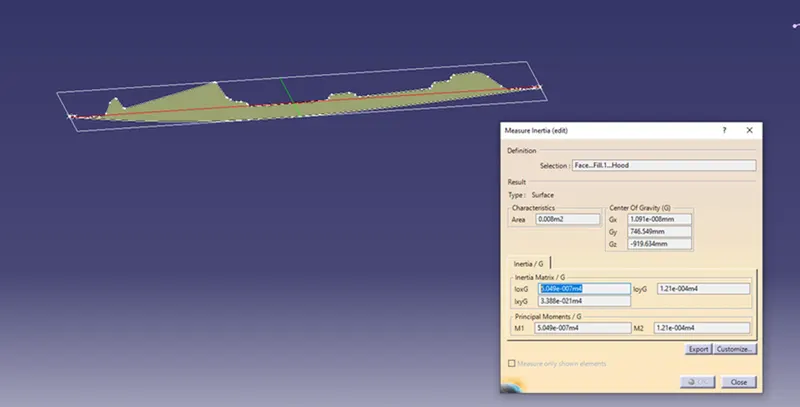
I1=1.21*10^8 mm^4
S1=248345.22 mm^3
If inner panel curve offseted by 6 mm
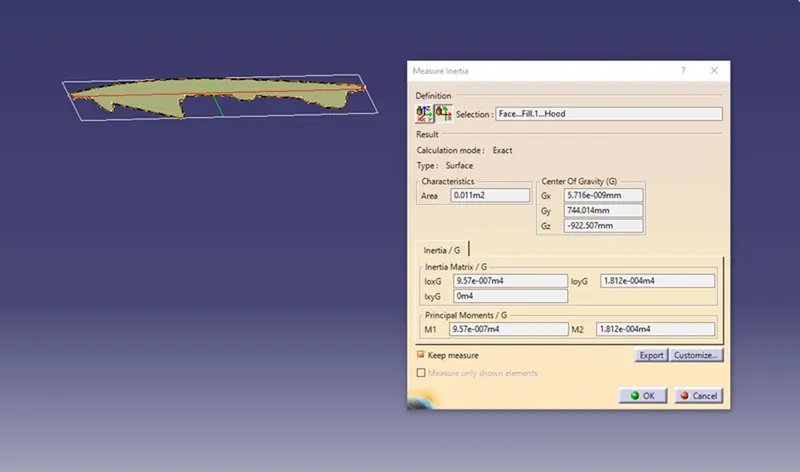
I2=1.812*10^8 mm^4
S2=371902.09 mm^3
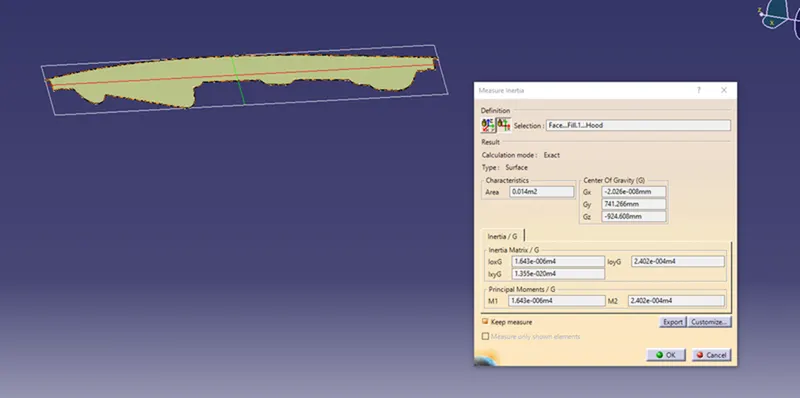
I3=2.402*10^8 mm^4
S3=492996.04 mm^3
Conclusion :-
Section modulus is increases with increase the gap between inner and outer panel. to give more strength to component add more engineering features to master section and as result drastic increase in section modulus.