Section Modulus calculation and optimization
SECTION MODULUS CALCULATION AND OPTIMIZATION
- Section modulus is a direct measure of strength of any sectional area of an object about an reference axis(neutral axis). Strength is nothing but, capable of supporting greater loads, so higher the strength it has a high capable of supporting greater loads.
- What is the section modulus formula for a rectangular section? The elastic section modulus formula of a rectangle
The elastic section modulus is defined as S = I / y, where I is the area moment of inertia, and y is the distance from the neutral axis to any given fibre.
S = I/y
Where,
S = Section Modulus
I = Area Moment of Inertia
y = Distance between the neutral axis and the extreme end of the object
- The main aim for calculating the section modulus is to find out the strength or rigidity of the component.to improve the strength of the material there are various factors to improve it like incresing the thickness of the material and increasing the embossed portion of the material.
- By increasing the thickness of the material the weight of the material may tend to increase to avoid that considering the increased in the area of the emboss may finest solution to increase the section modulus.
Calculation for the section modulus before optimization.
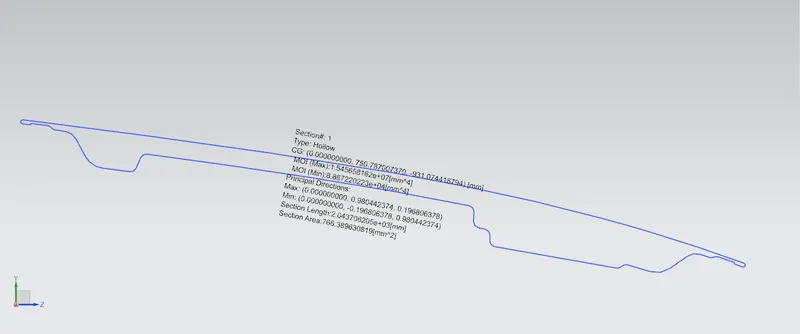
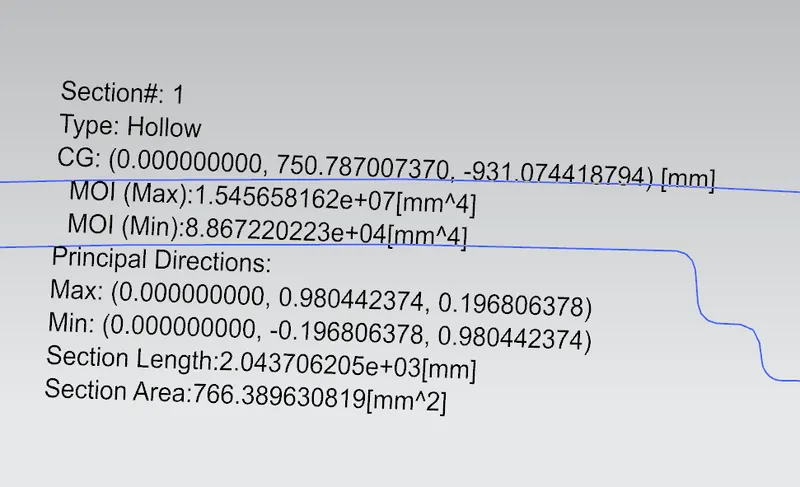
- The minimum area moment of inertia for the hood is, I=88672.3288[mm^4]
to calculate y=the distance from the neutral axis to any given fibre/2
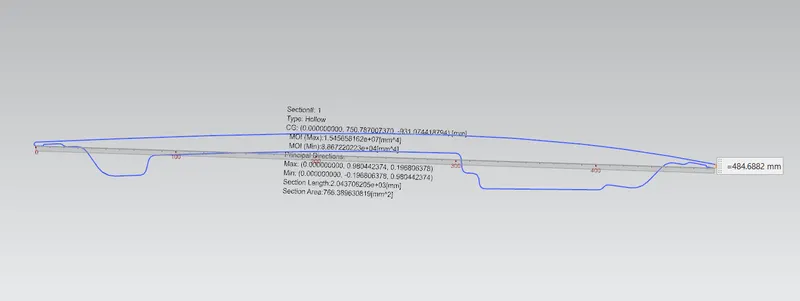
y= 484.6882/2 = 242.3441
S=I/Y
S=88672.3288/242.3441
S = 365.89[mm]^3
Case2:
After the optimization of the material
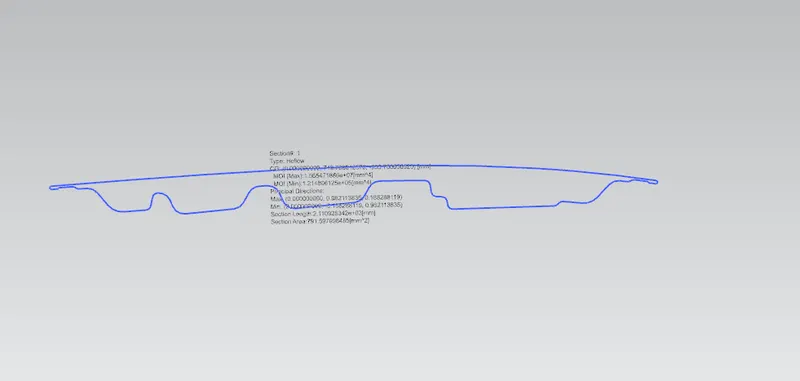
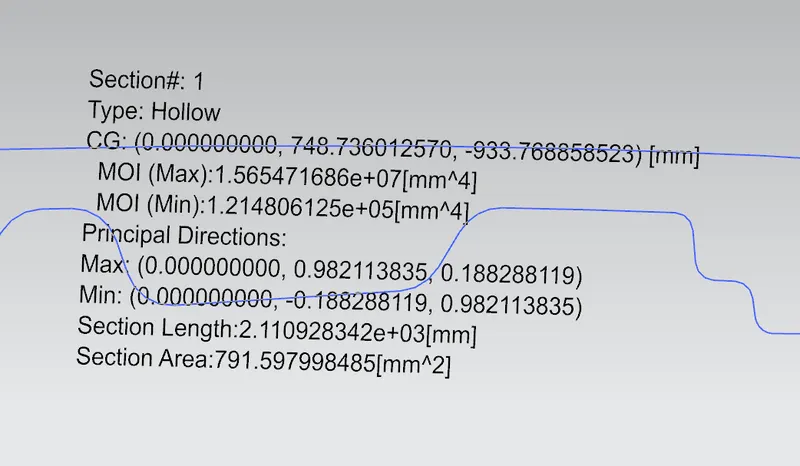
The minimum area moment of inertia for the hood is, I=121480.6149[mm]^4
to calculate y=the distance from the neutral axis to any given fibre/2
Y=4484.69 /2,
y=242.3441
S=I/Y
S= 121480.6149/242.3441
s = 501.27[mm]^3
Results:
- By comparing case 1 & case 2
- case 2 is greater than case 1
- After the optimization of the embossed region on the inner panel of the hood ,the section modulus of the hood is increased.