Section Modulus calculation and optimization
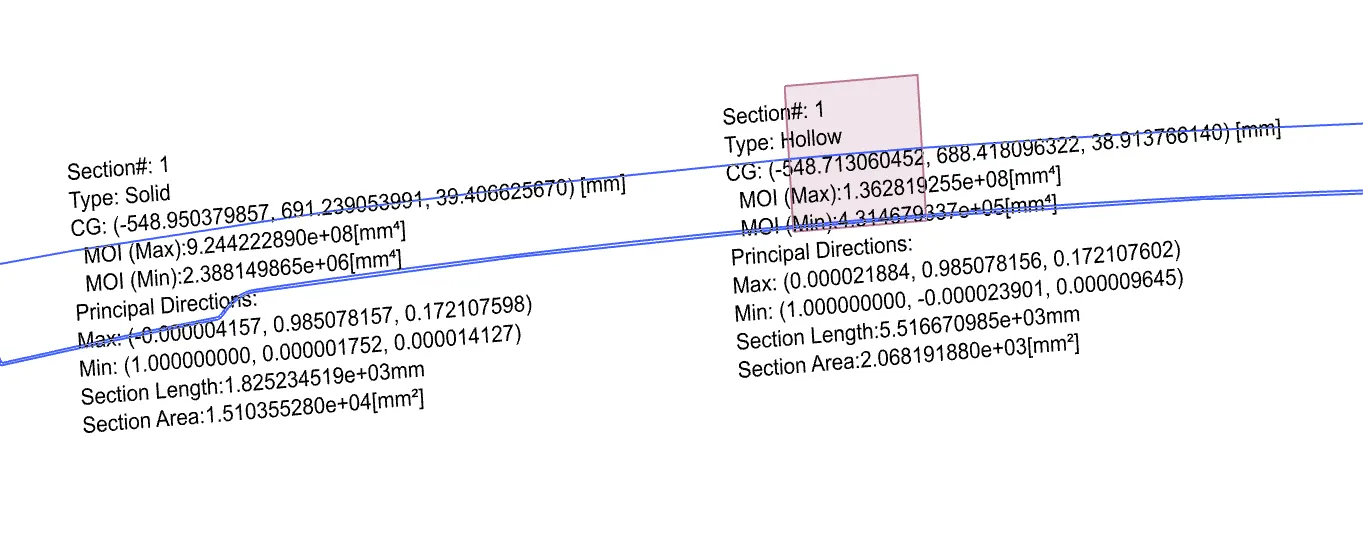
Current section
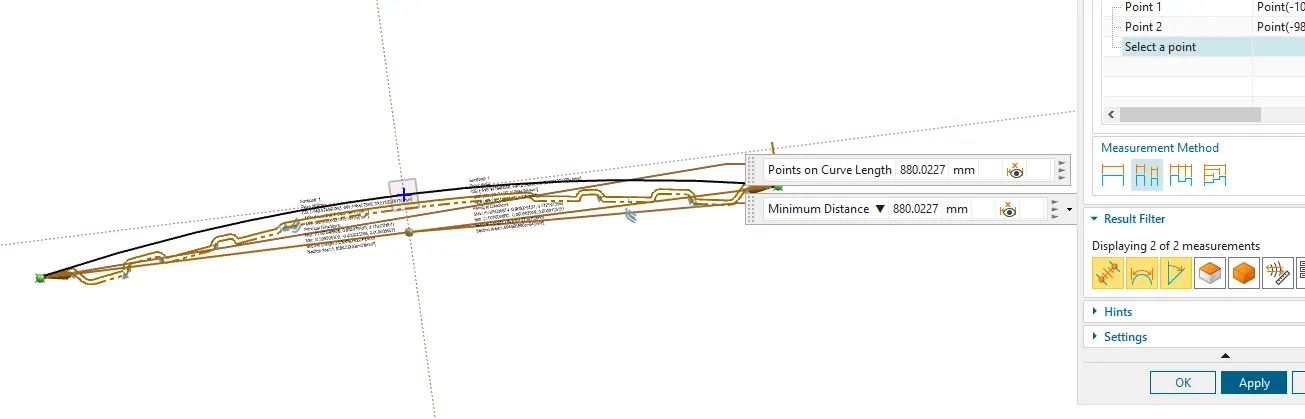
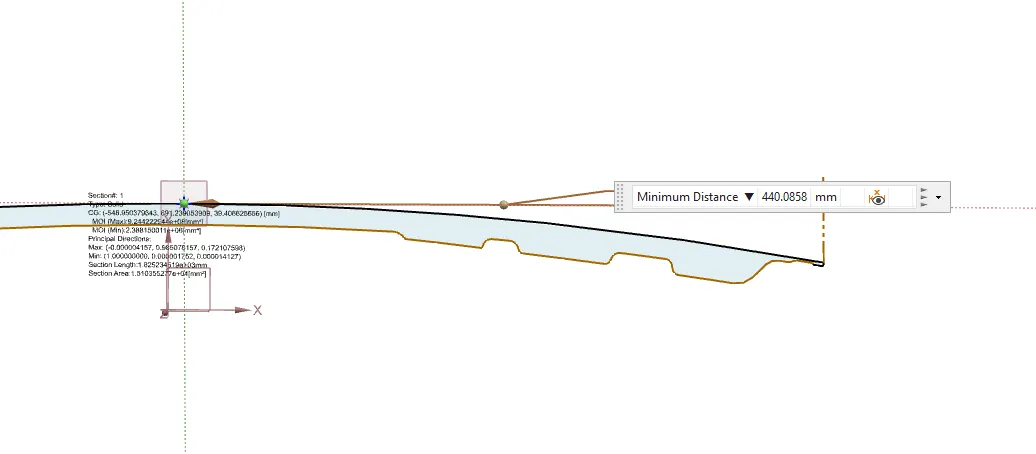
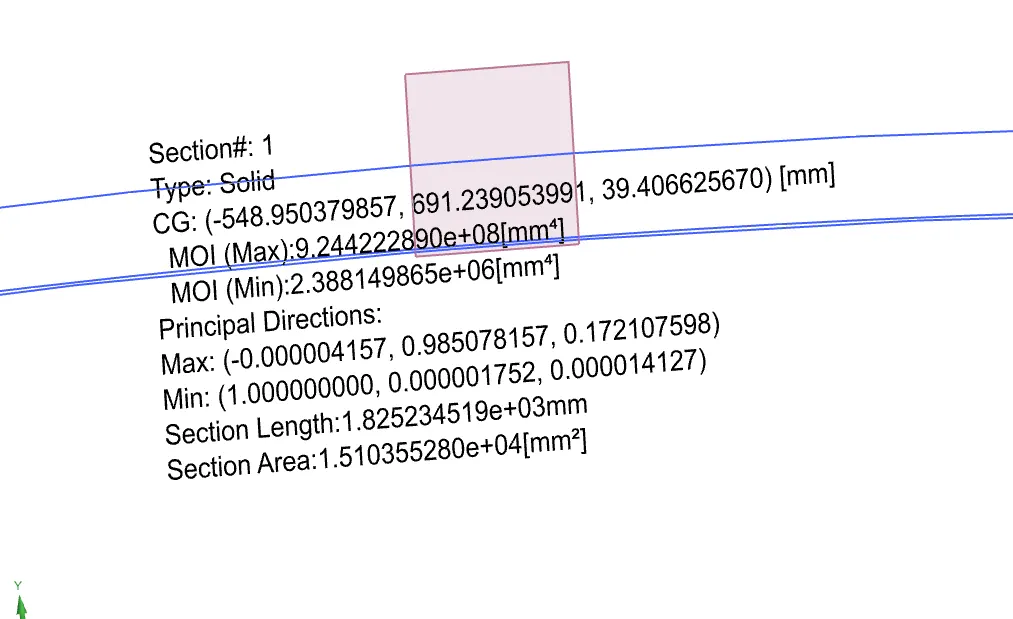
in the original section the y span is is half of the total length which is y max 440.0858
I is 2.3881e6 mm4
In this section S is 5426.51 mm3.
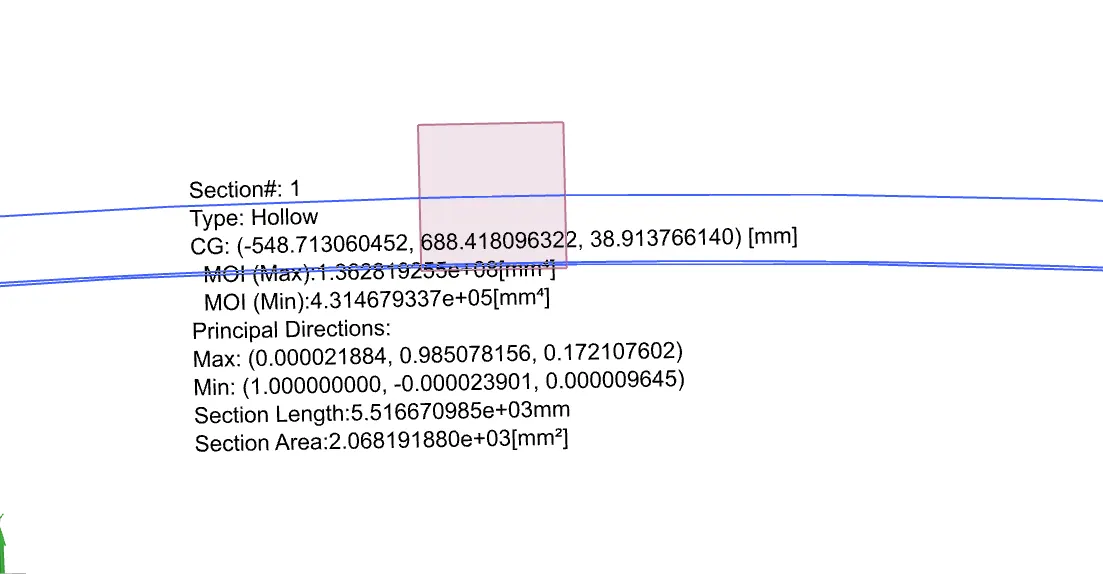
S here is 980.4mm3.
here we can see the comparison between thwe previous moi and modified moi
to change moi we redused the depth of the lowest flanges by 0.5 mm.
1. Brief Explanation About Section Modulus
The section modulus (S) of a cross-section about a given axis to the distance (ymax) from the neutral axis to the most extreme fiber:
- Unit: Typically or .
- Purpose: A higher section modulus indicates greater resistance to bending stress.
- Applications: Used in the design of beams, automotive components, and structural sections like those found in hoods or body panels.
The section modulus () depends on the following parameters related to the geometry of the cross-section:
1. Moment of Inertia ()
The moment of inertia of the cross-section is a measure of how its area is distributed about the neutral axis. It is directly proportional to the section modulus and depends on:
- Shape of the Cross-Section: Different shapes (rectangular, circular, I-beam, T-beam, etc.) have unique formulas for moment of inertia.
- Dimensions of the Cross-Section: Changes in base width (b), height (h), radius (r), or other critical dimensions significantly impact I. For example, for a rectangular cross-section: I=12bh^3
2. Distance to the Extreme Fiber (Ymax)
The section modulus is inversely proportional to the maximum distance (ymax) from the neutral axis to the outermost fiber.
- Increasing ymax reduces S, meaning the cross-section becomes less resistant to bending.
- The value of ymax depends on the overall height of the cross-section and the location of the neutral axis.
3. Cross-Sectional Shape
The shape directly influences both I and ymax, affecting the section modulus.
- Symmetric shapes (e.g., rectangles, circles) generally have straightforward ymax values.
- Asymmetric or complex shapes (e.g., T-beams or L-beams) require careful calculation, sometimes involving the centroid and parallel axis theorem.
4. Orientation of the Cross-Section
The orientation of the section relative to the bending axis is crucial. A section may have different section moduli about different axes:
- : Section modulus about the -axis (horizontal bending).
- : Section modulus about the -axis (vertical bending).
For example, a rectangular beam lying flat has a higher than when it stands upright.
5. Material Considerations (Indirect Impact)
While the material itself does not affect the geometric section modulus, material properties like yield strength (σy) determine how much stress the section can withstand. The bending strength of a section is given by:
Bending Strength=σy⋅S
Thus, material properties influence the required section modulus for a given application.