Section Modulus calculation and optimization
Hood design modification and calculations for section modulus
Section modulus:
Section modulus is defined as a geometric property of a given cross-section used in designing the flexural structures. It is purely dependent only on the cross-section of the member.
We use this parameter to measure the strength of the given member or beam by determining its resistance towards bending. For symmetric sections, the section modulus is considered to be same for both the values whereas for asymmetric sections, the max value is given as Smax and min value as Smin.
There are two different types of section modulus ; Plastic section modulus (Z) and Elastic section modulus (S). In this case, we are considering only elastic section modulus (S) which is governed by the following equation:
Section modulus, (S) = I / Y ………. (1)
Where, I = moment of inertia of the member
Y = yield strength of the member
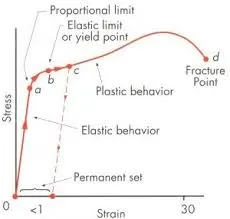
As discussed above, section modulus is a measure of resistance towards bending of the flexural member. The bending equation is governed by the equation as follows:
E/R = M/I = σ/Y ………. (2)
Considering only related terms with respect to moment of inertia (I) and yield strength (Y),
M/I = σ/Y ………. (3)
Where, M = bending moment about the neutral axis
σ = bending stress of the member
From equations (1) and (3),
σ = M/S …… (4)
Therefore, from the equation (4), we can say that bending stress is inversely proportional to the section modulus. It implies that as the section modulus becomes larger, the resistance towards bending also increases.
#1 Initial hood design and its cross-section analysis
The section inertia analysis is performed on the hood design using NX CAD tool. The intersection curve is selected across the YZ-plane and analyzed. It is made sure that the curve is fully closed for accurate results.
From the above figure, following results have been noted:
Imax = 809805.515 mm4
Imin = 382766.110 mm4
Material of the hood design is AISI 1018 Low Carbon Steel and its Yield Strength, Y = 370 MPa
Therefore,
Smax = Imax / Y = 809805.515/370 = 218.866 mm3
Smin = Imin / Y = 382766.110/370 = 103.450 mm3
#2 Modifications in the hood design and analysis
Here, the main aim is to improve the section modulus of the hood by varying its design parameters. Firstly, I checked for tangential nature of the curve i.e. by smoothening the curve. The results obtained is as below figure:
As we can see from the above figure, the Imax and Imin values are increased by 2%. Therefore, we can predict that the cross-sectional curve of the member should have smooth edges i.e. less no. of sections and more tangential in nature which impacts for positive section modulus. In the hood design, the radius of the sections can be improved for greater stability and thus improve bending resistance.
In addition, we know that section modulus is directly proportional to the sectional area. Therefore, section modulus can be improved by simply increasing the cross-section area of the member. In order to increase the cross-section area, the outer panel is offset at a distance of 2mm and joined with the inner panel. The results are as follows:
From the above figures,
Imax = 8470035.389 mm4
Imin = 458643.341 mm4
Smax = Imax / Y = 8470035.389/370 = 228.919 mm3
Smin = Imin / Y = 458643.341/370 = 123.957 mm3
When we compare the obtained results with the initial hood design analysis, the section modulus has been increased by 5%.
Conclusion
From the overall study, it can be noted that moment of inertia of the member plays a major role in the determining the strength of the member. The report illustrates that the tangential nature of the curve helps to slightly improve the section modulus. Also, the sectional area can be increased by offsetting the outer panel to certain distance which helps to improve the section modulus and bending resistance. Furthermore, study can be performed by adding more flanges in the section and analyze for section inertia analysis.