Section Modulus calculation and optimization
Section modulus calculation
Aim
To calculate section modulus in given hood panel and take measures to improve those values.
Introduction
Section modulus is the ratio of moment of inertia about the neutral axis to distance of extreme end from the neutral axis. It is also a measure of strength in a structure. A structure having higher section modulus is stronger and will have greater load bearing capabilities than those having a lower section modulus.
Section modulus may be written as an equation as S=I/Y,
Where,
S is section modulus
I is the moment of inertia
Y is the distance of neutral plane from its extreme end
It could also be said that section modulus is directly proportional to moment of inertia, so our primary focus is to increase moment of inertia at the neural planes.
Procedure
Section modulus needs to be calculated for both planes as shown in the figure as in case of impact, load will be distributed in both the directions.
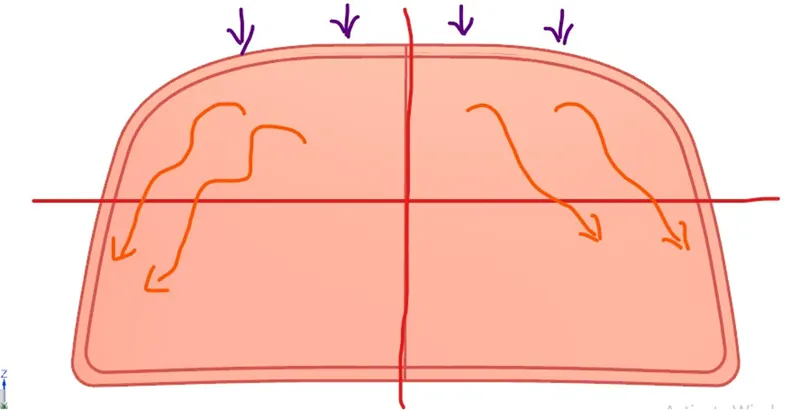
As shown in figure, the red colour shows, neutral plane in which the section modulus has to be calculated ; Purple colour shows the direction in which load is applied; the orange colour shows the direction in which the load is dissipated.
For horizontal section modulus
For horizontal section modulus, the neutral plane is selected half way between both extreme ends. Here, y=237.17mm
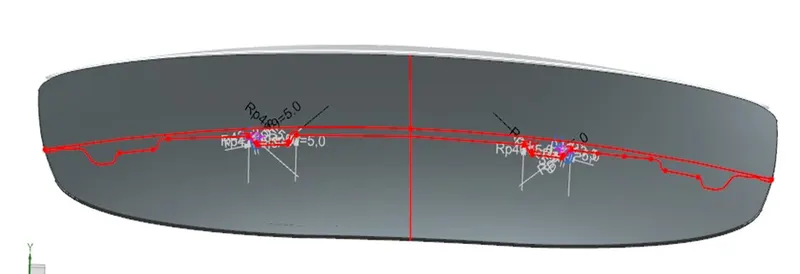
Case 1:
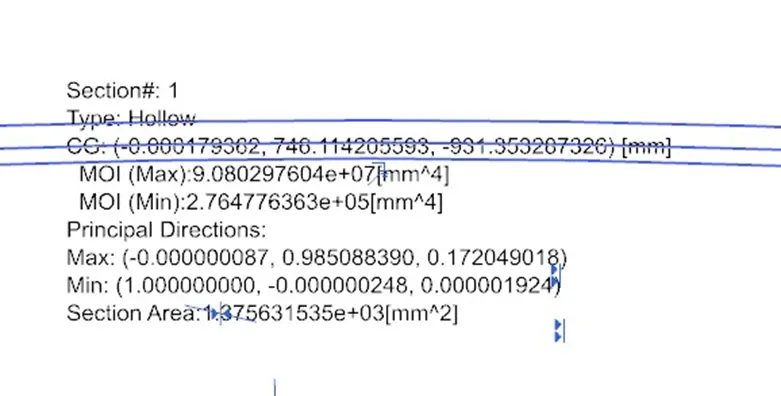
I=2.76 E+5 mm^4
Therefore, S= 276477.63/237.17= 1165 mm^3
Case 2
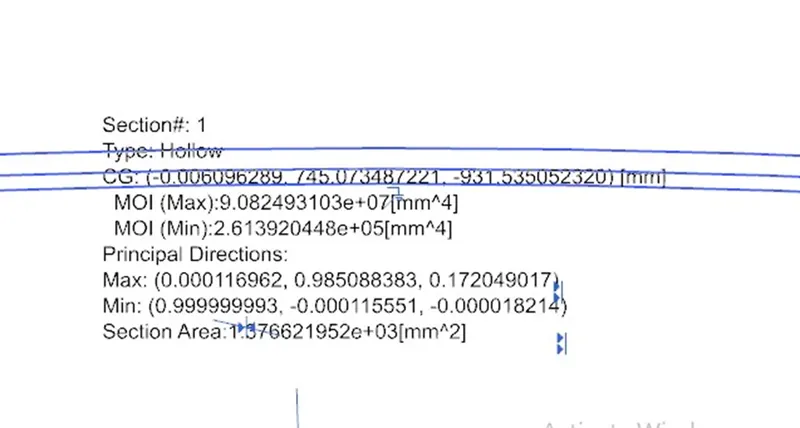
: I=2.61 E+5
SI=261392.044/237.17=1102mm^3
For verticall section modulus
For horizontal section modulus, the neutral plane is selected half way between both extreme ends. Here, y=438.48mm
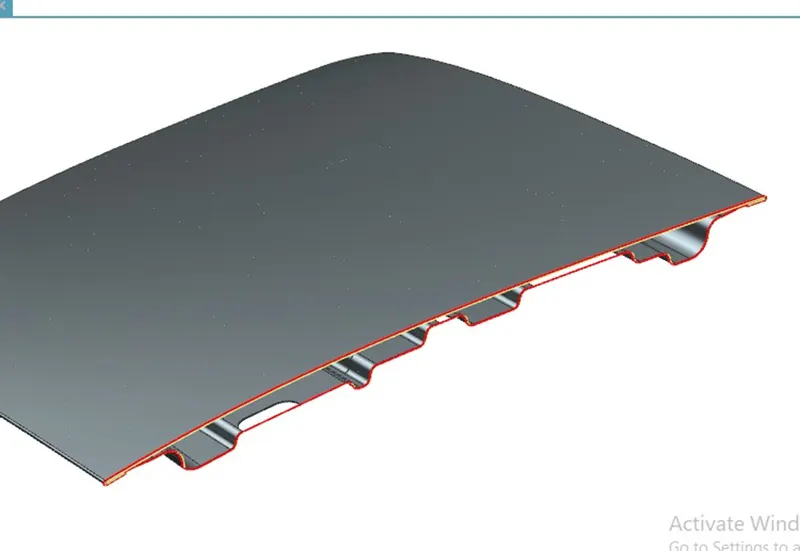
Case 3
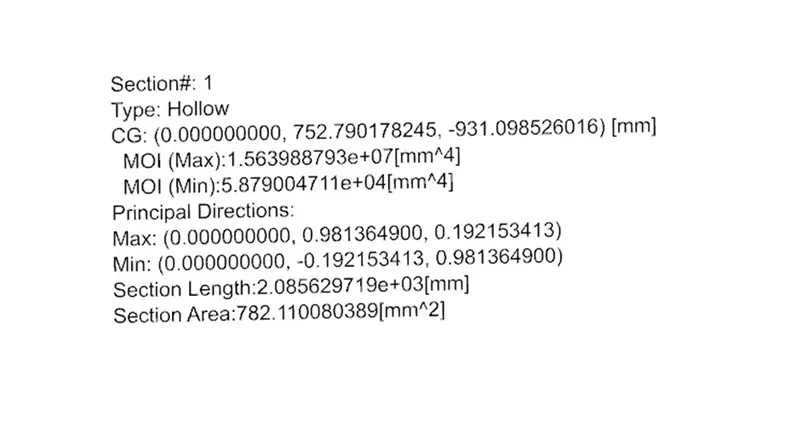
I=5.87 E+4 mm^4
S=58790.04/438.48= 134mm^3
Case 4
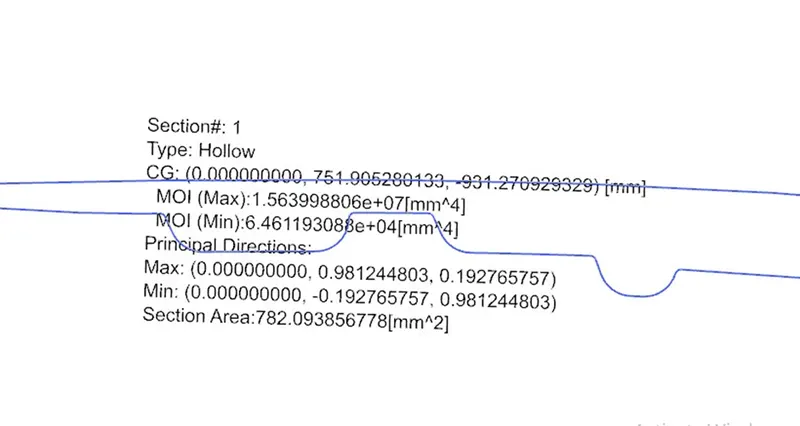
I= 6.46 E+4
S=64611.93/438.48= 147mm^3
Results
After, the study, it was found out, in horizontal section cross section, the lesser area results in having better moment of inertia and thereby better section modulus at that area as observed in case 1.
In Vertical section, it was however found out, a section having higher area to have more moment of inertia and thereby better section modulus as observed in case 4.