Fender Design Challenge
Fender Design
Introduction
A fender is that part of a vehicle that is used to frame in the wheels of a vehicle. The main purpose of a fender is to prevent mud, rocks and small grains from the road to be chipping on the paint and preventing stones from being throne into people or vehicles nearby. A fender serves the purpose of preventing external body to get inside the engine compartment. It also plays an important role in side impact tests and the design team has to keep in consideration both the safety of passengers and pedestrians in mind while designing the fender
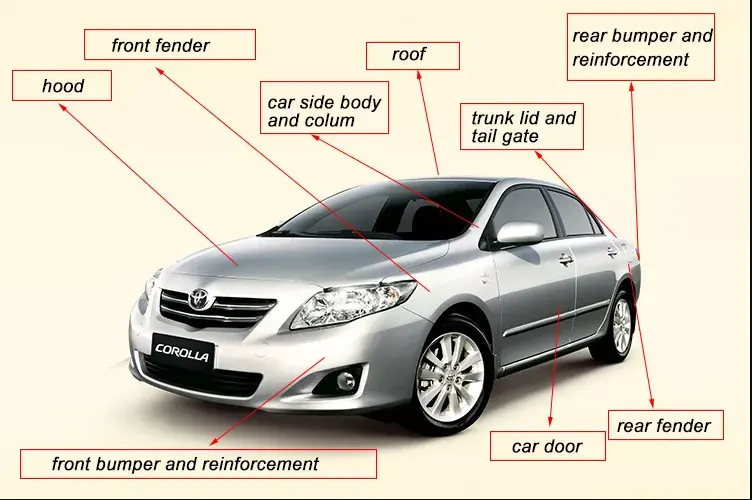
A fender is designed keeping various factors in considerations such as the mounting points, location of the vehicle and the attachments that has to be later accommodated. A fender usually mounted on A-Pillar, Drip Area, Bumper mounting, Sil area and Cowl area. . The design requirements of fender changes from country to country depending on the road and weather conditions in the country. Usually the country which has the highest standards in which the vehicle is to be introduced is taken and designed so that they could use the same fender in every country.
Types and Evolution of Fender
The fenders have transformed in shape and size over the last few decades. This is mostly in-order to reduce the metal scrap and wastage. Bellow is the images of a ford roadster that was popular in 1980’s to a fender of an i20 in 2020.

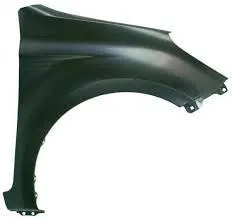
Ford roaster fender: Full bumper type I20 fender: Half bumper type
A full bumper type fender was initially used until the late 1980’s. A full bumper type fender covers the entire wheel arch and is very bulky. The later image shows the bumper of an I20 that is a half bumper type. The wheel arch is partially covered by the fender and the rest will be occupied by the bumper. The main advantage of this type is that 2 half type fenders could be created with the same material it takes to create one full bumper type fender.
Design criteria
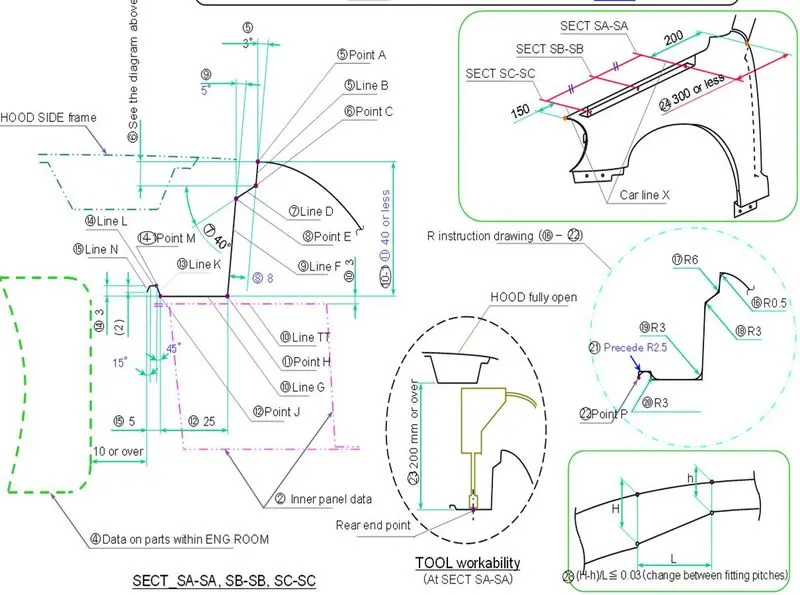
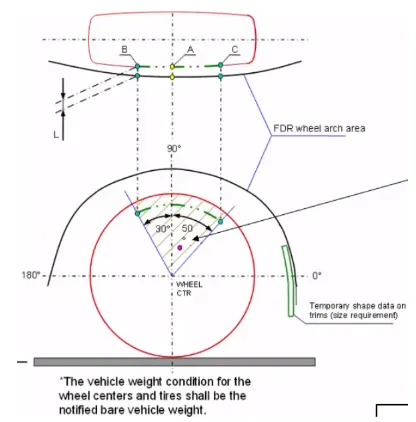
Wheel-Arch Standards
The wheel arch standards vary from country to country depending on the road conditions. The standard requierments for Japan is much more relaxed than the standards followed in Europian countries. So if the company intends to make available a car in different countries, the region that follows the highest standard are taken and designed accordingly. This help prevent having multiple parts for different regions.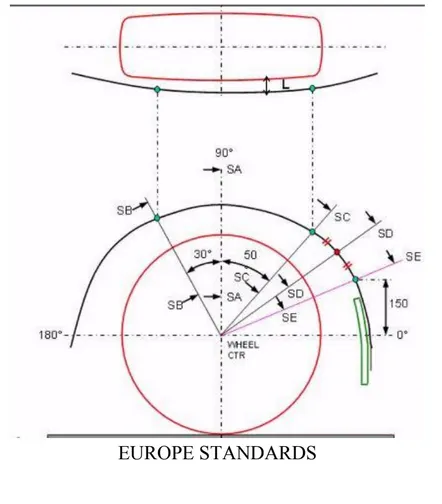
Fenders have mountings mostly on the following region
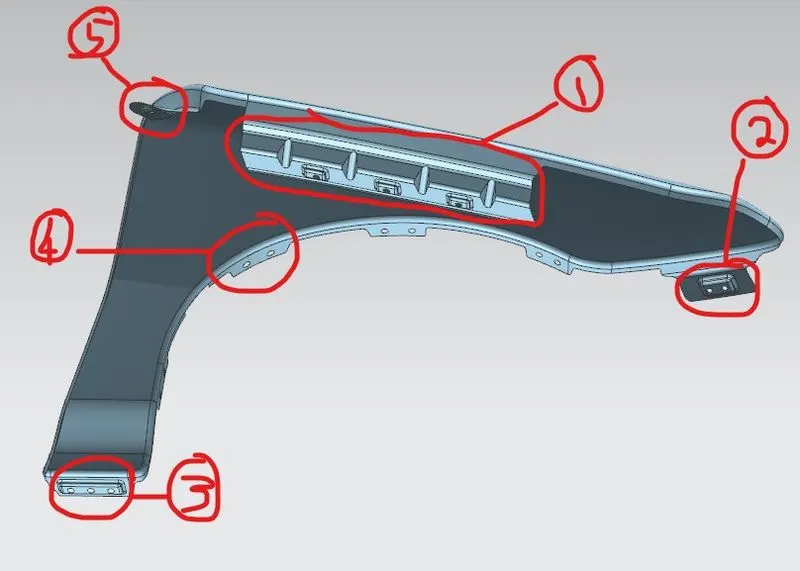
- 1. Drip Region
- 2. Bumper Mounting Region
- 3. Sil Area
- 4. Baffle mounting region
- 5.A-Pillar region
There are also mountings on cowl and body area in some fenders.
Drip region
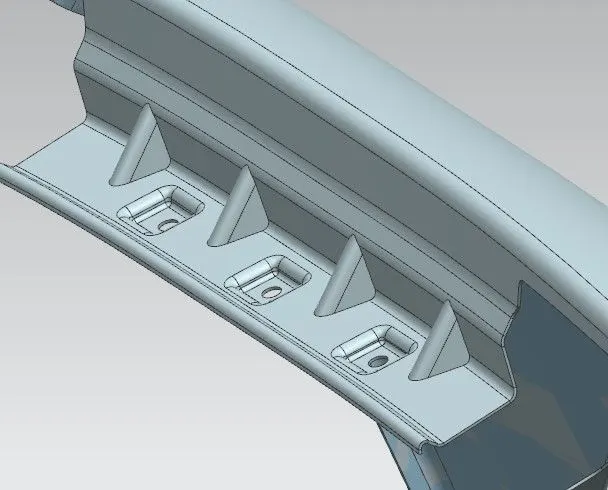
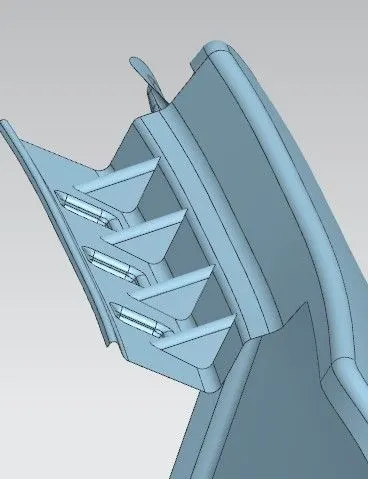
Drip region is the most important mounting of a fender that connect the body to the fender. The design criteria requires a clearance of almost 300mm from the windshield side to provide clearance for the cowl region and a clearance of 150mm is given for the headlight mounting on the other end. Darts and bends are provided at this part to strengthen this component.
A-Pillar Region
A-Pillar region is an important mounting point that is located near the drip area and the cowl region. Normaly either mounting is given at cowl region or at the A pillar. Usually they dont give mounting points at both these positions. A Pillar region is small when compared to the drip area so the darts are not necessary at these region.
Bumper Region
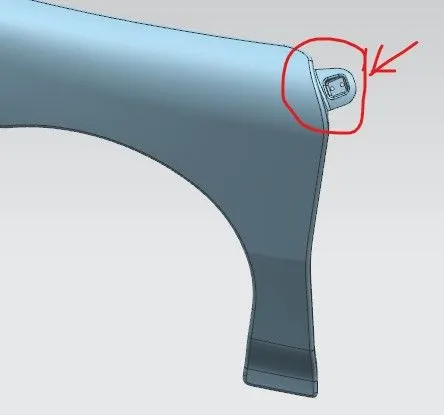
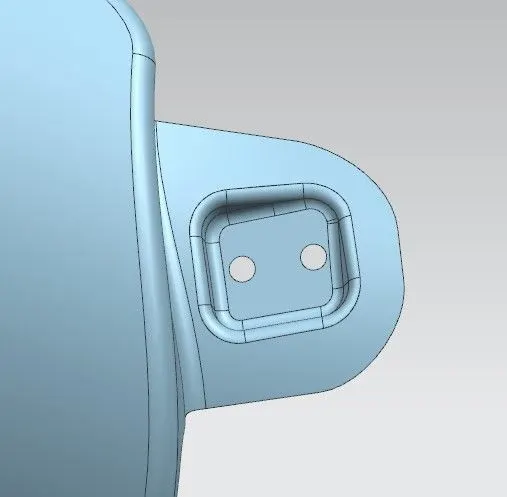
Bumper region is provided at the front of the fender. This point is carefully given by giving space for the headlight mounting point. The part is strengthened by making bends at the sheets.
Sil Area
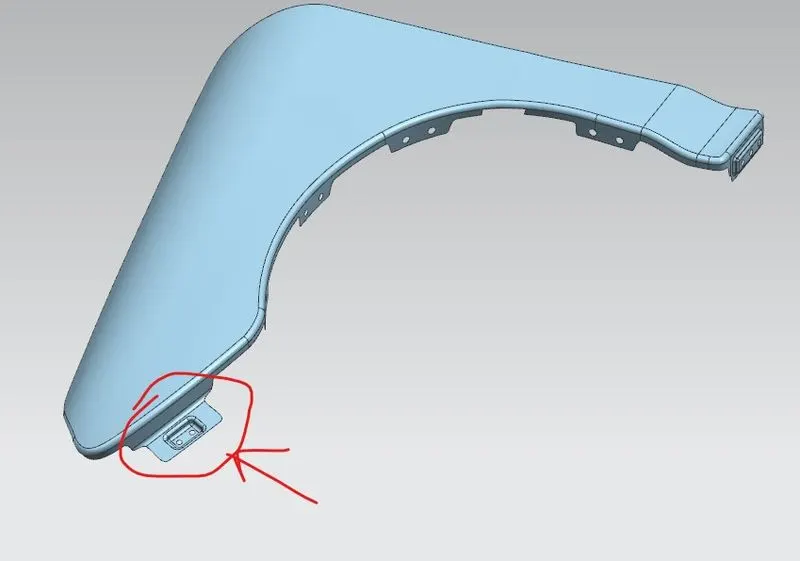
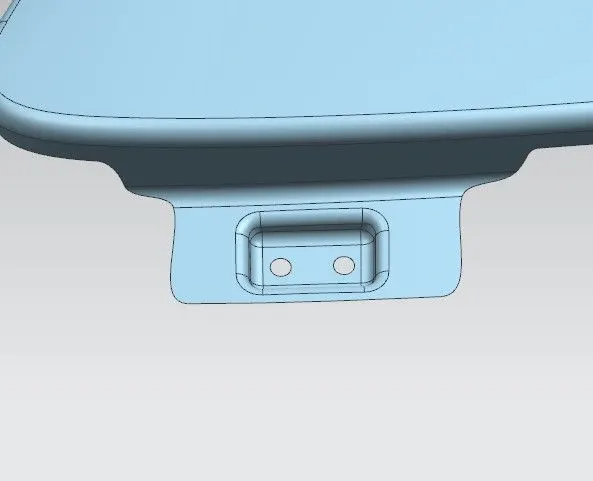
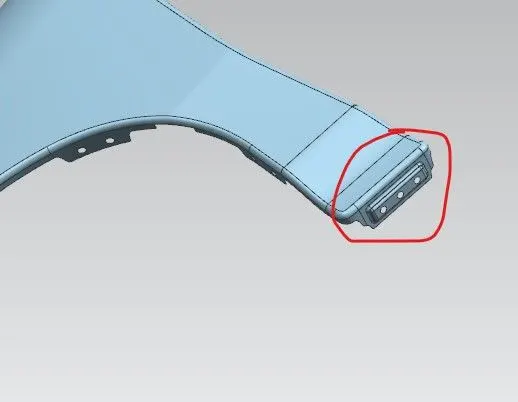
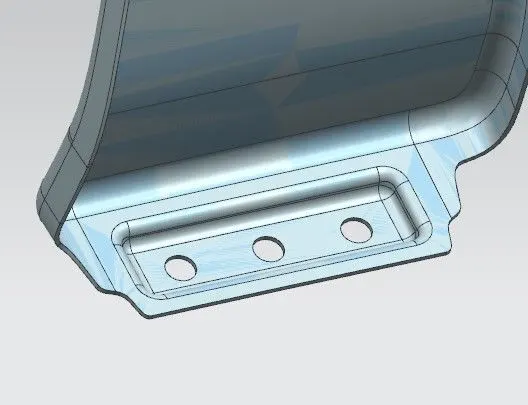
Sil mounting area is given at the base of the fender. Emboses are given at the base of the mounting area to strengthen the region. Holes with a raidus of 5mm is given at the base for mounting rhe fender with the Sil region.
Baffle Mounting