Section Modulus calculation and optimization
AIM:
To determine the hood's section modulus in order to assess its strength and make design adjustments that will improve the hood's bending strength. A structure becomes more resistant to bending the higher its section modulus.
SECTION MODULUS:
Section modulus is a geometric property for a given cross-section used in the design of beams or flexural members, it is also referred to as the Polar Modulus or the Torsional Sectional Modulus. Other geometric properties used in design include area for tension and shear, radius of gyration for compression, and moment of inertia and polar moment of inertia for stiffness. Ratio of area moment of inertia about the neutral axis and to the distance of outermost fiber from the neutral axis. The elastic section modulus and the plastic section modulus are the two different forms of section modulus.
S=I / y
Here,
S = Section Modulus
I = Area Moment of inertia
y = Distance from neutral axis to the outermost fiber.
The unit of section modulus is mm³.

Changing the position can show the difference in bending which is because of the centroid distance from outermost fiber.
NEUTRAL AXIS:
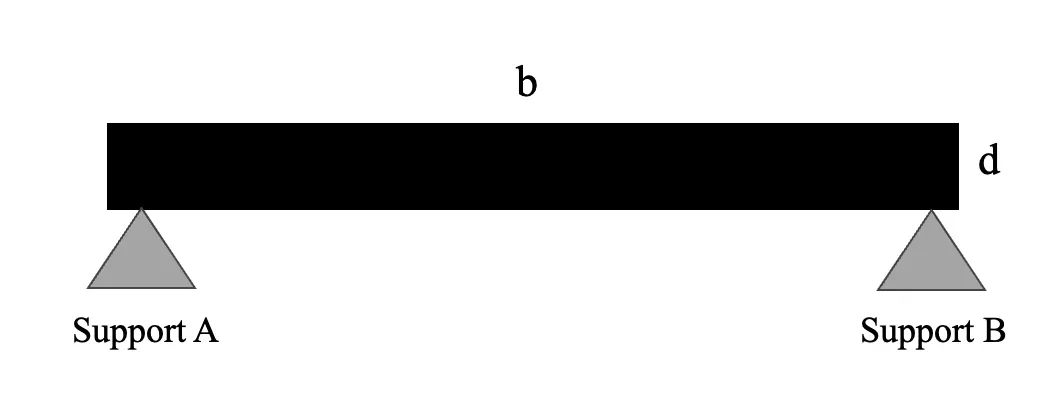
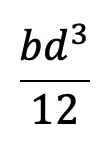
Neutral axis is a layer in a particular cross section, where there will be neither tension nor compression. Area moment of inertia formula for rectangular cross section are mentioned below,
CASE 1:
CASE 2:
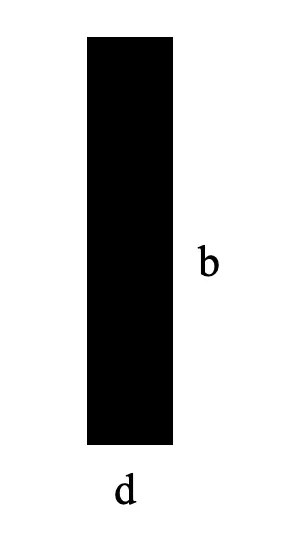
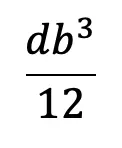
By visuals, b>d, which is area moment of inertia received in Case 2 is greater than the area moment of inertia received in Case 1.
Reason:
- because of cube.
- I2 > I1
RELATION BETWEEN AREA MOMENT OF INERTIA & RESISTANCE TOWARDS BENDING:
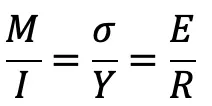
- M = Bending moment/Resistance towards bending
- I = Area moment of Inertia
- σ = Bending stress
- Y = Distance from neutral axis to outermost fibre
- E = Young's modulus
- R = curvature of particular bend
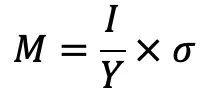
M=S×σ
- Maximize the Resistance, S (Section Modulus) should be maximum.
- Maximize the Resistance, area moment of Inertia should be maximum.
ELASTIC SECTION MODULUS:
The elastic section modulus, which applies up to the yield point for the majority of metals and other common materials, is utilized for general design.
S = I / y is the formula for the elastic section modulus, where I is the second moment of area (also known as the area moment of inertia) and y is the length of time that separates any given fiber from the neutral axis. It is commonly reported using y = c, where c is the length of the fiber that is furthest from the neutral axis. It is also frequently used to find the yield moment (My), where σy is the material's yield strength, and My = S × σy.
PLASTIC SECTION MODULUS:
For materials when plastic behaviour is taken to be an acceptable limit and elastic yielding is deemed acceptable, the plastic section modulus is employed. Designs frequently compare the plastic capacity against increased forces or stresses in an effort to finally stay below the plastic limit and prevent permanent deformations.
The placement of the plastic neutral axis (PNA) determines the plastic section modulus. The axis that divides the cross section so that the tension force from the area in tension and the compression force from the area in compression are equal is known as the PNA. Therefore, the area above and below the PNA will be equal for sections with constant yielding stress, but this may not always be the case for composite sections.
The area of the cross section on either side of the PNA, which may or may not be equal, is added up, and then the distance between the local centroids of the two regions and the PNA is multiplied to find the plastic section modulus:
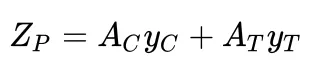
Another name for the Plastic Section Modulus is the "First moment of area."
The plastic moment, Mp, or full capacity of a cross-section is computed using the plastic section modulus. The two terms are connected by the material's yield strength, Fy, and Mp=Fy×Z. A form factor, represented by the letter "k," connects the plastic section modulus and elastic section modulus and is used to indicate capacity beyond the elastic limit of the material.
This could be shown mathematically with the formula:

Shape factor for a rectangular section is 1.5. So here We are Calculating Elastic section Modulus.
SECTION MODULUS CALCULATION AND OPTIMIZATION:
CASE 1:
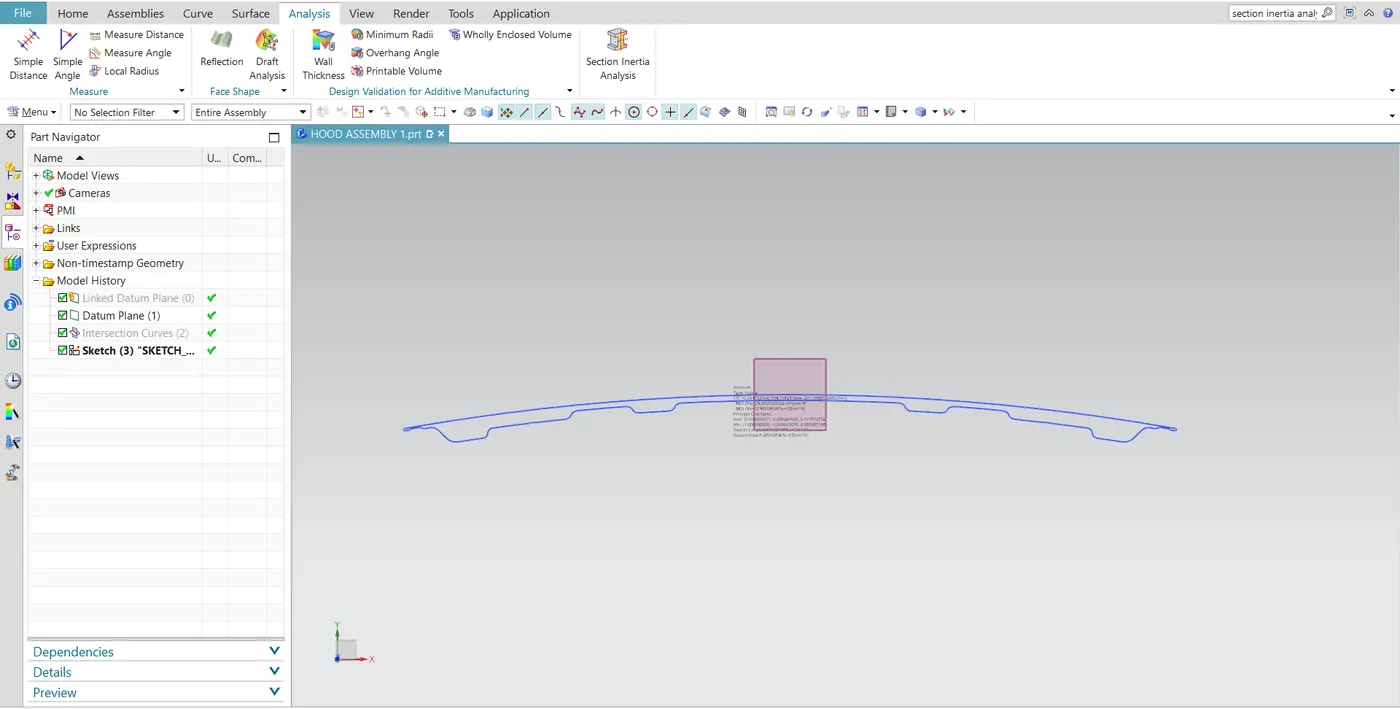
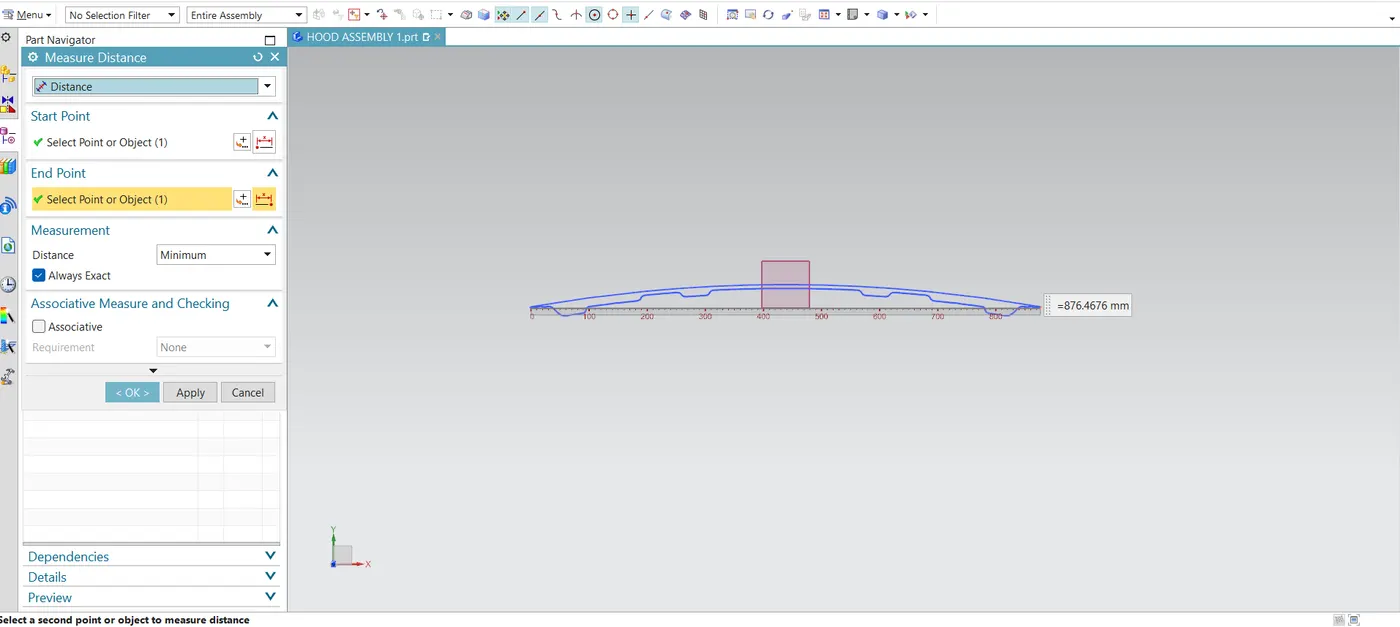
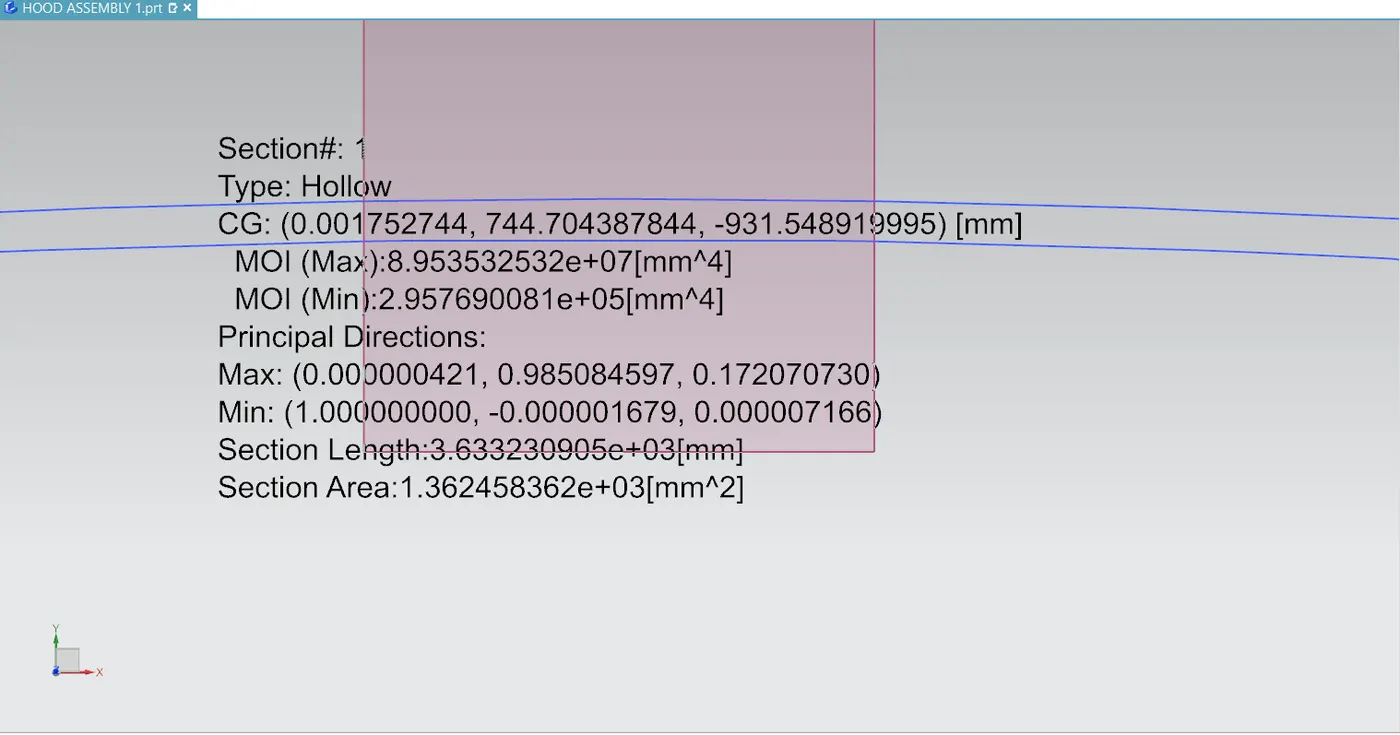
Moment of Inertia (MOI), Imax = 8.953532532 × 10⁷ [mm4]
Moment of Inertia (MOI), Imin = 2.957690081 × 10⁵ [mm4]
Distance between the neutral axis and the outermost end of the object, y = 876.4676 / 2 = 438.2338 mm
Section Modulus, S = I / y
I = 2.957690081 × 10⁵ [mm4]
S1 = (2.957690081 × 10⁵ [mm4]) / (438.2338 mm)
Section Modulus, S1 = 674.91144704037 mm3
CASE 2(OPTIMIZED):
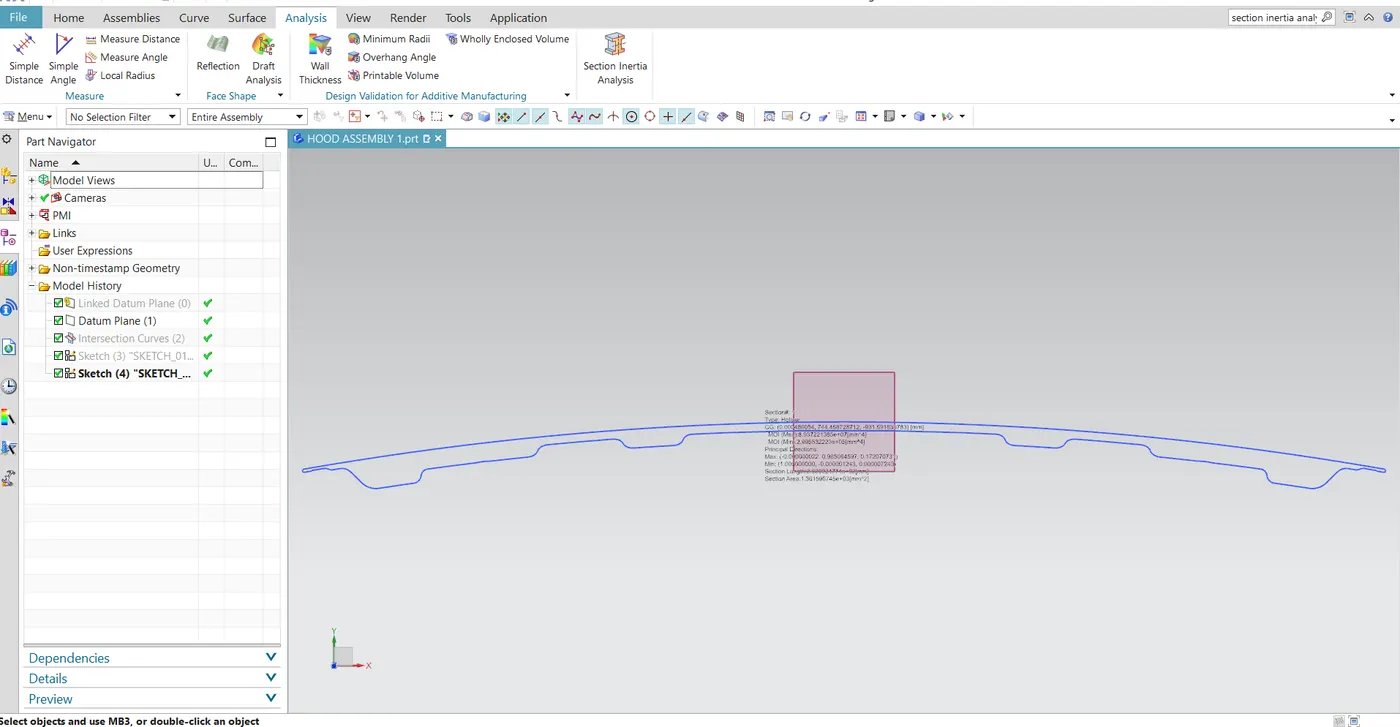
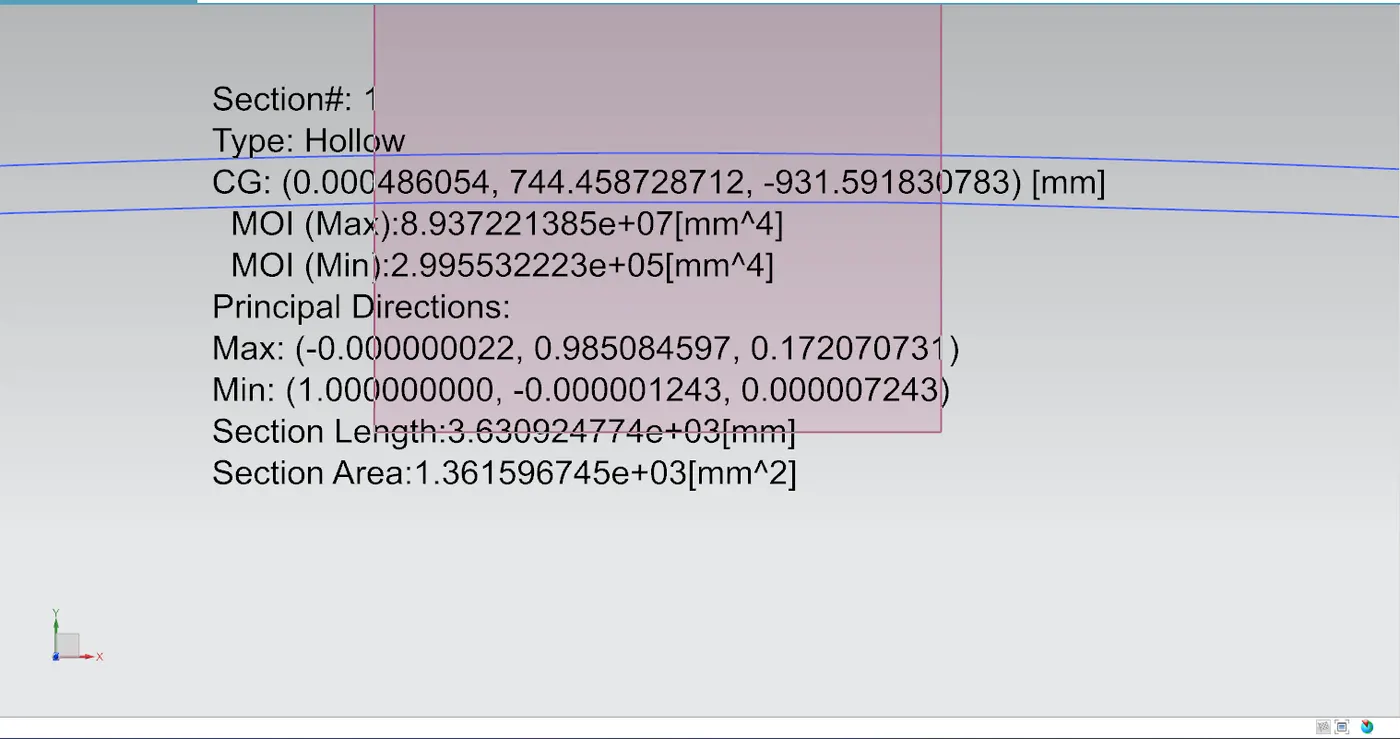
Moment of Inertia (MOI), Imax = 8.937221385 × 10⁷ [mm4]
Moment of Inertia (MOI), Imin = 2.995532223× 10⁵ [mm4]
Distance between the neutral axis and the outermost end of the object, y = 876.4676 / 2 = 438.2338 mm
Section Modulus, S = I / y
I = 2.995532223× 10⁵ [mm4]
S2 = (2.995532223× 10⁵ [mm4]) / (438.2338 mm)
Section Modulus, S2 = 683.54659613202 mm3
RESULT:
S2 (Optimized) > S1,
After minor adjustments or optimization, the section modulus of the car's hood was estimated, and improved findings were discovered.