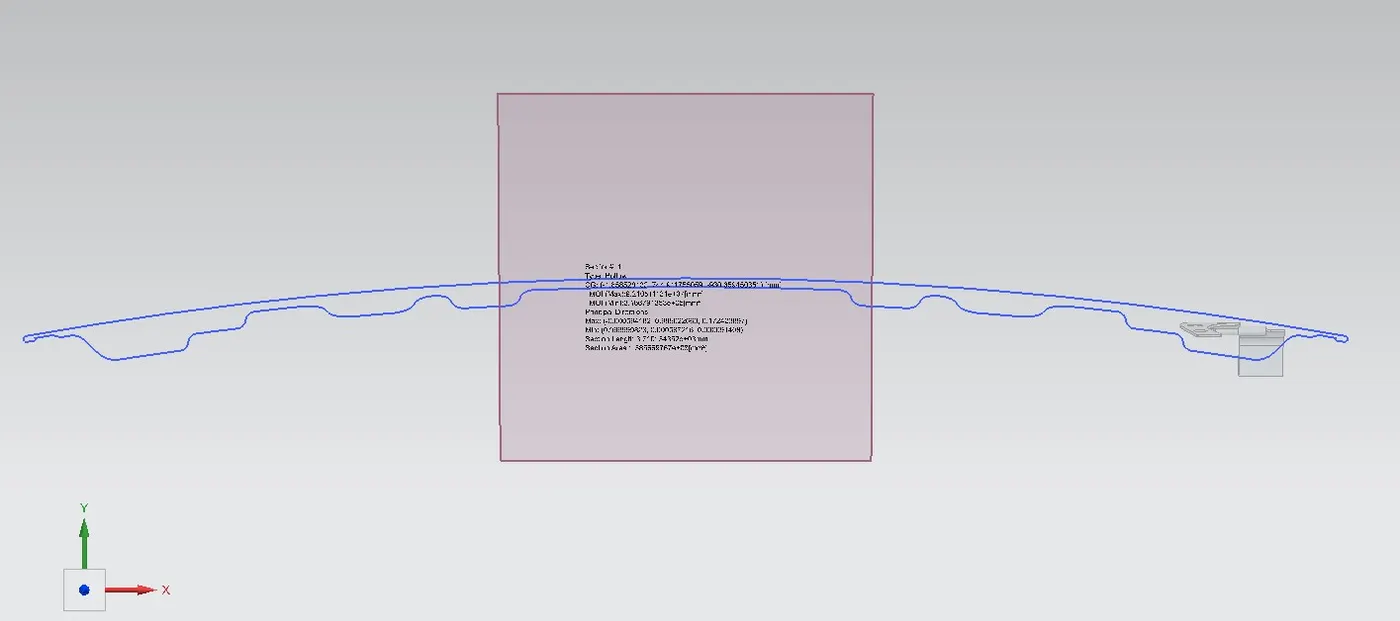
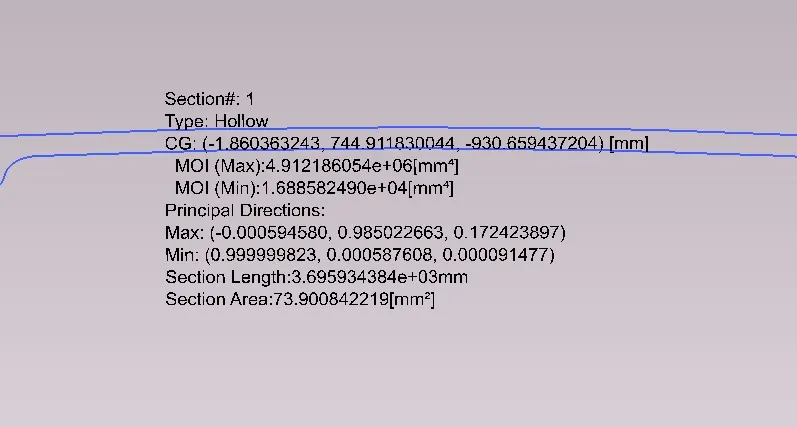
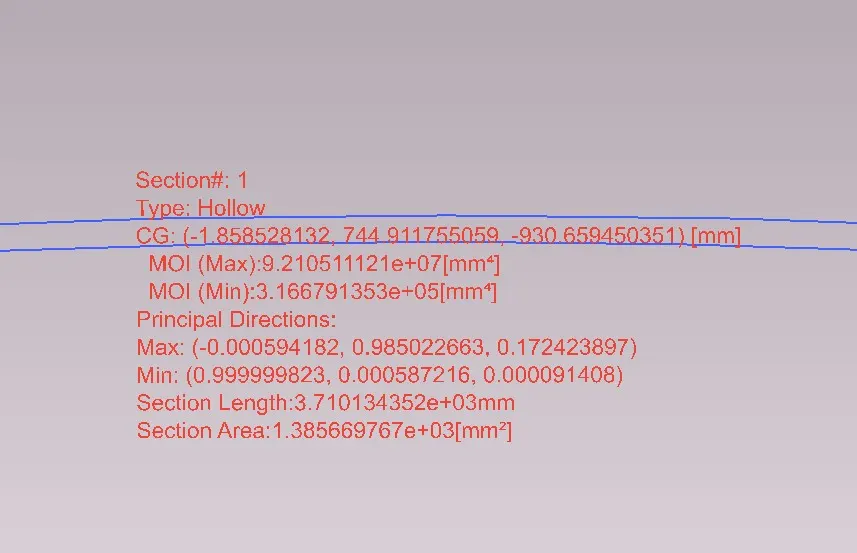
Section Modulus calculation and optimization
SECTION MODULUS
The section modulus serves as a vital geometric characteristic in the realm of beam or flexural member design. This property, also known as the Polar Modulus or Torsional Sectional Modulus, comes alongside other geometric factors such as area for tension and shear, radius of gyration for compression, and moment of inertia and polar moment of inertia for stiffness. It's important to note that the interrelation among these properties heavily hinges on the specific shape under consideration.
Defined as the ratio of the second moment of inertia to the distance from the Neutral Axis (N.A.), the section modulus bears significant weight as a measure of a given member's strength. It is instrumental in calculating the stress within the outermost section of a beam. Its symbol, S, represents this property.
Mathematically, the section modulus can be expressed as:
S = I / y
Here, I represents the moment of inertia, and y signifies the distance from the neutral axis to the upper or lower extremity of the fiber.
The unit of section modulus is expressed in cubic millimeters (mm^3).
The section modulus exclusively hinges on the cross-sectional shape of the beam. Various shapes such as rectangular, square, circular, I-sections, T-sections, composite sections, etc., can all influence the section modulus differently.
In the case of symmetric sections, the section modulus value applies both above and below the centroid of the fiber.
However, for asymmetric sections, distinct values exist for the top and bottom of the fiber due to differing distances from the centroid to the material's upper and lower portions. The maximum section modulus is denoted as S_max, while the minimum is termed as S_min.