Section Modulus calculation and optimization
AIM: Study of Section modulus for the given hood model for two iterations and analyze which will the better to be considered.
What is Section Modulus?
Section modulus is the ratio of total moment resisted by the section to the stress in the extreme fibre. Section modulus give us idea about how much of load the given structure can take. If the section modulus increases the moment of resistance increases. It is also referred to as the Polar Modulus or the Torsional Sectional Modulus.
Section modulus is defined as the ratio of polar moment of inertia to the radius of the shaft or the distance from the neutral axis to the outer fibres.
we have Bending equation
M / I = σ /y = E / R.
where,
M = Bending Moment
I = Area moment of Inertia
E = Young modulus
R = Radius of gyration
Area Moment of Inertia;
The area moment of inertia of a beam cross section area measures the beam ability to resist bending. The larger the moment of inertia less will be the bend.
Use the formula: where b = breadth (width) and d = depth (height) to calculate the moment of inertia about the x-x axis for beams A and B using information from the diagram.
For a beam which has been bent, the maximum stress σmax will occur at the maximum distance ymax from the neutral axis.
Thus from above equation,
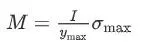
The quantity I/ymax is a purely geometric function and is termed the section modulus Z. Thus we can write:
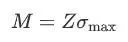
Therefore :
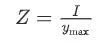
Z = Section modulus.
I = Moment of Inertia.
Ymax = distance between the neutral axis and the extreme end of the object.
Lets do the analysis of section modulus on NX-CAD software;
case 1:
use mastersection and section inertia cammand for below analysis
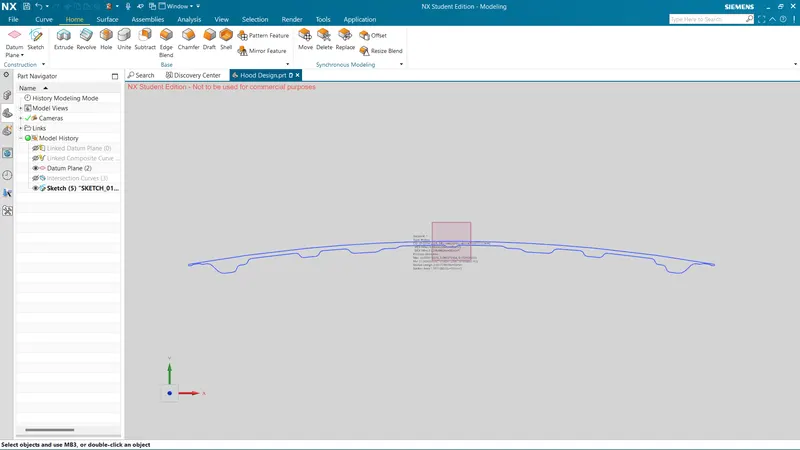
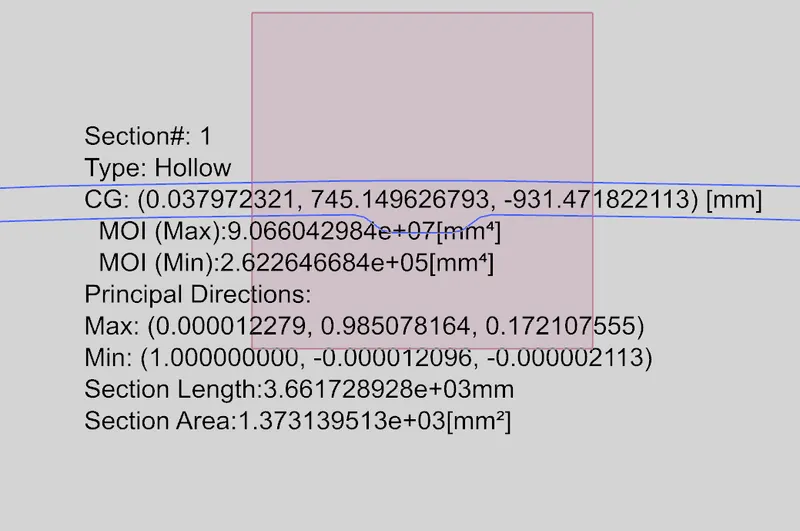
Moment of inertia(max) = 9.066042984×10^5×mm^4
Moment of inertia(min) = 2.622646684×10^3×mm^4
Y=485.7599/2=242.8799 mm
S=I/Y
S=2.62264×10^3/242.87= 10.80 mm^3
Hood Design Optimization
By increasing the depth of the inner panel by 0.5 mm
Case 2:
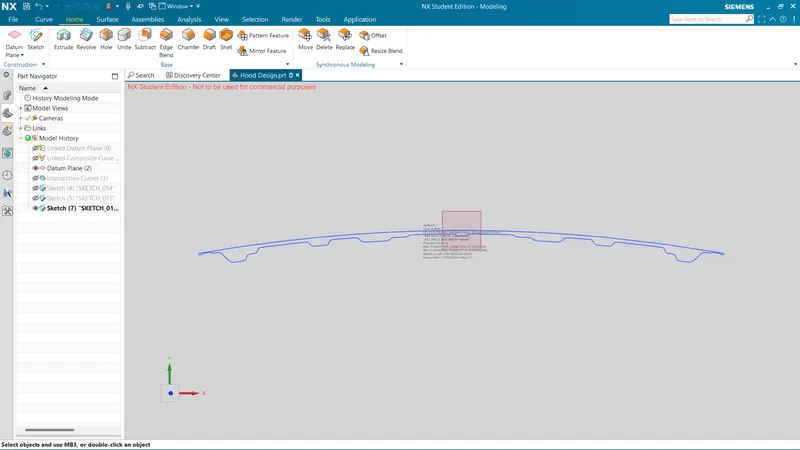
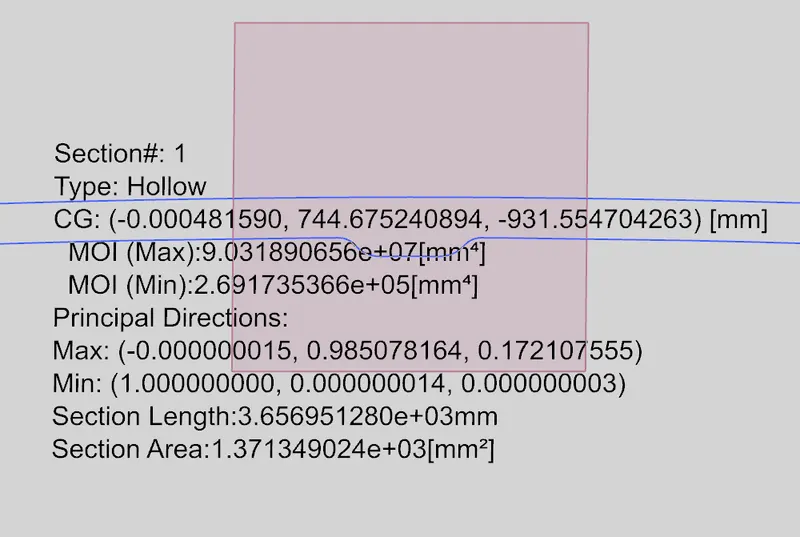
Moment of inertia(max) = 9.031890656×10^5×mm^4
Moment of inertia(min) = 2.691735366×10^3×mm^4
Y=485.7599/2=242.8799 mm
S=I/Y
S=2.6917×10^3/242.87= 11.08 mm^3
Conclusion:
Resulting by comparing case 1 & case 2,
The section modulus value of case 2 is higher than the case 1
And it is observed that increasing area moment of inertia, increases section modulus which leads to increase strength(stiffness), Which the moment of inertia directly proportional to the strength of the material.