Section Modulus calculation and optimization
SECTION MODULUD CALCULATION OF HOOD
Aim
To calculate the section modulus of the previously designed hood for analyzing its strength and also optimizing the design to see the difference in the bending strength of the hood. Higher the section modulus of a structure, the more the resistive it becomes to bending.
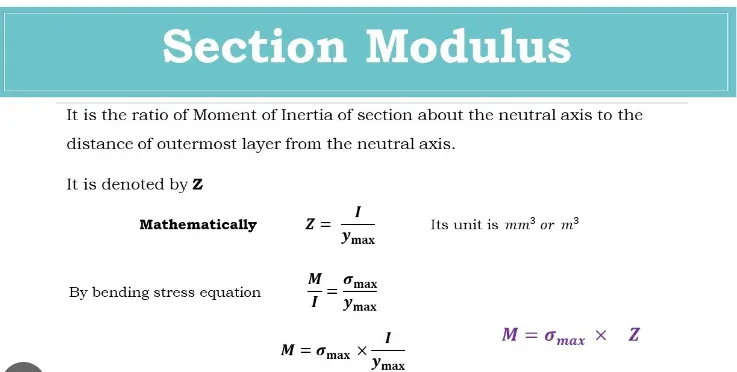
Section modulus
Section modulus is a geometric property for a given cross-section used in the design of beams or flexural members, it is also referred to as the Polar Modulus or the Torsional Sectional Modulus. Other geometric properties used in design include area for tension and shear, radius of gyration for compression, and moment of inertia and polar moment of inertia for stiffness. Any relationship between these properties is highly dependent on the shape in question. Equations for the section moduli of common shapes are given below. There are two types of section moduli, the elastic section modulus and the plastic section modulus.
S=I/Y
Here,
S = Section modulus
I= Moment of Inertia (Unit mm 4)
Y= Distance from Neutral axis to the extreme end (unit mm)
The Unit of a “section modulus” is (mm3)
Moment of inertia
It is defined as the quantity expressed by the body resisting angular acceleration which is the sum of the product of the mass of every particle with its square of a distance from the axis of rotation. Or in more simple terms, it can be described as a quantity that decides the amount of torque needed for a specific angular acceleration in a rotational axis. Moment of Inertia is also known as the angular mass or rotational inertia. The SI unit of moment of inertia is kg m2.
Moment of inertia is usually specified with respect to a chosen axis of rotation. It mainly depends on the distribution of mass around an axis of rotation. MOI varies depending on the axis that is chosen.
In General form,
Moment of Inertia is expressed as I = m × r2
where,
m = Sum of the product of the mass.
r = Distance from the axis of the rotation.
Area Moment of Inertia:
The area moment of inertia of a beam cross section area measures the beam ability to resist bending. The larger the moment of inertia less will be the bend.
Where,
M = Bending Moment
I = Area moment of Inertia
E = Young modulus
R = Radius of gyration
Section modulus equationsCross-sectional shapeFigureEquationCommentRectangle  Solid arrow represents neutral axisdoubly symmetric I-section (major axis)
 ,
,

NA indicates neutral axisdoubly symmetric I-section (minor axis) NA indicates neutral axisCircle
 Solid arrow represents neutral axisCircular hollow section
 Solid arrow represents neutral axisRectangular hollow section
 NA indicates neutral axisDiamond
 NA indicates neutral axisC-channelNA indicates neutral axis
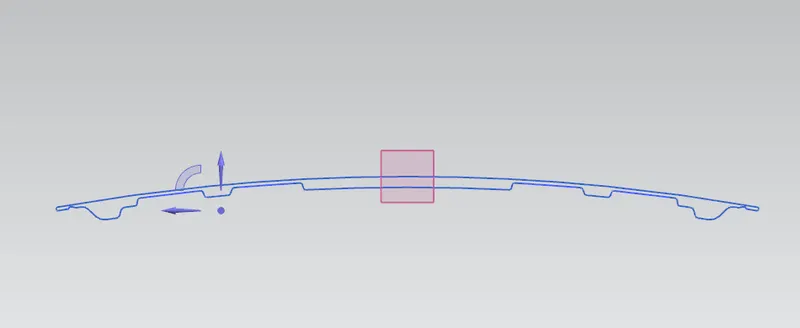
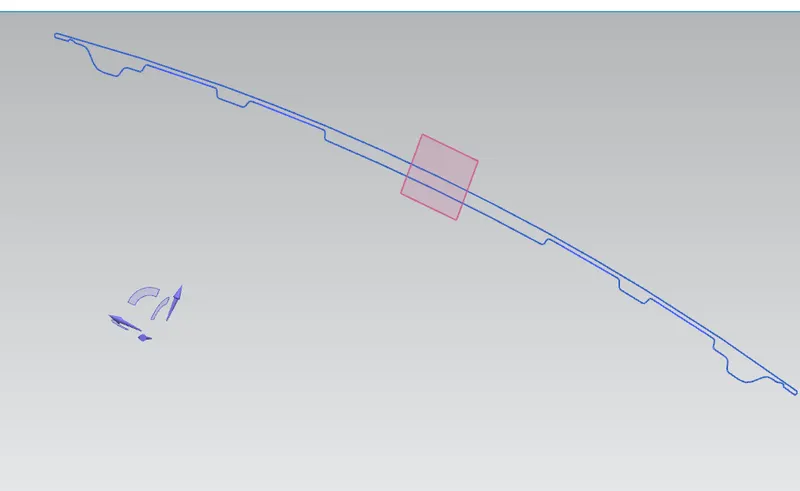
Calculation Of Section Modulus Of Hood
First Optimisation :-
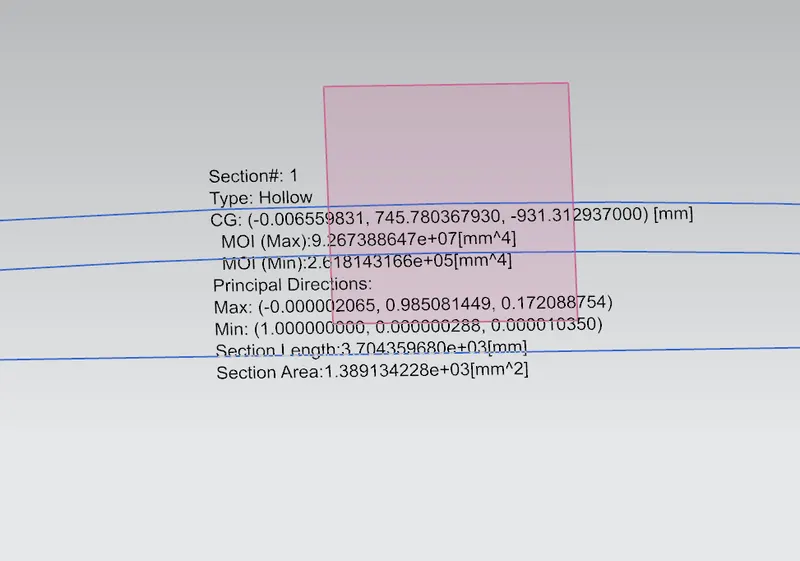
Moment of Inertia (max) = 926738.864mm^4
Moment of Inertia (min) = 261814.316mm^4
Y = 881.1050/2 = 440.5525mm
S = I/Y
Therefore;
S(min)1 = 261814.316/440.5525
= 594.286mm^3
Second optimisation :-
By increasing the depth to 0.5mm
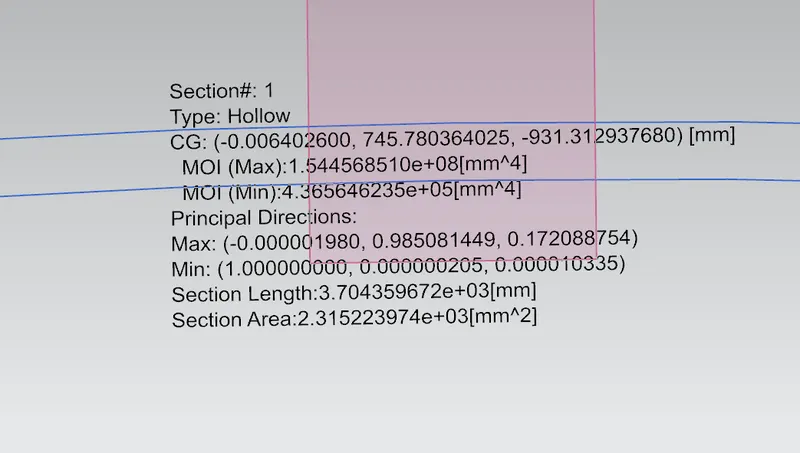
Moment of Inertia (max) = 154456.851mm^4
Moment of Inertia (min) = 436564.623mm^4
Y = 881.1050/2 = 440.5525mm
S = I/Y
Therefore;
S(min)2 = 436564.623/440.5525
= 990.948mm^3
Conclusion :-
After calculation of S1 and S2, we came to conclusion that as we increase the section area, the moment of inertia & section modulus increase which means strength and load material also increase. Which the moment of inertia directly proportional to the strength of the material.
The section modulus value of case 2 is higher than the case 1.
Strength of material is directly proportional to the moment of interia, thus increasing the sectional area increase the increases strength of component.
Thus sectional modulus for hood design is calculated and optimized design is also done to increase the section modulus of the hood.