Section Modulus calculation and optimization
REPORT :
Section Modulus is simply defined has the ratio of the bending moment to the bending stresses
(or)
It is also defined has the ratio of moment of inertia of the beam cross section about the neutral axis to the distance of the extreme fiber from the neutral axis
S= I/Y
Where s= Section modulus
I= Momet of inertia
y= Distance between the neutral axis and extreme end of the object
Section modulus is the geometric property for the given cross sectional area used in the design of flexural members other geometric properties used in the design include radius of gyration (K) ,moment of inertia(I) and the polar moment of inertia for stifness.Any relationship between these particles remain highly dependent.There are two kinds of section modulus they are elastic section modulus and plastic section modulus.
Elastic section modulus :
It is used in applying the elastic point for most of the metals and others common materials.
Plastic section modulus :
It is used for the materials which staying with the elastic yielding is accepatable and plastic behaviour is with in the acceptable limit.It depends on the location of the plastic neutral axis it is defined as the axis that splits the compression force from the area in compression equals to the tension force
Moment of Inertia : It is defined has the product of mass and radius square
I =M*r^2
For example if section modulus of a rectangle is calculated then it is given has shown in the below figure
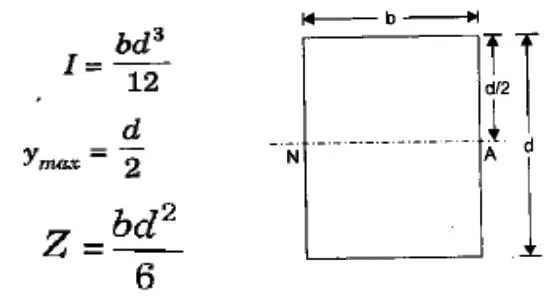
Section Modulus :
Generally section modulus defines the strenght of the beam or the material more the section modulus more the strength is and can be capable of carrying more weight or mass.
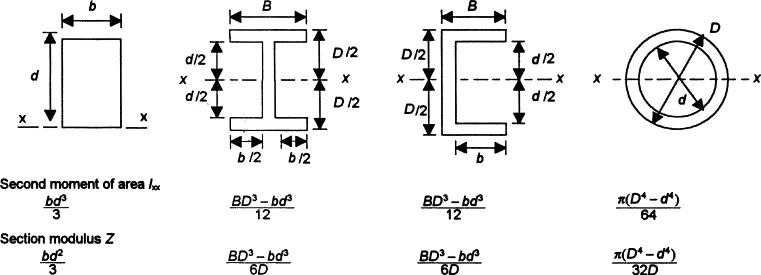
In this case the side crash test is done not the front crash test if the area is more then the section modulus is also more,the area of the hood panel can be increased by giving the optimum thickness to the panel and also giving the optimum offset distance
For example if the hood is having high section modulus then it is very hard to bend if the hood is having less section modulus then it is easy to bend.
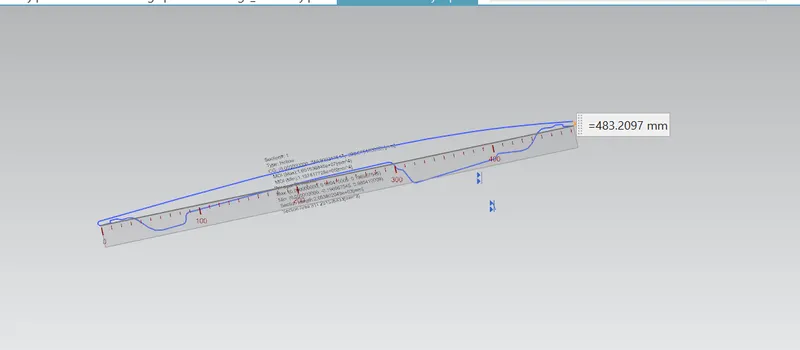
Y is the distance from the neutral axis and the extreme end of the object = 483.2097 mm
Case 1 : In this case the inputs taken are thickness is 0.75mm and the offset distance is 3.15 mm
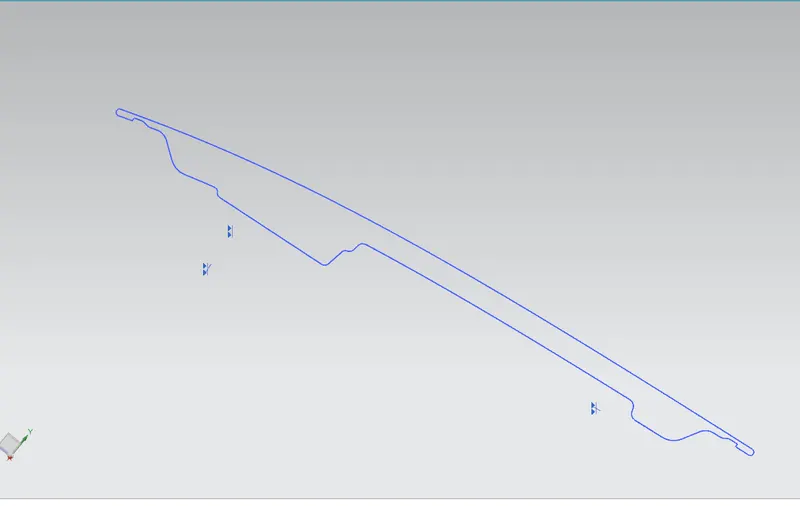
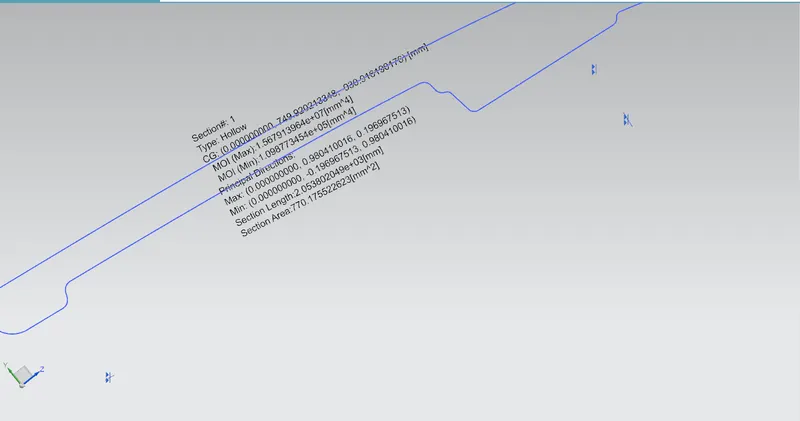
From the case 1
Maximum MOI = 1.567913964e+07[mm^4]
Minimum MOI = 1.09877345e+05[mm^4]
S= I/y
For Max MOI (S) = 1.567913964*10^7 /483
S = 32.46*10^3 mm^3
For Min MOI(S) = 1.09877343*10^5/483
S =0.227*10^3 mm^3
Case 2 :
In the second case thickness of the hood panel is changed from 0.75mm to 0.79mm therefore the moment of the inertia is also increased from 1.56 mm to 1.65 mm as by changing the mass the moment of inertia also changes in this way the optimization of the part takes place.
Therfore the case 2 has more strength when compared to the case 1
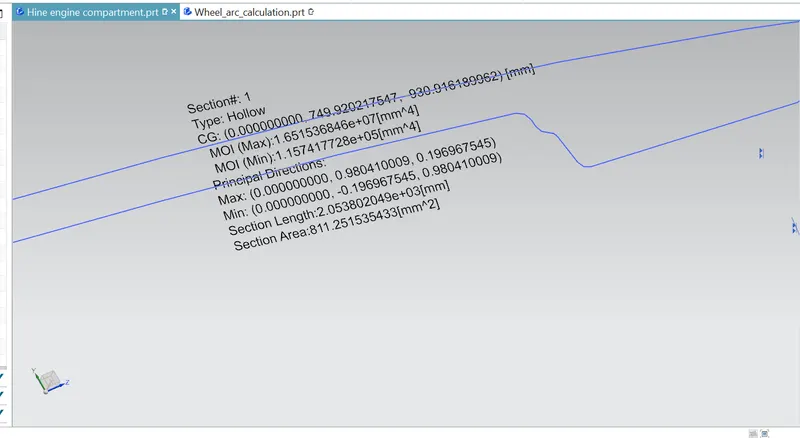
From case 2
Maximum MOI =1.6515+07[mm^4]
Minimum MOI =1.1574177e+05[mm^4]
S= I/y
For Max MOI (S) = 1.6515*10^7/483
S =34.192*10^3 mm ^3
For Min MOI (S) = 1.1574177*10^5/483
S =0.239*10^3 mm^3
Conclusion :For hood design the section modulus was calculated by using the moment of inertia and by changing the thickness the section modulus also changes so that better section modulus values can be obtained.