Section Modulus calculation and optimization
Section Modulus calculation and optimization
- AIM: To calculate the hood's section modulus designed to analyze the strength and bending strength.
Section modulus
- Section modulus is a geometric property for a given cross-section used in the design of beams or flexural members, it is also referred to as the Polar Modulus or the Torsional Sectional Modulus.
- Other geometric properties used in the design include an area for tension and shear, the radius of gyration for compression, and the moment of inertia and polar moment of inertia for stiffness.
- Any relationship between these properties is highly dependent on the shape in question.
- Equations for the section moduli of common shapes are given below.
- There are two types of section moduli, the elastic section modulus, and the plastic section modulus.
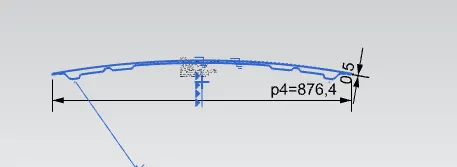
Use the Section from your Hood design and calculate the Section Modulus using the formula
S = I/y
Where,
S = Section Modulus
I = Moment of Inertia
y = distance between the neutral axis and the extreme end of the object
y= l/2 =876.4/2
y=438.2
- BENDING STRENGTH:
- What is meant by bending strength?
- The bending strength of a material is defined as its ability to resist deformation under load.
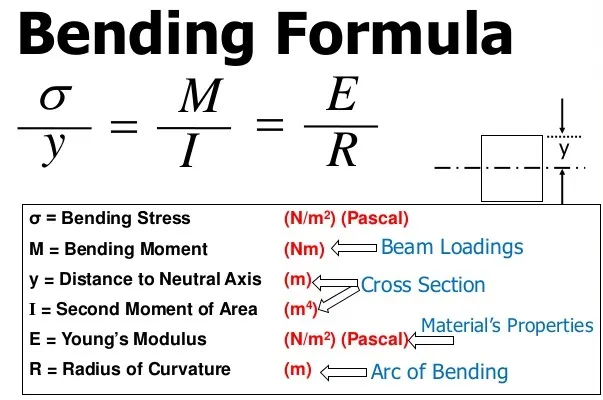
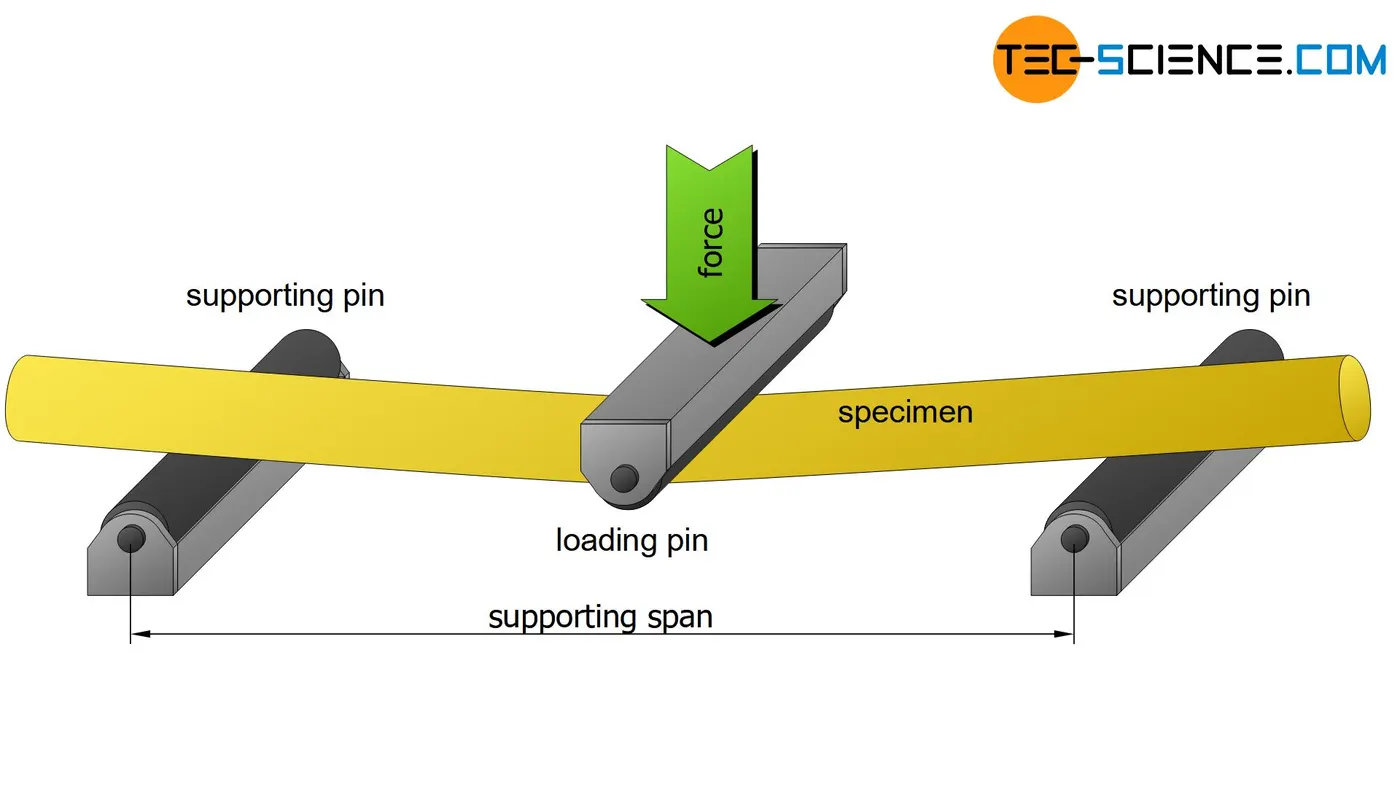
- If the sectional modulus value is increased then the bending strength value will also increase.
- By keeping this point, let's consider two cases and analyze the value of sectional modulus, and select the best optimization value for hood design.
CASE STUDY 1(ITERATION 1):
- To do an analysis, we have to create a close cross-section of the hood.
- After creating the closing cross-section, we will be going to do a sectional inertia analysis of the hood. (Refer to the given pic below.)
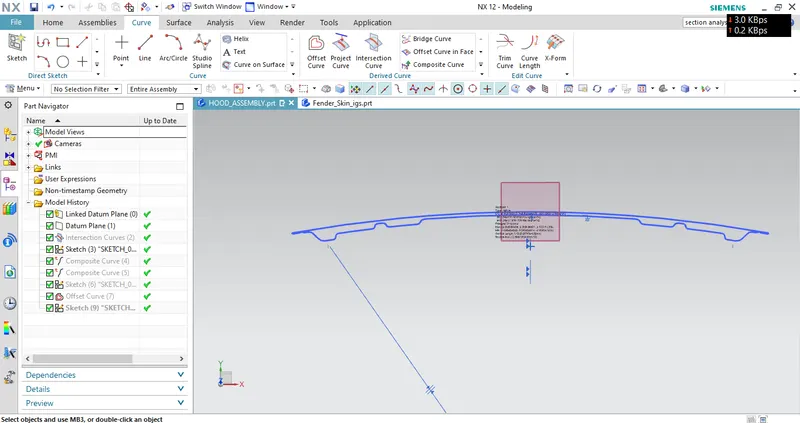
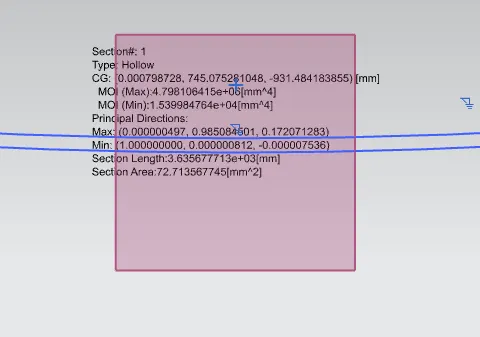
Moment of inertia(max) = 4.798106415×10^6×mm^4
Moment of inertia(min) = 1.539984764×10^4×mm^4
y= l/2 =876.4/2
y=438.2mm
S=I/Y
S=1.539984764×10^4/438.2
S =35.14mm^3
CASE STUDY 2(ITERATION 2):
- Now, let's consider the second case or perform a second iteration.
- Here we offset the inner section curve by 0.5 downward direction and let's analyze the sectional modulus values.
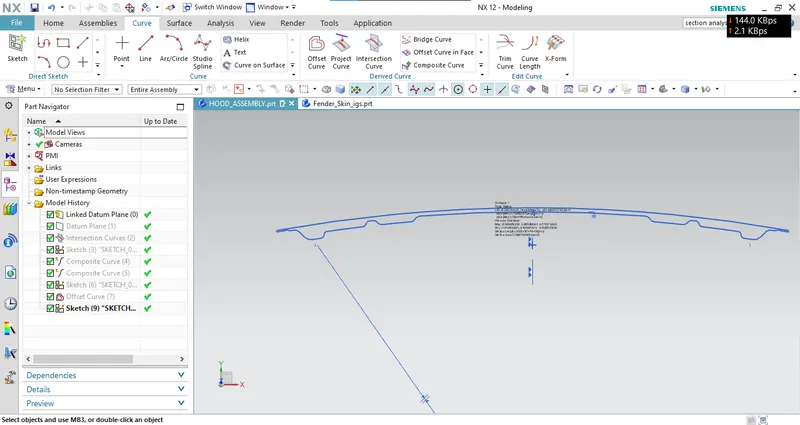
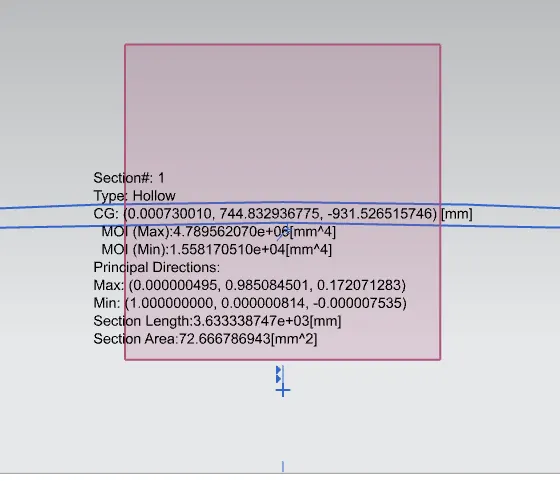
Here,
Moment of inertia(max) = 4.789562070×10^6×mm^4
Moment of inertia(min) = 1.558170510×10^4×mm^4
y= l/2 =876.4/2
y=438.2mm
S=I/Y
S=1.558170510×10^4/438.2
S = 35.5584mm^3
OPTIMIZATION CONCLUSION FOR HOOD DESIGN:
ITERATION CASE STUDY 1:
S =35.14mm^3
ITERATION CASE STUDY 2:
S = 35.5584mm^3
- Since we increase the depth of the inner panel then the sectional modulus increases.
- The difference can be seen in the moment of inertia and the change in the section modulus can be seen by the change in the design(depth).
- Case study 2 provides us with optimization results if we increase the depth of the inner panel.