Roof Design
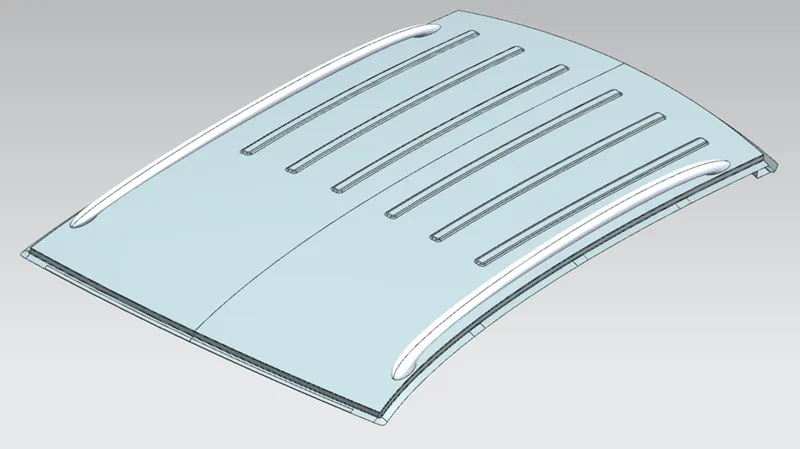
Objective
- For the Given Roof styling, create an assembly by developing the essential flanges for the outer roof and creating the reinforcements.
- Provide appropriate dimensions and check for Draft analysis.
- Do a curvature study on the roof and perform calculations to determine the position of the Bow-roofs.
Introduction
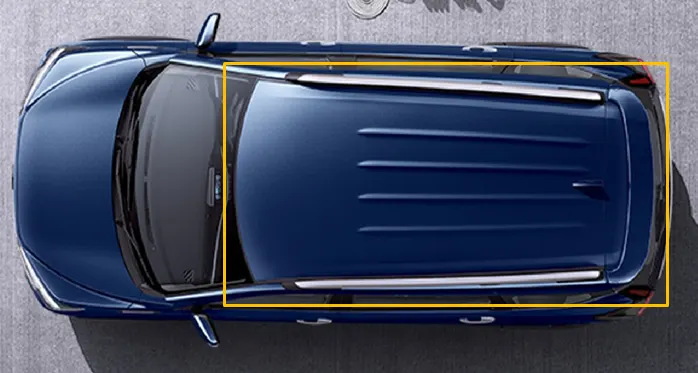
- An automobile roof or car top is the portion of an automobile that sits above the passenger compartment, protecting the vehicle occupants from sun, wind, rain, and other external elements.
- The roof of the car is made up of multiple parts that provide support and strength to the roof component, which include,
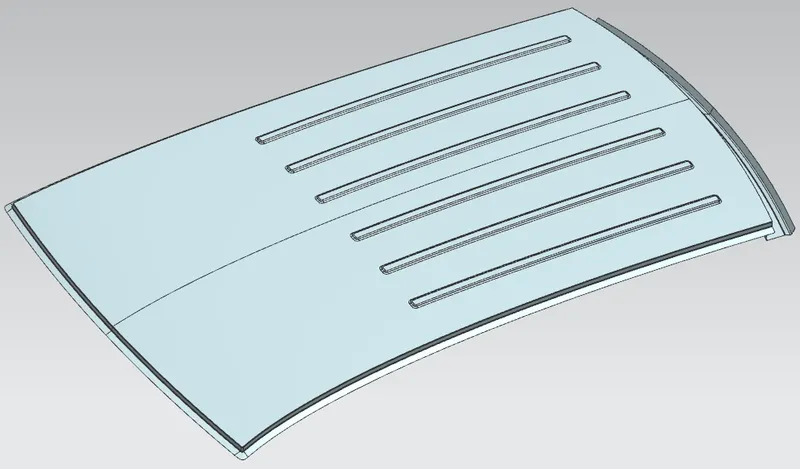
a)Roof outer panel
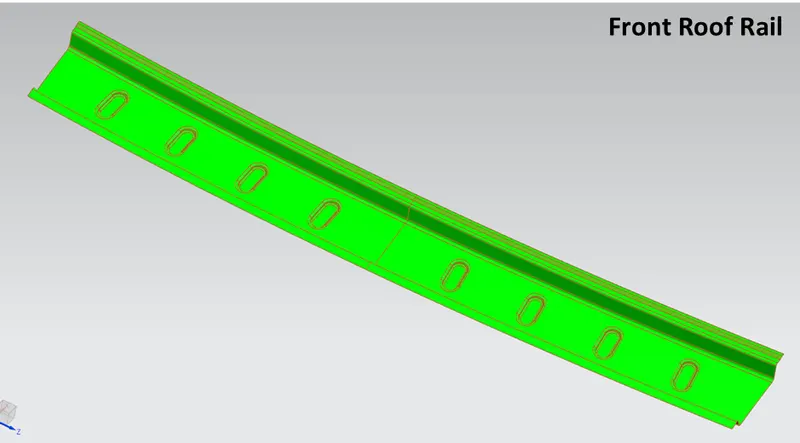
b)Front roof rail
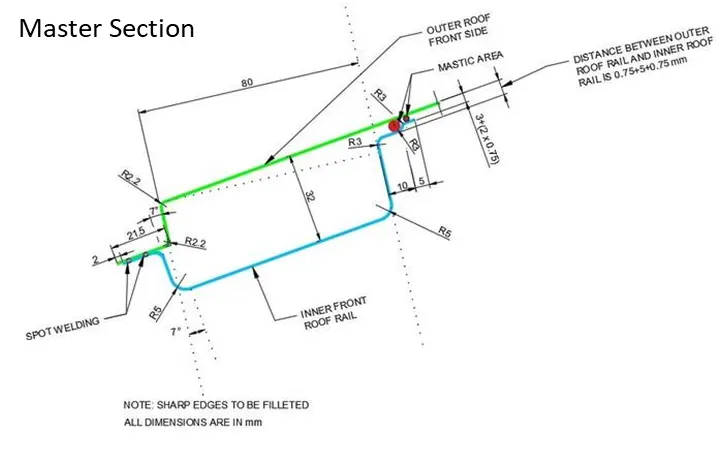
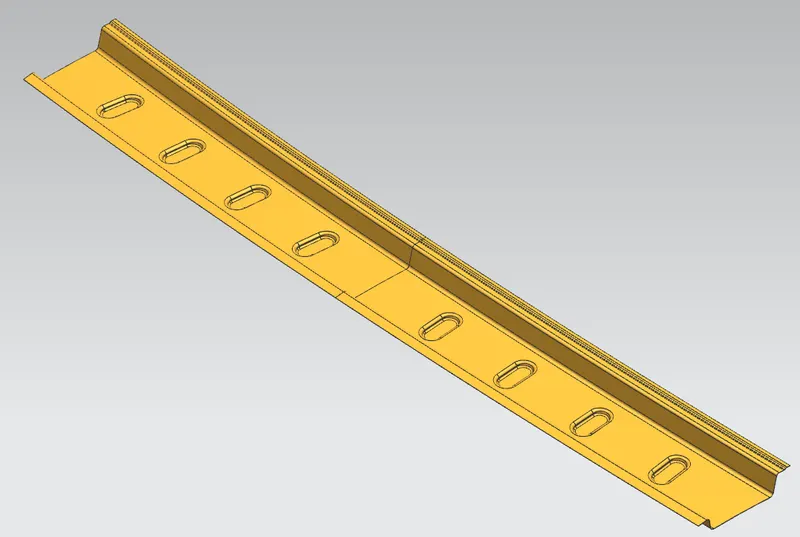
- Front roof rails are designed to fulfill support requirements, visibility criteria, headroom space, and mounting for inside rare view mirrors.
- The front windshield glass is mounted on the front roof rail
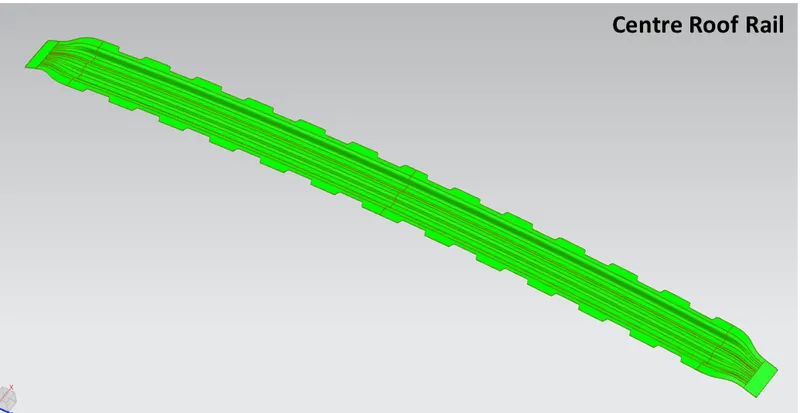
c)Centre Roof rail
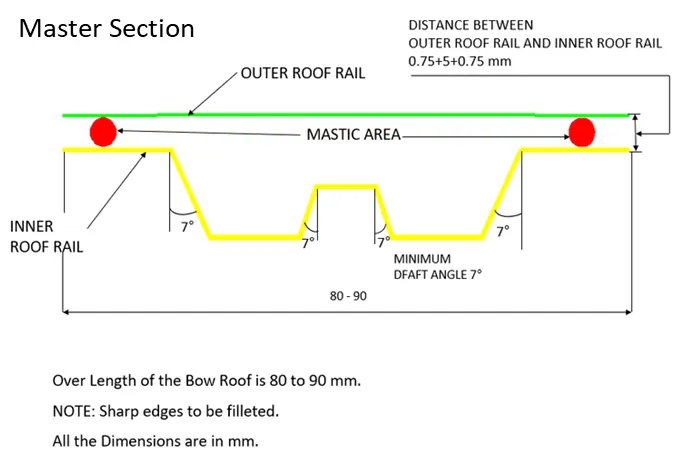
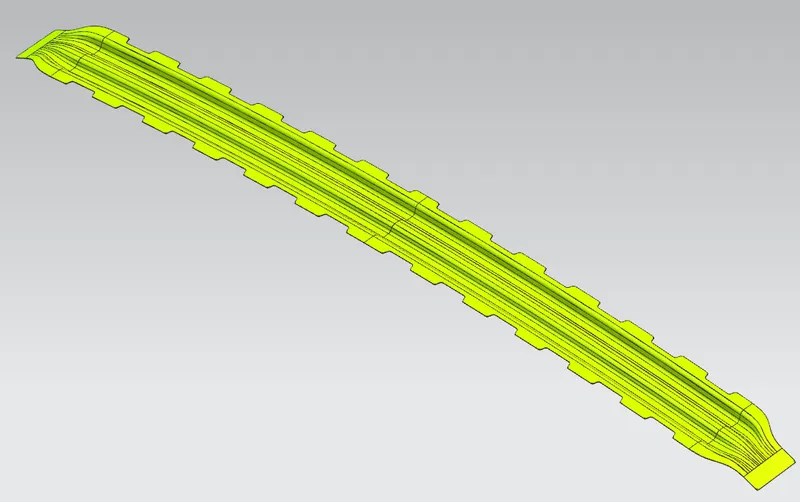
- Center roof rails are generally placed at the center of the roof, as the roof is more likely to bend at the center.
- Mastic sealants are used for joining center roof rails to the roof.
- Embossing can be added to further increase the strength.
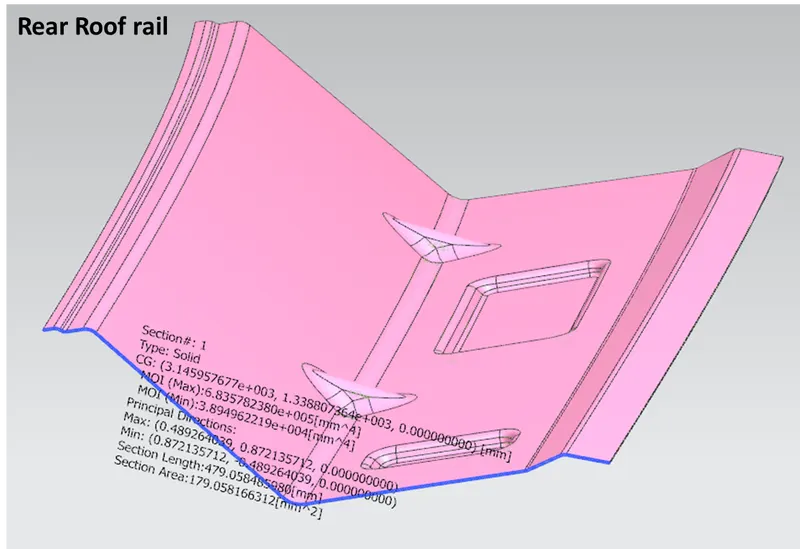
d)Rear Roof rail
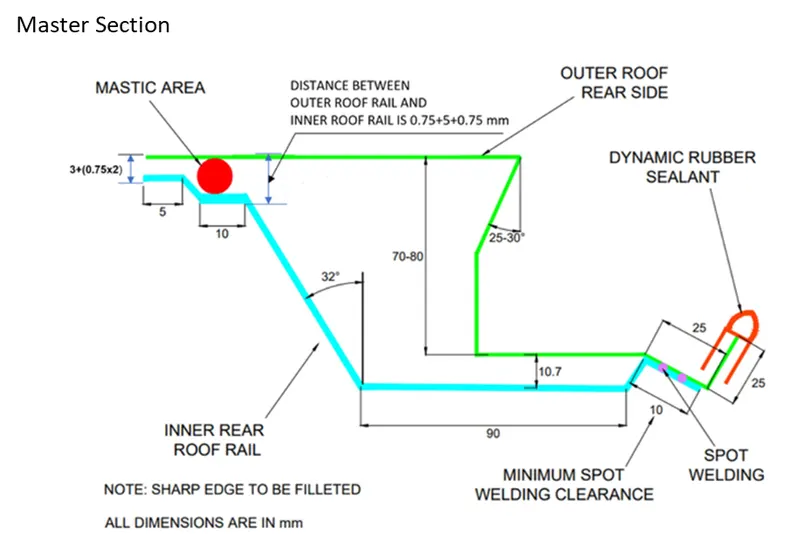
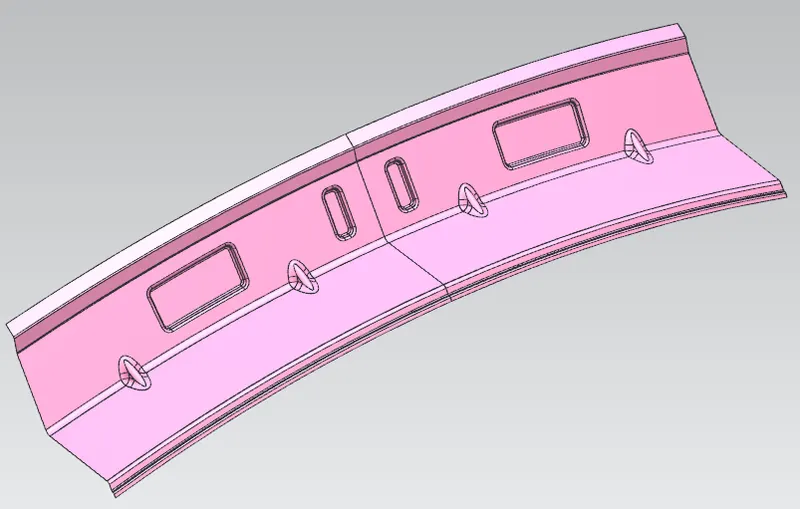
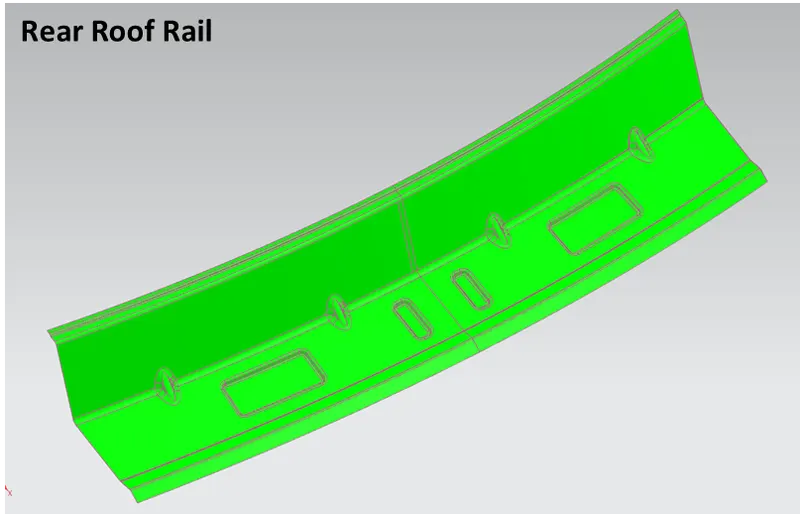
- The Rear roof rail is used to provide strength to the roof panel front and it also acts as a link between windshield glass, roof panel, and headliner,
- Inputs from the backdoor design are taken to accommodate the required clearance.
- Spot Welds are applied at the Back door end of the rail and the other end is joined with the roof using Mastic Sealants.
e)Bow roof
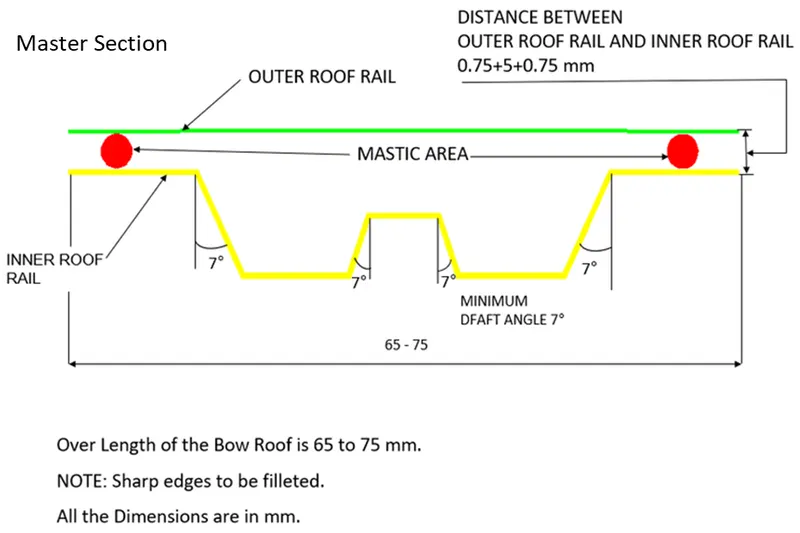
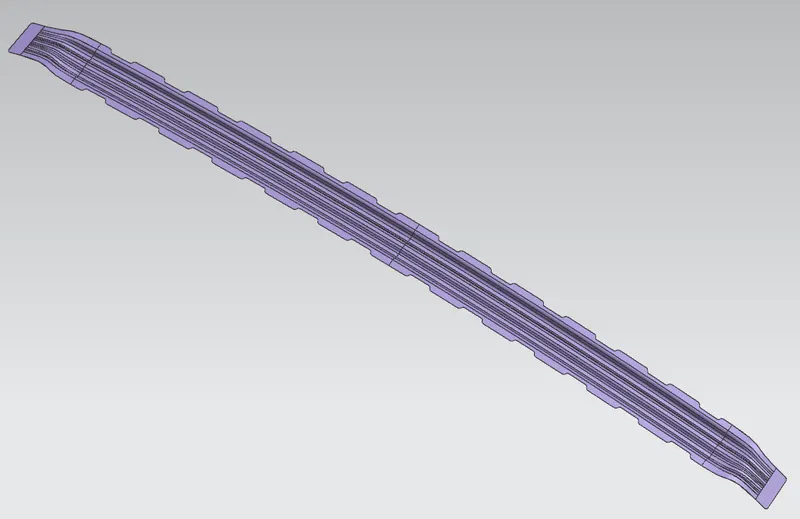
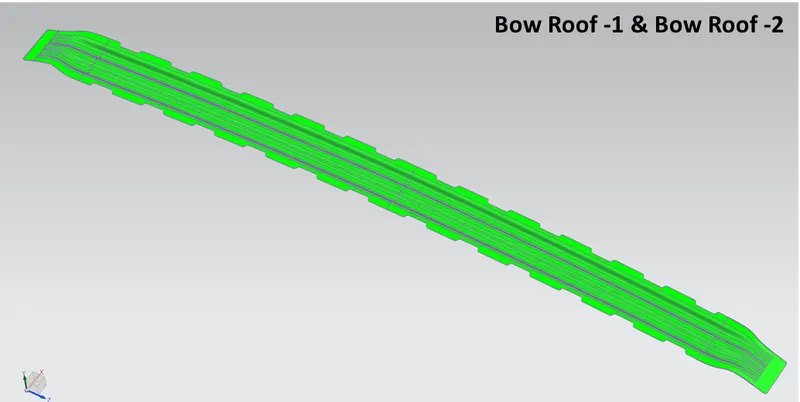
- The bow roof are positioned in such a way that they provide maximum support to the roof.
- Bow roof rails are an optional feature provided as required by the design.
- Small cars may have none while large ones may have 3 or more, they may also be integrated into the center roof rail in some cases.
- The roof is fixed to the roof rails with the use of mastics while the ends are spot welded.
Assembly of Components
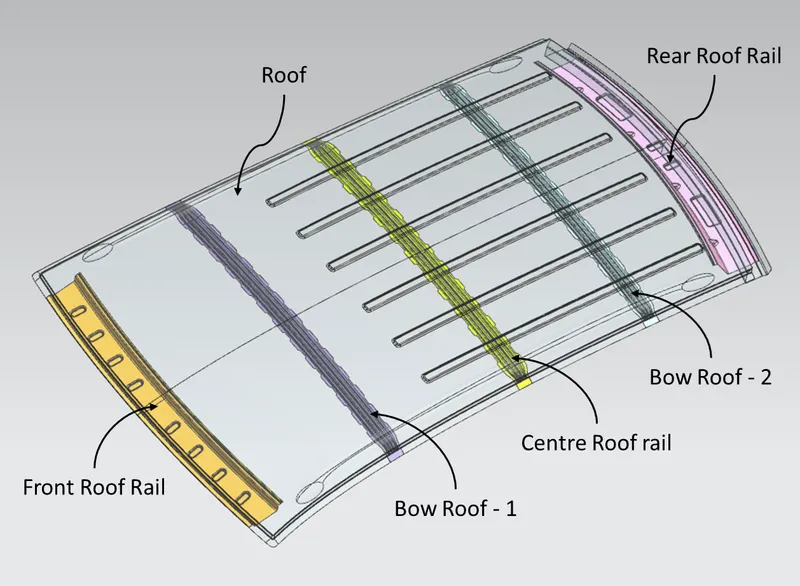
- The roof panel is attached to the BIW of the car with the help of front and rear roof rail.
- The number of bow roof rails depends on the size of the roof. Longer the roof, more the number of bow roof rails.
- Other dimensions like strength and material are governed by the factors like headroom, overall space, visibility, ergonomics and the rules and regulation of the states where it is sold.
- Some roofs have a window on them and are called sunroofs, while convertibles have special mechanisms that allow the roof to be retracted.
Section Modulus:
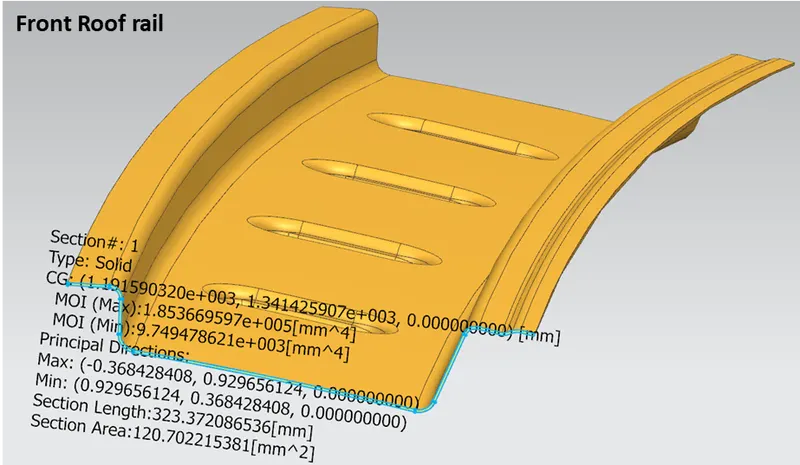
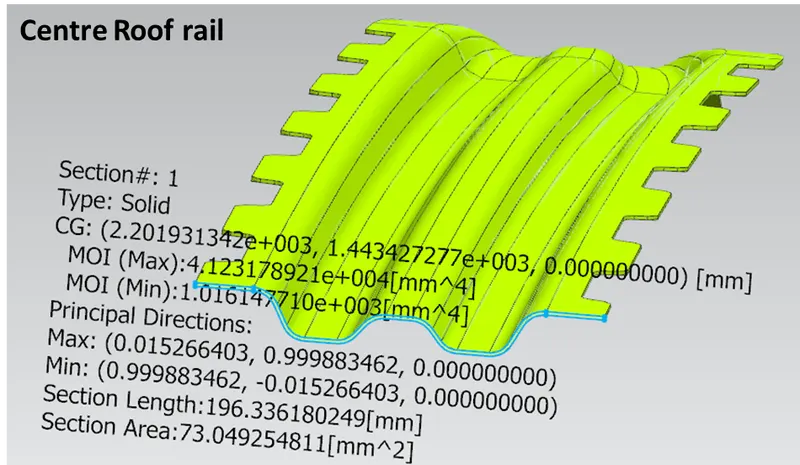
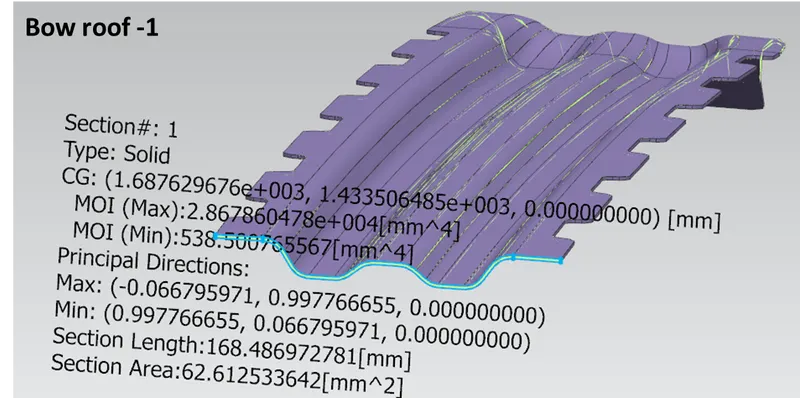
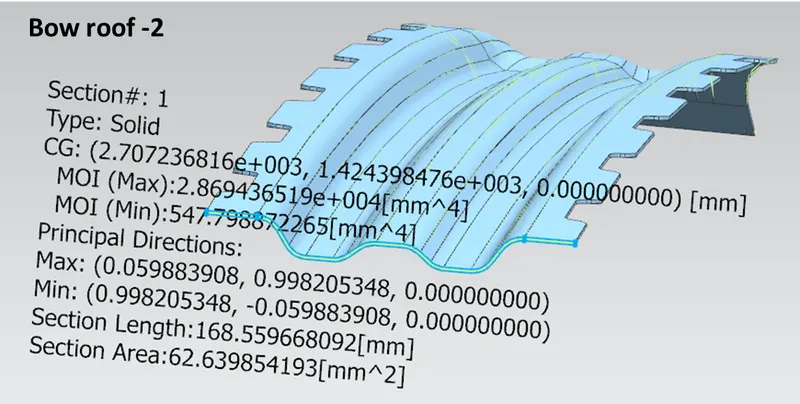
- Moment of inertia is used to predict the amount of deformation and deflection of a part.
- A higher moment of inertia is preferable as it reduces the amount of deflection for a given force.
- Adding thickness to the part, increasing the width of flanges, and adding embosses will increase the section inertia of the part.
Draft Analysis:
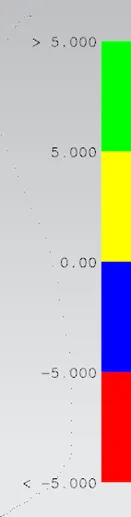
- Draft analysis is a technique used to analyze whether a part created in CAD can be manufactured based on the draft provided.
- The part should be easily removed from the panel die without any distortion and deformation.
Design and Calculations
Heat distortion study
- Heat distortion temperature is the temperature at which the metal softens and deforms under a specific load.
- The roof of a car is probably the only component that is exposed to the sun almost all the time, so this study is done to check the ability of the roof to withstand high temperatures with respect to the positioning of the reinforcements which contribute to increased strength.
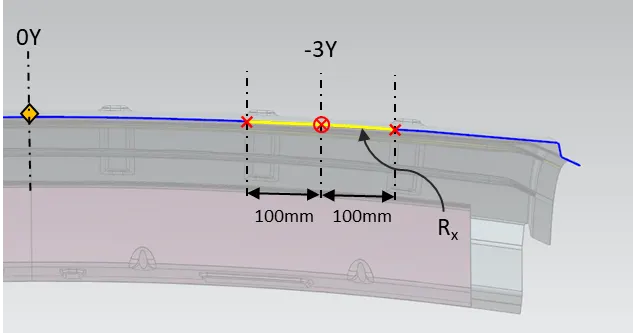
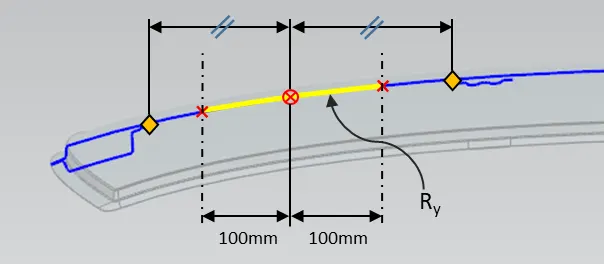
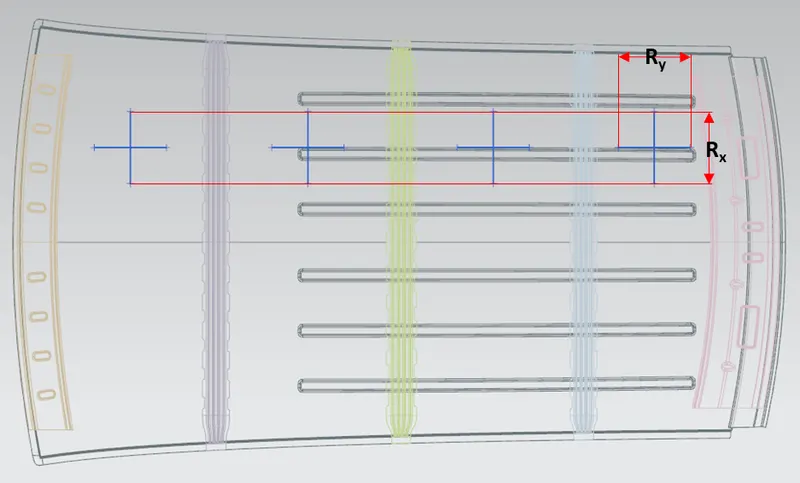
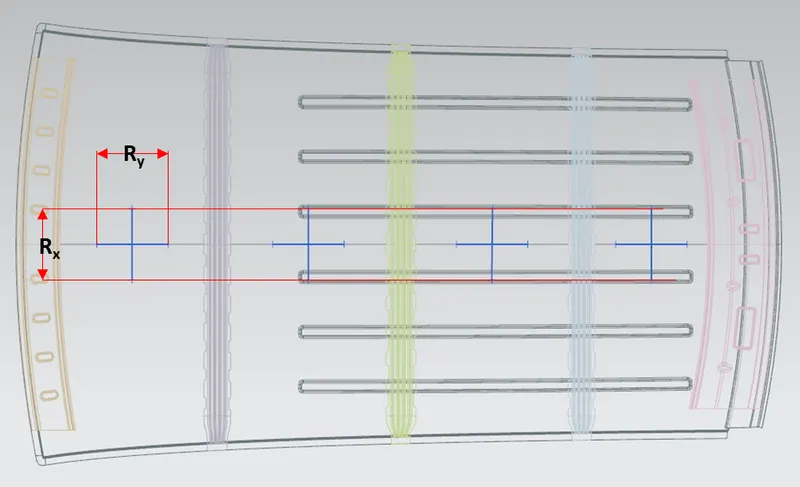
Bow–Roof Prediction Formula
W = [1.73 x 10^(-3) x L] + [1.85 x 10^(-8) x (R^2)/t] + [ 1.10x10^(-3) x l] - 2.68
Where,
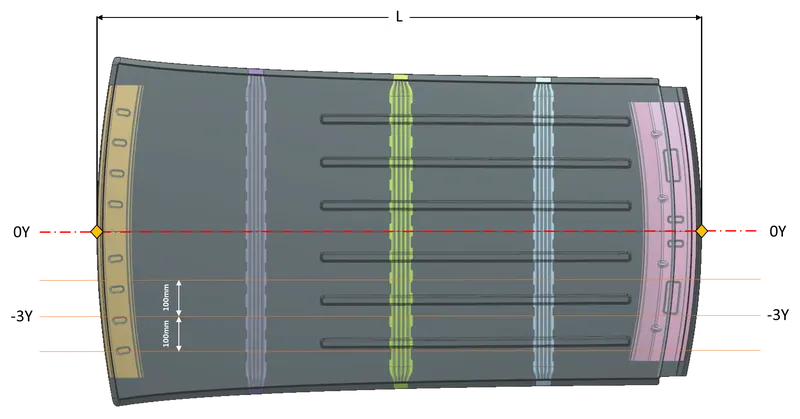
L = Roof Length in X-Direction[mm](Roof dimension in 0-Y)
R = Roof curvature
R = 2(Rx*Ry)/(Rx+Ry)
Rx = X curvature
Ry = Y curvature
t = Roof plate thickness [mm]
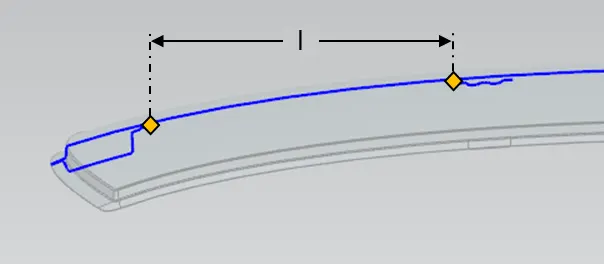
l = Bow Roof Span [mm]
Judgment Condition
OK< 2.7

From the above-calculated result, it is clear that no value of W is exceeding 2.7, hence position of all bow roof are correct.
Snow load prediction
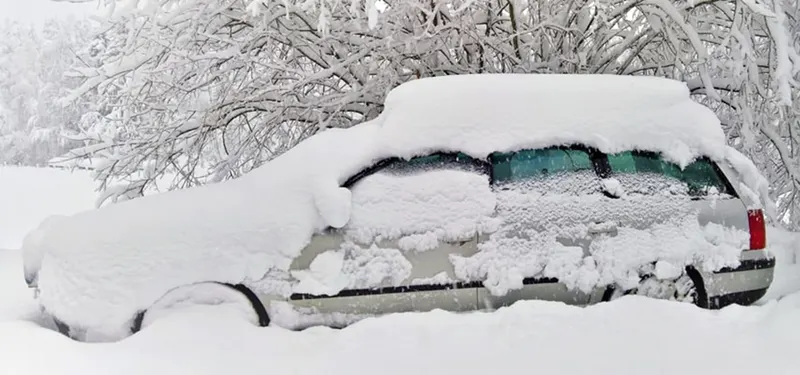
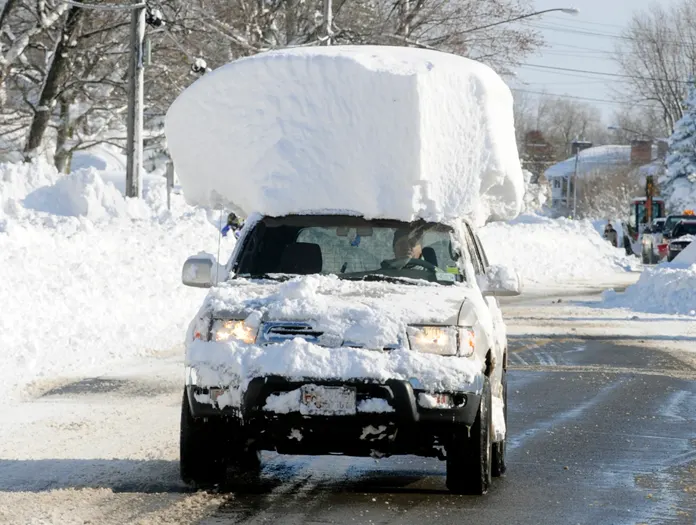
- Snow load damage test is mainly used to decide on the roof panel’s style and thickness. Generally, it is expected to avoid permanent deformation of the roof under the severe winter and snow conditions.
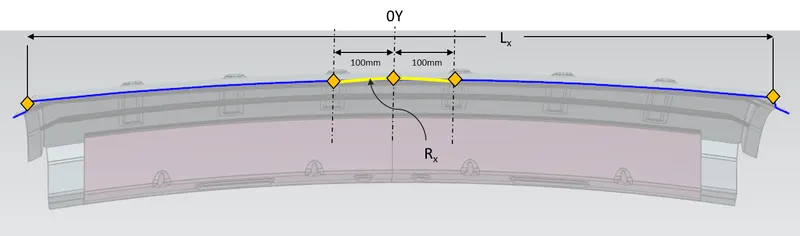
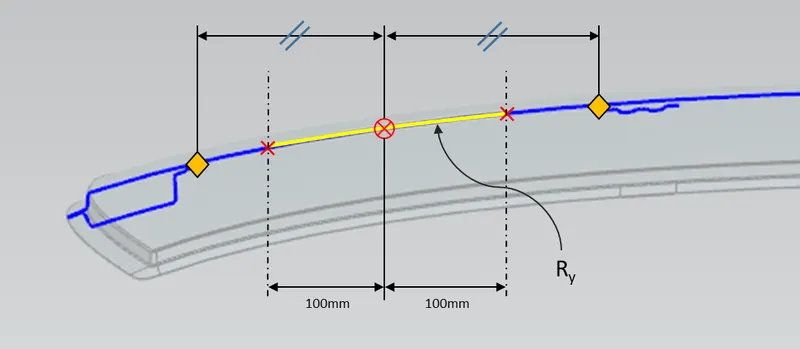
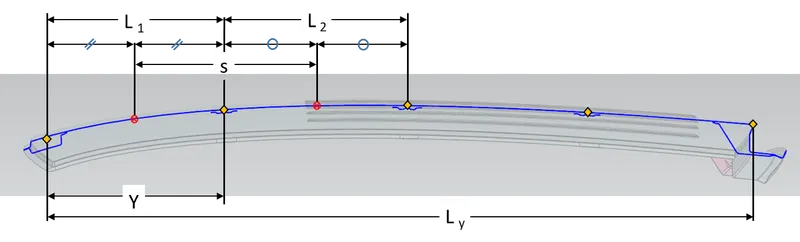
Snow Load Prediction Formula:
Qr = [Iy x t2] / [α x s x [(Rx + Ry)/2]2 x 10-8]
Note: The Qr value given over here is correct. There was a typo error in the formula given in the video.
Where,
α = My x Lx2 x 10-12 , My = Y(Ly-Y)
t = Roof plate thickness [mm]
Ly = Distance between the front and rear roof Rails on the Vehicle along with 0Y[mm]
Length of Roof panel with the center point between Roof rail Front /Rear as the front and rear reference point.
Lx = Distance between the Left and Right end of the roof on the Roof BOW [mm]
The width of the roof panel is exposed on the surface.
Y = Distance front Front Roof Rail to Roof BOW[mm]
s = Distance for which Roof BOW bears divided load [mm]
s = L1/2 + L2/2
Iy = Geometrical moment of inertia of Roof BOW (Y cross-section )[mm4]
Rx = Lateral direction curvature radius of roof panel Y cross-section on Roof BOW [mm]
Roof panel curvature Radius of the Length Lx in Front view
Ry = Longitudinal Direction curvature radius of the Roof panel X cross-section on Roof BOW [mm]
Roof panel X curvature radius of length s in Side view
Judgment condition
Qr ≥ 3.1
250 ≤ s ≤ 380

From the above-calculated result, it is clear that value of Qr ≥ 3.1 in every sistuation, hence roof can withsatnd snow load as per current arrangemet of Roof rails.
Crash Safety Considerations/ Test
Rollover test:
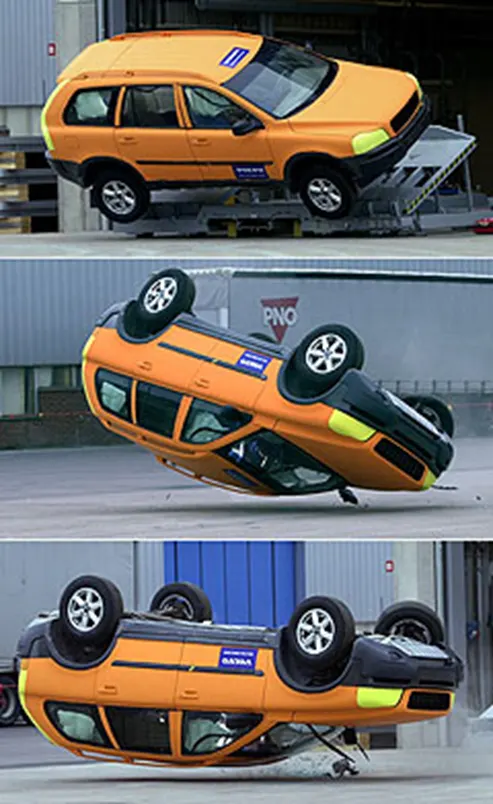
- Rollover test is conducted essentially on SUVs, minivans and pickup trucks
- These vehicles are more likely to rollover after a collision or sudden curving movement, due to there high centre of gravity.
- Each car’s reliability including the strength of vehicle pillars holding the roof is determined in every rollover test.
- Pillars should resist load during dynamic impact or when rolling severe turning maneuvers.
The fishhook test:
- National highway traffic safety administration (NHTSA) tests vehicles for its handling maneuvers called a fishhook.
- In this test, test vehicle is subjected to take quick left turn at the speed of 60 to 80 Km/hr, this situation simulates oversteering usually happens during emergency.
- Test vehicle fails if two wheels leave the ground.
- Test vehicle passes when vehicle body slides out.
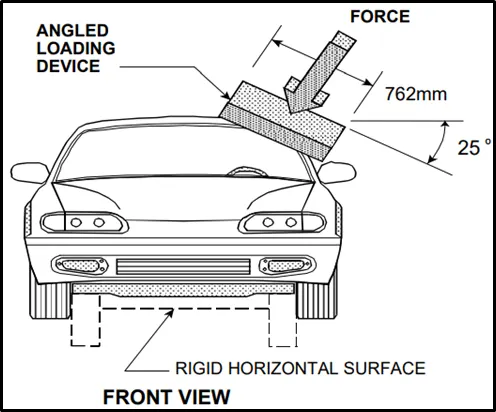
Static Load test
- The roof of any vehicle shall be tested on one side only. The left or right side of the vehicle may be tested.
- The following data will be recorded during testing of each vehicle roof:
- Load versus displacement.
- Time versus displacement
- Vehicle movement at the rocker panels as recorded by the 4 dial indicators. As a minimum, record the readings from the dial indicators:
- Before load application.
- At maximum displacement of loading device travel.
- Immediately after loading device removal.
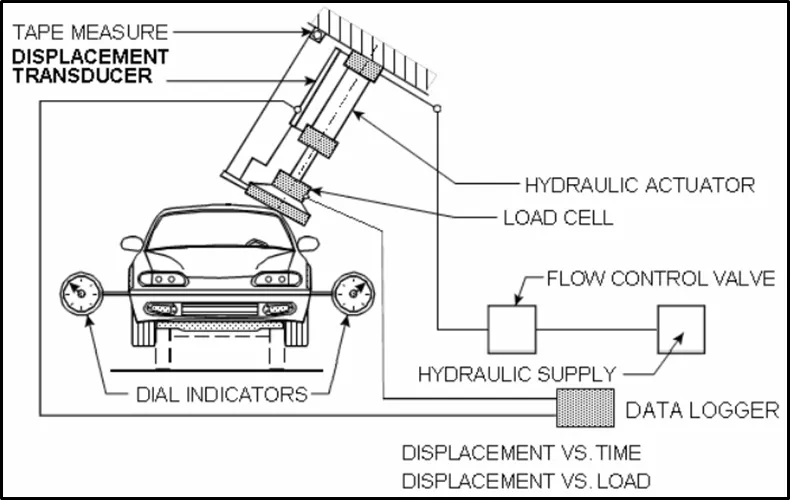
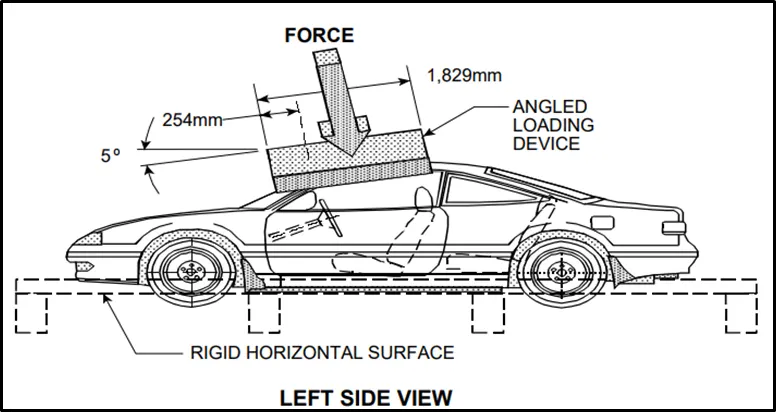
- Load is applied to the roof normal to the loading device after it has been positioned, continuously at a rate not to exceed 13 millimetres per second until the loading device travels 127 millimetres.
- Loading device is guided to prevent it from being rotated or displaced from its intended direction of travel.
- If the minimum roof crush resistance is met before the loading device travels 127 millimetres, the test shall be stopped.
*** End of Report***