Roof Design
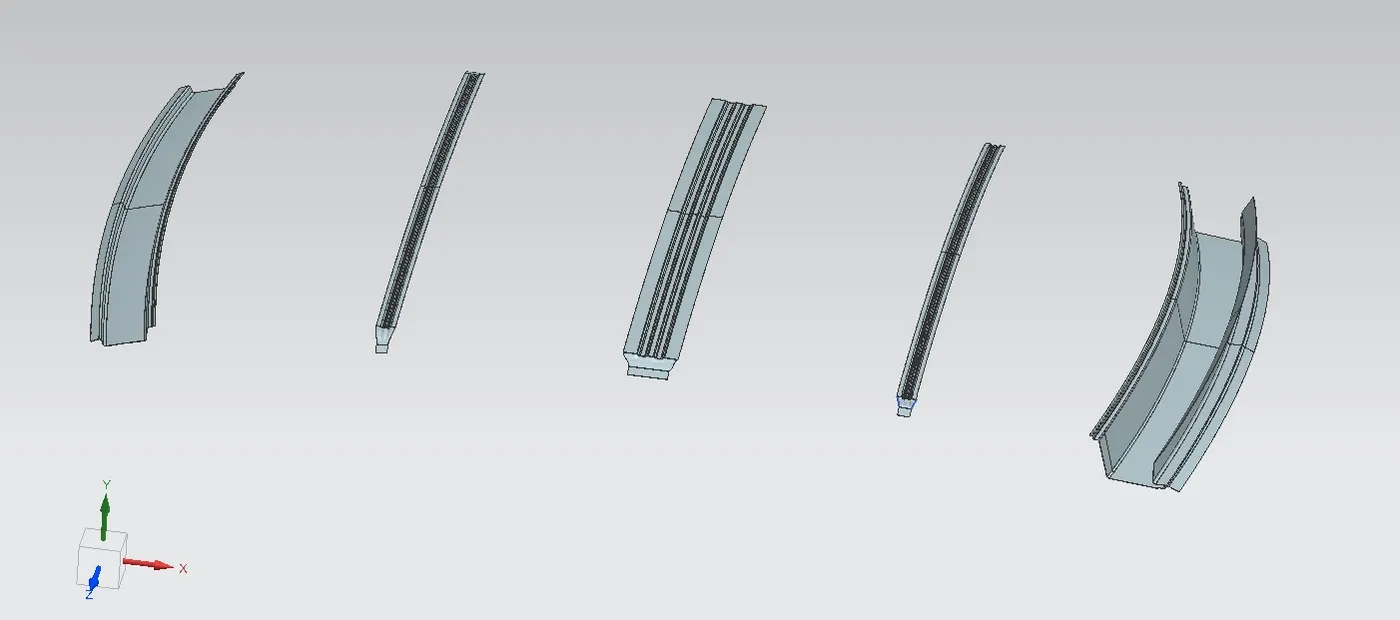
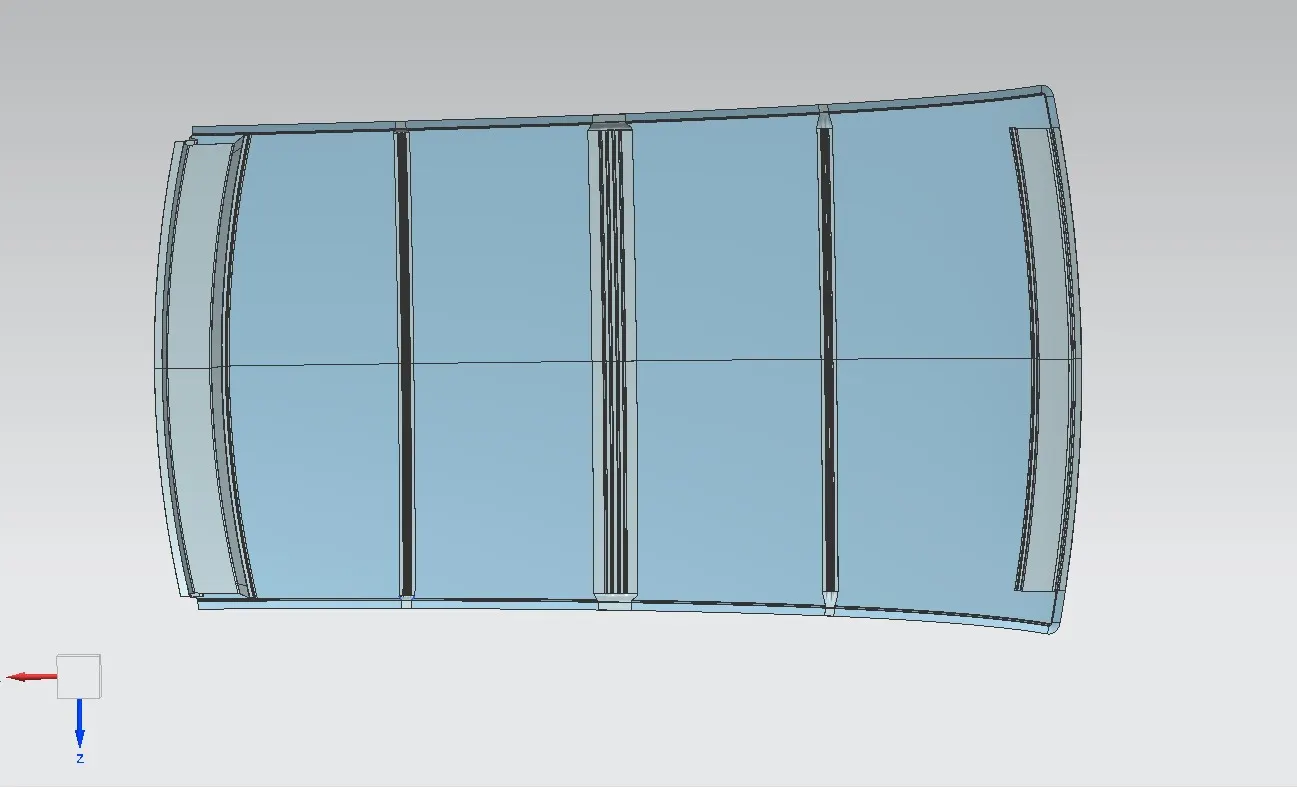
Aim: Design of the front roof rail, rear roof rail, and bow roof for the roof of the vehicles with the help of the given skin data of the roof according to snow load condition and hear distortion criteria.
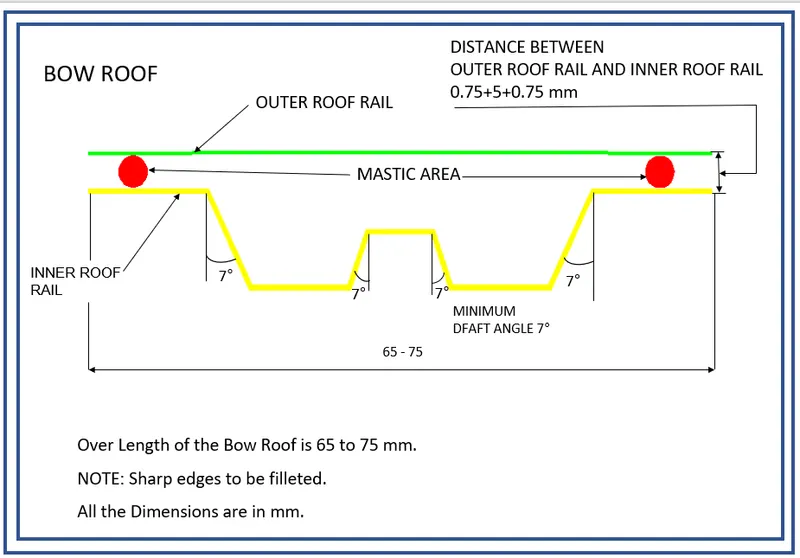
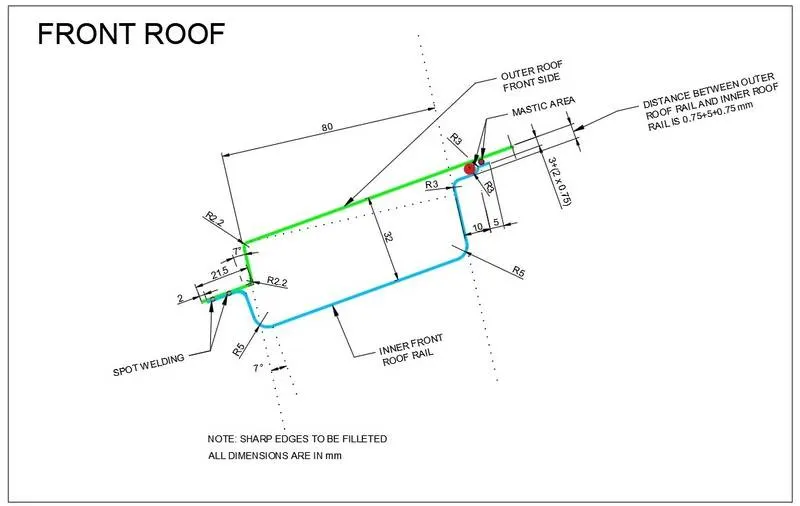
The following master section are used for the design of the roof
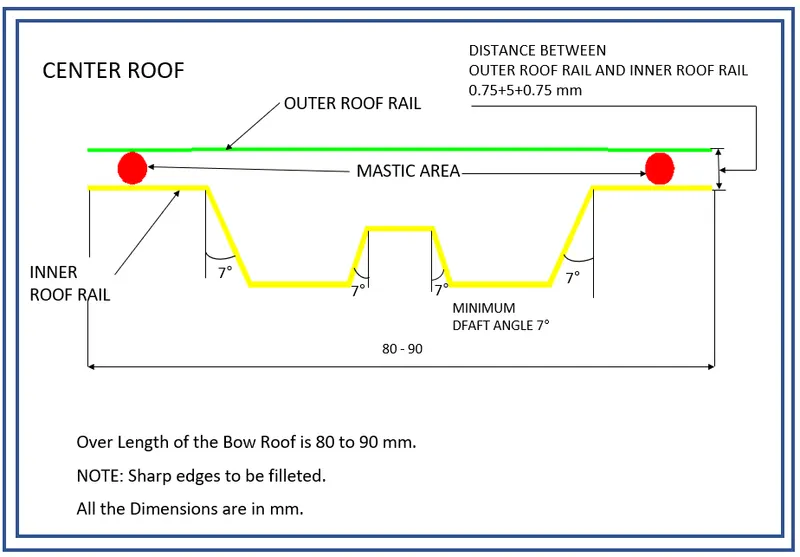
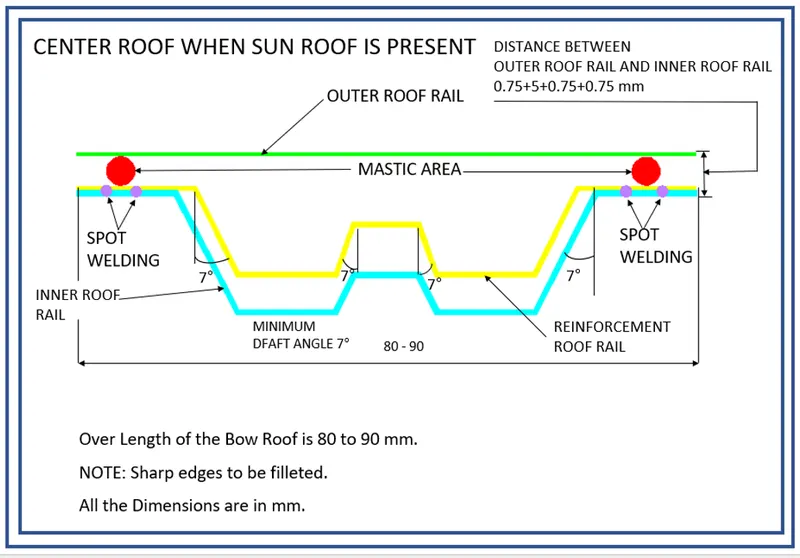
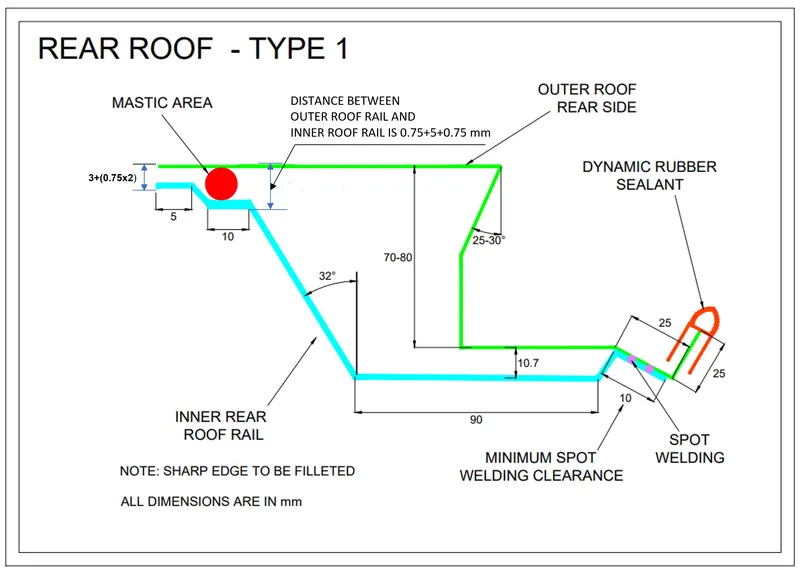
Roof
a. In modelling the hardtop-style roof as per the provided master section, it's important to note that we won't be adding any additional reinforcement for the central roof rail.
b. To ensure secure attachment, flanges will be added on all sides of the roof. These flanges are intended for spot welding, facilitating the connection of the front roof rail, central roof rail, rear roof rail, and bows.
c. The dimensions and angles of these flanges are determined based on visibility criteria and the necessary drawing angles for the sheet metal manufacturing process.
d. The thickness of the roof is set at 0.75mm.
Front Roof Rail:
a. The front roof rail serves a dual purpose. It reinforces the roof's structure, enhancing its strength, and also provides mounting points for various features like interior lamps and rearview mirrors.
b. The depth of the front roof rail is determined by considering the visibility criteria line essential for the driver's line of sight.
c. The width of the front roof rail is carefully chosen to ensure ample headroom clearance between the driver's head and the roof rail's end surface, preventing potential injuries.
d. Spot welding is employed on the front side of the front roof rail, while mastic points are used on the rear side to securely attach it to the roof surface.
e. The minimum radius for the fillet at the edges is set at 3mm.
Rear Roof Rail:
a. The rear roof rail functions as a reinforcement for the rear section of the roof surface.
b. Similar to the front roof rail, the joining method employed for this rail remains consistent.
c. A minimum fillet radius of 3mm is maintained.
Bows:
a. We are fabricating two bows: one positioned between the front roof rail and central roof rail, and the other between the central roof rail and rear roof rail.
b. Each end of the bow is connected to the roof's outer flanges through spot welding, while the inner sides of the bow are attached to the inner surface of the roof using mastic points.
c. A minimum fillet radius of 3mm is adhered to.
d. The cross-sectional design of the bow is meticulously crafted to maximize the minimum moment of inertia, ensuring the bow's strength against failure.
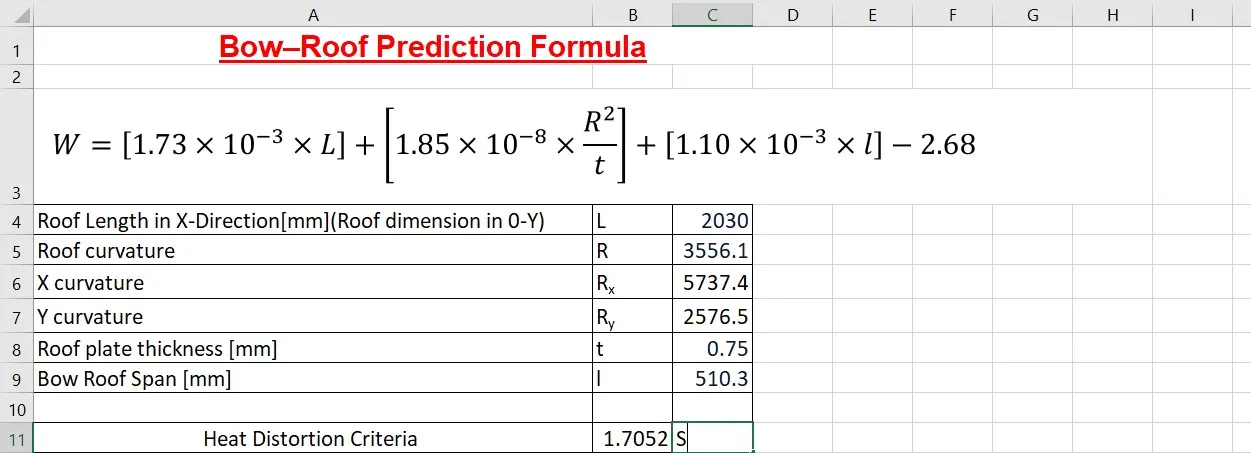
Heat Distortion Criteria:
This criteria assesses the roof's ability to withstand heat-induced distortion when subjected to elevated temperatures while bearing a fixed load. In situations where the ambient temperature is high and the roof carries a weight, any deformation could lead to failure. To determine whether the roof undergoes deformation, calculations are conducted based on the positioning of the bow, and these calculations are as follows:
Snow load condition:
This snow load condition calculation is done to check the strength of the roof when there is dead weight on the roof. As we know that in some regions we have snowfalls so when snow falls on the roof then this act as dead weight because in some the rate of snowfall is more so the roof should sustain this dead weight for that we do this calculation to check the position of the bow and its sectional area