Roof Design
ROOF DESIGN
Objectives:
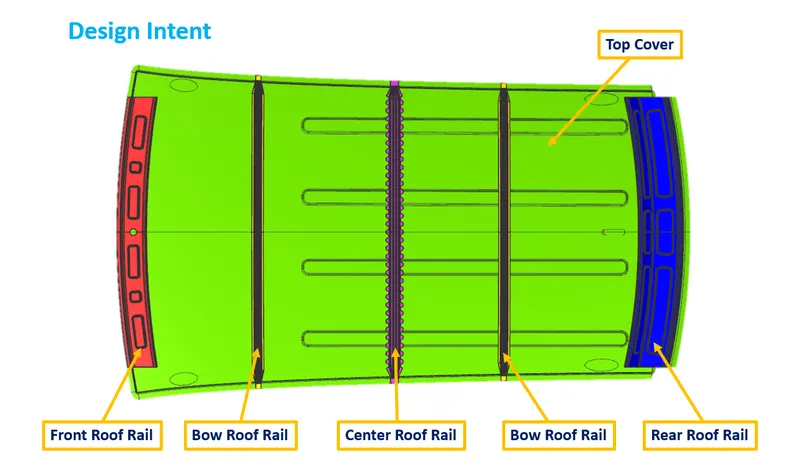
- Main objective of the project is to create the Roof Sheetmetal design in NX cad, and also designing Front roof rail, rear roof rail, bow roof front, bow roof rear, center roof rail and Reinforcement are creating to build the strong roof.
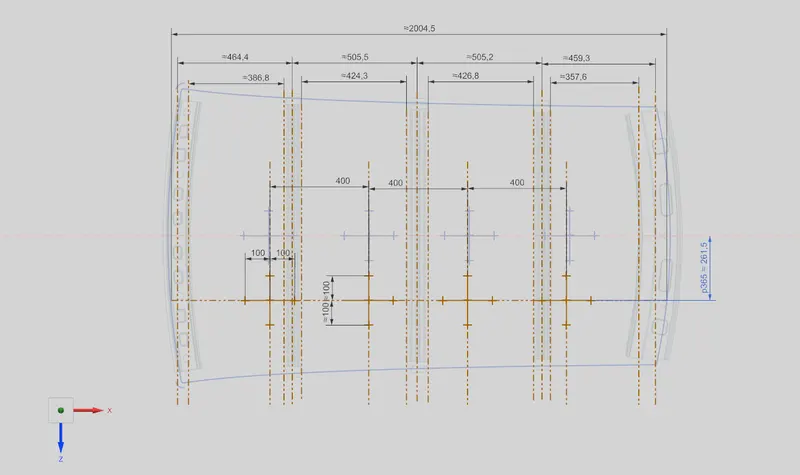
- Do curvature study on Roof and performance calculations for Heat distortion and Snow load criteria to determine the position of the Bow roofs.
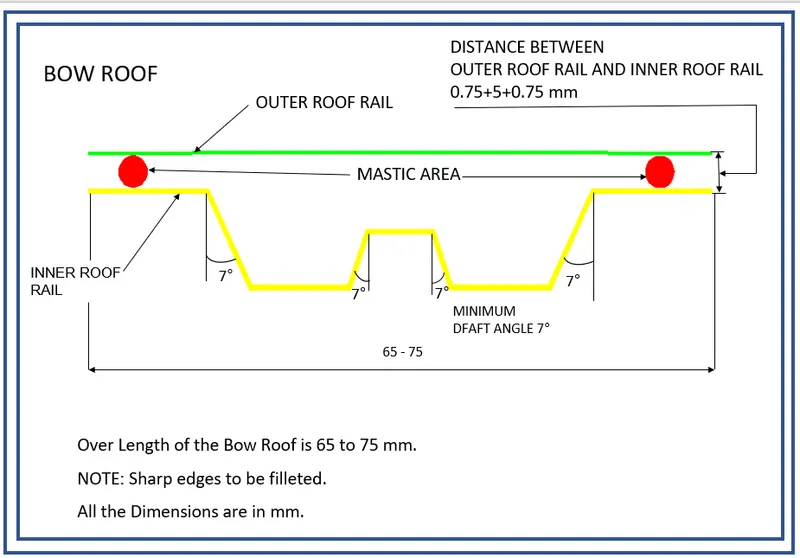
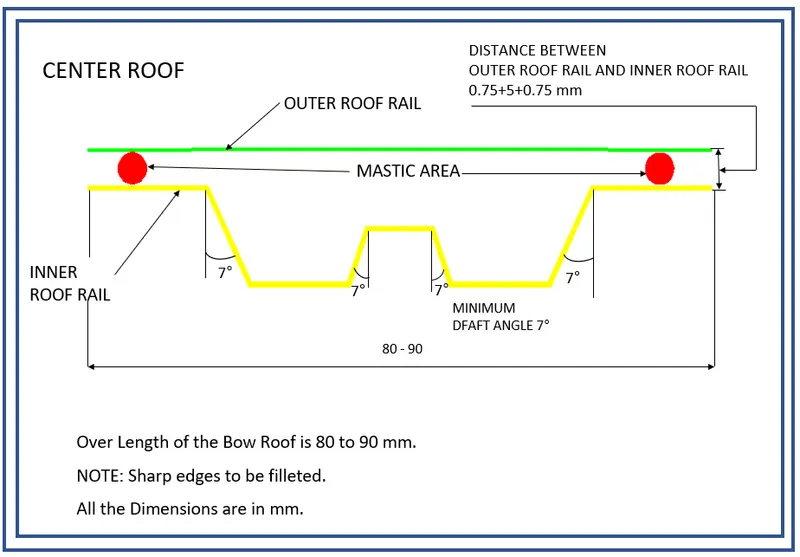
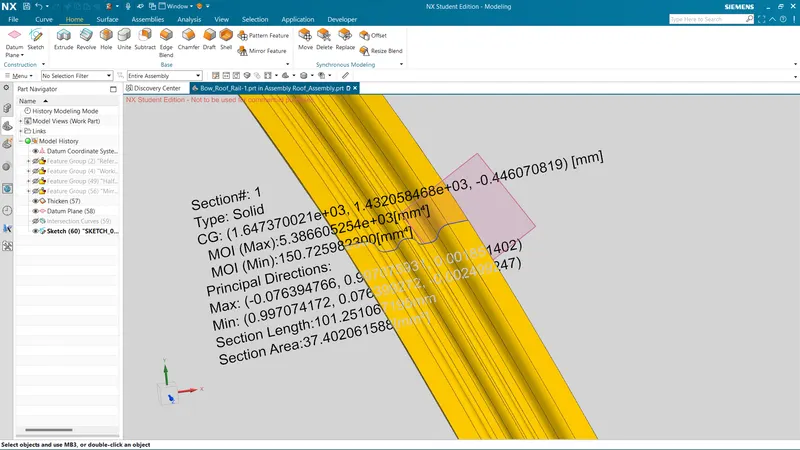
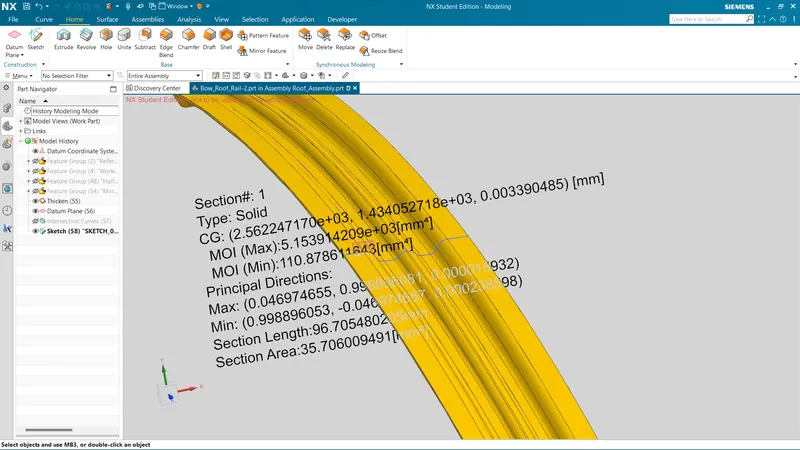
- Finding the moment of inertia and section modulus for Bow-roofs and center roof rail.
- And, also finding the Draft Analysis of each part.
Roofs:
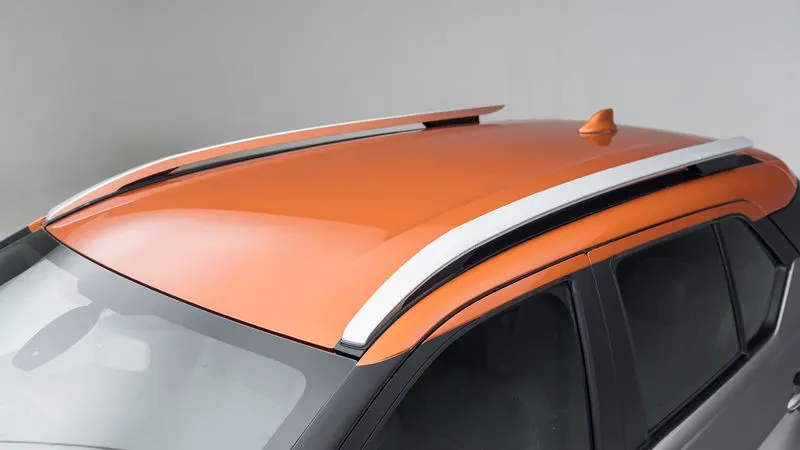
The name says it. The roof is the protective layer above the passenger compartment which keeps everything inside safe from external elements like wind, rain, sun and others. In some cars, roofs are fixed and some cars come with roofs that can be opened. Sometimes roofs come with a small window that can be opened when needed.
The car roof can be converted into an external storage too. There are roof racks available in the market which can be installed in the roof to store something.
What are the different types of car roofs:
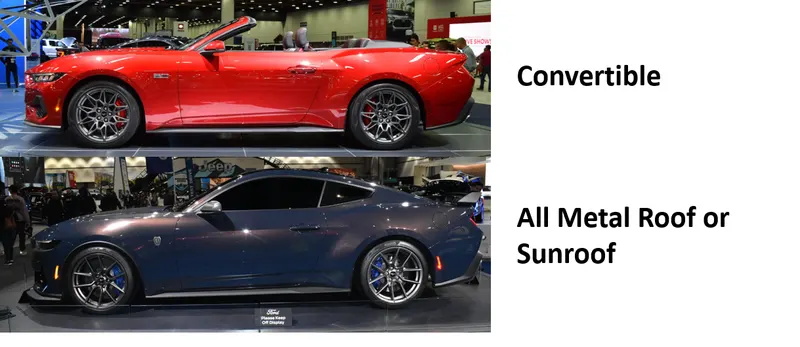
There are various types of roof variants, from traditional all-metal roofs to convertible roofs to sunroofs and moonroofs. The differences in the types of sunroofs will not be explored as they are very similar from an integration and packaging perspective. Both sunroofs and moon roofs have electrically adjustable sunshades that open and close. Currently, the hot new thing which automakers have started to experiment with is integrating large glass panels on all-glass roofs.
What components make up a car roof?
The roof panel assembly is made up of different components depending on what variation of roof you may be dealing with, but the most common components are front and rear headers, roof bows, roof ditch/roof rails (roof ditch modeling execution), sunroof module, sunroof ring (only applicable to sunroof vehicles), and the roof outer panel /glass roof.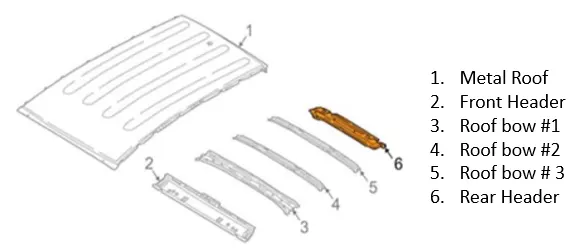
Typical non sunroof roof system
Why most of the car roofs are curved?
Automotive roofs are designed to have a slight crown, with a peak around the B-Pillar. In addition to improving aerodynamic performance (fuel economy/range), the reasonings behind this is that the roof is designed to act as a water management system for the vehicle. During a storm, the water is redirected in the roof ditch to the front and back of the vehicle and away from the door openings.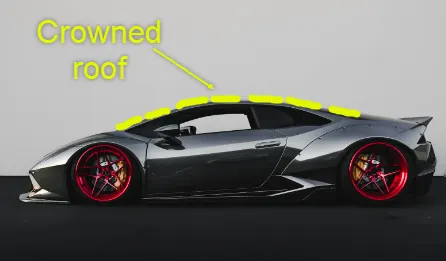
The BIW system of a vehicle is like the foundation and frame of a house. All other components mount to the body-in-white and the roof is no exception. The roof is the mounting surface for many parts such as the headliner and substrate, electrical harnesses, airbags, grab handles, sunshade, sun visors, an overhead console, and radio antenna. Each of those components has specific packaging requirements which the roof must enable. Accessories such as roof racks also attach to the roof.
What is oil canning in automotive panels?
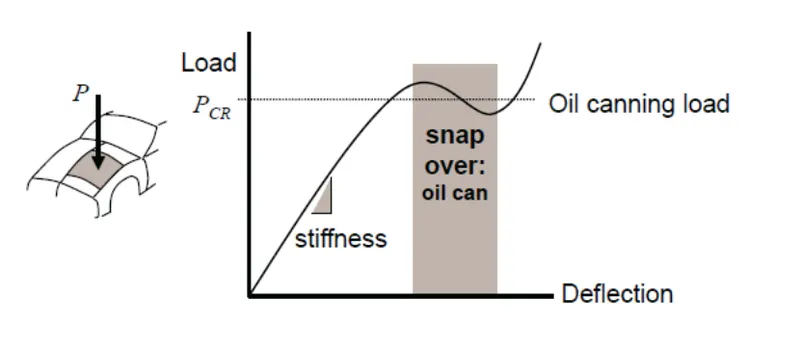
Sometimes when you press down on a hood or roof panel of a car you will hear a pop, bang, or clunking noise. This noise is due to the load on a large panel exceeding the critical buckling load Pcr and as a result, reversing the curvature of the panel. Automotive panels are generally doubly curved. The curvature on these automotive panels is not the same in the orthogonal direction. The greater the stiffness of the panel the greater the oil-canning resistance. The way to increase the Pcr for a roof panel is by improving the panel geometry/curvature, and support conditions, and by adding roof bows.
How do you measure roof strength?
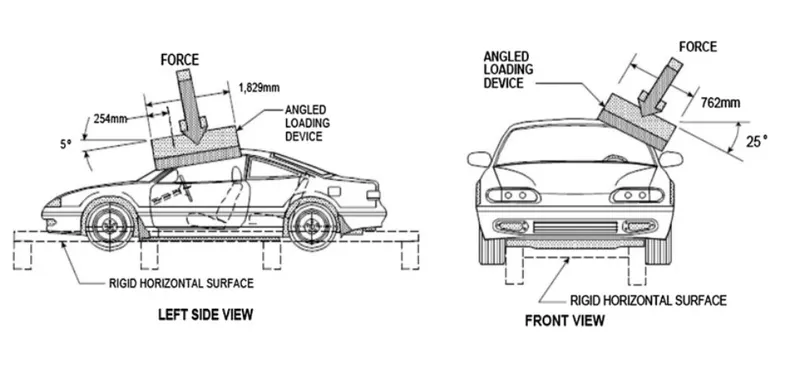
According to the Federal Motor Vehicle Safety Standard (FMVSS), rollover crashes are some of the most dangerous automobile accidents. About 35% of occupants involved in rollover crashes die, which is more than 7500 people a year. This is because seatbelts on passenger seats are not effective at protecting occupants during a rollover because of their geometry. As a result, the FMVSS has developed a standardized test to check vehicle roof structure performance. The latest standard, FMVSS 216a, states that a vehicle that weighs over 6,000 pounds, should be able to withstand a force equal to 3 times the unloaded vehicle weight (UVW) without the roof collapsing (less than 5 inches of deformation). This test also needs to be conducted on both driver and passenger sides. Since the loading platen is placed forward of the C pillar, the main load-bearing structures during a roof crush test are the A-pillars, B-pillars, front header, and roof rails.
Following are the design considerations of the roof-
- Visibility criteria
- Head clearance
- Heat distortion and snow load criteria
- Draft analysis
- Safety parameters
Input data from styling team:
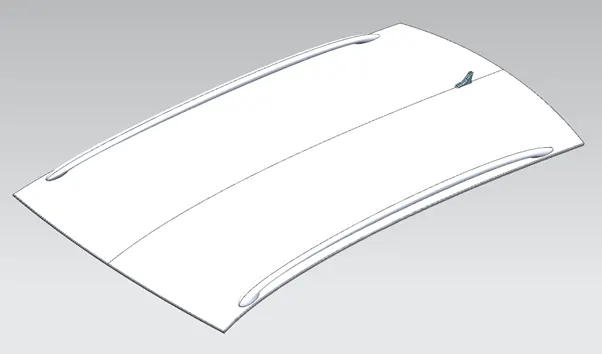
1. Class-A surface of the roof along with the railing rack
2. Mastersections For Diffrent Regions;
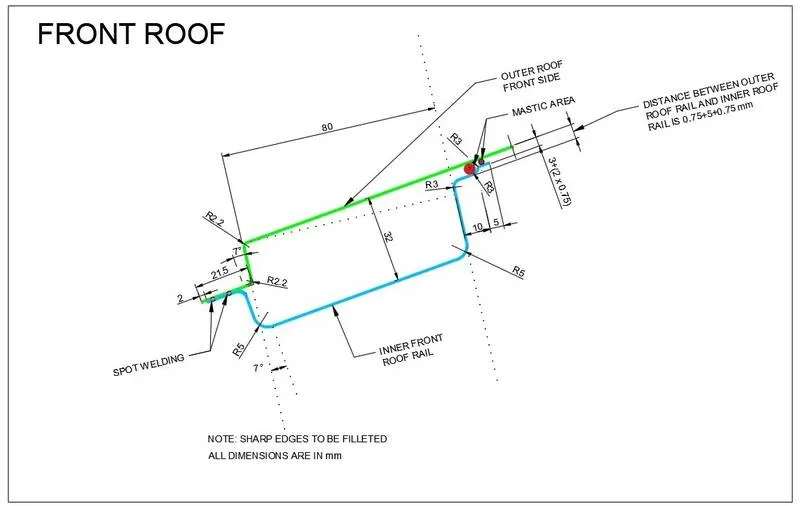
For Front Roof Rail-
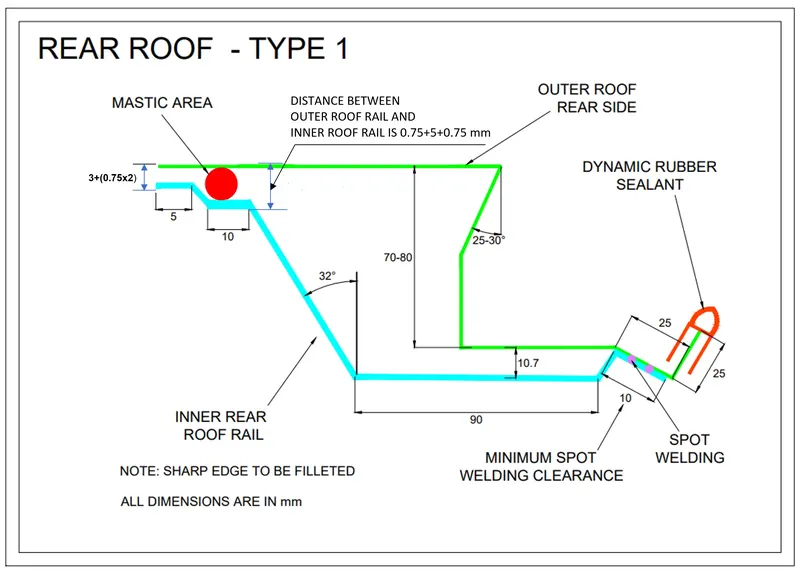
For Rear Roof Rail-
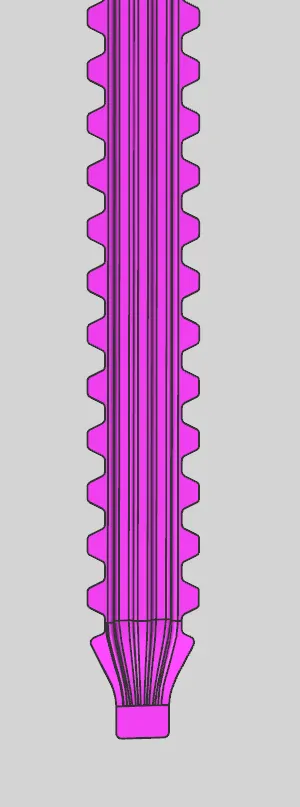
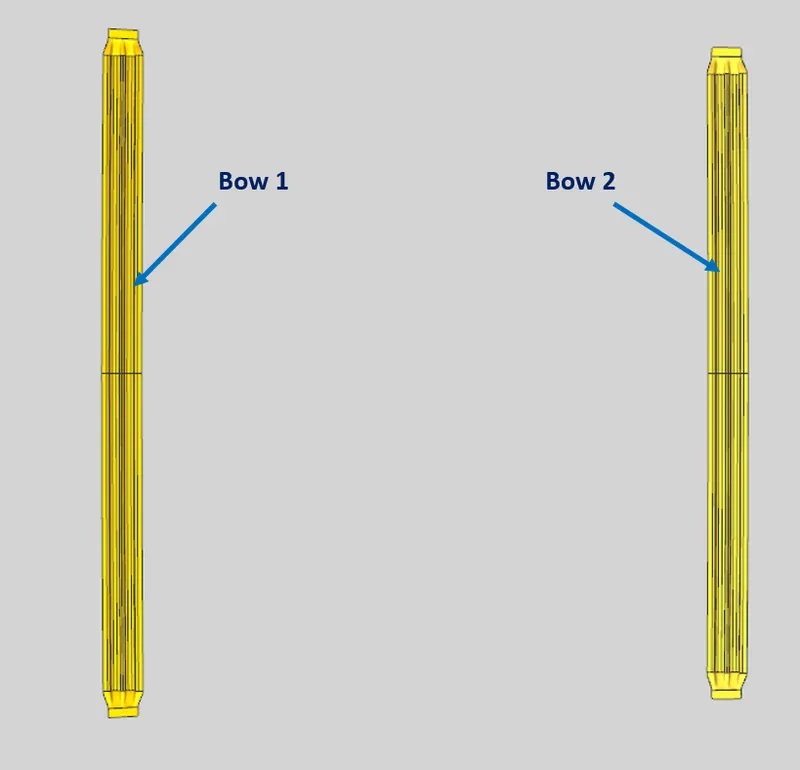
For Bow Roof-
For Center Reinforcement Rail-
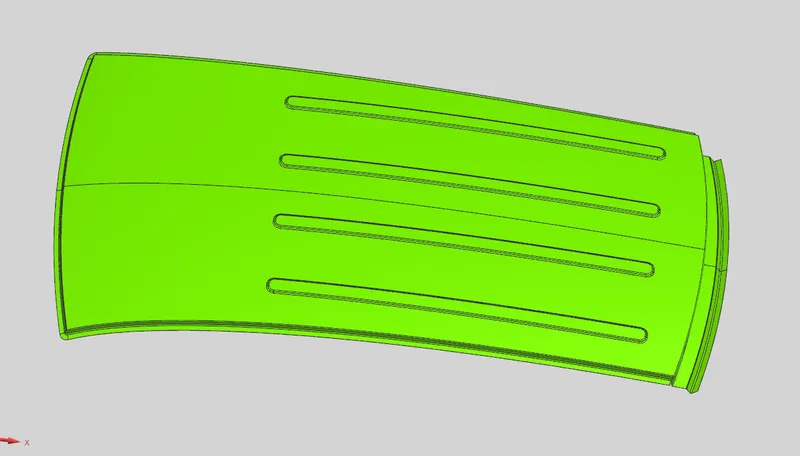
Design of Top Cover:
BIW of Roof is going to fit on Body side, windshield, Backdoor so the required acessories need to be assembled first on the roof panel using given mastersections. Embosses are also added for strength improvement. overall Thickness of outer panel is 0.75 mm.
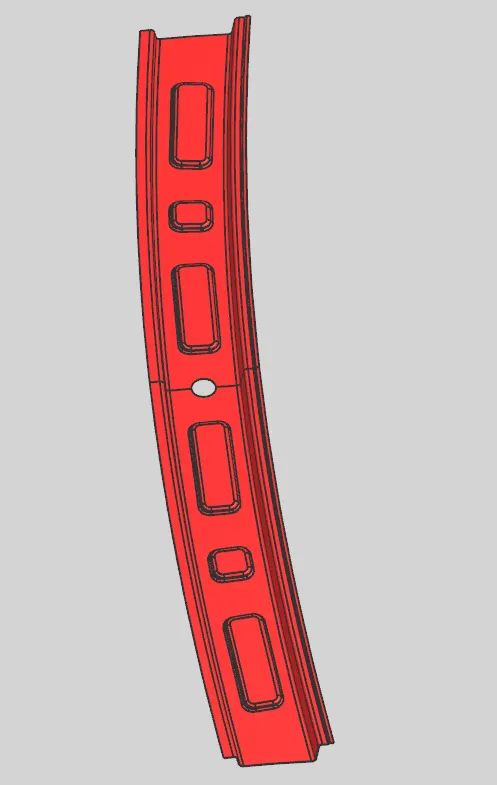
Design of Front Roof Rail:
Front roof rail is the one which joins the wind shield glass, body side outer and the inner panel.
it having length of 80 mm and 0.75 mm thick.
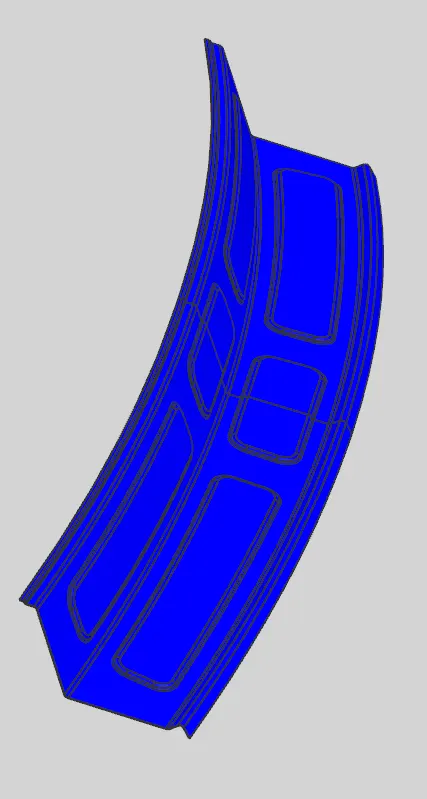
Design of Rear Roof Rail:
Rear roof rail is the one which joins the back door, body side outer and inner panel with thickness value of 0.75 mm.
Calculating the Section Modulus:
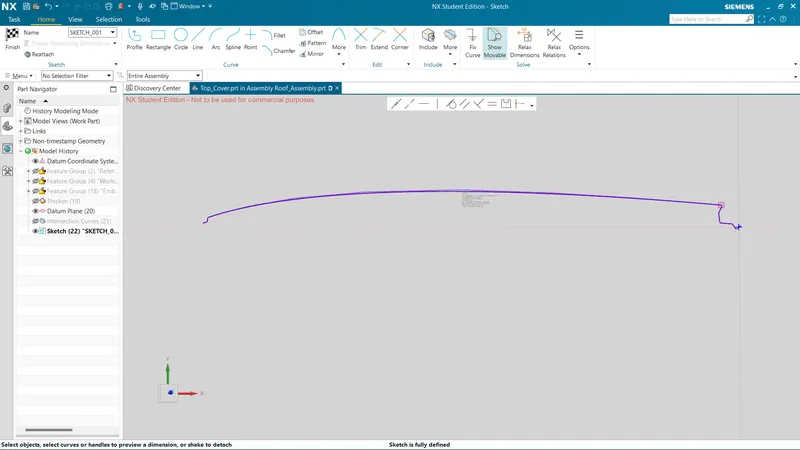
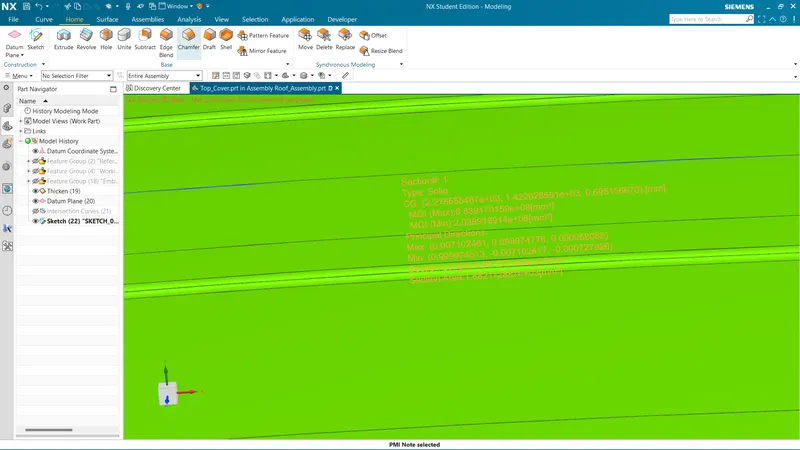
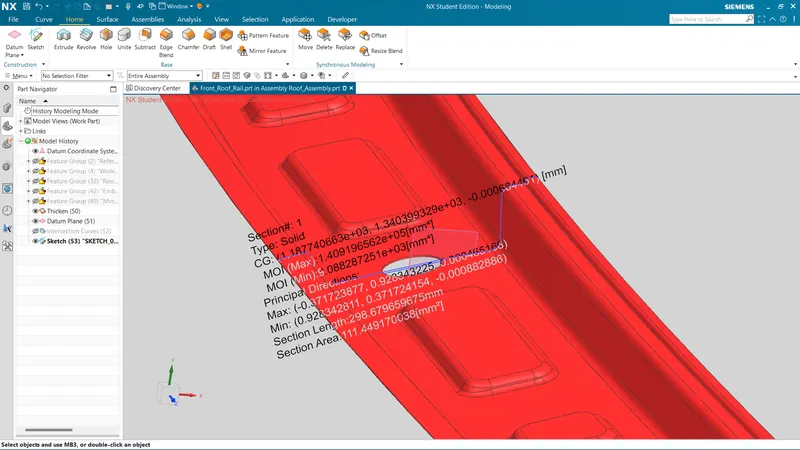
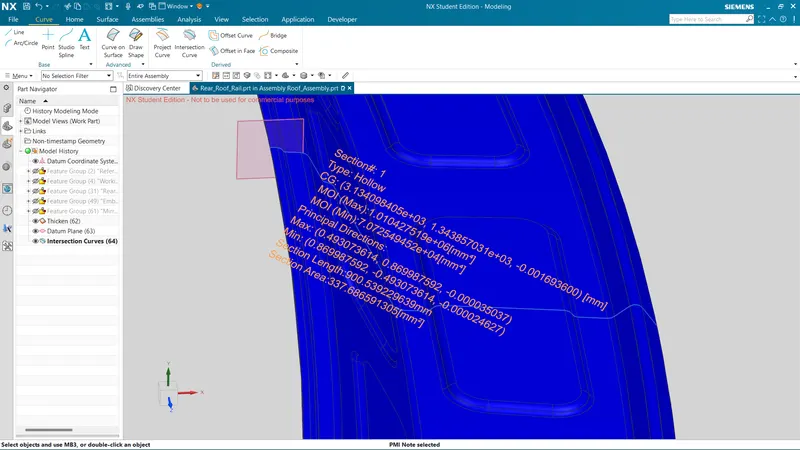
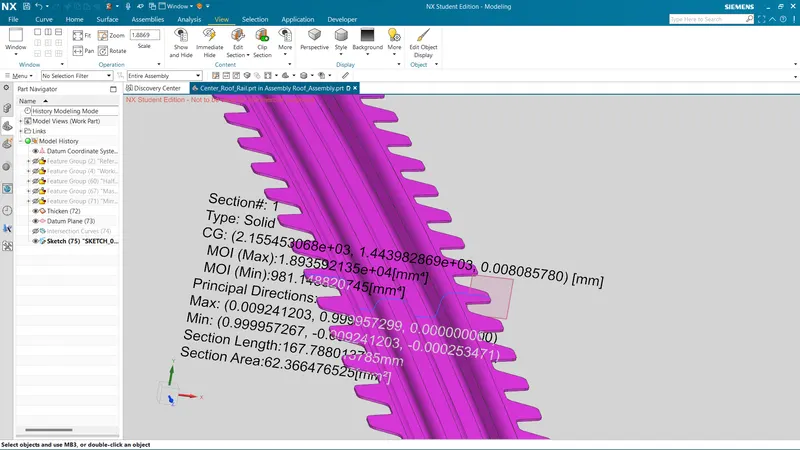
To calculate the section modulus, we need to take the intersection of all the components individually on the 0-Y section.
Top Cover-
Front Roof Rail-
Rear Roof Rail-
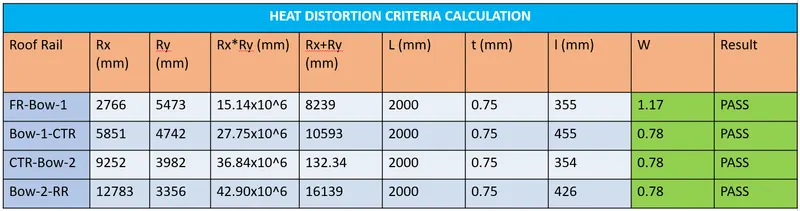
W = [1.73 x 10^(-3) x L] + [1.85 x 10^(-8) x (R^2)/t] + [ 1.10x10^(-3) x l] - 2.68
Judgment Condition: OK< 2.7> 3.1
Where
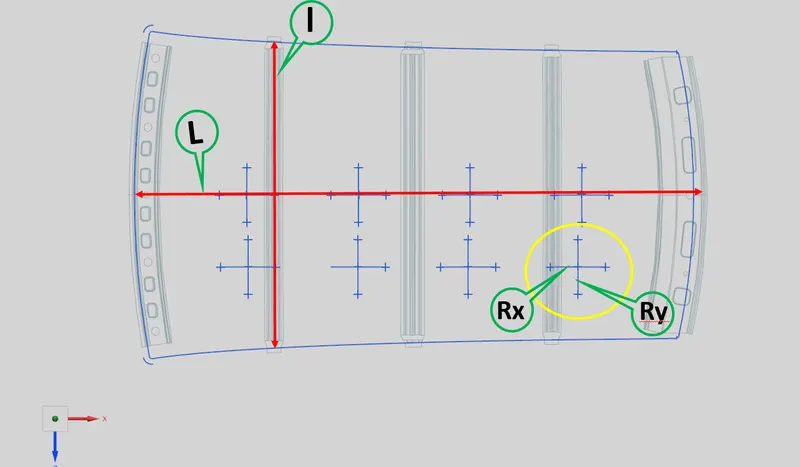
L = Roof Length in X-Direction[mm](Roof dimension in 0-Y)
R = Roof curvature
R = 2(Rx*Ry)/(Rx+Ry)
Rx = X curvature
Ry = Y curvature
t = Roof plate thickness [mm]
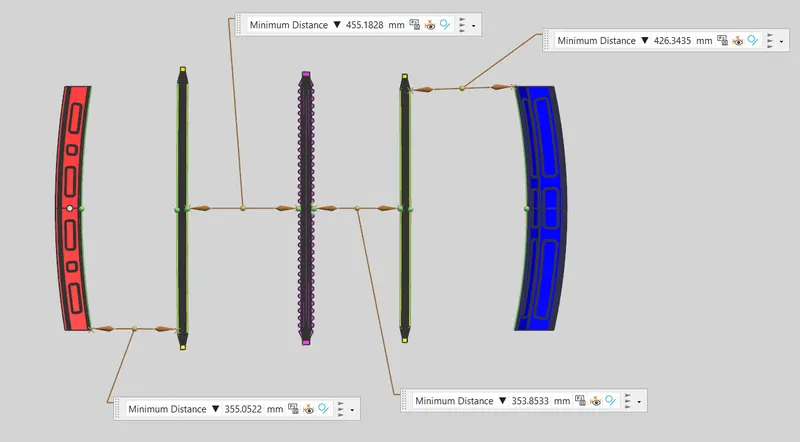
l = Bow Roof Span [mm]
JUDGMENT CONDITION OK IF W< 2.7
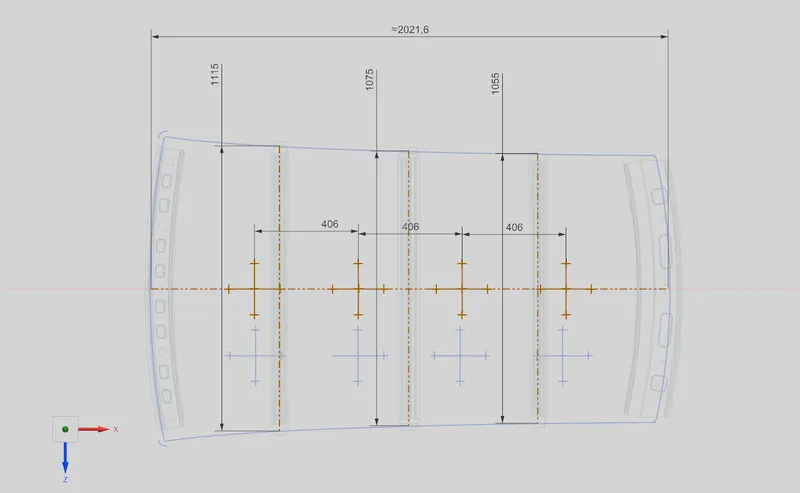
Snow Load Clculations:-
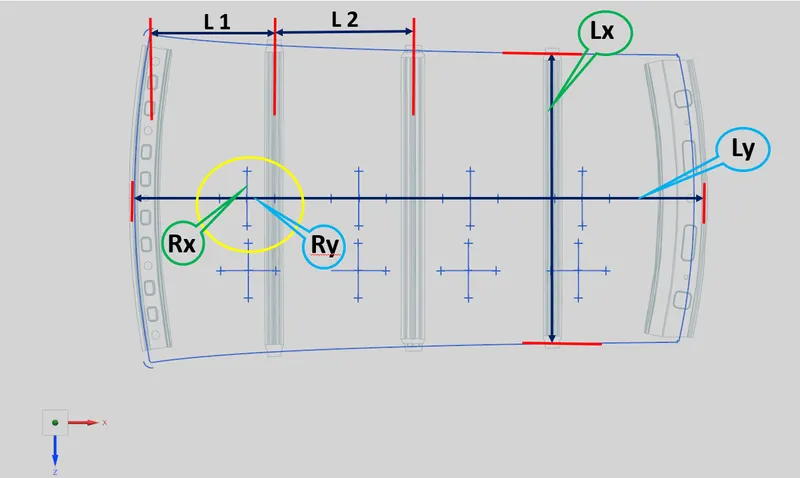
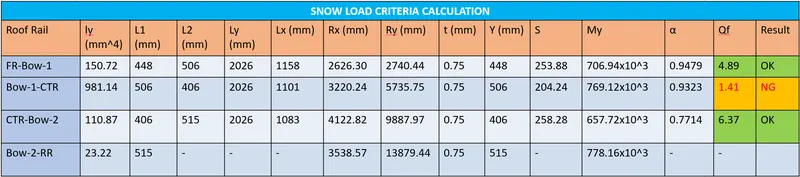
Qr = [Iy x t2] / [α x s x [(Rx + Ry)/2]2 x 10-8]
Where,
α = My x Lx2 x 10-12 , My = Y(Ly-Y)
t = Roof plate thickness [mm]
Ly = Distance between the front and rear roof Rails on the Vehicle along with 0Y[mm]
Length of Roof panel with the center point between Roof rail Front /Rear as the front and rear reference point.
Lx = Distance between the Left and Right end of the roof on the Roof BOW [mm]
The width of the roof panel is exposed on the surface.
Y = Distance front Front Roof Rail to Roof BOW[mm]
s = Distance for which Roof BOW bears divided load [mm]
s = L1/2 + L2/2
Iy = Geometrical moment of inertia of Roof BOW (Y cross-section )[mm4]
Rx = Lateral direction curvature radius of roof panel Y cross-section on Roof BOW [mm]
Roof panel curvature Radius of the Length Lx in Front view
Ry = Longitudinal Direction curvature radius of the Roof panel X cross-section on Roof BOW [mm]
Draft Analisys for each part:
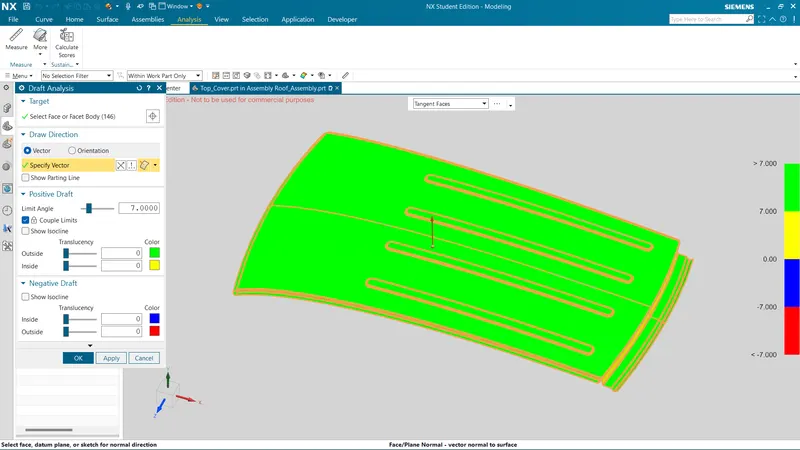
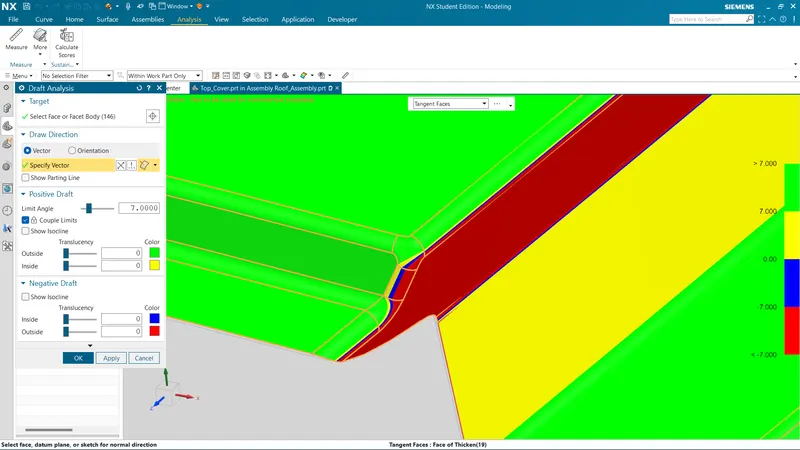
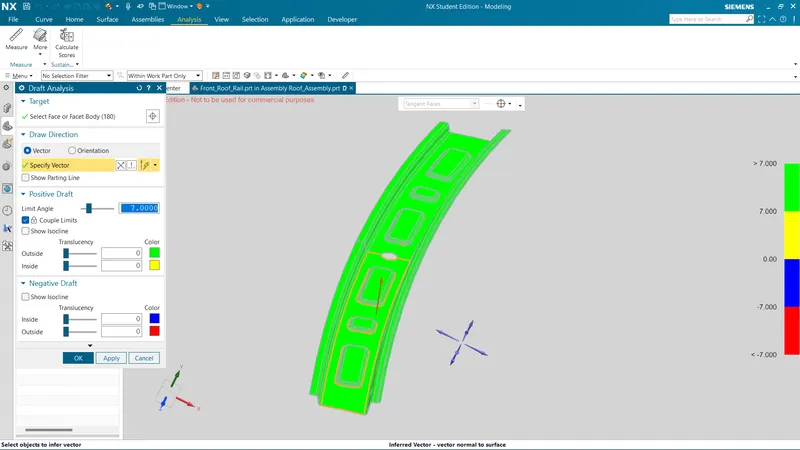
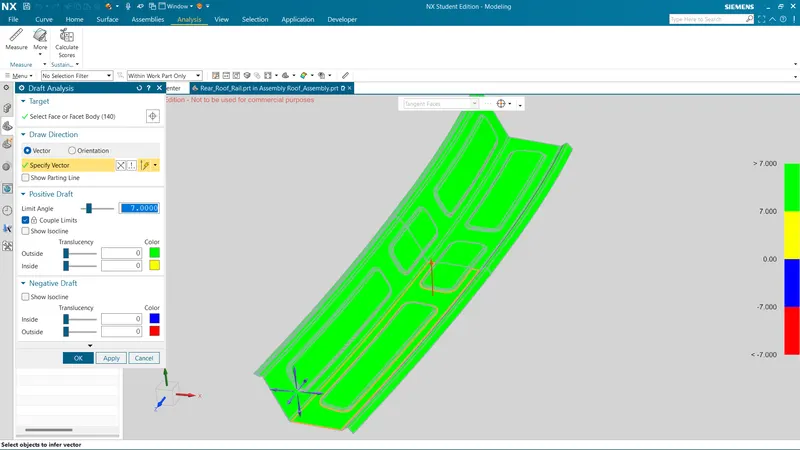
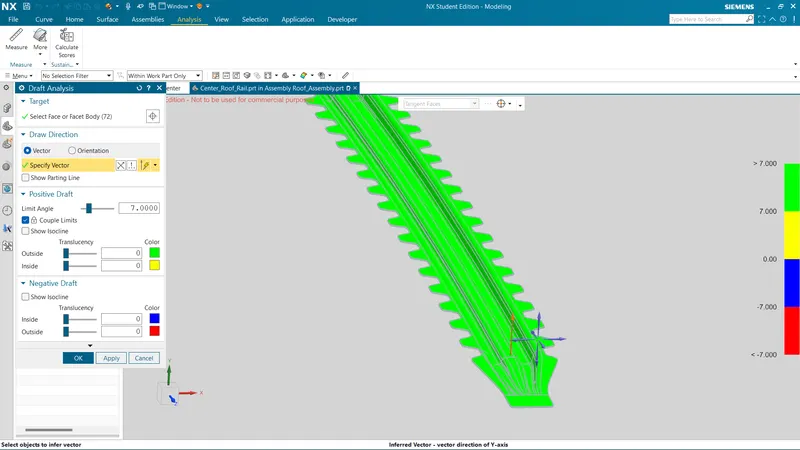
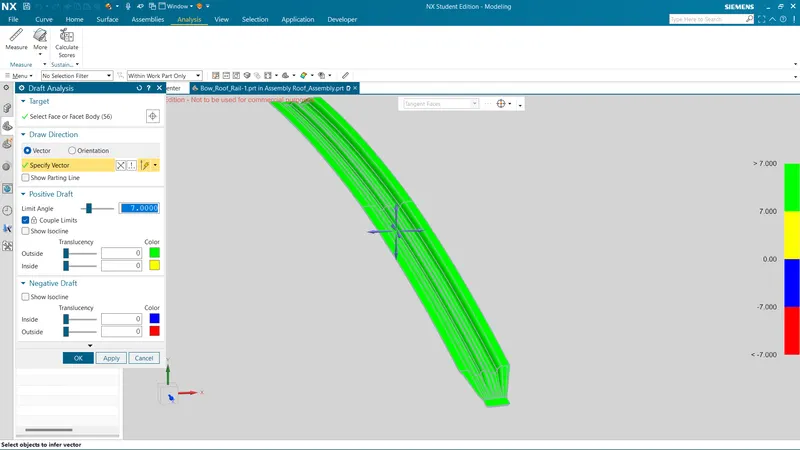
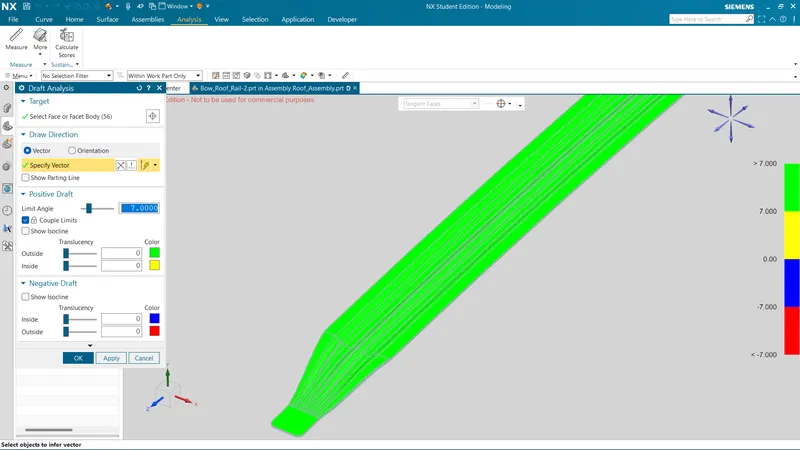
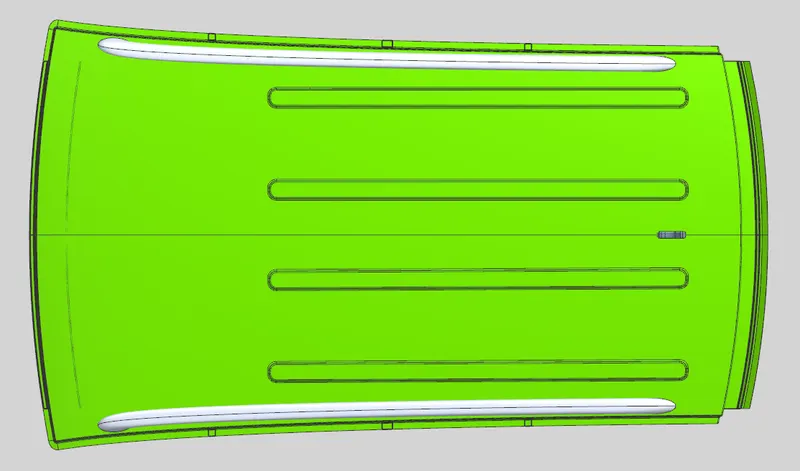
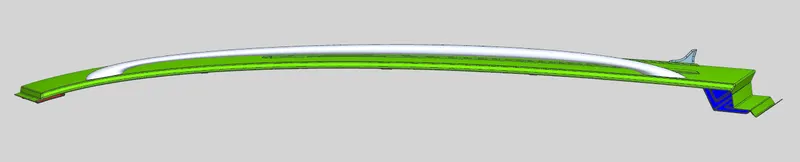
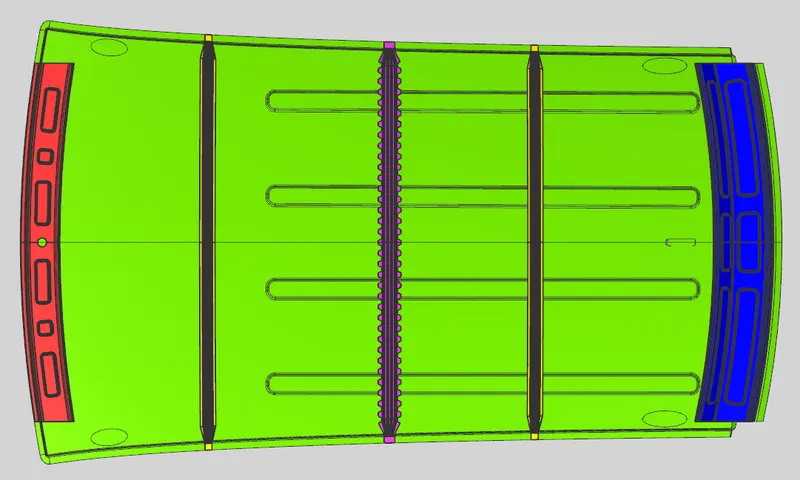
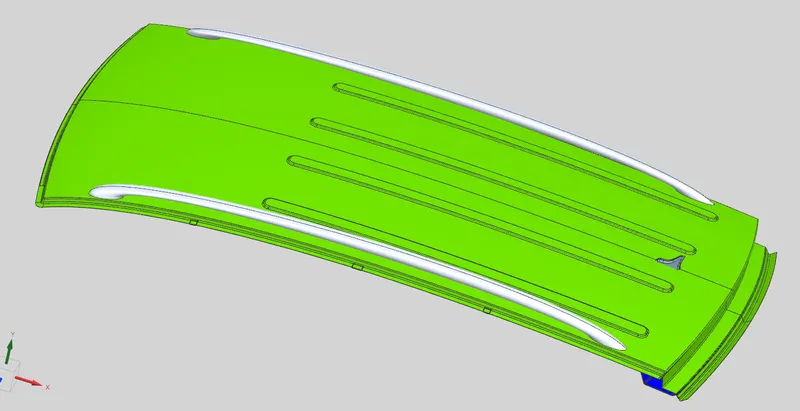
- The Draft Analysis command enables you to detect if the part you drafted will be easily removed. This type of analysis is performed based on color ranges identifying zones on the analyzed element where the deviation from the draft direction at any point, corresponds to specified values.
- All the sheetmetal surfaces are going to be manufacture with deep drawing process.
- Thus Minimum draft angle requirement is 7 degree is considered for analysis. Green colour show positive draft angle of the part more than 7 degree.
Outer Roof Panel-
CONCLUSION
In this way, We were successfully able to design the roof with all the roof rails for better support and strength. We designed it so as to satisfy the norms and regulations by calculating the heat distortion criteria and the snow load critera. While doing this we also understood about the methodology behind designing the roof of the car and what all we take into consideration also got to knew much about Roof and regarding its detailed analysis.