Roof Design
Report on Roof:-
Roof design refers to the shape, structure, and features of the roof of a car. The roof design plays a significant role in the overall aesthetics, functionality, and safety of the vehicle. Some aspects to consider when designing a roof:
-
Roofline and Profile: The roofline determines the shape and style of the roof, which can vary from a flat roof to a sloping or curved design. Whether it's a sedan, SUV, coupe, or other vehicle type.
-
Roof Pillars: The roof design includes pillars that provide structural support and help define the vehicle's body style. Common roof pillars include the A-pillar at the front, B-pillar in the center, and C-pillar at the rear. The positioning and thickness of these pillars influence visibility, strength, and aesthetics.
-
Roof Material: The choice of material for the car roof affects weight, structural integrity, and aesthetic appeal. Common roof materials include steel, aluminum, carbon fiber, or glass-reinforced plastic (GRP). The material selection should balance factors like strength, safety, cost, and manufacturing feasibility.
-
Roof Strength and Safety: The roof design must meet safety standards and provide sufficient strength to protect occupants in the event of a rollover or impact. Manufacturers use structural reinforcements and materials to ensure the roof can withstand forces and contribute to the overall vehicle safety.
-
Roof Rack Compatibility: Some vehicles, such as SUVs or station wagons, may have provisions for roof racks or roof-mounted accessories. The roof design should consider load-bearing capacity, attachment points, and compatibility with aftermarket roof racks for carrying additional luggage or sporting equipment.
-
Aerodynamics: The shape and contours of the car roof impact aerodynamic performance and fuel efficiency. Design considerations include minimizing drag, optimizing airflow, and reducing noise caused by wind turbulence.
-
Roof Integration with Other Body Elements: The roof design should seamlessly integrate with other exterior elements, such as the windshield, side windows, doors, and rear end. The transitions and alignment between these components contribute to the overall harmony and visual appeal of the car's design.
Structural Components :
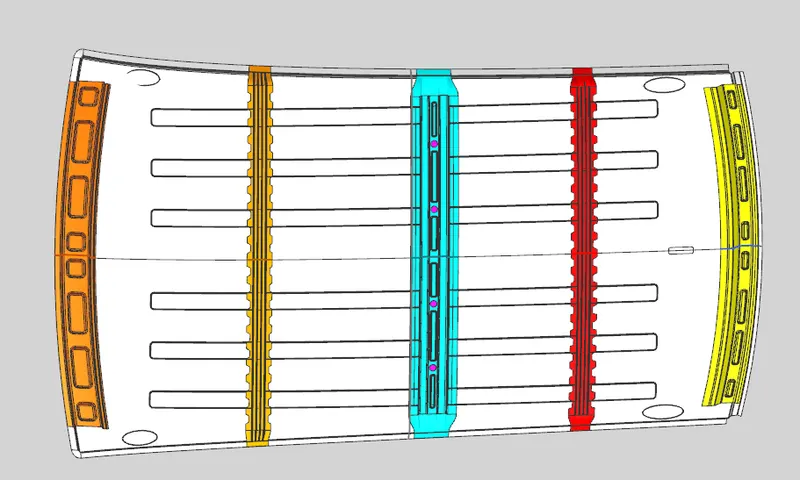
Reinforcements in Roof :
Reinforcements in roof design aim to improve occupant safety by enhancing the strength, rigidity, and structural integrity of the roof structure. They are designed to withstand various forces and protect occupants in the event of a collision, particularly during rollover scenarios. The specific type and placement of reinforcements vary depending on the vehicle model, design requirements, and safety regulations.
here we know that the roof itself is not a single component but an assembly of various parts and structures that form the roof assembly.
thus we have to use some structural components on roof such as:-
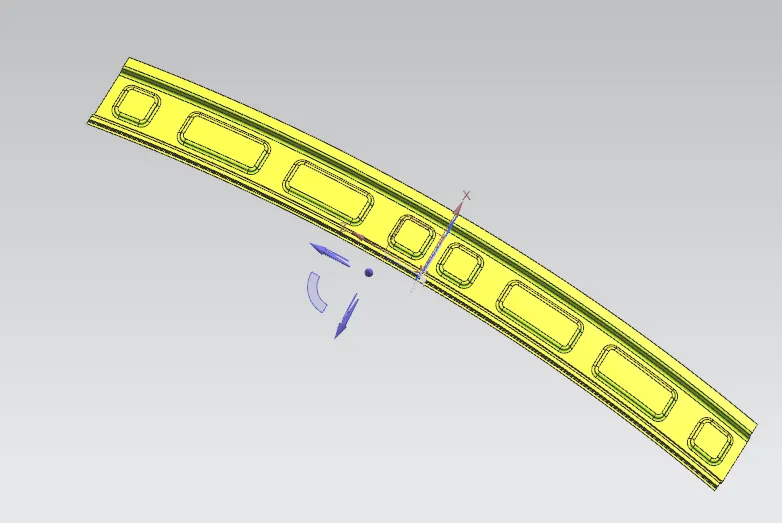
- front roof rail (FR)
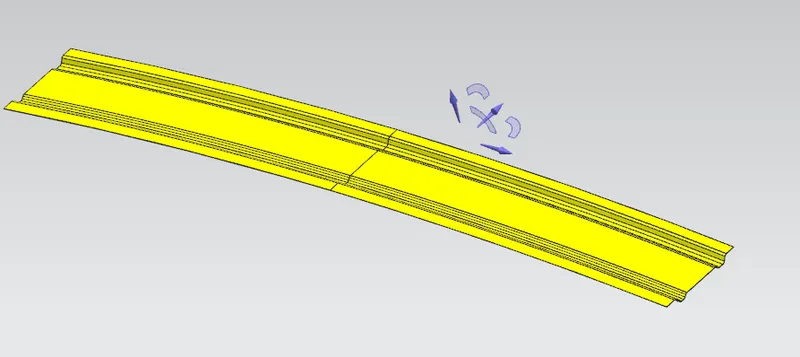
- bow roof rail 1 (BR1)
- bow roof rail 2 (BR2)
- center roof rail inner (CR)
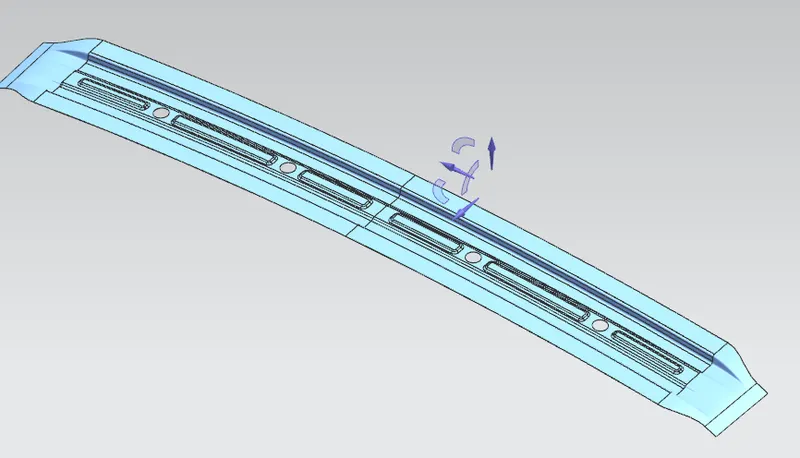
- center roof outer (secondary)
- rear roof rail (RR)
front roof rail (FR):The roof rail serves as a crucial support structure connecting the windshield glass, bodyside outer, and inner panels of a vehicle. It is typically constructed using recycled body side outer material, resulting in a rail thickness of 0.65 mm. During the manufacturing process, a draft angle of 3-5 degrees is incorporated to facilitate deep-drawing operations. Design considerations for the roof rail encompass ensuring optimal visibility for the driver and passengers, as well as maintaining sufficient headroom clearance for comfortable seating.
bow roof rail 1 (BR1 & BR2):-
The intermediate structural components in the roof design serve to provide additional support in conjunction with the primary roof rails (FR, CR, RR). The inclusion of bow roof rails may vary depending on the vehicle class and design objectives. In certain cases, bow roof rails may not be present at all, as it depends on the specific design intent. These intermediate components are attached to the roof using mastics, while embosses are incorporated to enhance strength and structural integrity.
Center roof rail inner (CR):-
The center roof rail is positioned precisely in the middle section of the roof. In certain instances, an additional secondary rail is integrated into the center rail to provide enhanced strength. The design of the center rail takes into consideration the curvature of the roof at the CR position. To maintain the desired styling surface, the center rail is joined to the roof using mastics instead of spot welds.
Center Roof Outer (secondary) :-
Rear Roof Rail (RR):-
The rear roof rail serves as a support structure that connects the backdoor, bodyside outer, and inner panels. When designing the rear roof rail, considerations are taken from the backdoor design to ensure the necessary clearance, as well as meet the requirements for headroom clearance and rear visibility. Spot welds are applied at the backdoor end of the rail for secure attachment, while the other end is joined to the roof using mastic sealants.
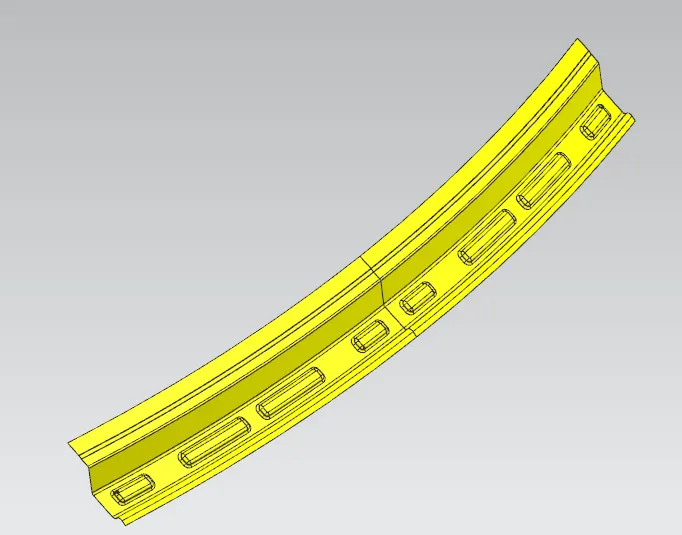
Section Modulus :-
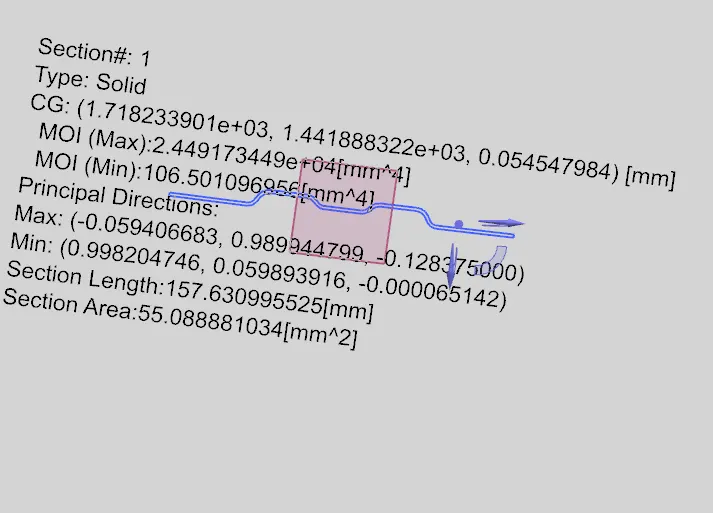
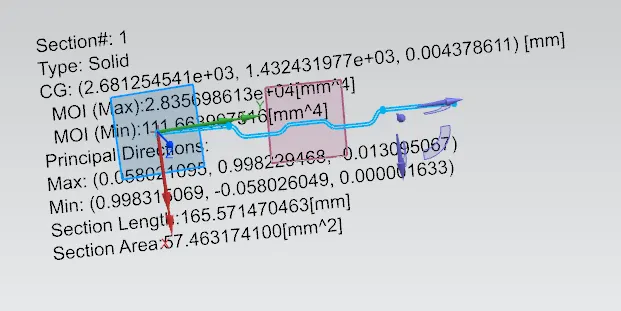
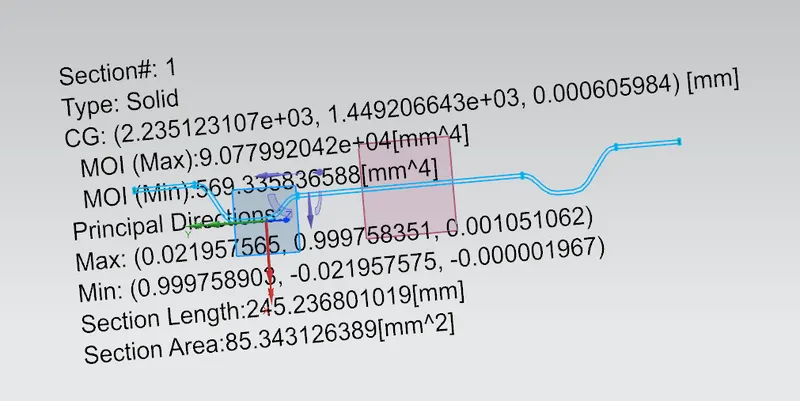
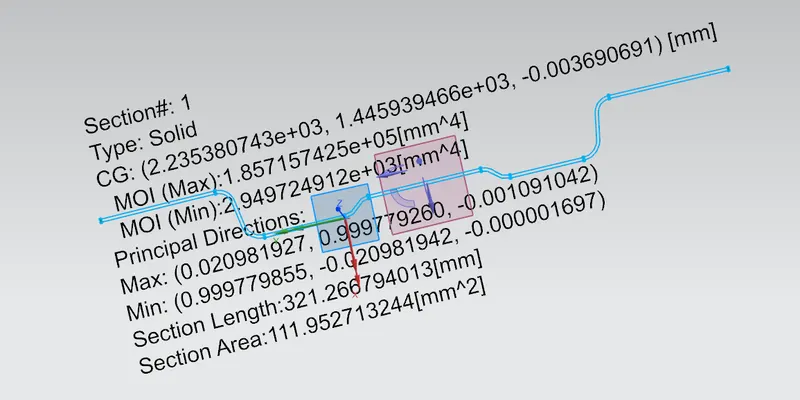
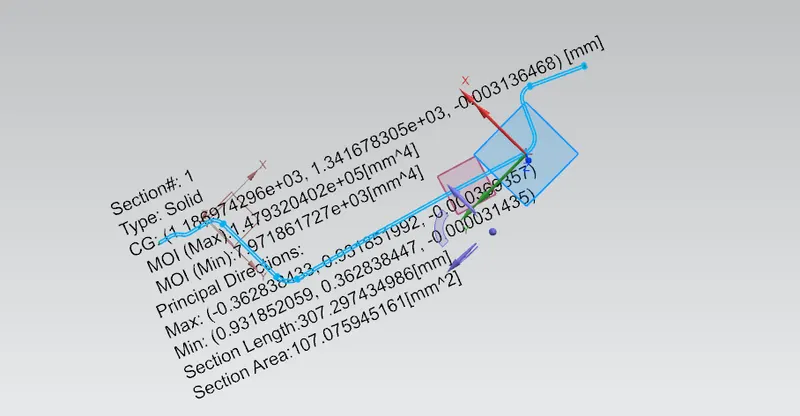
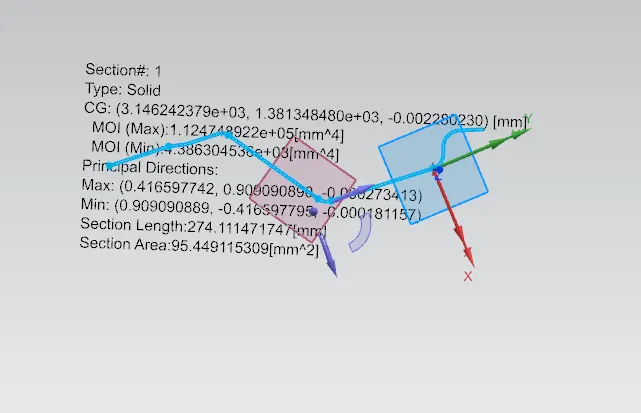
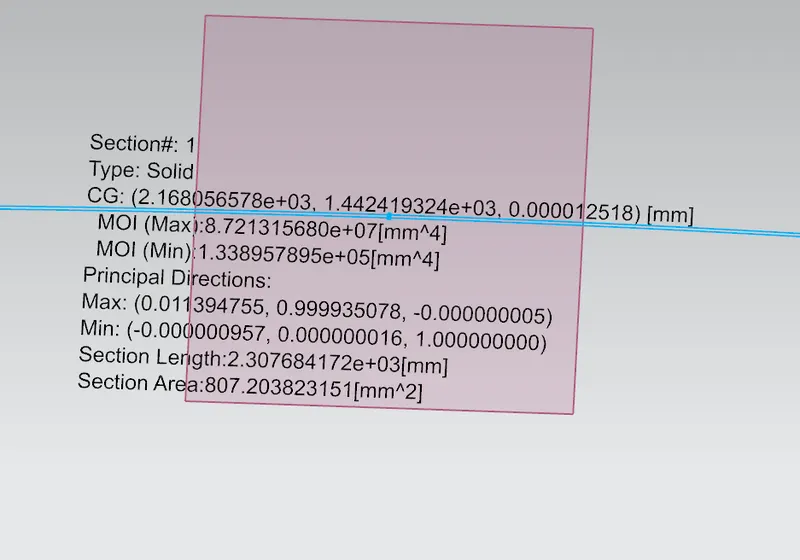
calculations :-
heat distortion criteria:
Heat distortion temperature is the temperature at which the metal softens and deforms under a specific load. This study is done to check the ability of the roof to withstand high temperature with respect to the positioning of the reinforcements which contribute to increased strength.
W = [1.73 x 10^(-3) x L] + [1.85 x 10^(-8) x (R^2)/t] + [ 1.10x10^(-3) x l] - 2.68
Judgement Condition : OK< 2.7> 3.1
Where
L = Roof Length in X-Direction[mm](Roof dimension in 0-Y)
R = Roof curvature
R = 2(Rx*Ry)/(Rx+Ry)
Rx = X curvature
Ry = Y curvature
t = Roof plate thickness [mm]
l = Bow Roof Span [mm]
|
BOW |
Rx |
Ry |
R |
I |
L |
t |
R^2/t |
W |
OK/NG |
|
FR&BR1 |
5711.0 |
2779.3 |
3738.9 |
400.3 |
2031.8 |
0.75 |
18639164 |
1.61 |
OK |
|
BR1&CR |
4849.6 |
6613.9 |
5595.9 |
407.6 |
2031.8 |
0.75 |
41753322 |
2.04 |
OK |
|
CR&BR2 |
3933.1 |
11711.4 |
5888.6 |
334.2 |
2031.8 |
0.75 |
46234146 |
2.04 |
OK |
|
BR2&RR |
3219.8 |
16729.1 |
55866.4 |
320.8 |
2031.8 |
0.75 |
41614166 |
1.94 |
OK |
Based on the information provided in the table, it can be concluded that the designed roof meets the heat distortion criteria successfully.
Snow load criteria:
Snow load criteria study is done to check the ability of the roof to withstand snowfall and bounce back to its original shape without any permanent deformation once the load is removed
Snow load Prediction formula
Qr = [Iy x t2] / [α x s x [(Rx + Ry)/2]2 x 10-8]
Note: The Qr value given over here is correct. There was a typo error in the formula given in the video.
Where
α = My x Lx2 x 10-12 , My = Y(Ly-Y)
Judgement condition = Qr ≥ 3.1
250 ≤ s ≤ 380
t = Roof plate thickness [mm]
Ly = Distance between the front and rear roof Rails on the Vehicle along with 0Y[mm]
Length of Roof panel with the center point between Roof rail Front /Rear as the reference point of the front and the rear.
Lx = Distance between the Left and Right end of the roof on the Roof BOW [mm]
Width of the roof panel exposed on the surface.
Y = Distance front Front Roof Rail to Roof BOW[mm]
s = Distance for which Roof BOW bears divided load [mm]
s = L1/2 + L2/2
Iy = Geometrical moment of inertia of Roof BOW (Y cross-section )[mm4]
Rx = Lateral direction curvature radius of roof panel Y cross-section on Roof BOW [mm]
Roof panel curvature Radius of the Length Lx in Front view
Ry = Longitudinal Direction curvature radius of the Roof panel X cross-section on Roof BOW [mm]
Roof panel X curvature radius of length s in Side view
|
S.NO |
BOW |
IY |
α |
Lx |
Ly |
Y |
S |
Rx |
Ry |
t |
QR |
OK/NG |
|
1. |
FR&BR1 |
103.8068 |
1.0 |
1148.25 |
2031.8 |
495.1 |
505.3 |
5529.8 |
3086.9 |
0.75 |
8.96 |
OK |
|
2. |
BR1&CR |
466.0359 |
1.0 |
1095.97 |
2031.8 |
515.4 |
479.8 |
4380.8 |
8634.6 |
0.75 |
6.86 |
OK |
|
3. |
CR&BR2 |
111.6565 |
0.7 |
1062.09 |
2031.8 |
444.1 |
431.0 |
3911.7 |
13857.5 |
0.75 |
3.79 |
OK |
Based on the information provided in the table, it can be concluded that the designed roof meets the Snow Load criteria successfully.