Roof Design
Aim:
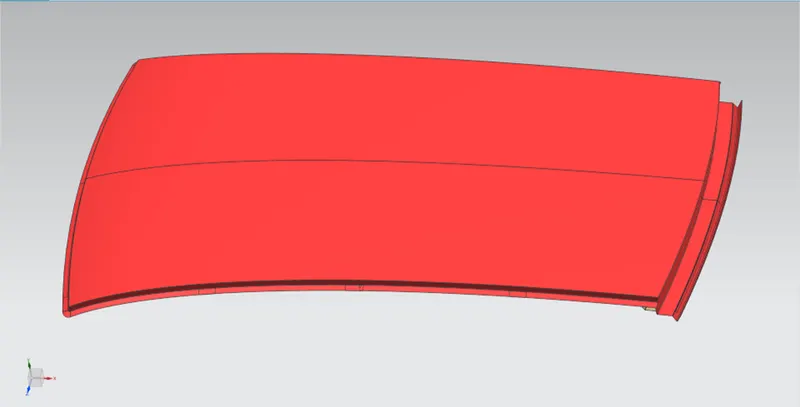
For the Given Roof styling, need to create an Assembly by developing the essential flanges for the outer roof and creating the reinforcements.
Roof:
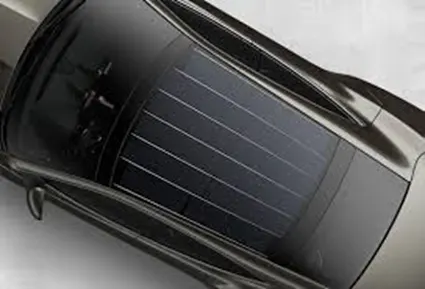
Roof is an integral part of the car or any automobile because the passengers require a shield which protects them from varying weather conditions. The passengers sort to automobiles like cars for the comfort it offers during travelling from one place to another.
Designing of Roof:
The starting point of the roof design is the roof styling surface which is got from the styling team who take into consideration of all the aesthetic considerations of this design. The roof engineer must take into consideration of three important factors before proceeding with the design.
1.Front visibility criteria
2.Rear visibility criteria
3.Head room clearance criteria
The roofs are not the load carrying member but they should be designed to carry loads in order to remain strong without any dents or permanent deformation during the periods of unforeseen situations.
Parts In Roof:
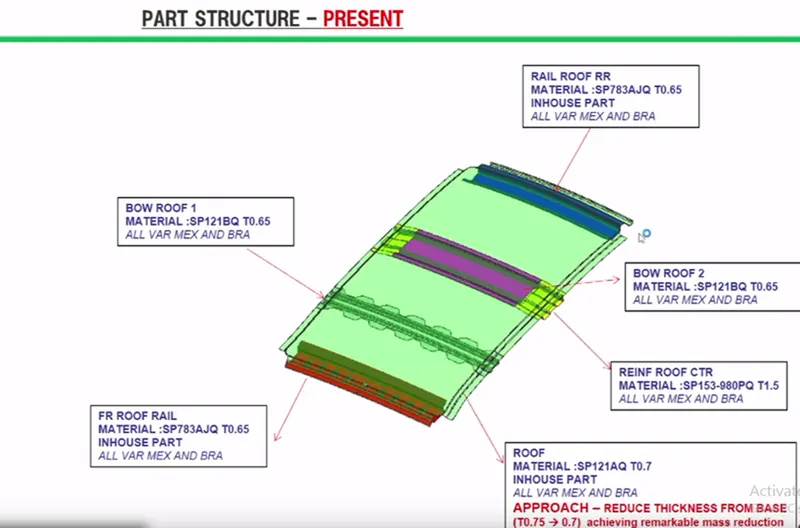
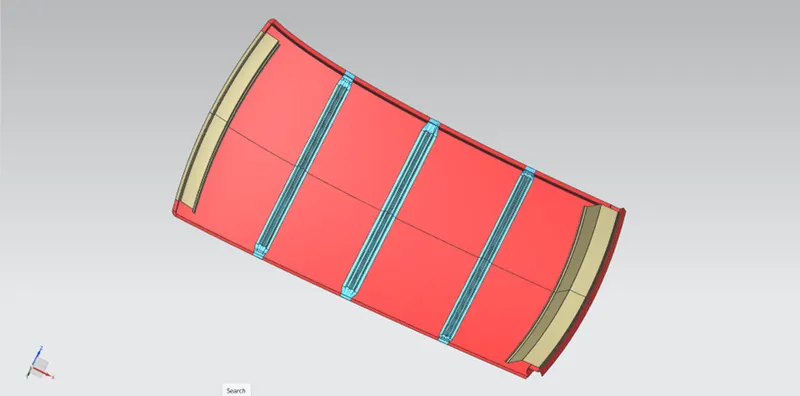
The roofs are reinforced with five structures which acts as support members.
- Front roof rail
- Rear roof rail
- Centre bow roof rail
- Front bow roof rail
- Rear bow roof rail.
Designing of Roof:
- The Draft angle should be greater than 7 degrees.
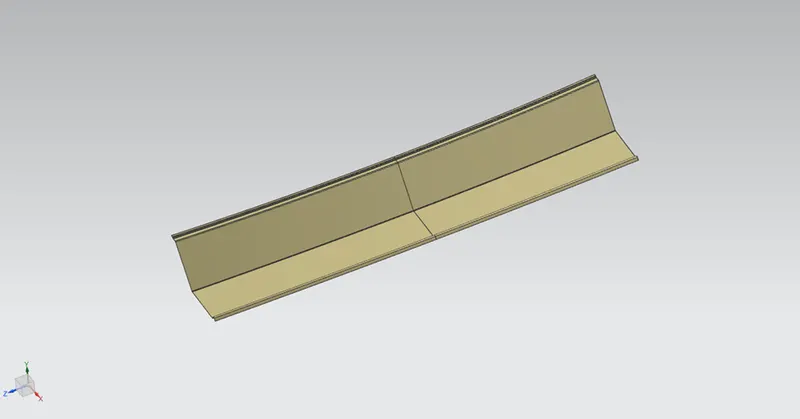
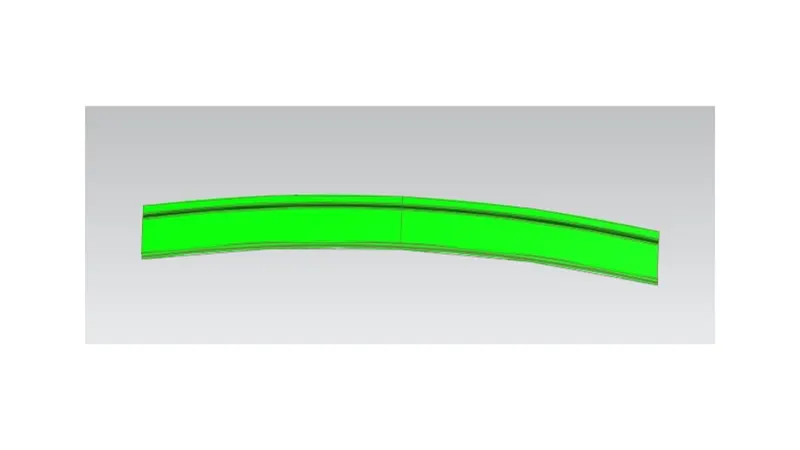
Front Roof Rail:
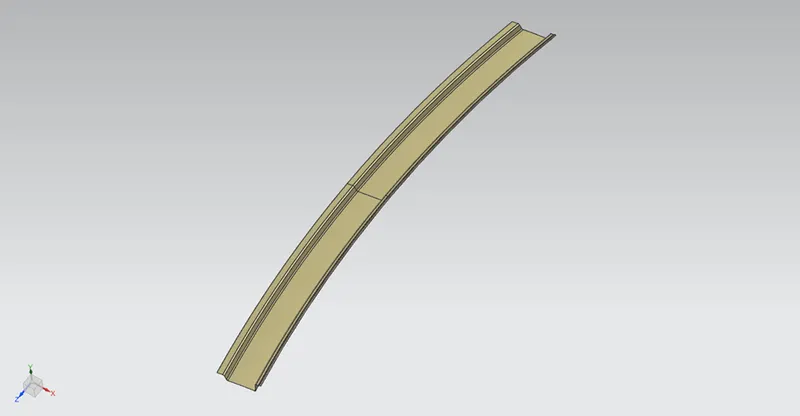
- It is placed in front portion in the roof, it is connecting with windshield, A pillar.
- As per the given master section, taken the surface from the parent part and designed as shown below.
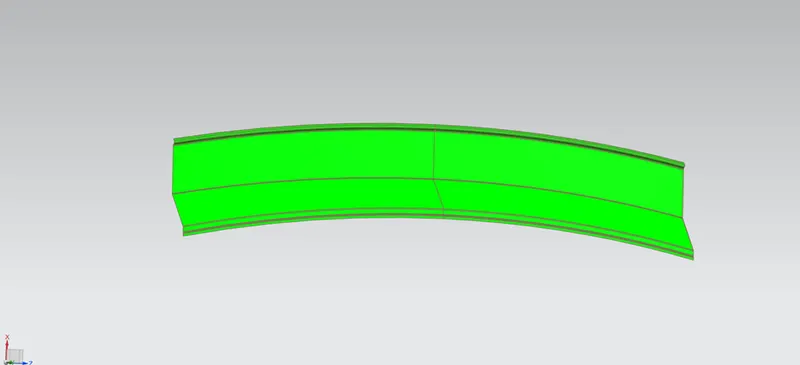
- Draft Analysis analysed in the part as well.
Rear Roof Rail:
- It is in rear portion in the roof it is connecting with C pillar and closing portion of tail door.
- Tail door is hanged in its body and open and closing aspects are considered while design this rear rail.
Front, Centre & Rear bow roofs:
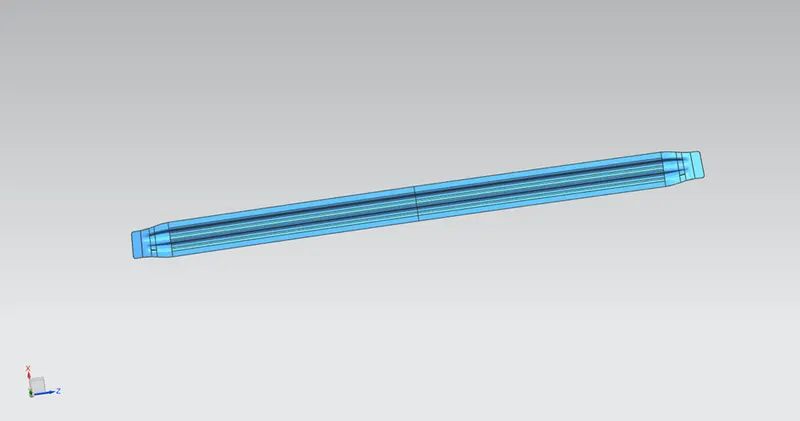
- Bow roofs are providing enough strength to the roof on middle portion.
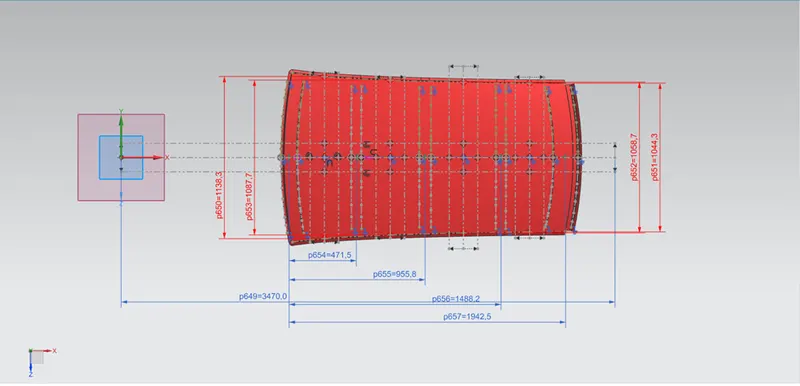
- The bow roofs can place 300 mm between another roofs.
- We created three bow roofs and did some calculations
Front Bow Roof
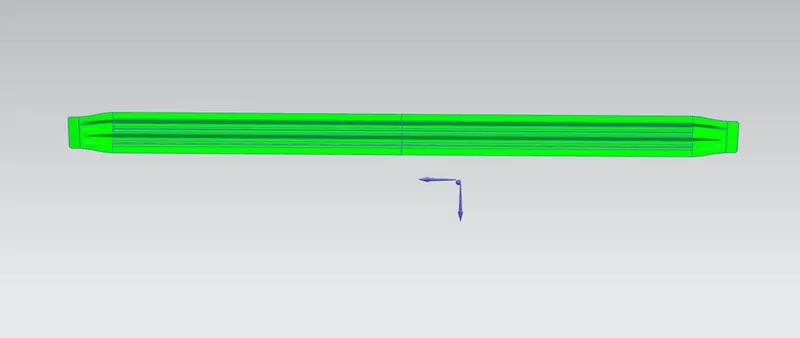
Rear Bow Roof
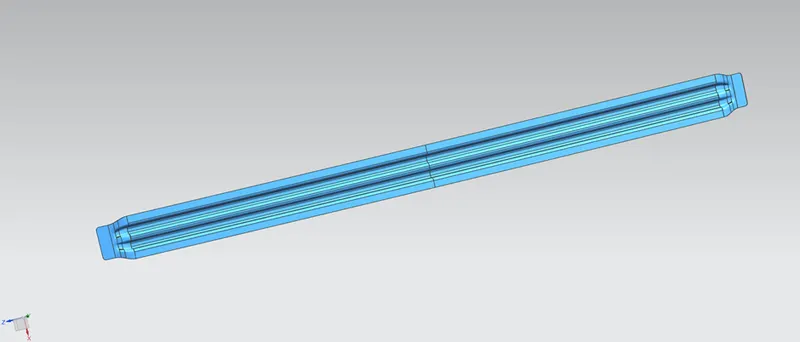
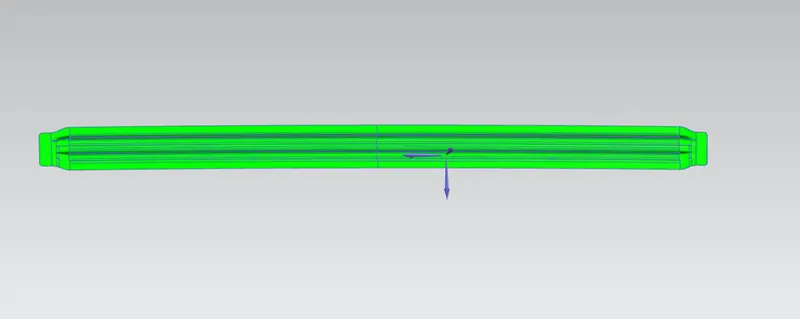
Centre Bow Roof:
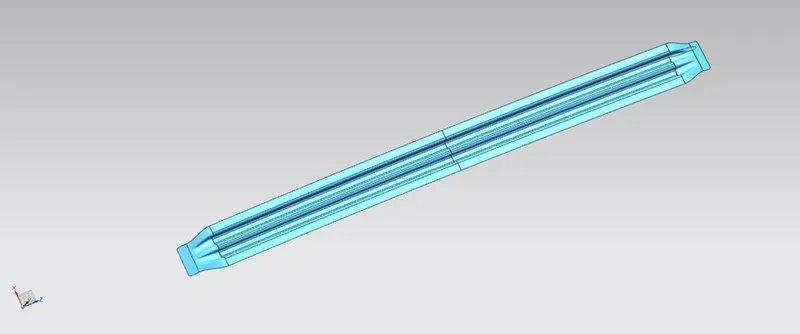
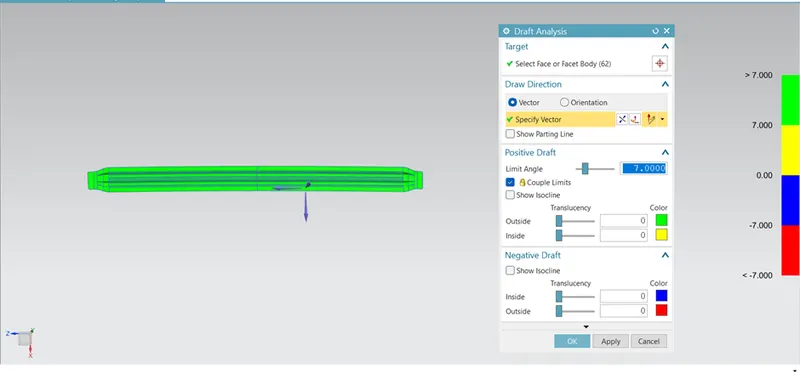
Roof Assembly:
Designed rails and bow roofs are fixed by using fix constraints.
Roof design calculations
- Heat Distortion Criteria
- Snow Load Criteria
Heat Distortion Criteria:
- Heat distortion temperature is the temperature at which the metal softens and deforms under a specific load. This study is done to check the ability of the roof to withstand high temperature with respect to the positioning of the reinforcements which contribute to increased strength.
Why Heat Distortion Criteria?
- The use of high-tensile steel sheets on car bodies has increased, and the weight of bodies has decreased, for enhance fuel economy. by fabricating pieces from thinner sheets.
- The surface areas of outer panels such as a roof panel and door outers are large, so the effects of weight reduction are also large and thereby the needs for thinner panels are high.
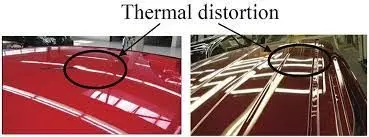
- Some studies have noted issues with the outside quality where, when thinner outer panels are employed, the surfaces of shells bend owing to thermal strain during the painting and drying processes in addition to issues with the stamping performance (hence, referred to as thermal distortion).
- The washing, electrodeposition, sealing, and finish coating steps are all included in the painting of a vehicle's body. An automobile body is submerged in an electrocoating solution during the electrodeposition process to create an electrodeposited film. The body is then put through the drying process, where hot air from a furnace is used to dry the electrocoating solution.
Procedure:
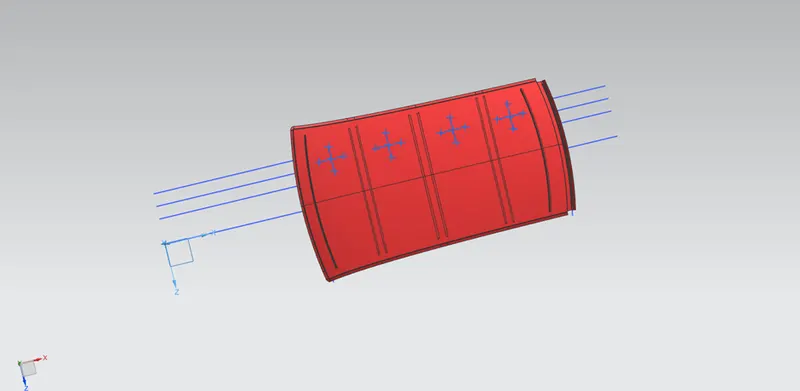
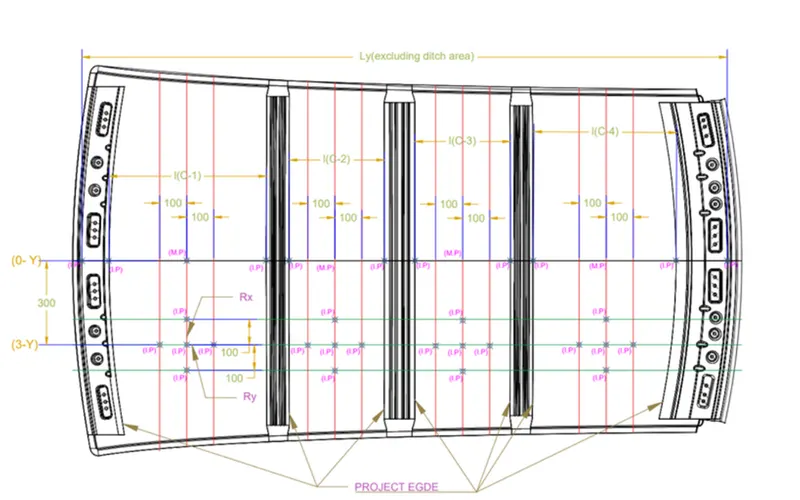
- Create a sketch on 0-Y offset it for 300mm as 3-Y.
- Again offset 3-Y to 100MM on both directions.
- Project the edges of our roof’s rails, now create the intersection points of rail and our sketch.
- Find a middle point of that intersections, create a line and offset it for 100 mm on both the sides.
- Create intersections of sketch as shown above and create an arc by using the points and measure its radius.
- Then substitute the data’s we found in the formula.
W = [1.73 x 10^ (-3) x L] + [1.85 x 10^ (-8) x (R^2)/t] + [1.10x10^ (-3) x l] - 2.68
Judge mental Condition: OK< 2.7
Were, L = Roof Length in X-Direction[mm](Roof dimension in 0-Y)
R = Roof curvature
R = 2(Rx*Ry)/(Rx+Ry)
Rx = X curvature
Ry = Y curvature
t = Roof plate thickness [mm]
l = Bow Roof Span [mm]

SNOW LOAD PREDICTION:
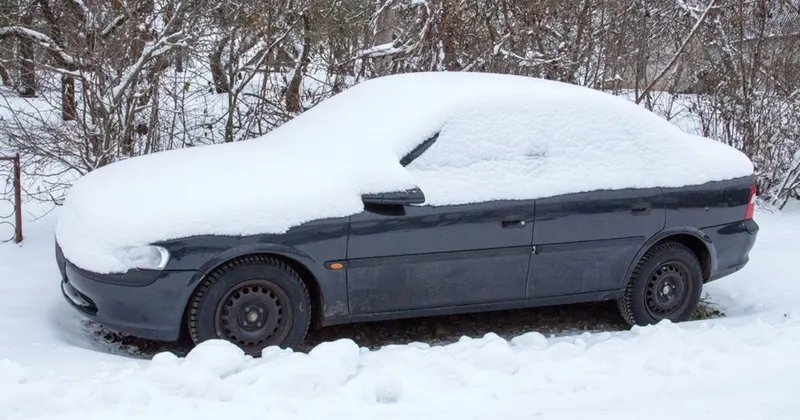
- Snow Load Criteria study is done to check the withstand ability when the snow loads over the roof during winter in snow fall regions.
- This study will also analyse the roof that whether the permanent deformation occurs after removing the snow load.
- That it may bend but needs to be bounce back to its original position. roof design must pass through these calculations to ensure that it has sufficient stiffness to withstand the load due to accumulation of snow over the roof.
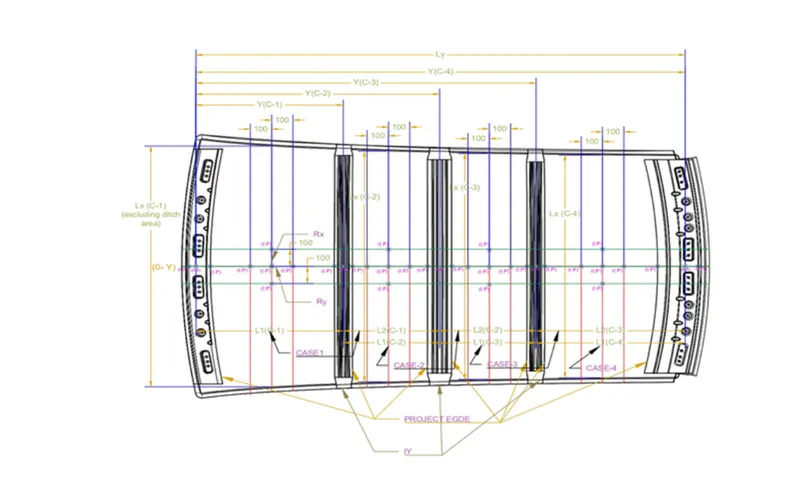
Qr = [Iy x t ] / [α x s x [(Rx + Ry)/2] x 10 ]
Where α = My x Lx x 10, My = Y(Ly-Y)
Judgement condition = Qr ≥ 3.1
t = Roof plate thickness [mm]
Ly = Distance between the front and rear roof Rails on the Vehicle along with 0Y[mm] Length of Roof panel with the centre point between Roof rail Front /Rear as the front and rear reference point.
Lx = Distance between the Left and Right end of the roof on the Roof BOW [mm] Width of the roof panel exposed on the surface.
Y = Distance front Front Roof Rail to Roof BOW [mm]
s = Distance for which Roof BOW bears divided load [mm]
s = L1/2 + L2/2
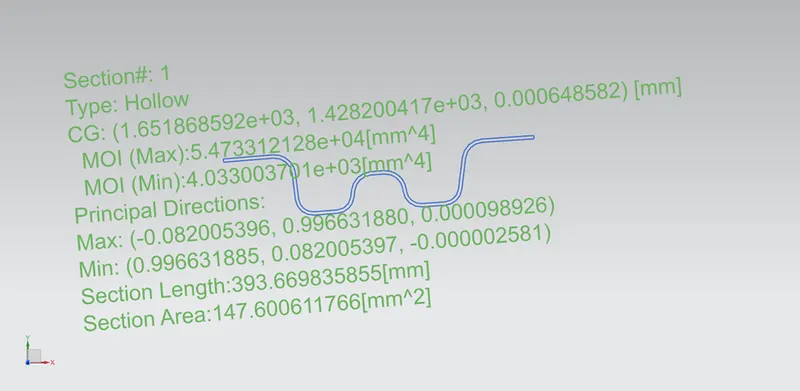
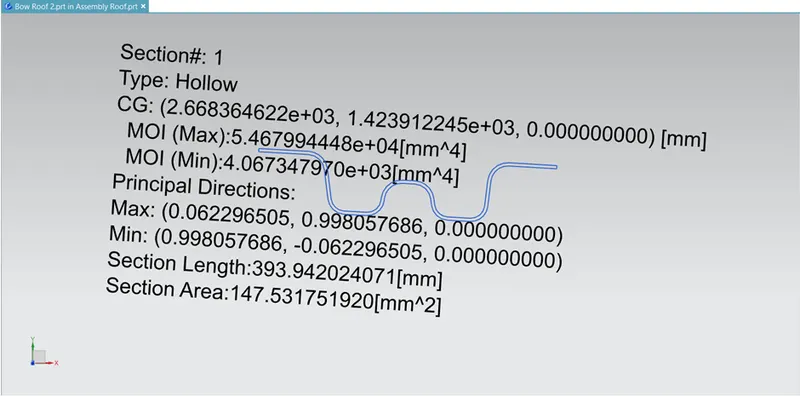
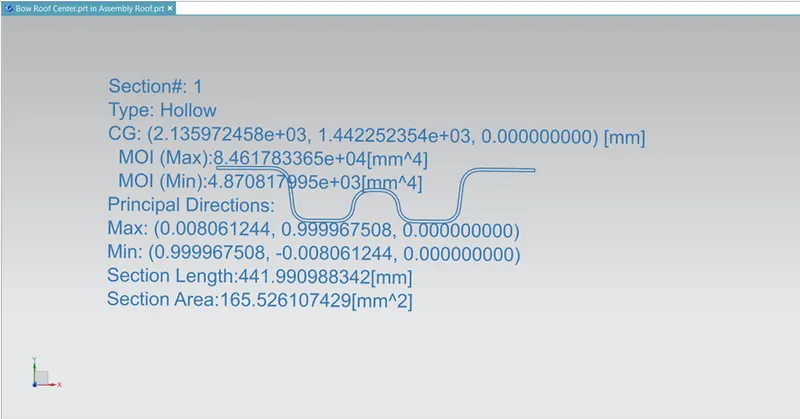
Iy = Geometrical moment of inertia of Roof BOW (Y cross-section )[mm4]
Rx = Lateral direction curvature radius of roof panel Y cross-section on Roof BOW [mm] Roof panel curvature Radius of the Length Lx in Front view
Ry = Longitudinal Direction curvature radius of the Roof panel X cross-section on Roof BOW [mm] Roof panel X curvature radius of length s in Side view

Moment of Inertia:
Iy for Section Bow Roof 1:
Iy for Section Bow Roof 2:
Iy for Section Centre Bow Roof:
Success rate of Criteria:
The Design passes both the Bow load prediction as well as the snow load prediction criteria. So, there is no modification needed in the roof design
Conclusion:
Roof design is made as per the design and the engineering standards.