Roof Design
Roof -
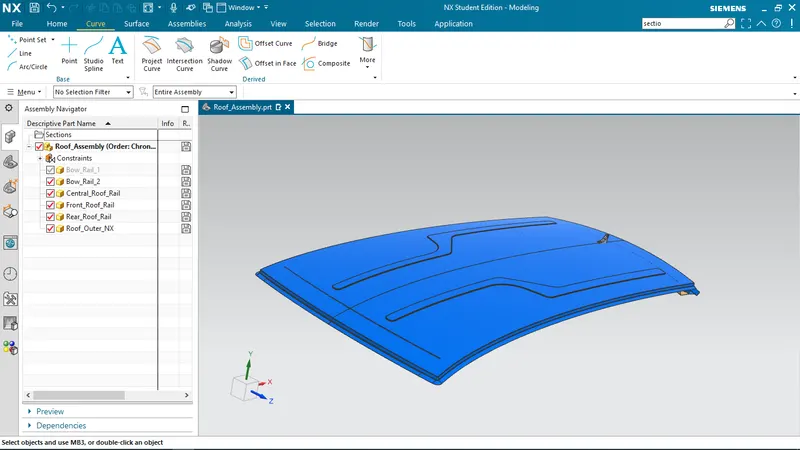
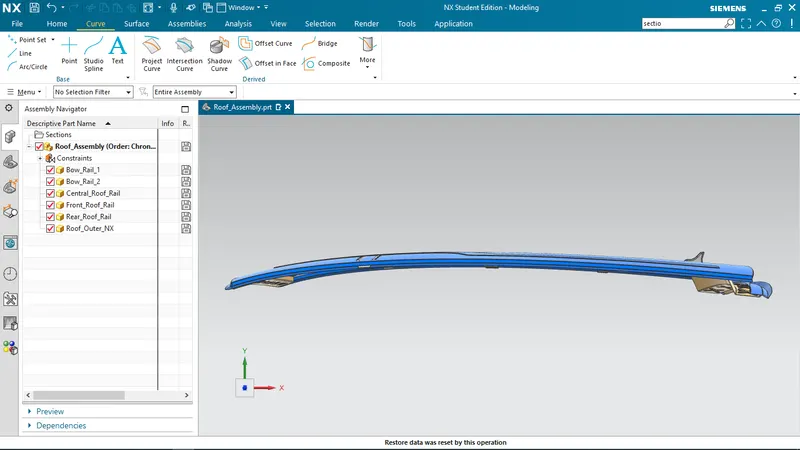
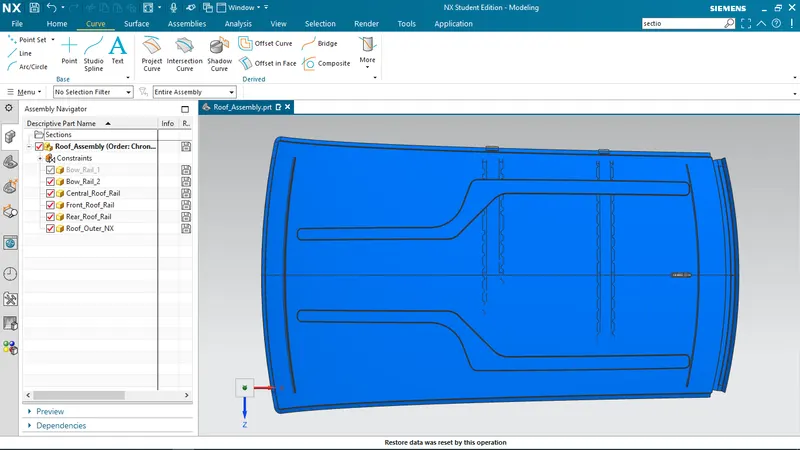
An automobile roof or car top is the portion of an automobile that sits above the passenger compartment, protecting the vehicle occupants from sun, wind, rain, and other external elements. Because the earliest automobiles were designed in an era of horse-drawn carriages, early automobile roofs used similar materials and designs.

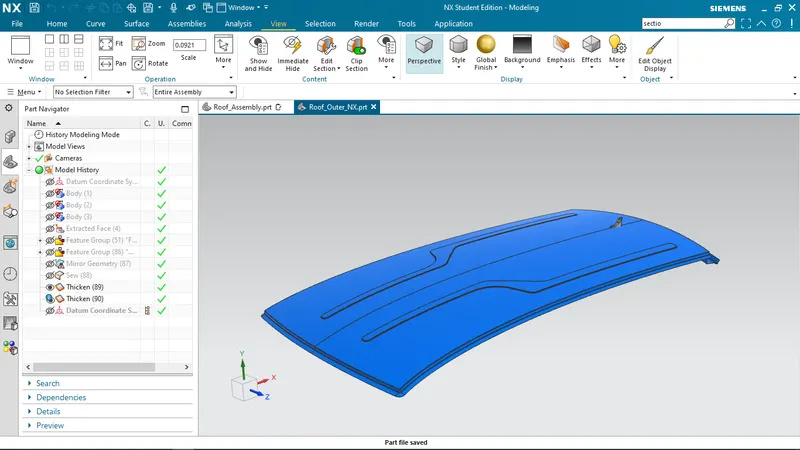
Roof Components -
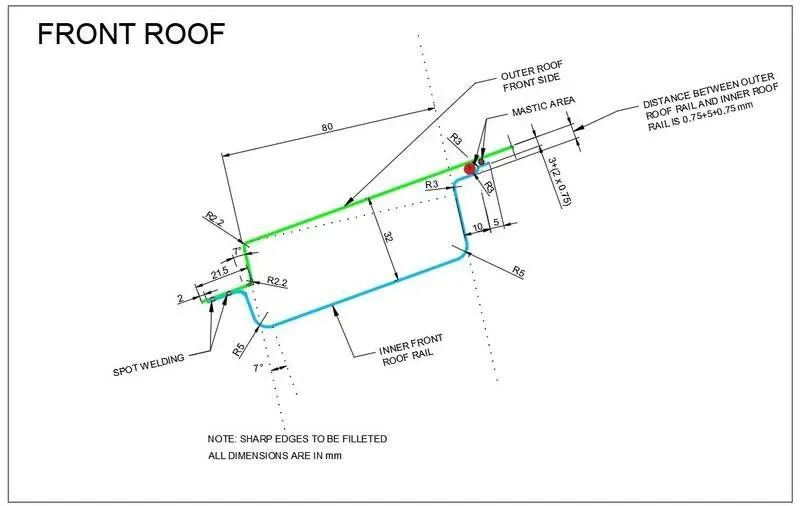
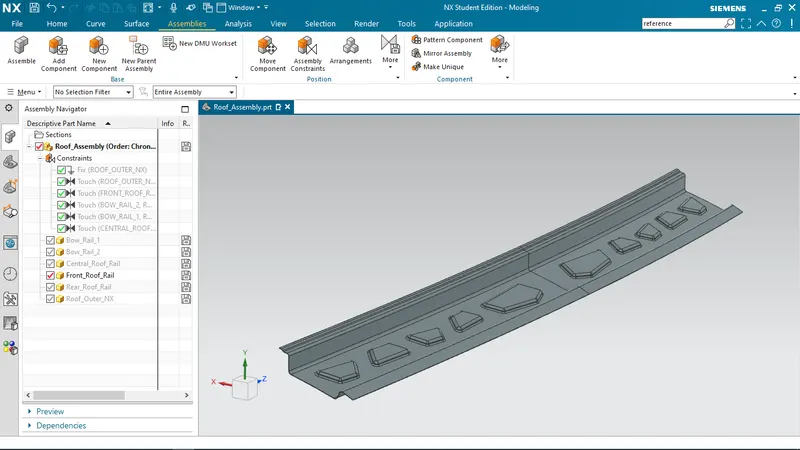
- Front Roof Rail :
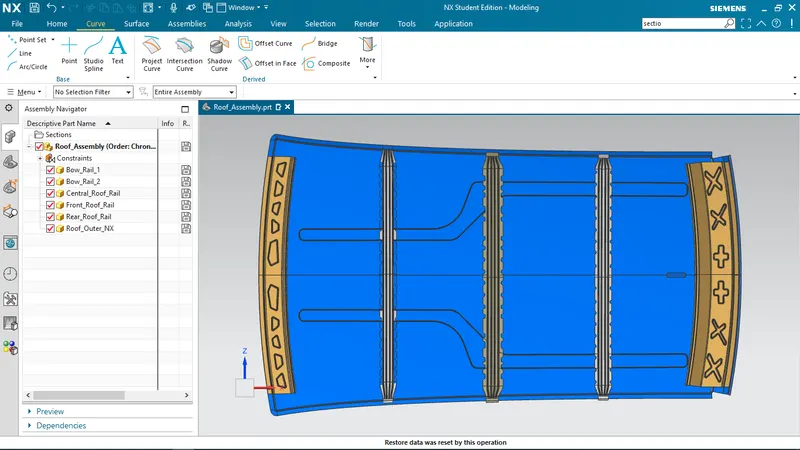
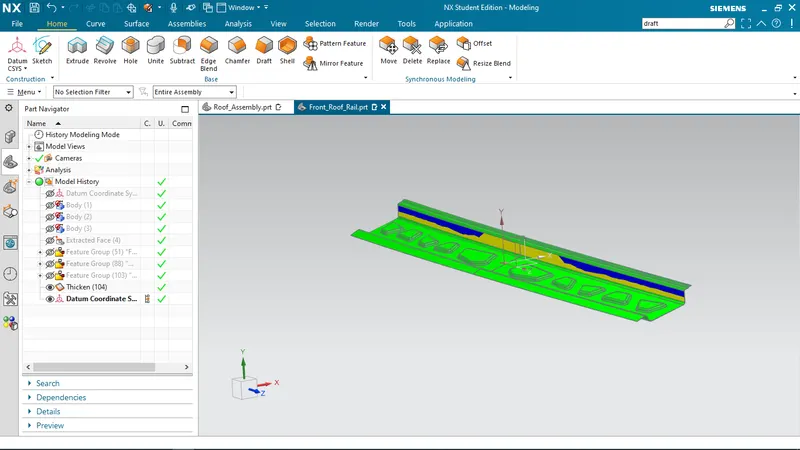
The front roof rail is created at the front side of the roof to provide strength to the roof. Headroom clearance and the driver visibility are the two important factors to be considered while designing the front roof rail. the front roof rail is connected to the roof outer panel with the help of mastic seal.
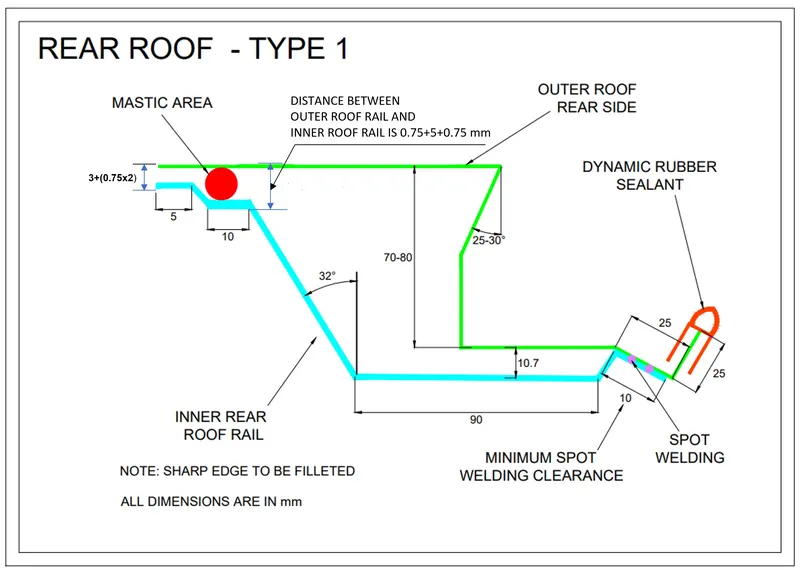
- Rear Roof Rail :
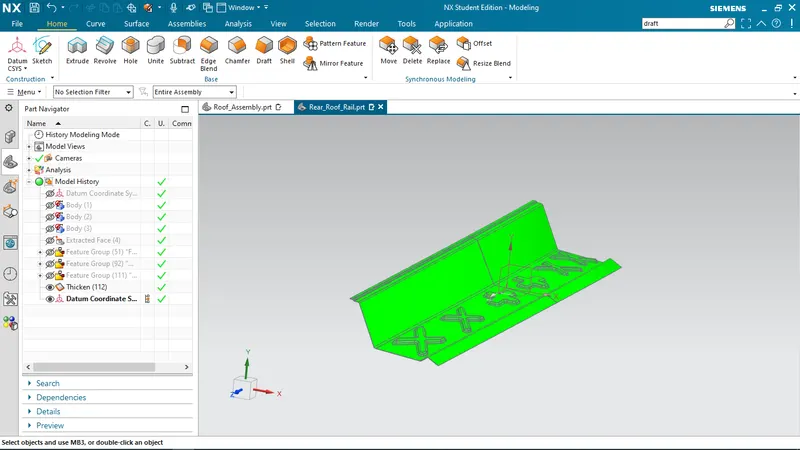
The rear roof rail is used as the reinforcement to the roof surface at the rear side. The joining method used for this rail is the same as that of the front roof rail.
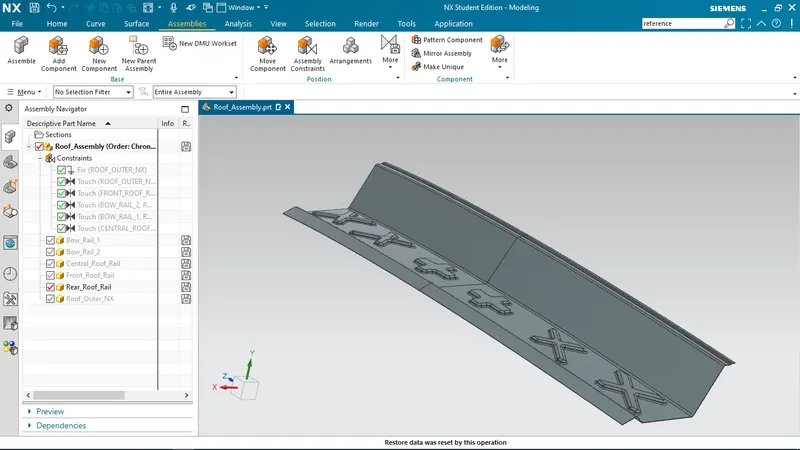
- Central Roof Rail :
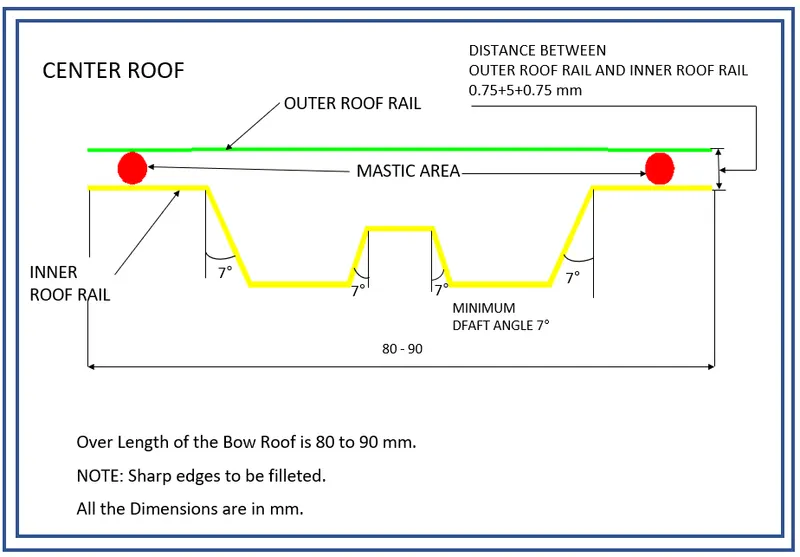
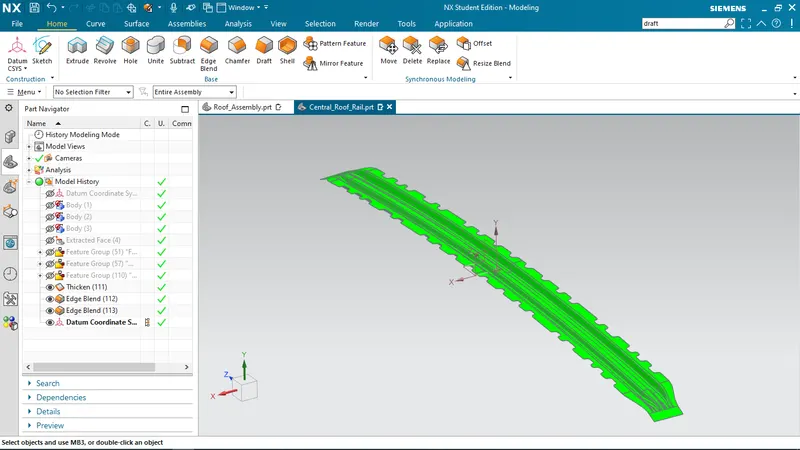
Central roof rail helps in providing effectively support to the flat area of the roof as it is more susceptible to failure under the action of load .Central roof rail is placed at the center of the roof which is connected to the B-pillar support structure .This central roof rail helps in adding the strength to the roof during the roll over test.
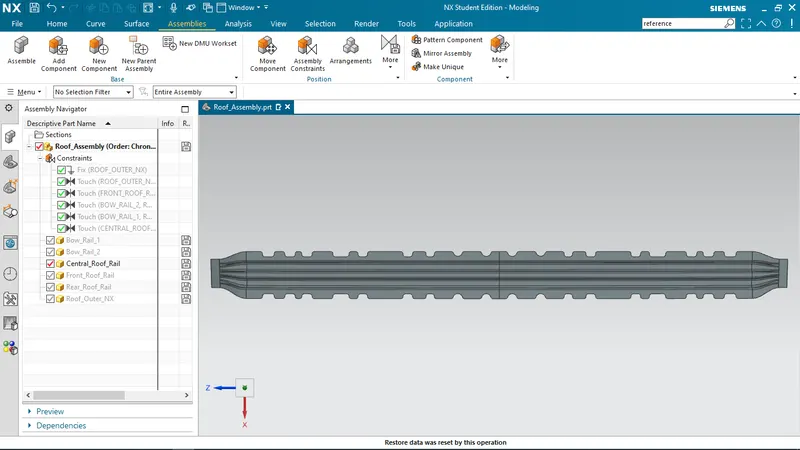
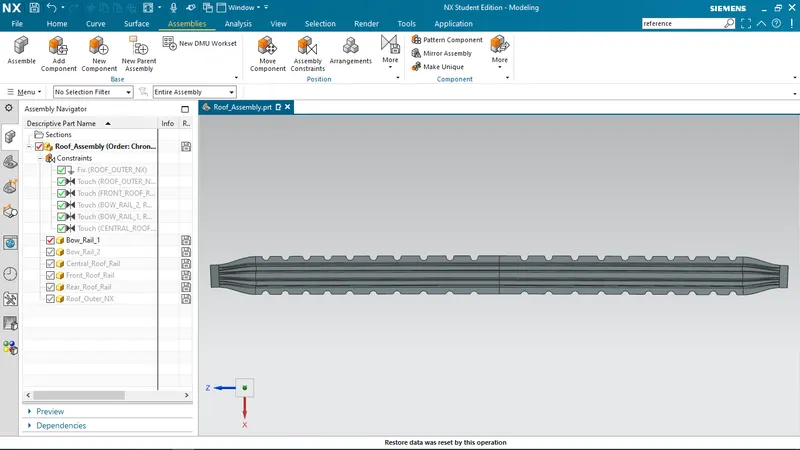
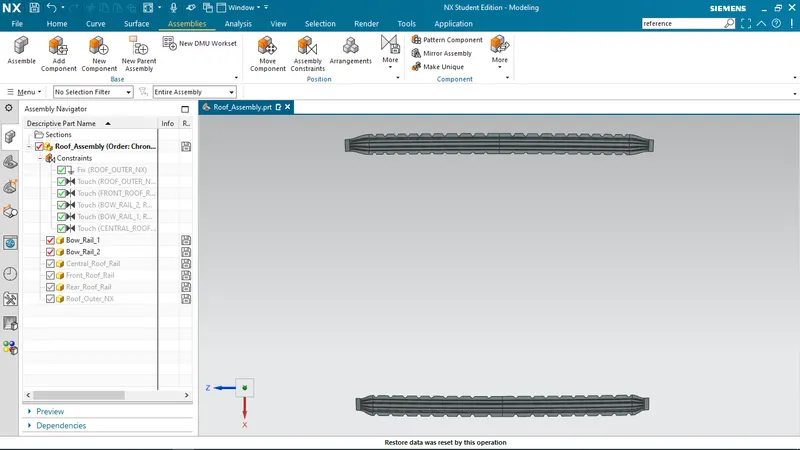
- Bow Roofs :
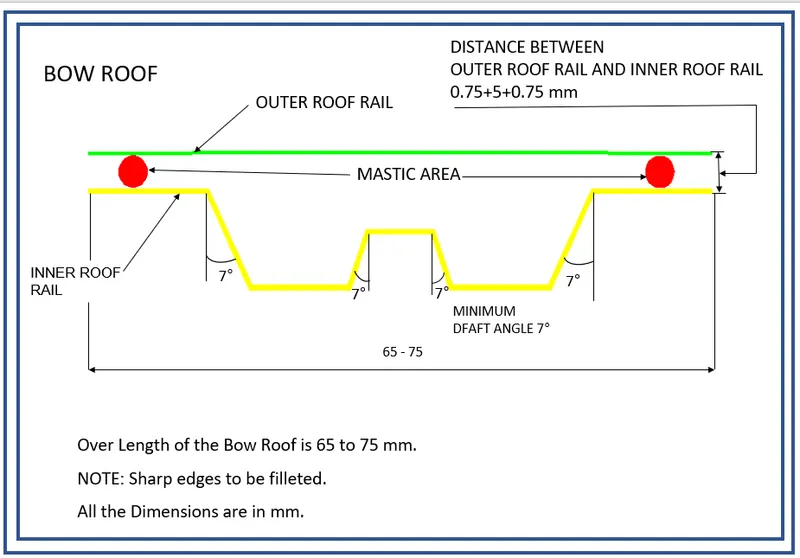
The bow roofs are give to improve the torsional stiffness and load bearing capacity of the roof structure .It is used to give strength to the area between the front roof, the central roof rail and rear roof rail. It can be created in any numbers depending upon the roof length but the position of the bow roofs is to be justified by curvature study.
Joining Process -
- Spot welding is a resistance welding process. This welding process is used primarily for welding two or more metal sheets together by applying pressure and heat from an electric current to the weld area.

- Mastics are introduced between the roof outer panel and the reinforcements for joining.
Design Consedarations for Roof :
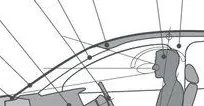
- Visibility criteria
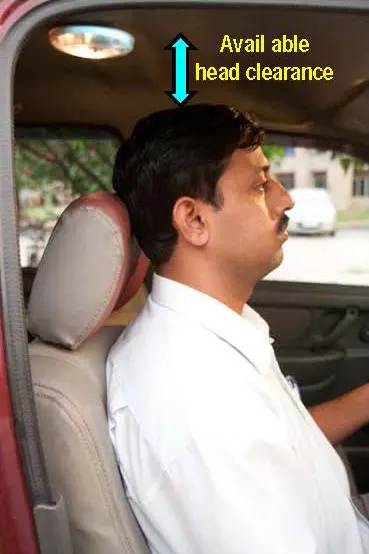
- Head clearance
- Heat distortion and snow load criteria
Heat Distortion Criteria:
Heat distortion temperature is the temperature at which metal softens and deforms under a specified load. While designing roof, this criteria is taken into consideration. We create bow roofs when the roof is long and flat to increase its strength. The position of the bow roofs is to be justified and this justification is done by curvature study.
Bow-Roof Prediction Formula -
W = [1.73 x 10^(-3) x L] + [1.85 x 10^(-8) x (R^2)/t] + [1.10x10^(-3) x l] - 2.68
Where,
L = Roof Length in X-Direction[mm](Roof dimension in 0-Y)
R = Roof curvature
R = 2(Rx*Ry)/(Rx+Ry)
Rx = X curvature
Ry = Y curvature
t = Roof plate thickness [mm]
l = Bow Roof Span [mm]
Judgment Condition
OK< 2.7
Calculation :
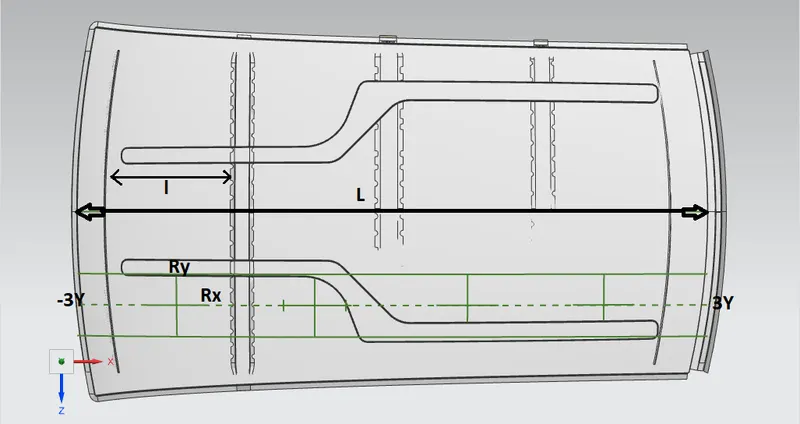
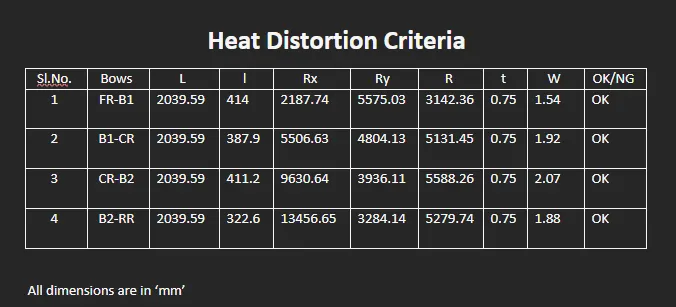
- The roof is completely satisfying the conditions of heat distortion criteria.
Snow Load Criteria :
This test is done to know how is the roof behaving when there is a snow over. Normally due to the snow weight the dent will happen. But the roof should be designed in such a way that when the snow is removal the roof should go it its original position. This is the basic requirements for snow load criteria .
Snow Load Prediction Formula -
Qr = [Iy x t2] / [α x s x [(Rx + Ry)/2]2 x 10-8]
Note: The Qr value given over here is correct. There was a typo error in the formula given in the video.
Where,
α = My x Lx2 x 10-12 , My = Y(Ly-Y)
t = Roof plate thickness [mm]
Ly = Distance between the front and rear roof Rails on the Vehicle along with 0Y[mm]
Length of Roof panel with the center point between Roof rail Front /Rear as the front and rear reference point.
Lx = Distance between the Left and Right end of the roof on the Roof BOW [mm]
The width of the roof panel is exposed on the surface.
Y = Distance front Front Roof Rail to Roof BOW[mm]
s = Distance for which Roof BOW bears divided load [mm]
s = L1/2 + L2/2
Iy = Geometrical moment of inertia of Roof BOW (Y cross-section )[mm4]
Rx = Lateral direction curvature radius of roof panel Y cross-section on Roof BOW [mm]
Roof panel curvature Radius of the Length Lx in Front view
Ry = Longitudinal Direction curvature radius of the Roof panel X cross-section on Roof BOW [mm]
Roof panel X curvature radius of length s in Side view
Judgment condition
Qr ≥ 3.1
250 ≤ s ≤ 380
Calculation :
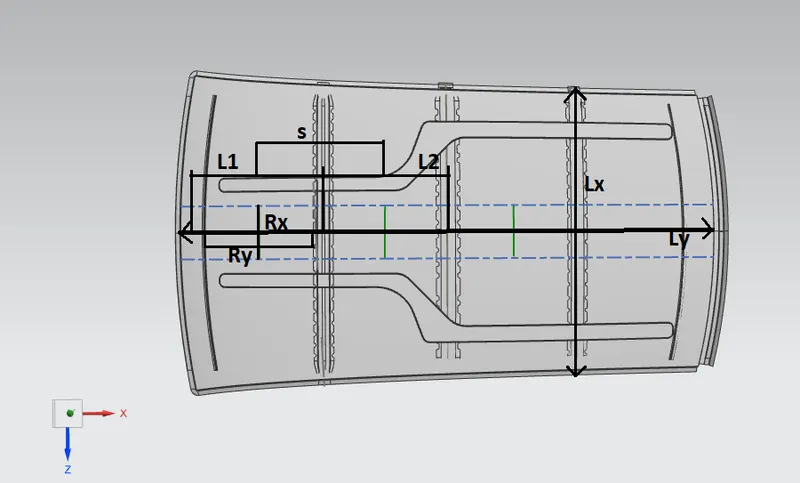
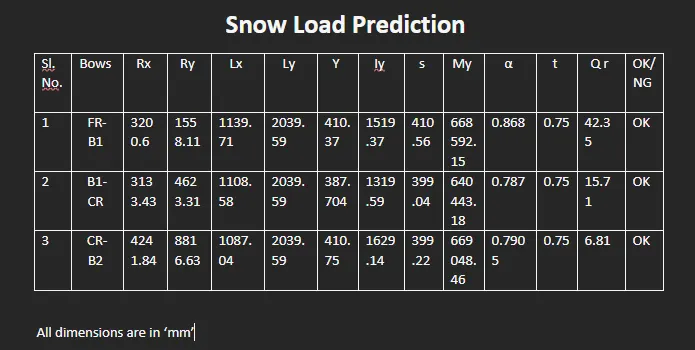
- The roof is completely satisfying the conditions of snow load prediction.
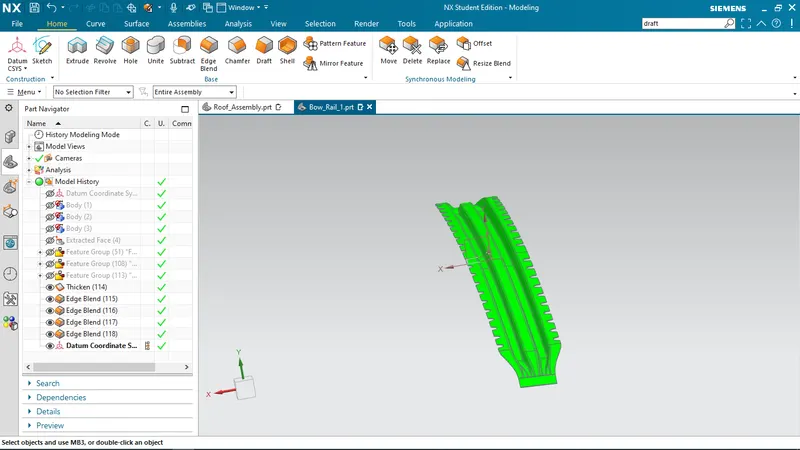
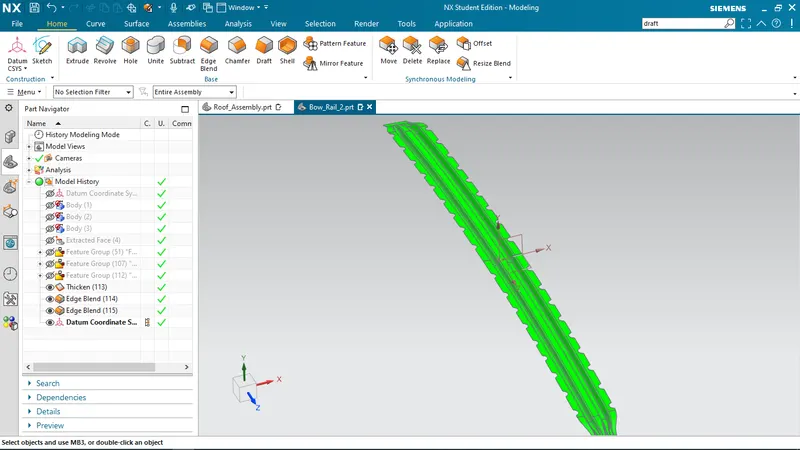
Draft Analysis For Roof Components -
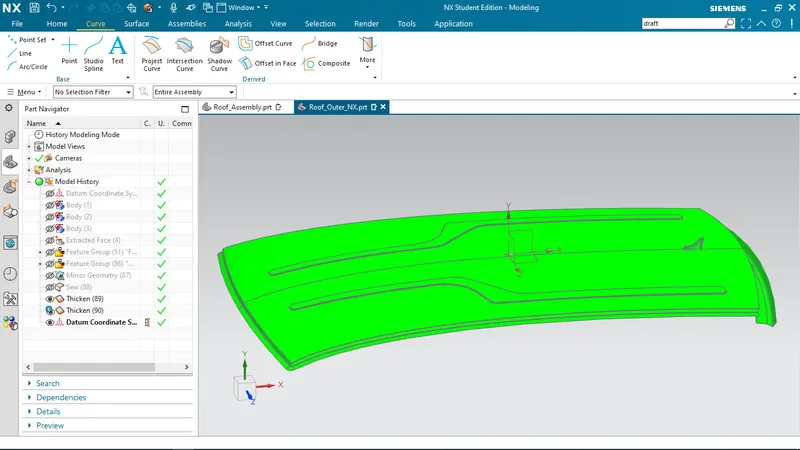
Roof Outer Panel:
Front Roof Rail:
Rear Roof Rail:
Central Roof Rail:
Bow Roofs:
Section Modulus Study of the Roof Components:
The section modulus of the cross-sectional shape is of significant importance in designing of structures. It is a direct measure of the strength of the structure
A structure that has a larger section modulus than another will be stronger and capable of supporting greater loads.
The section modulus, S = I / y
I = Moment of inertia
y = Distance from the neutral axis to any given fibre. It is often reported using y = c, where c is the distance from the neutral axis to the most extreme fibre.
Front Roof Rail -
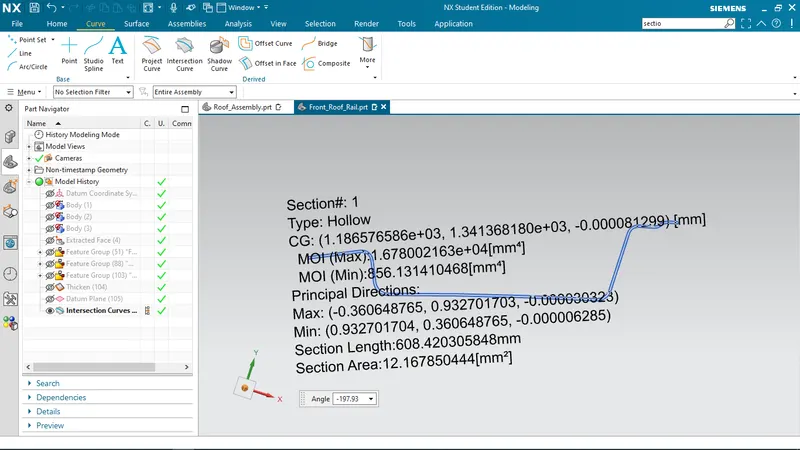
I(min.)= 856.1314mm^4
y= 124.5/2= 62.25mm
S = 13.753mm^3
Rear Roof Rail -
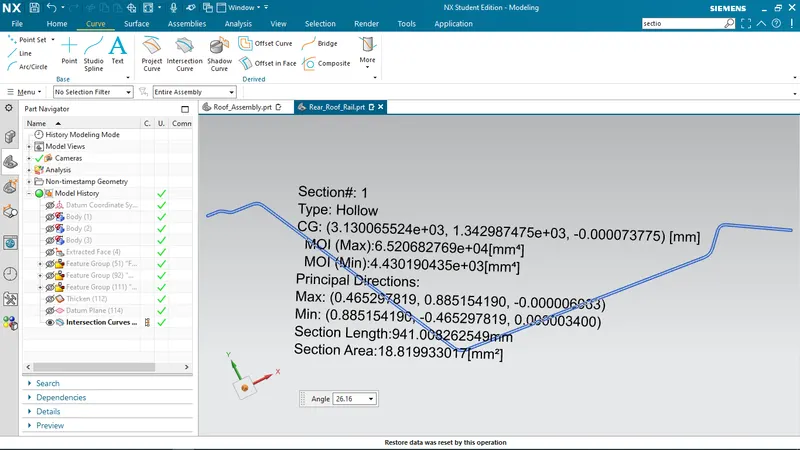
I(min.)= 4.4301*10^4 mm^4
y= 203.4/2= 101.7mm
S = 435.604mm^3
Central Roof Rail -
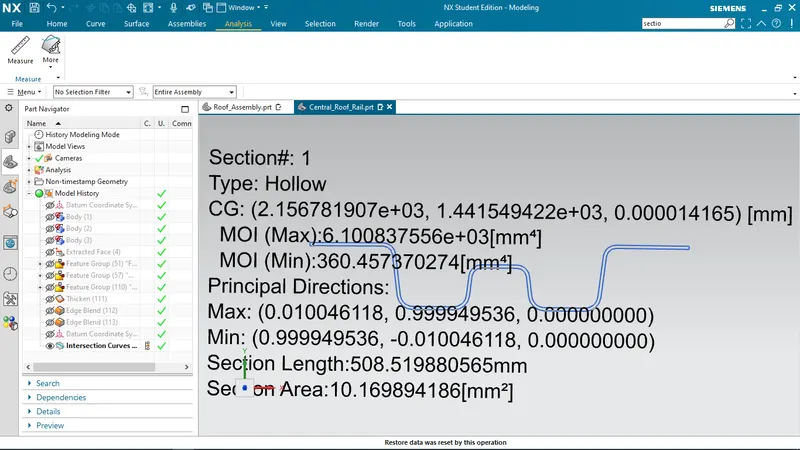
I(min.)= 360.45 mm^4
y= 90/2= 45mm
S = 8.01mm^3
Bow Roof_1 -
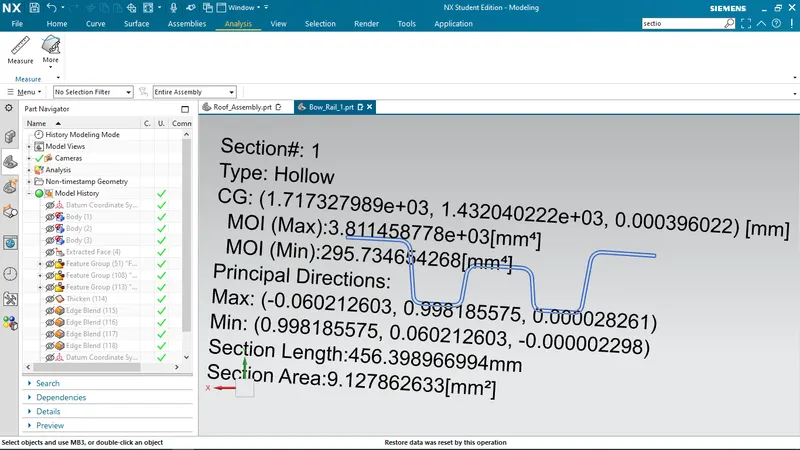
I(min.)= 295.73 mm^4
y= 75/2= 37.5mm
S = 7.88mm^3
Bow Roof_2 -
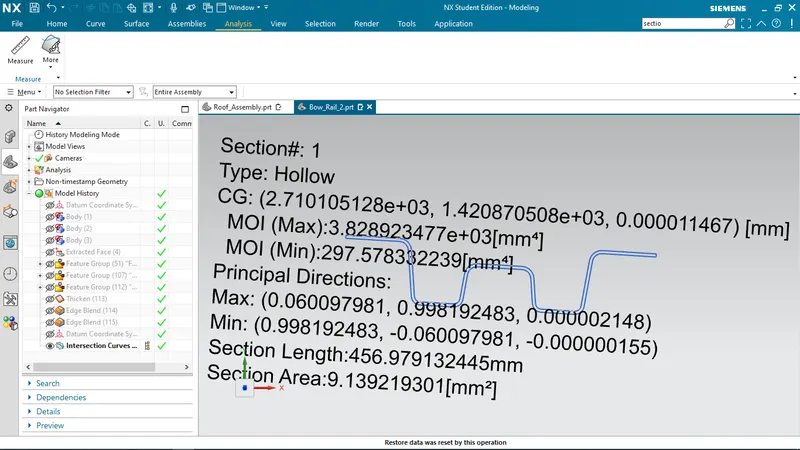
I(min.)= 297.57 mm^4
y= 75/2= 37.5mm
S = 7.93mm^3
Views -