Roof Design
Designing Roof From styling surface
The following parts are created from the styling surface provided
A. Front roof rails
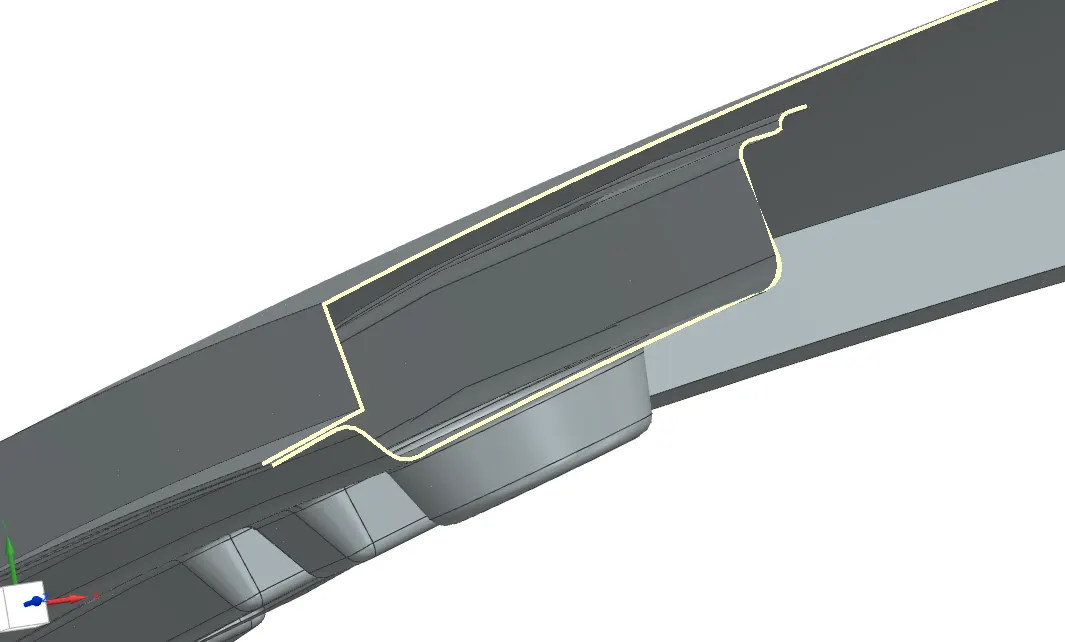
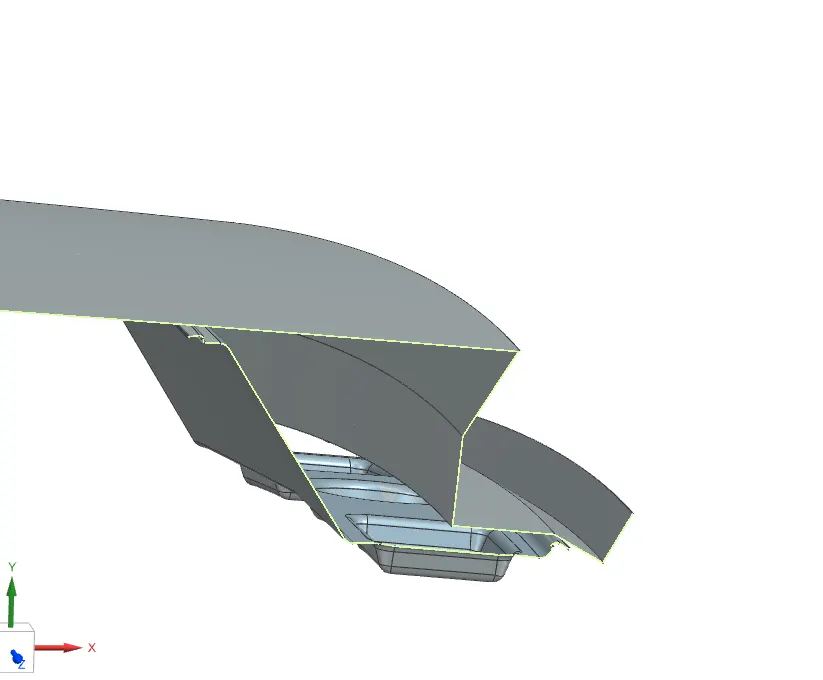
Rear roof rails
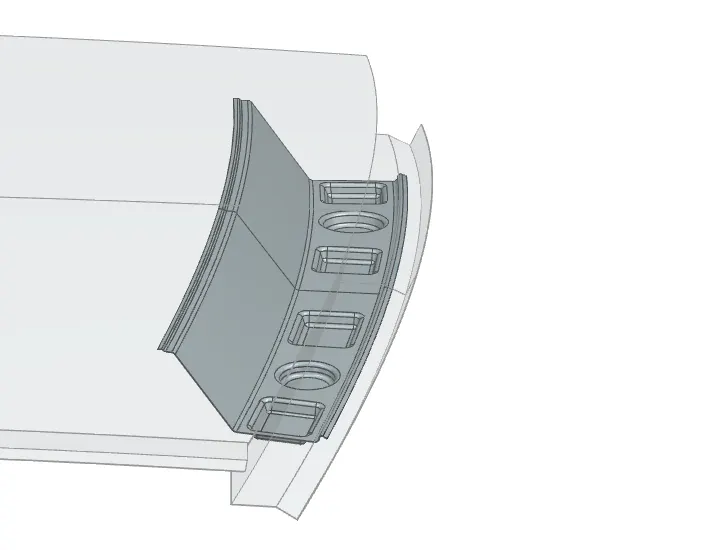
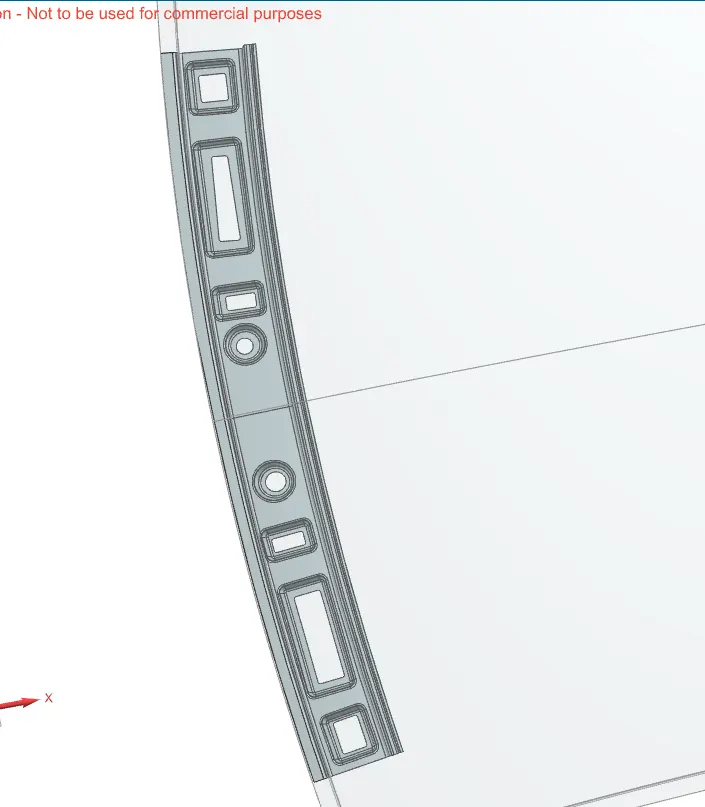
Roof rails
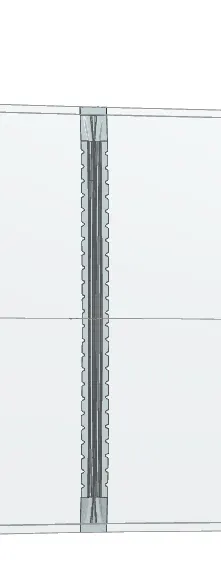
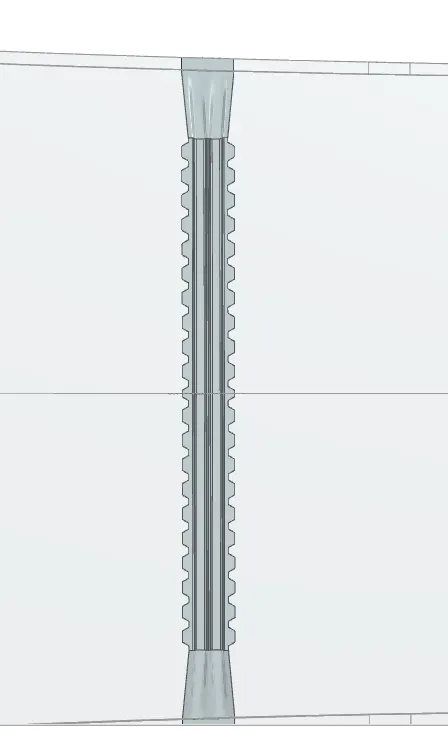
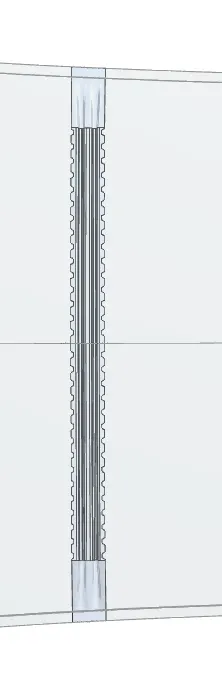
Final Assembly
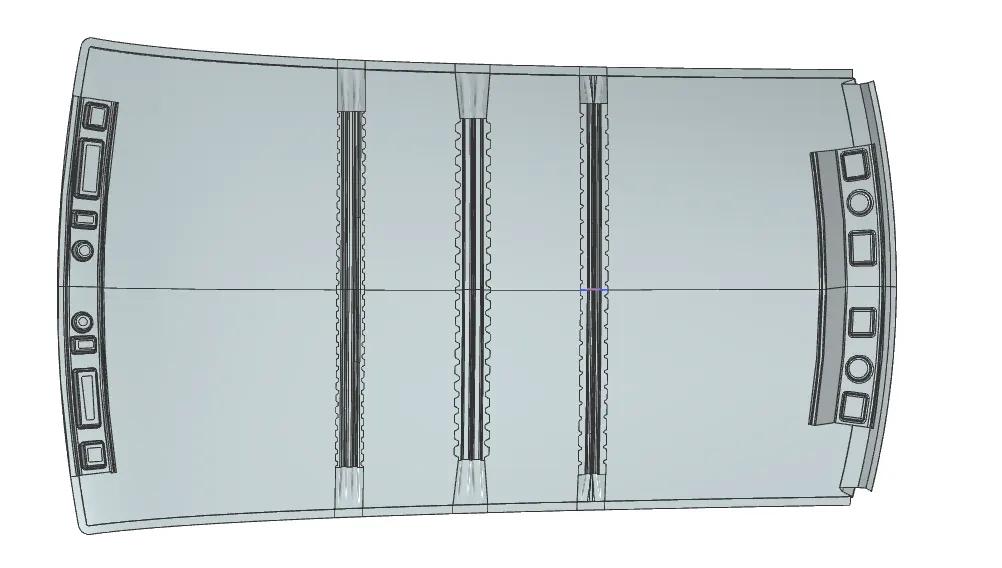
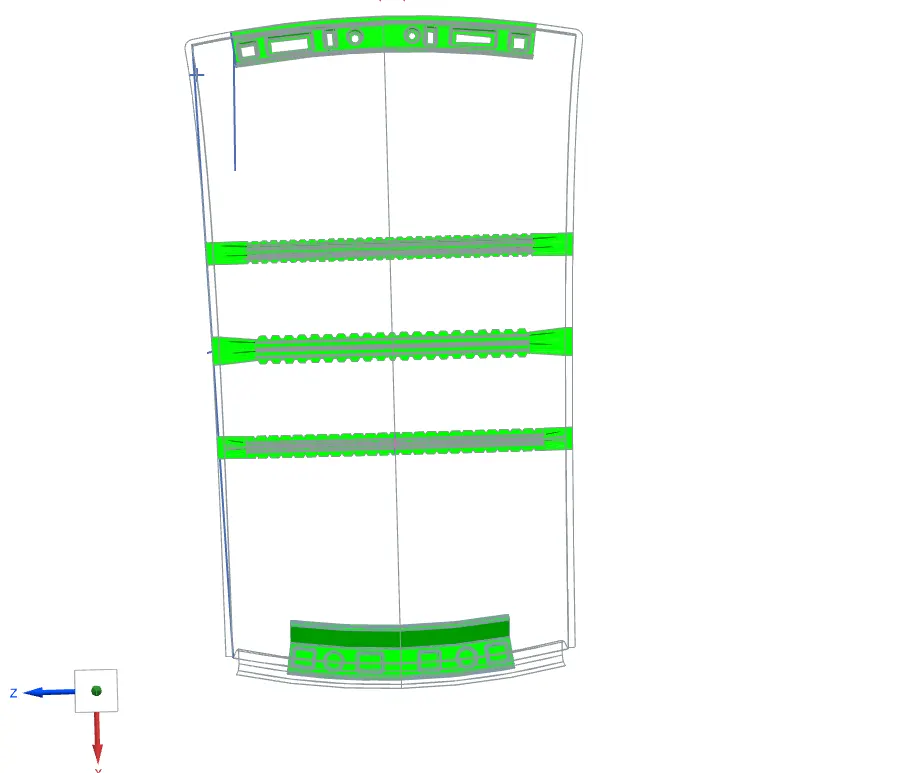
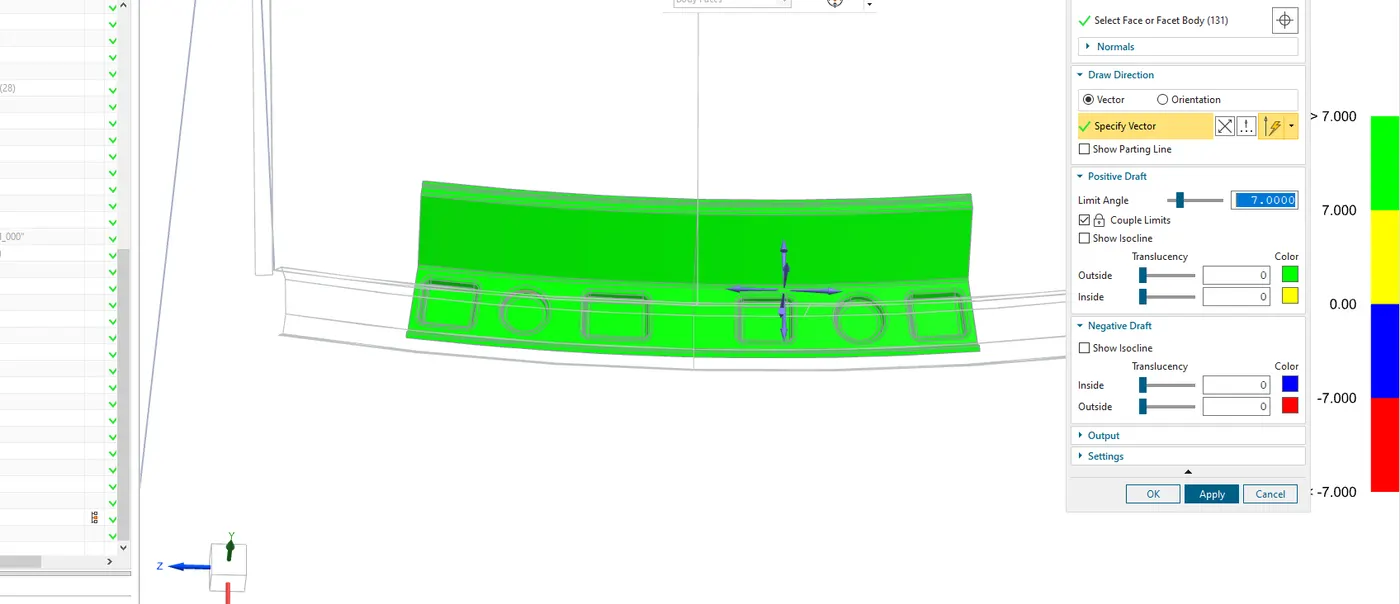
Draft Analysis
Entire part with draft angle of 7.
Front roof reinforecement
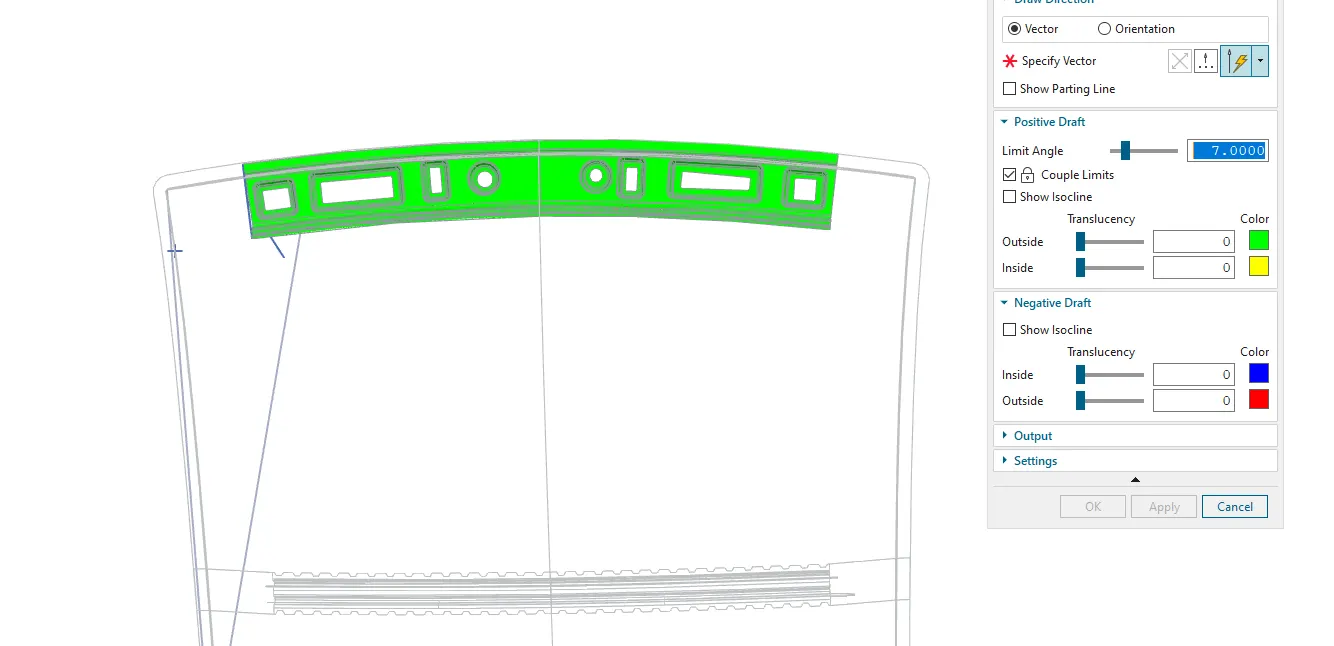
Bow roof rail
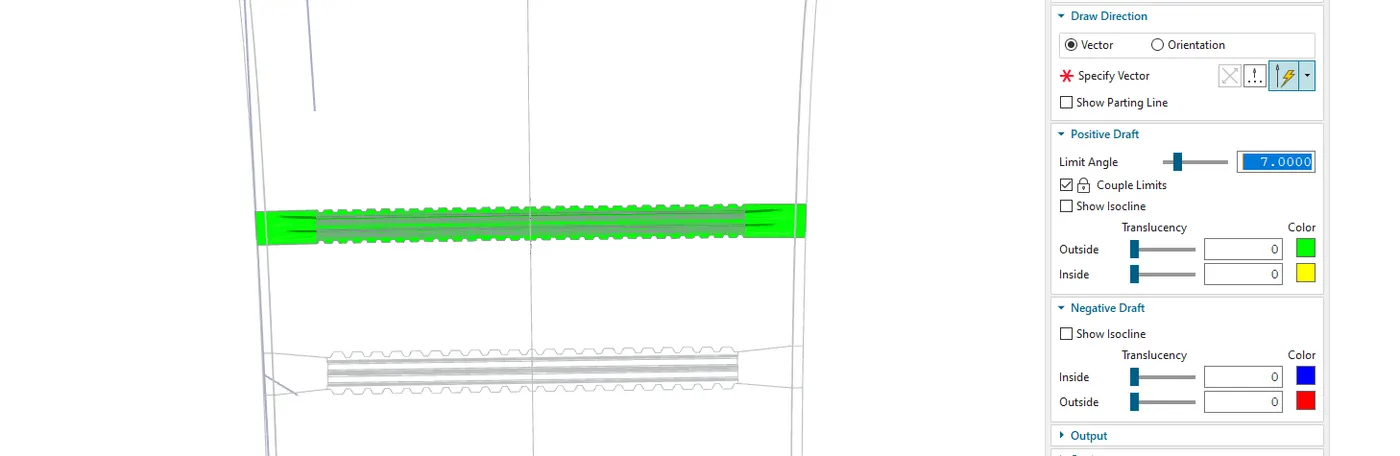
Centre and aft roof rail
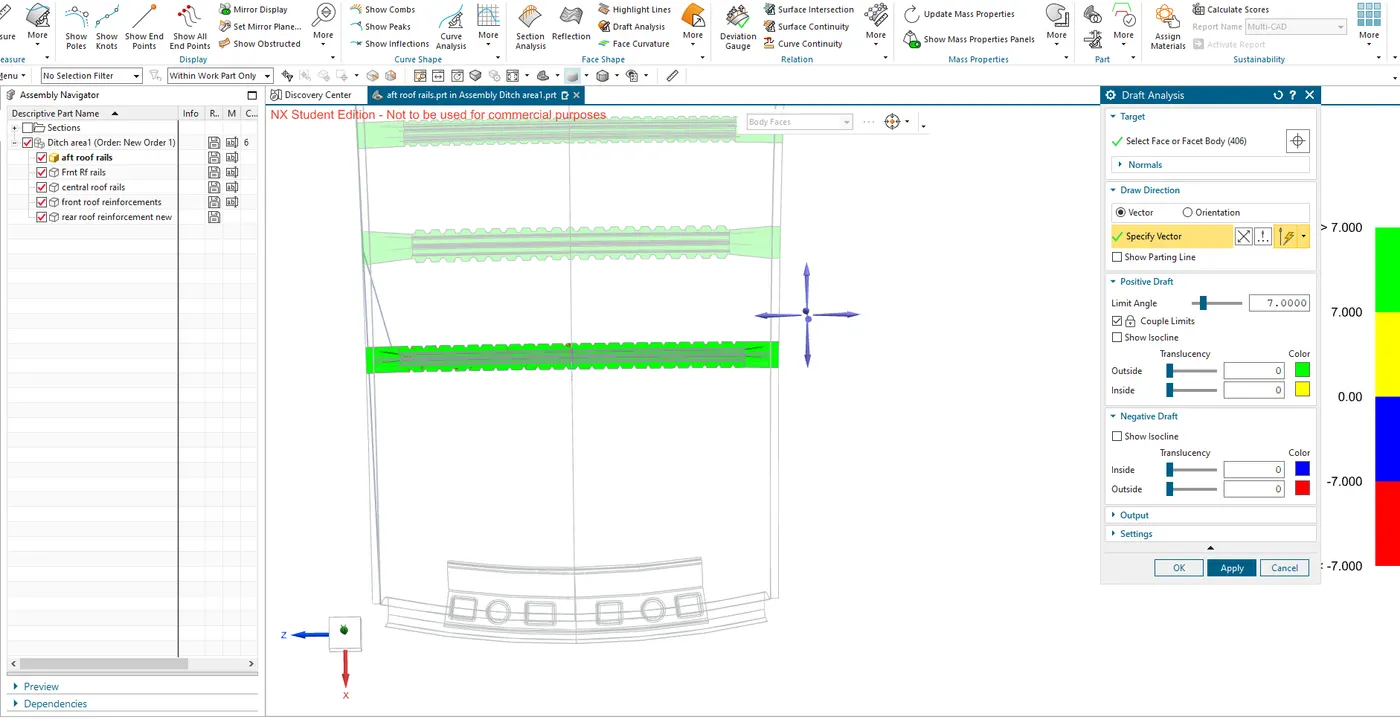
Rear roof reinforcement
Analysis
A. Safety
Roof Crush Test:
- Purpose: The roof crush test evaluates the strength of the vehicle roof during a rollover scenario, simulating the forces applied to the roof when the vehicle rolls over.
- Standards: The roof must meet or exceed the regulatory standards set by organizations such as the Federal Motor Vehicle Safety Standards (FMVSS 216) in the U.S. or Euro NCAP. These standards specify that the roof should withstand a specific amount of force without excessive deformation that could endanger passengers.
- Test Procedure: The vehicle is subjected to a static force applied vertically to the roof, typically a load equal to 1.5 times the vehicle's weight. The maximum allowable deformation is often restricted to 5 inches (or around 127 mm), depending on the standards.
- Material and Structural Requirements: Materials and roof design must be strong enough to resist significant deformation. This includes considering the reinforcement of the roof frame, integration of stronger materials, and evaluating stress concentrations that could lead to failure. Embosses and Reinforcements are provided to increase deformation safety
2.Heat Distortion Test
As the roof of the vehicle undergoes significant temperature fluctuations during accidents (from heat generated by extreme high to cold external temperatures), the roof must retain its structural integrity. The roof material must resist warping or distortion under high heat conditions.
W = [1.73 x 10^(-3) x L] + [1.85 x 10^(-8) x (R^2)/t] + [ 1.10x10^(-3) x l] - 2.68
Where
L = Roof Length in X-Direction[mm](Roof dimension in 0-Y)
R = Roof curvature
R = 2(Rx*Ry)/(Rx+Ry)
Rx = X curvature
Ry = Y curvature
t = Roof plate thickness [mm]
l = Bow Roof Span [mm]
Judgement Condition : W<2.7
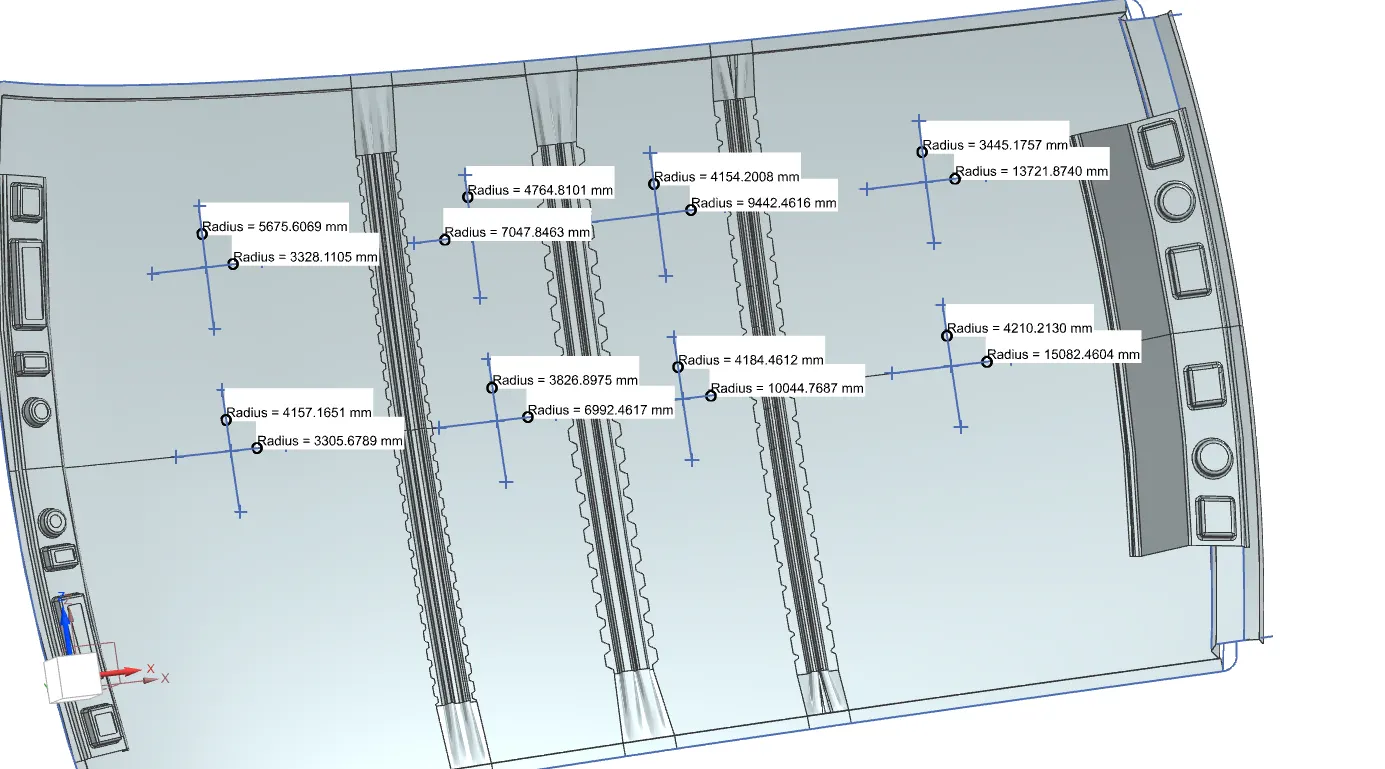
We get the following results

3.Snow Load Criteria
- Snow Load Performance: The roof design must account for the weight of snow or ice accumulation on the vehicle during winter months, especially in regions that experience heavy snowfall.
- Structural Design: The roof should be designed with sufficient strength to bear the additional load caused by snow and ice without buckling or collapsing. This involves reinforcing areas prone to excessive load.
- Material Strength: The material choice must include an ability to handle high compressive loads (as snow accumulates and exerts force on the roof).
- Testing Procedure: Snow load simulations can be done by applying calculated snow weight based on typical regional snowfall rates and testing the roof under these conditions.
Based on these we perform an curvature analysis using the following formula
Qr = [Iy x t2] / [α x s x [(Rx + Ry)/2]2 x 10-8]
Where
α = My x Lx2 x 10-12 , My = Y(Ly-Y)
Judgement condition = Qr ≥ 3.1
250 ≤ s ≤ 380
t = Roof plate thickness [mm]
Ly = Distance between the front and rear roof Rails on the Vehicle along with 0Y[mm]
Length of Roof panel with the center point between Roof rail Front /Rear as the reference point of the front and the rear.
Lx = Distance between the Left and Right end of the roof on the Roof BOW [mm]
Width of the roof panel exposed on the surface.
Y = Distance front Front Roof Rail to Roof BOW[mm]
s = Distance for which Roof BOW bears divided load [mm]
s = L1/2 + L2/2
Iy = Geometrical moment of inertia of Roof BOW (Y cross-section )[mm4]
Rx = Lateral direction curvature radius of roof panel Y cross-section on Roof BOW [mm]
Roof panel curvature Radius of the Length Lx in Front view
Ry = Longitudinal Direction curvature radius of the Roof panel X cross-section on Roof BOW [mm]
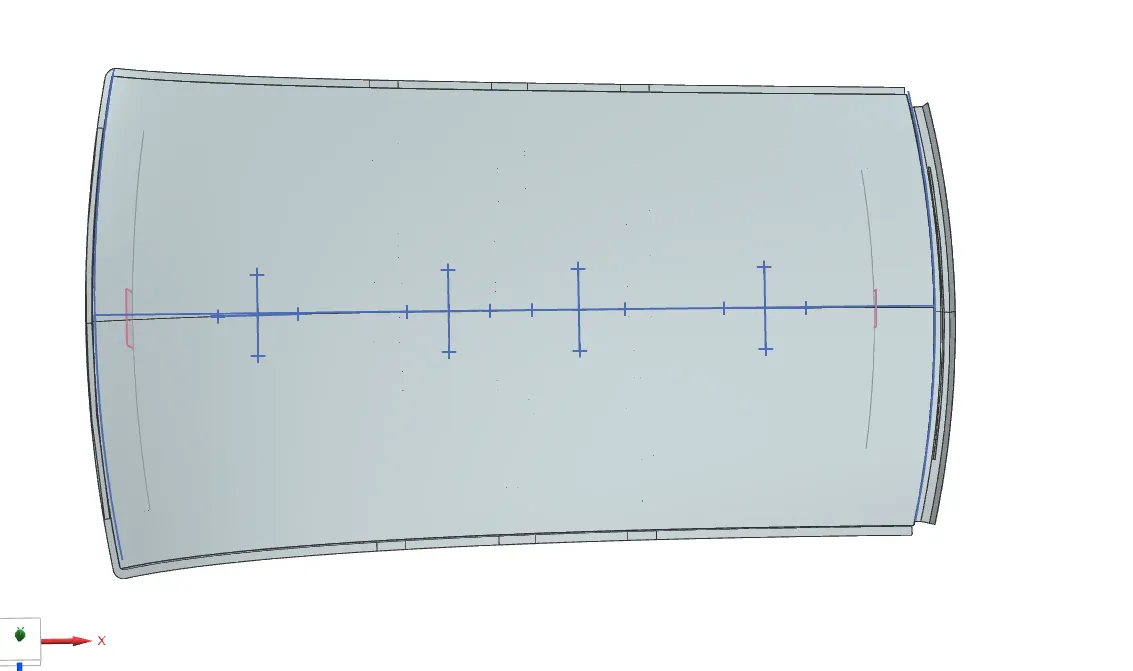
Section 1
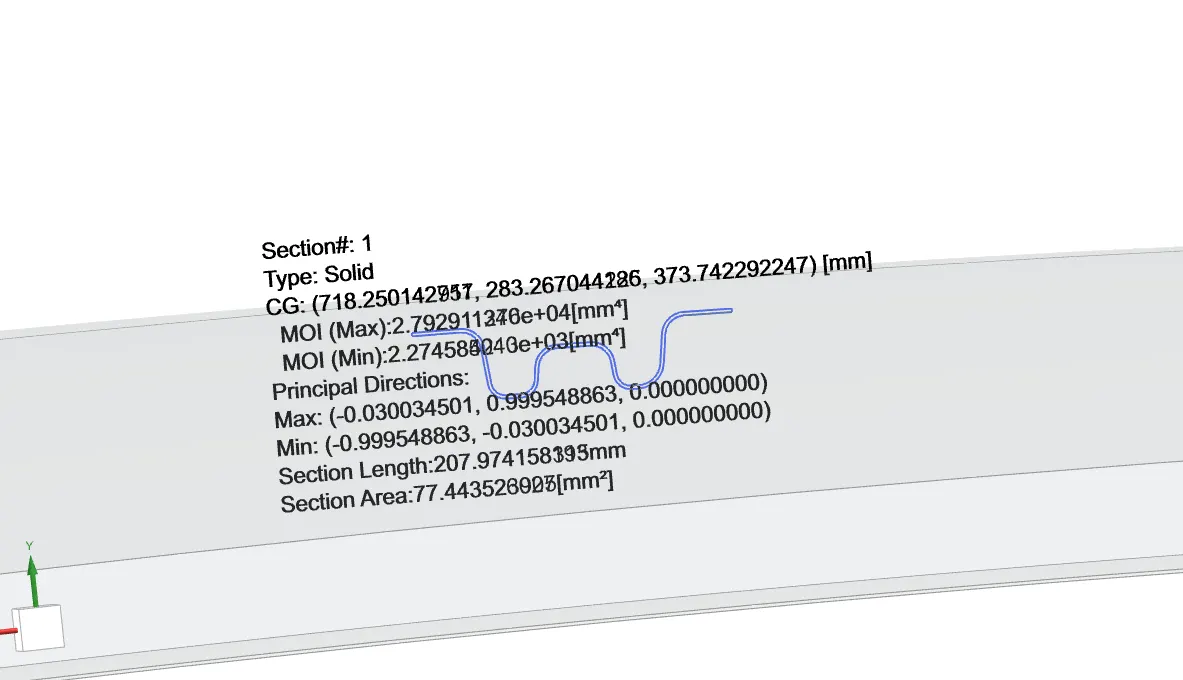
Section 2
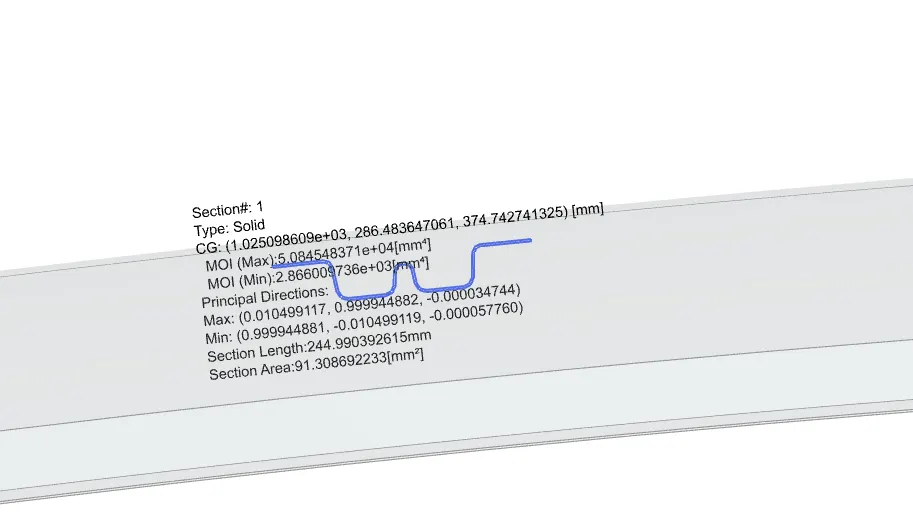
Section 3
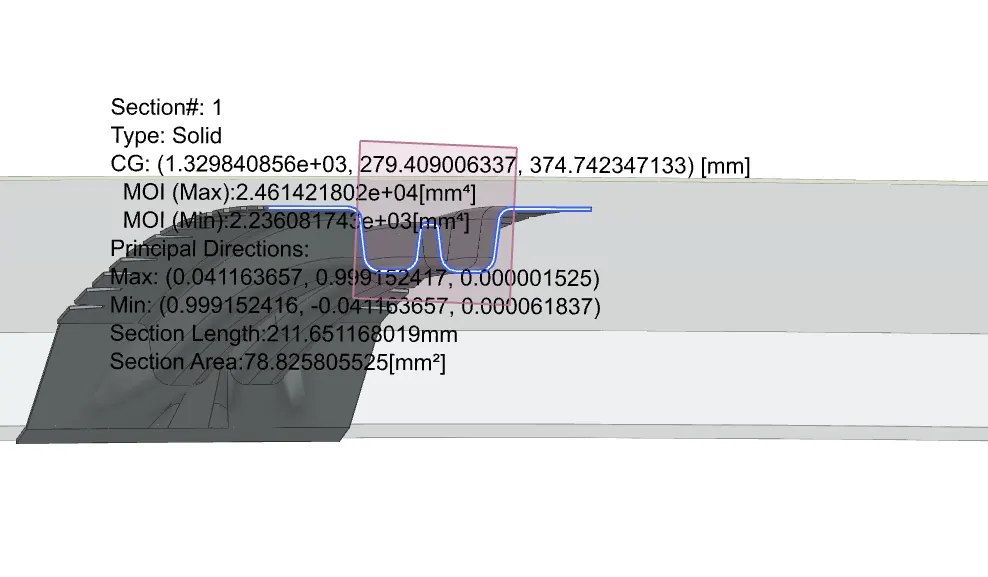

the bow roof rail fails under my current configuration
to remedy this the parameters under consideration are
1. Increase ly,t
2. decrease alpha, s, Rx,Ry
For changing Rx and Ry we need to first do a curvature analysis to find least curvature on the roof.
the bow roof rail fails under my current configuration
to remedy this the parameters under consideration are
1. Increase ly,t
2. decrease alpha, s, Rx,Ry
The amended snow load is given below
As Rx and Ry pertain to the curvature of the roof we have to give inputs to our styling team to modify section of the roof which becames a hassle as this changes the design aesthetic of the car.
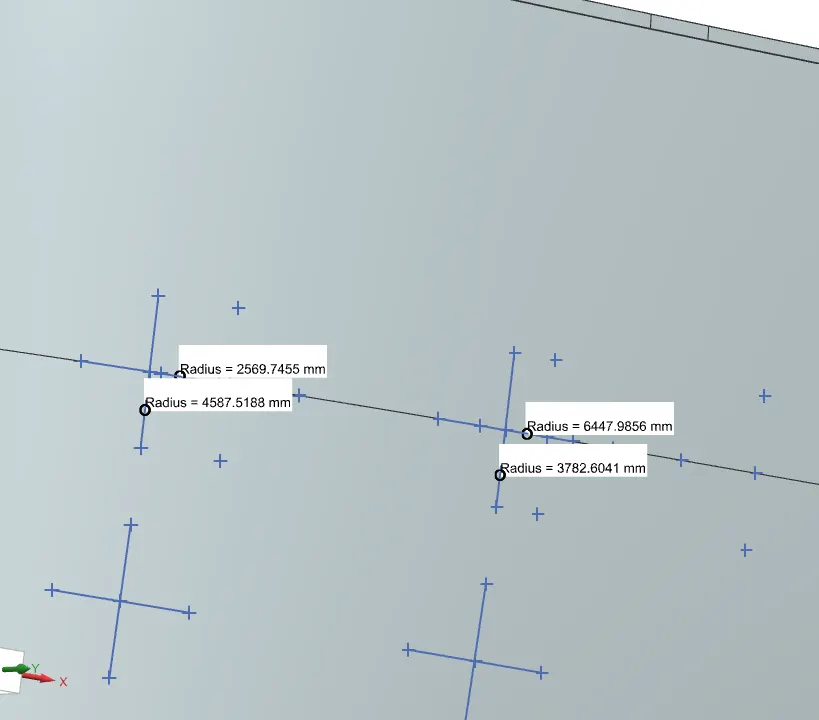
we amended this by moving the bow roof rail closer to the front roof rails. We can see a change in Rx and Ry as the roof curvature changes.

Manufacturing Processes Involved in Automobile Roof Production
1. Material Selection
Before manufacturing can begin, the right materials must be selected. Based on the safety, heat distortion, and snow load requirements, the materials will likely include high-strength steel, aluminum alloys, composites (carbon fiber, fiberglass), and specialized automotive glass (for sunroofs or panoramic roofs).
- High-Strength Steel: Commonly used for structural integrity due to its strength and cost-effectiveness.
- Aluminum: Lighter than steel, providing weight reduction benefits, but still capable of handling stress and crash forces.
- Composites (Carbon Fiber or Fiberglass): These materials are used in higher-end vehicles for weight reduction, excellent thermal stability, and strength-to-weight ratio.
- Tempered Glass: Used for sunroofs or panoramic roofs to ensure passenger safety (breaks in controlled ways).
2. Press Forming (Stamping)
The roof’s outer skin (and sometimes the inner structural elements) is often formed through press forming, also known as stamping. This involves shaping flat sheets of metal or composite material into the roof's desired shape using large machines called presses.
- Process: A flat sheet of material is fed into a press, which uses high force to shape the sheet into the final part by applying pressure with a mold (die).
- Materials: Typically, steel or aluminum sheets are used for this process. The process is well-suited for materials that can be effectively shaped into complex geometries.
- Advantages: This process is quick and allows for mass production of the same part in a cost-effective manner. It’s also highly effective for creating large parts like the outer shell of the automobile roof.
- Considerations: Careful design is needed to ensure that the material doesn’t experience excessive stretching or thinning, which could affect strength and performance (especially under crash load).
3. Hydroforming
For more complex shapes and higher strength, hydroforming is often used, especially for creating the roof frame (the structure beneath the roof panel). This process uses high-pressure hydraulic fluid to mold metal tubes or sheets into the desired shape.
- Process: A tube or sheet of metal is placed inside a mold. Then, hydraulic fluid is pumped at high pressure to shape the material.
- Materials: Primarily high-strength steel or aluminum.
- Advantages: Hydroforming allows for the creation of lightweight, stronger parts with fewer welds and joints. It also helps produce smoother shapes, improving aerodynamics and reducing stress concentration points, which is particularly useful in crash scenarios.
- Considerations: This process requires precise control over pressure and temperature to avoid issues with material deformation.
4. Welding and Joining
Once the various components of the roof (roof panel, roof frame, reinforcement beams, etc.) are shaped, they are assembled using various joining processes. Welding is one of the most common methods, but there are others used depending on the materials and specific needs of the design.
Spot Welding: Often used to join sheet metal in automobile manufacturing. The process involves applying heat to the metal at the point of contact to melt and fuse the pieces together. We use spot welding in the front and rear roof rails
Laser Welding: Used for high-precision joining of parts, especially in areas that require clean and accurate welds without warping the material, as it produces less heat than traditional welding.
Riveting: Sometimes used in areas where welding is not feasible, such as joining different materials like metal to composite.
Adhesive Bonding: Mastic sealant is used to join and waterproof joints between different parts. Also
Considerations: Proper welding ensures that the roof frame is strong enough to withstand forces during a rollover (roof crush test). It must also ensure that seams do not fail under thermal stress (heat distortion) or snow load.
5. Roll Forming
Roll forming is often used to produce the continuous beams or structural reinforcements of the roof, such as the roof rails, support pillars, and other structural components.
- Process: A continuous sheet of metal is passed through a series of rollers that gradually shape the material into the final desired cross-section (e.g., a U-shaped beam).
- Materials: Typically steel or aluminum.
- Advantages: Roll forming is highly efficient and ideal for producing parts with a consistent cross-section, making it ideal for reinforcing components that are integral to the roof's strength.
- Considerations: The process is suitable for creating long, uniform pieces (e.g., roof rails) that are then cut to size.
6. Thermal Treatment (Heat Treatment)
Once the roof components are formed, heat treatment processes are often applied to enhance the mechanical properties of the materials.
Annealing: This process involves heating the metal to a specific temperature and then cooling it slowly. This reduces internal stresses, making the metal more ductile and less prone to cracking.
Quenching: Involves heating the material and then rapidly cooling it (typically in water or oil) to increase hardness and tensile strength, making it more resistant to deformation during a crash.
Tempering: Following quenching, tempering is used to reduce brittleness, making the material more suitable for impact resistance.
Considerations: These processes are essential to ensure that materials maintain strength and resistance to deformation during crash tests, as well as to withstand extreme temperatures (heat distortion).
7. Surface Treatment (Coating)
To ensure corrosion resistance, aesthetics, and durability, the roof panels often undergo various surface treatments.
Galvanization: Coating steel panels with a thin layer of zinc to protect against rust and corrosion.
Powder Coating or Painting: The roof panels may be coated with automotive-grade paint for both aesthetic purposes and to ensure the roof resists environmental wear, UV damage, and corrosion.
Ceramic Coating: In some high-end models, ceramic coatings are used on the glass for enhanced durability and resistance to UV damage.
Considerations: The roof needs to resist environmental factors, including UV radiation, salt from snow or ice, and moisture. The coating must also not affect the roof's performance under heat distortion or snow load.
8. Glass Integration
For roofs with sunroofs or panoramic roofs, integrating glass is a specialized process that requires precision due to the weight, size, and safety concerns of automotive glass.
Lamination: The glass is often laminated to provide strength and shatter-resistance. A layer of polymer is sandwiched between two layers of glass to prevent the glass from breaking into sharp, dangerous shards in the event of an accident.
Tempering: Tempered glass is used for roofs to enhance strength and safety. When broken, tempered glass shatters into small pieces, reducing the risk of injury.
Bonding: The glass is securely bonded to the roof frame using strong adhesives. This adhesive bond must withstand crash forces and prevent detachment during rollover accidents.
Considerations: Glass integration must meet safety regulations (e.g., FMVSS 205 or ECE R43) and is critical for both aesthetics and safety in sunroof or panoramic roof designs.
9. Final Assembly and Quality Control
The final assembly involves joining all the components into a complete roof structure, including the frame, outer shell, glass, and reinforcement beams.
- Assembly Process: Automated systems or skilled technicians will install the roof onto the vehicle body frame, ensuring alignment and secure attachment of all parts. This may involve welding, bolting, or adhesive bonding, depending on the design.
- Quality Control: Rigorous testing is conducted, including visual inspection, dimensional checks, strength tests (such as the roof crush test), and stress testing to ensure that the roof meets all safety, heat distortion, and snow load criteria.