Roof Design
Objective:
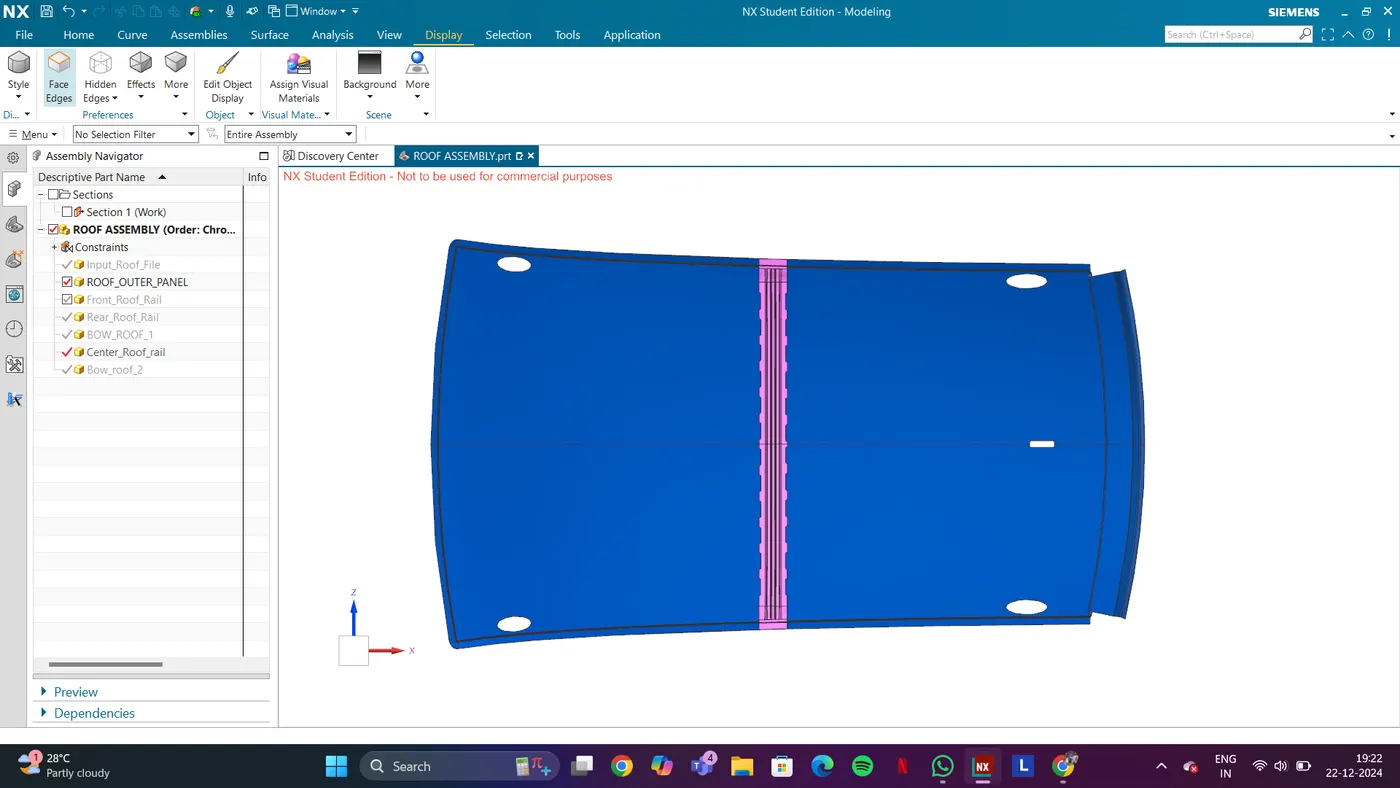
For the given styling create an assembly by developing the essential flanges for the outer roof and creating the reinforcements and perform draft analysis and also check for heat distortion criteria and snow load prediction.
Roof:
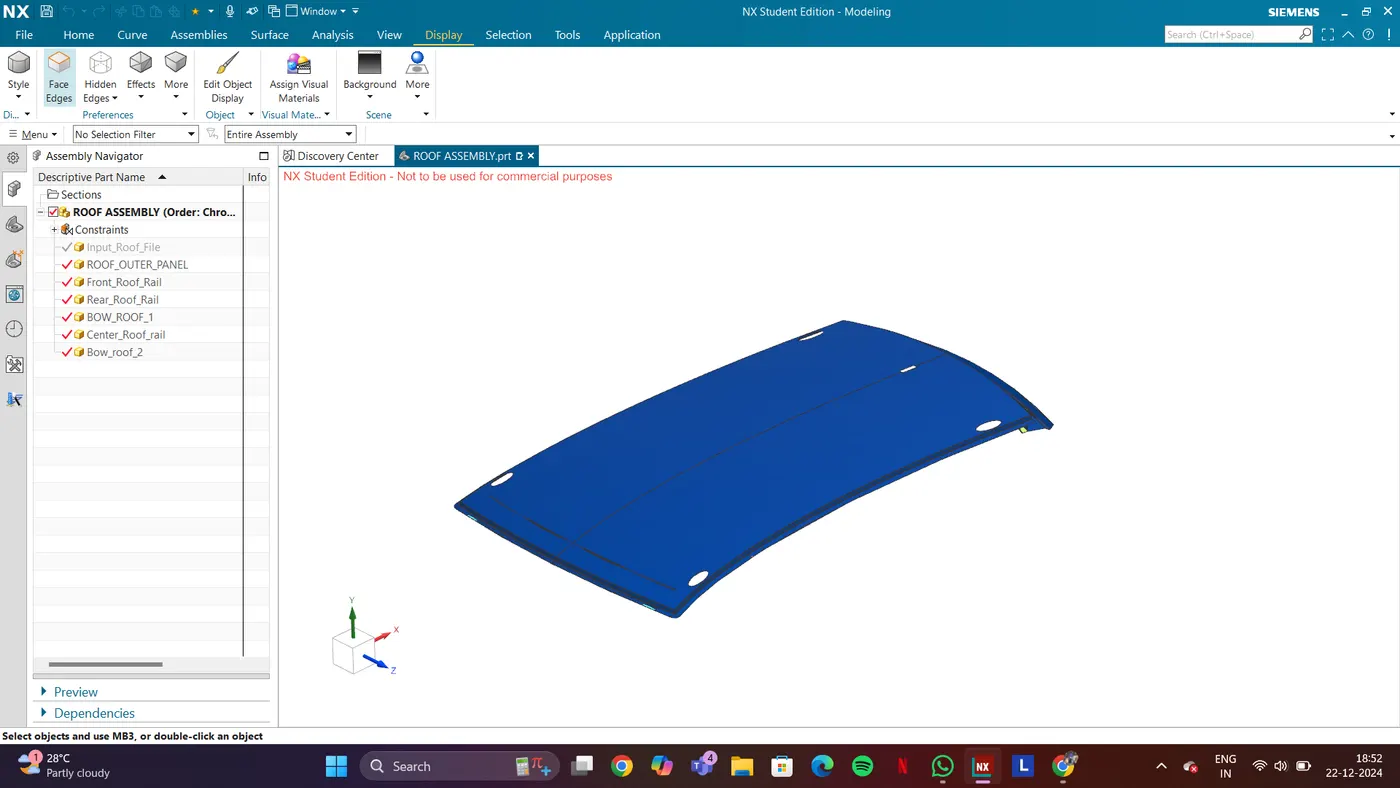
Roof is a BIW part that protects the passenger from external factors like Sun light, rain, dust etc. It is one of the major aesthetic feature for the car, and contributes a lot in styling. The roof also acts as a safety feature and is also considered to add strength to the BIW frame structure to the car.
The most commonly used material for manufacturing roof is steel. Apart from steel, aluminum, carbon fibers are also used in certain design conditions. Convertible top cars use cloth, canvas, vinyl etc.
Components:
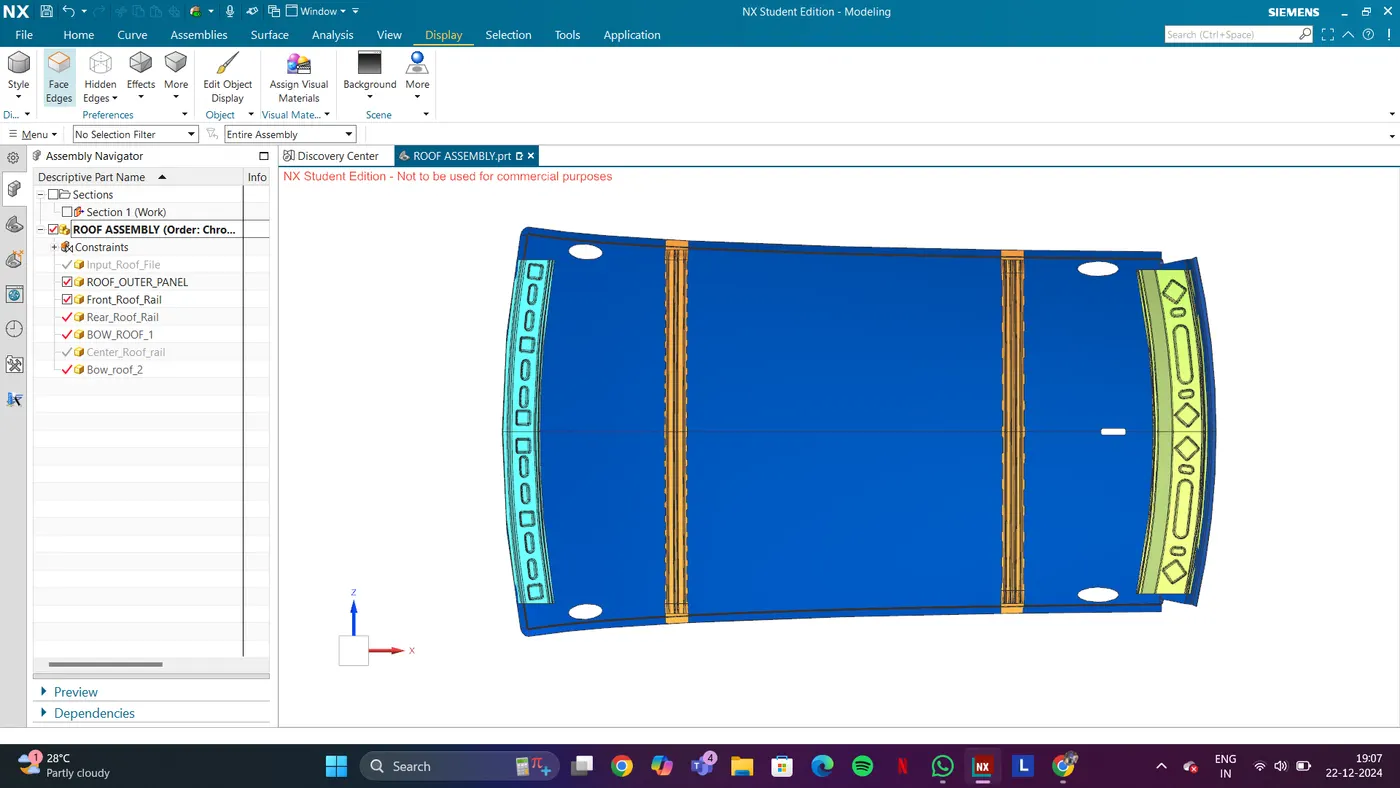
The roof consists of Front roof panel , Bow roof, Center roof reinforcement rail, and Rear roof . The number of bow roof is determined based on the strength requirement and length of the roof.
Master Section:
Front Roof Rail
Rear Roof
Bow Roof
Center Reinforcement Rail
Roof Design Parameters:
roof thickness = 0.75 mm
bow roof thickness = 0.75 mm
Center Reinforcement = 0.75 mm
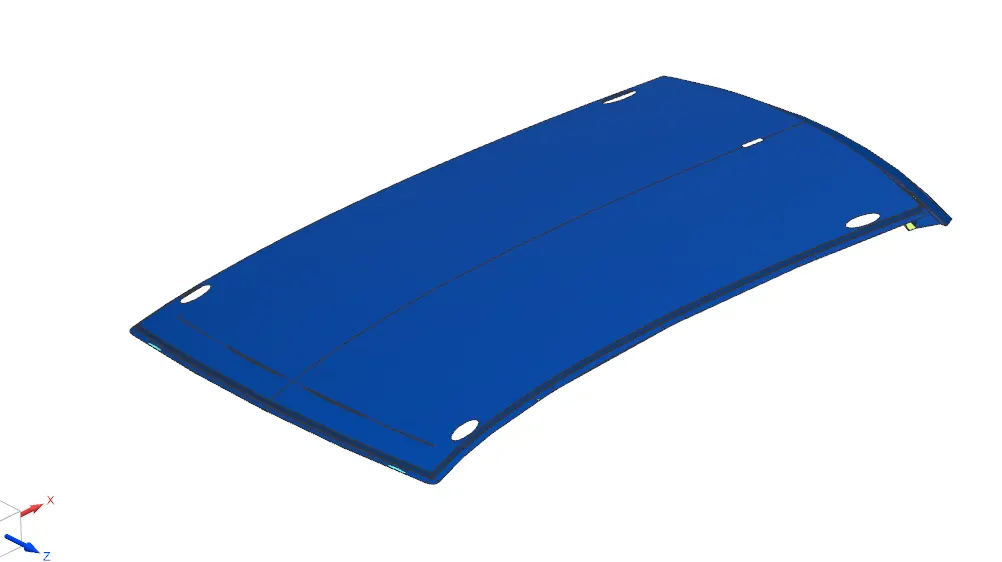
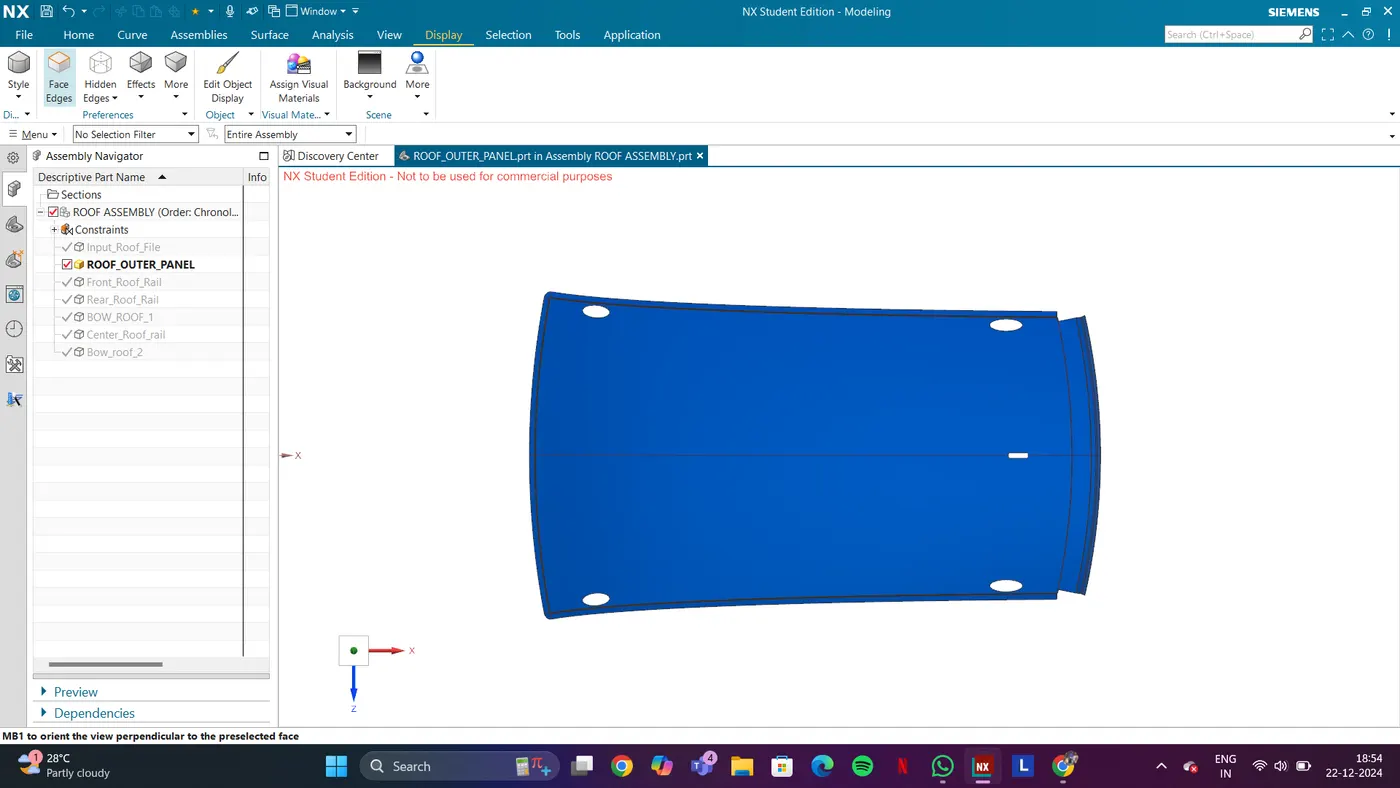
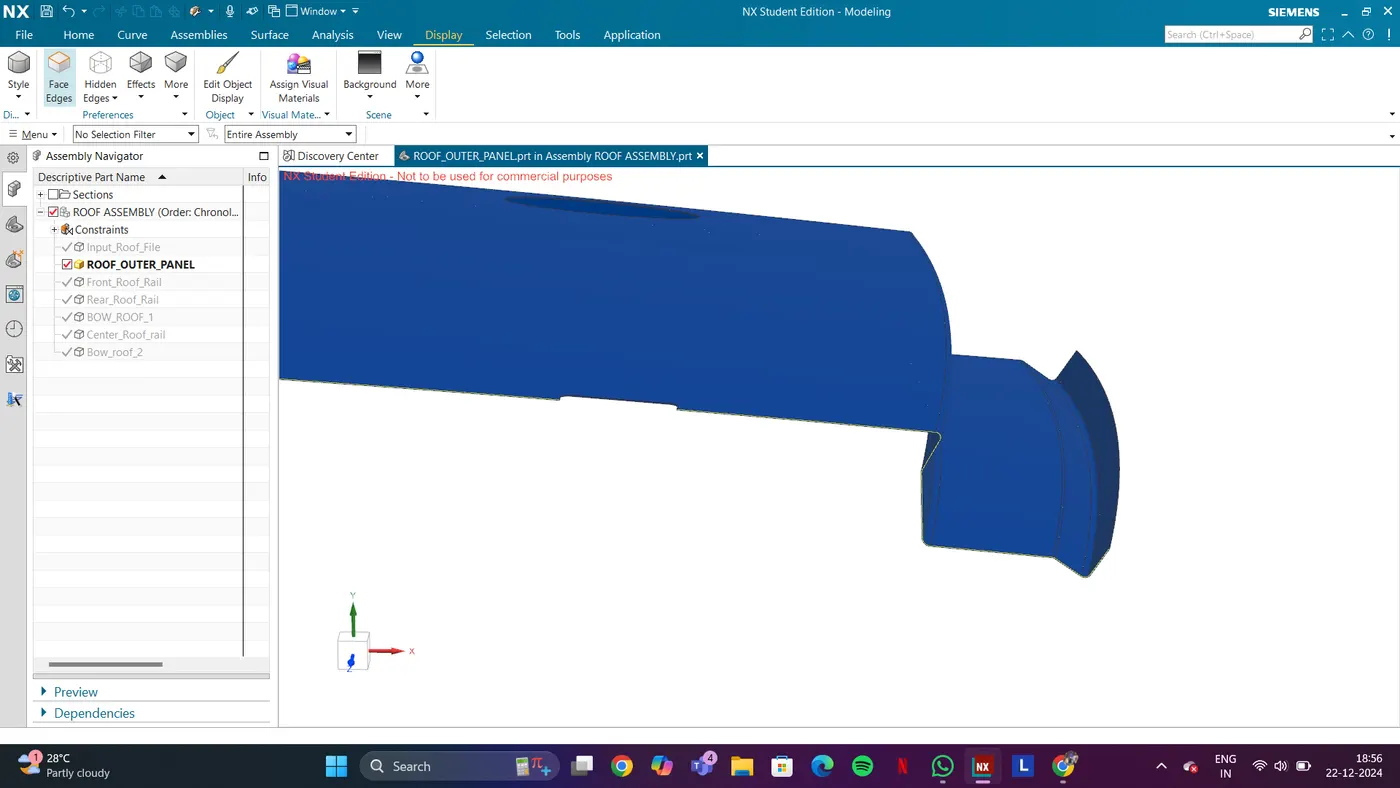
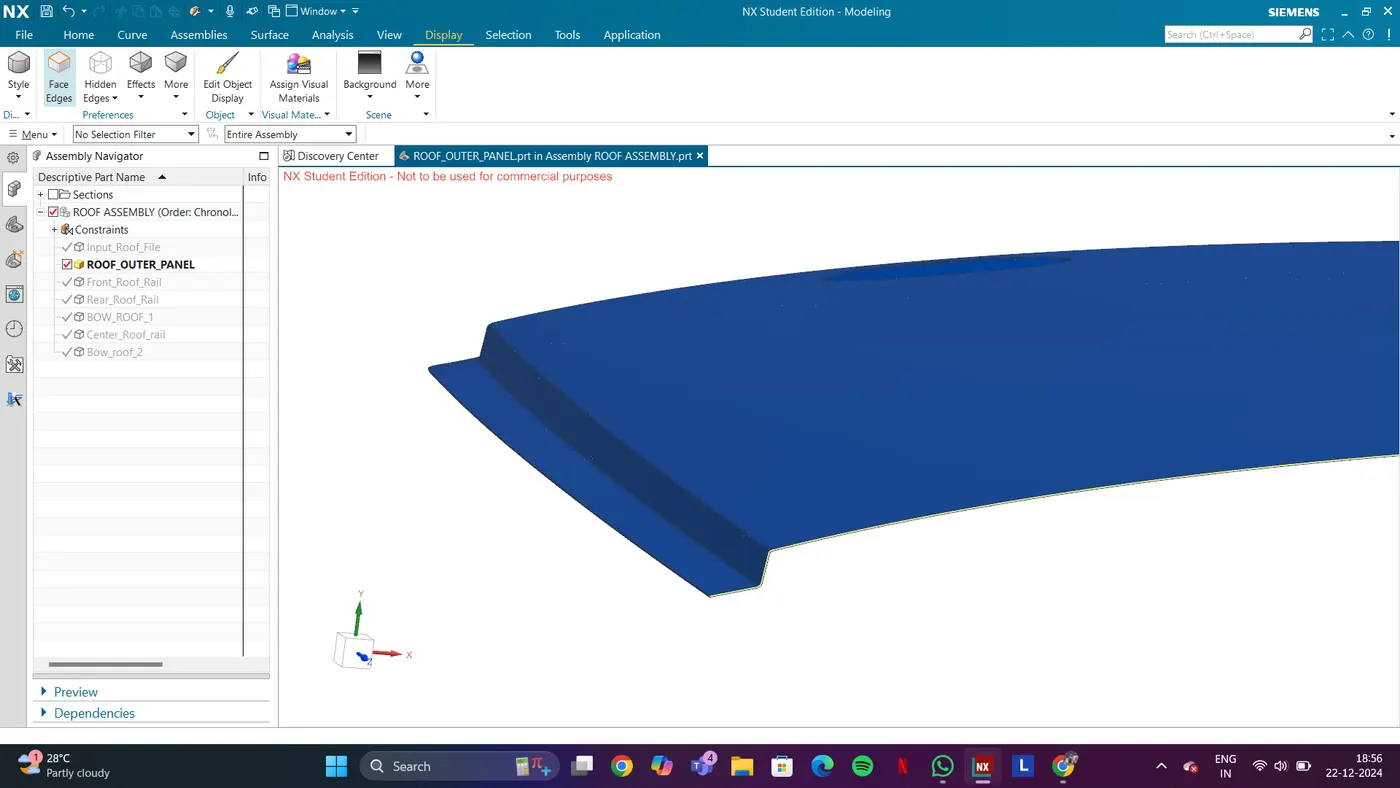
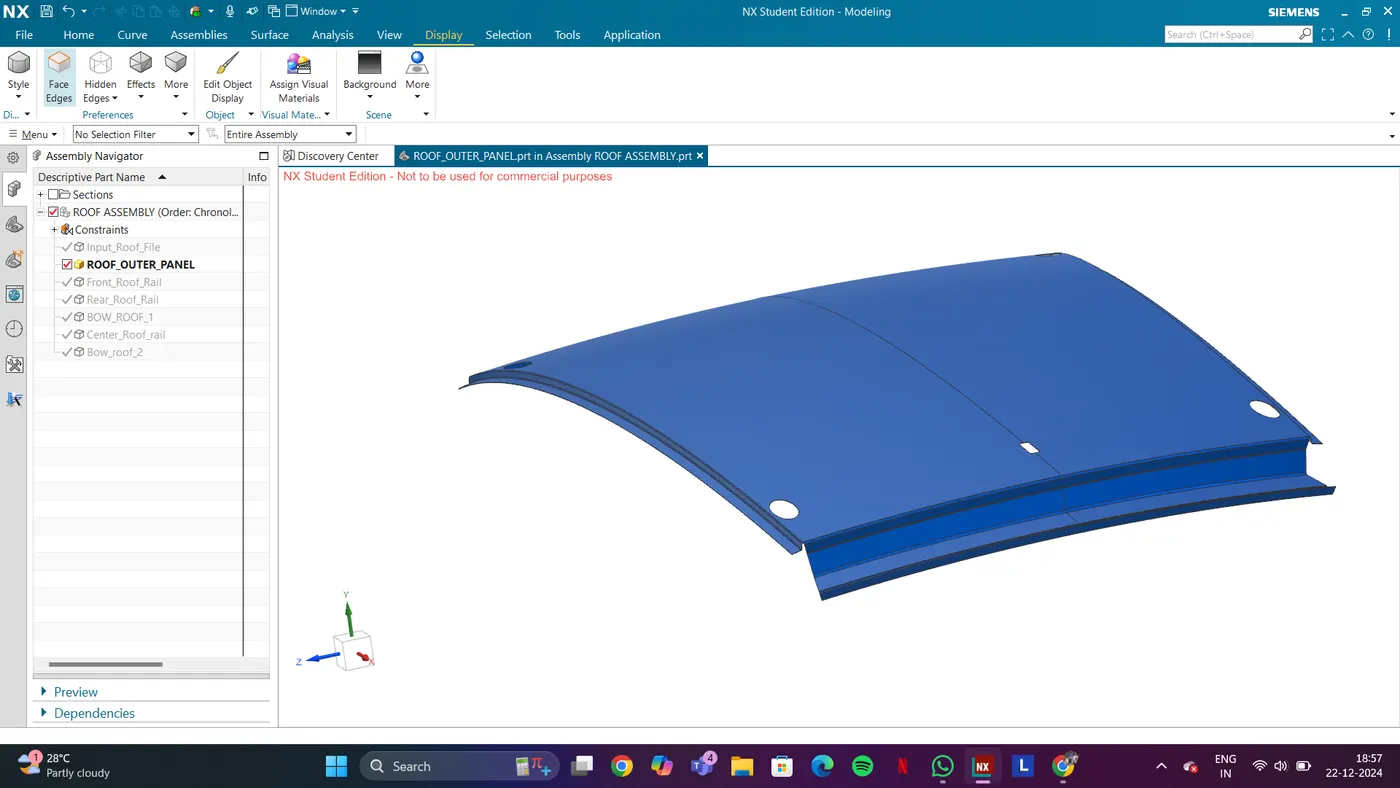
Roof Outer Panel
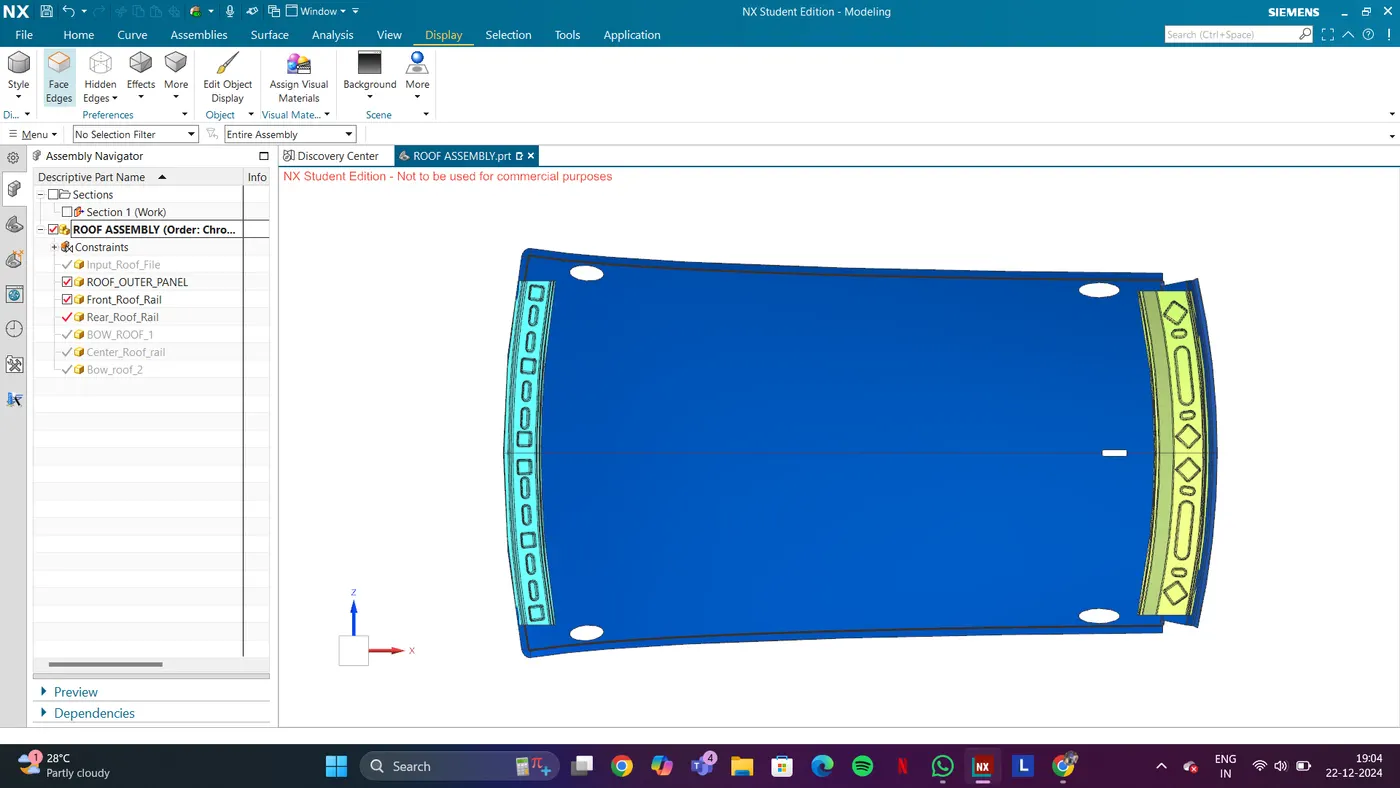
The outer panel is spread wide across from the windshield to the rear door. The outer panel is the aesthetic feature of the hood assembly. The styling team is responsible for the design of the styling surface for the hood assembly which is given as input and then converted to a part.
Front Roof Rail:
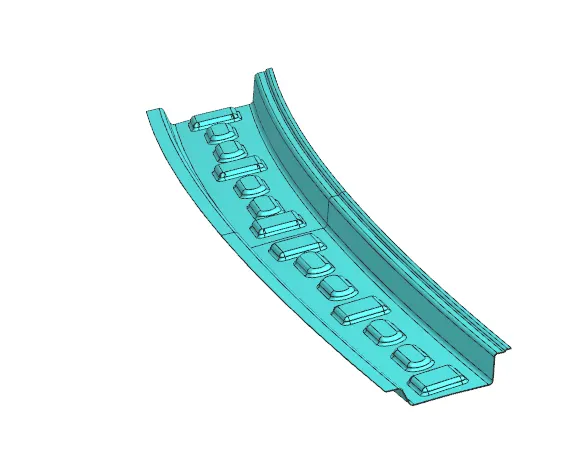
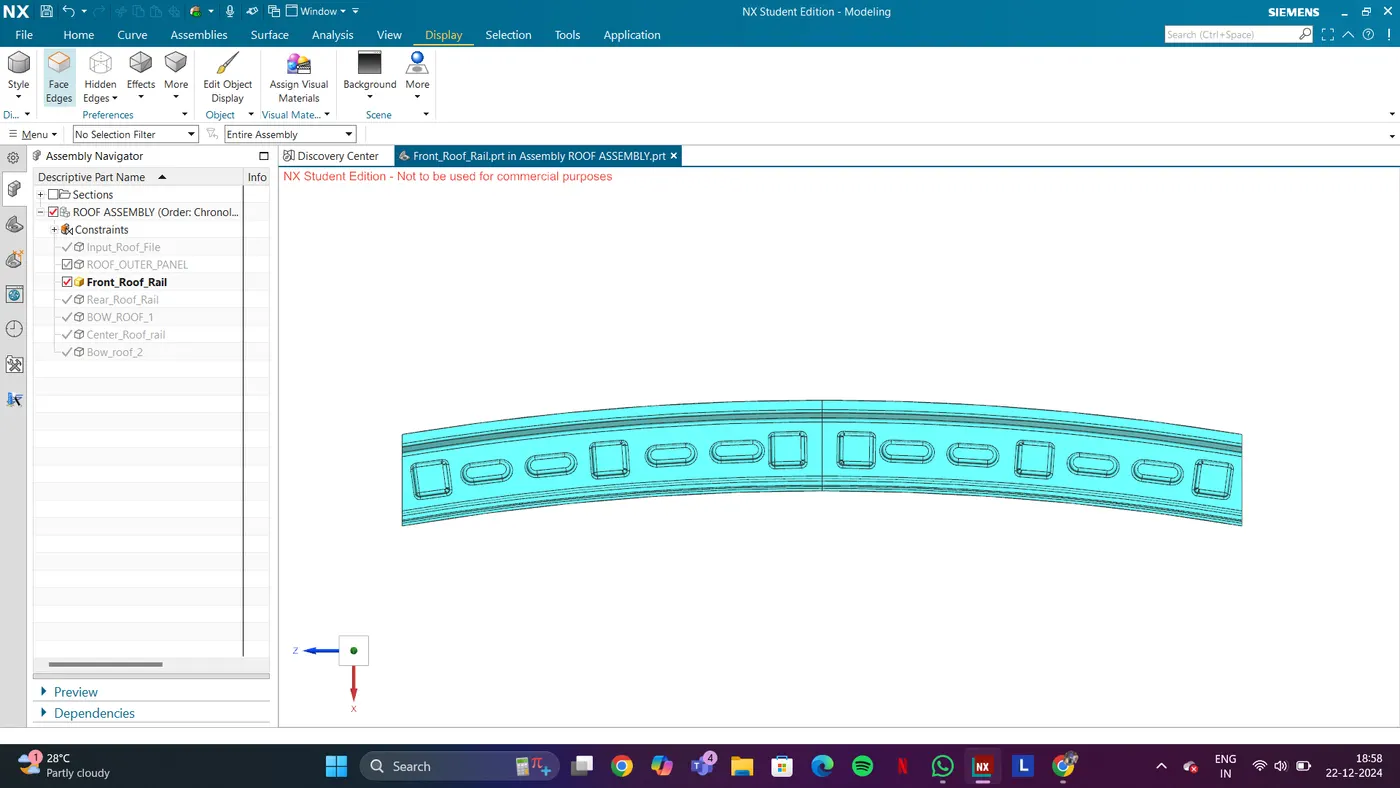
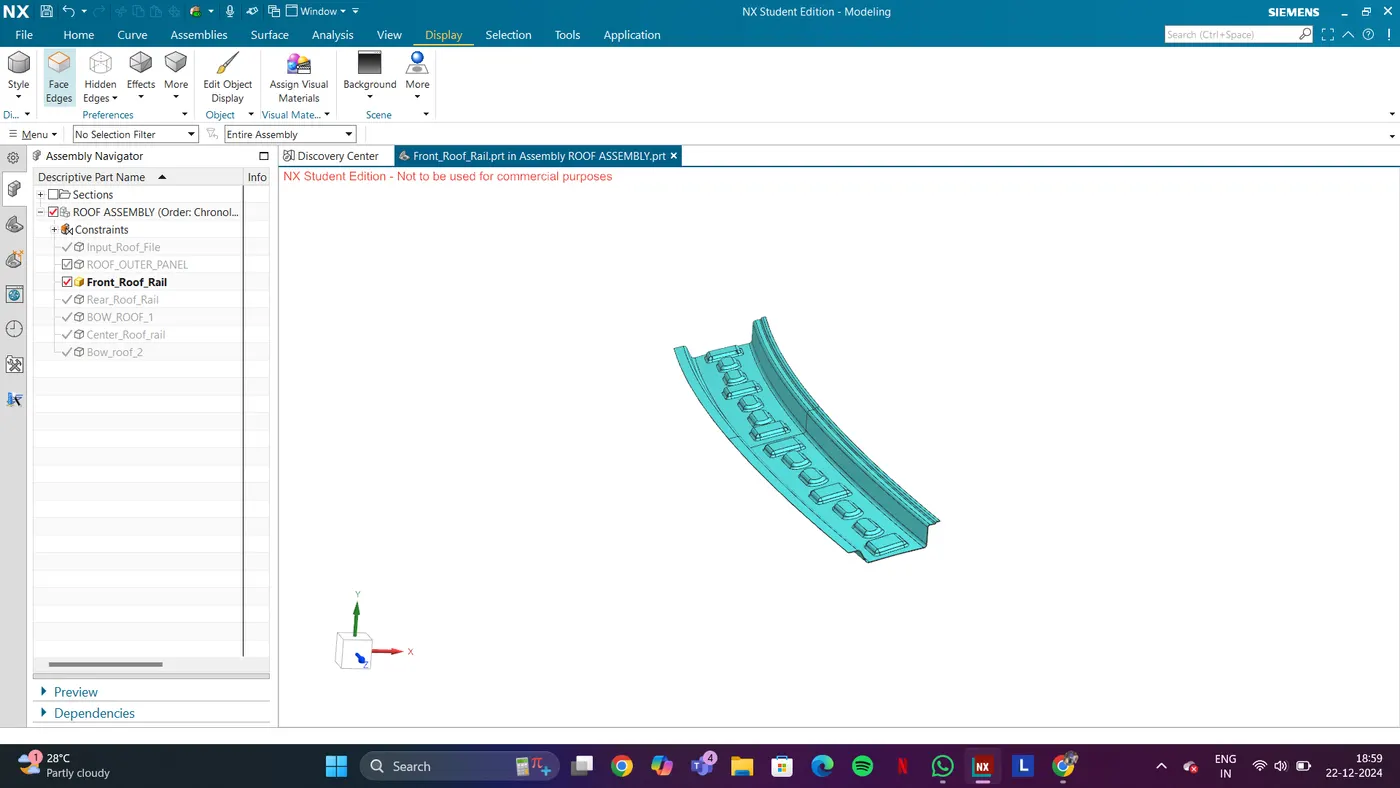
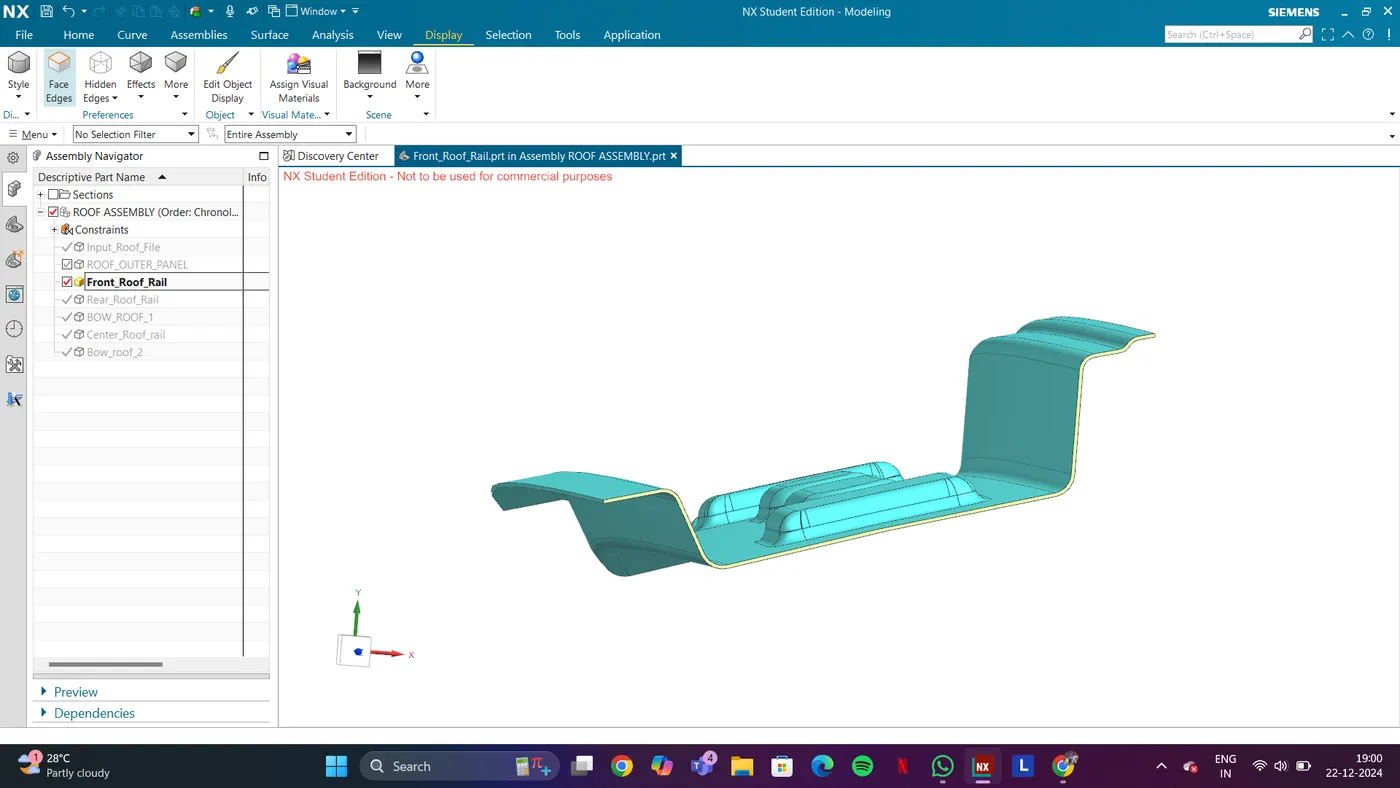
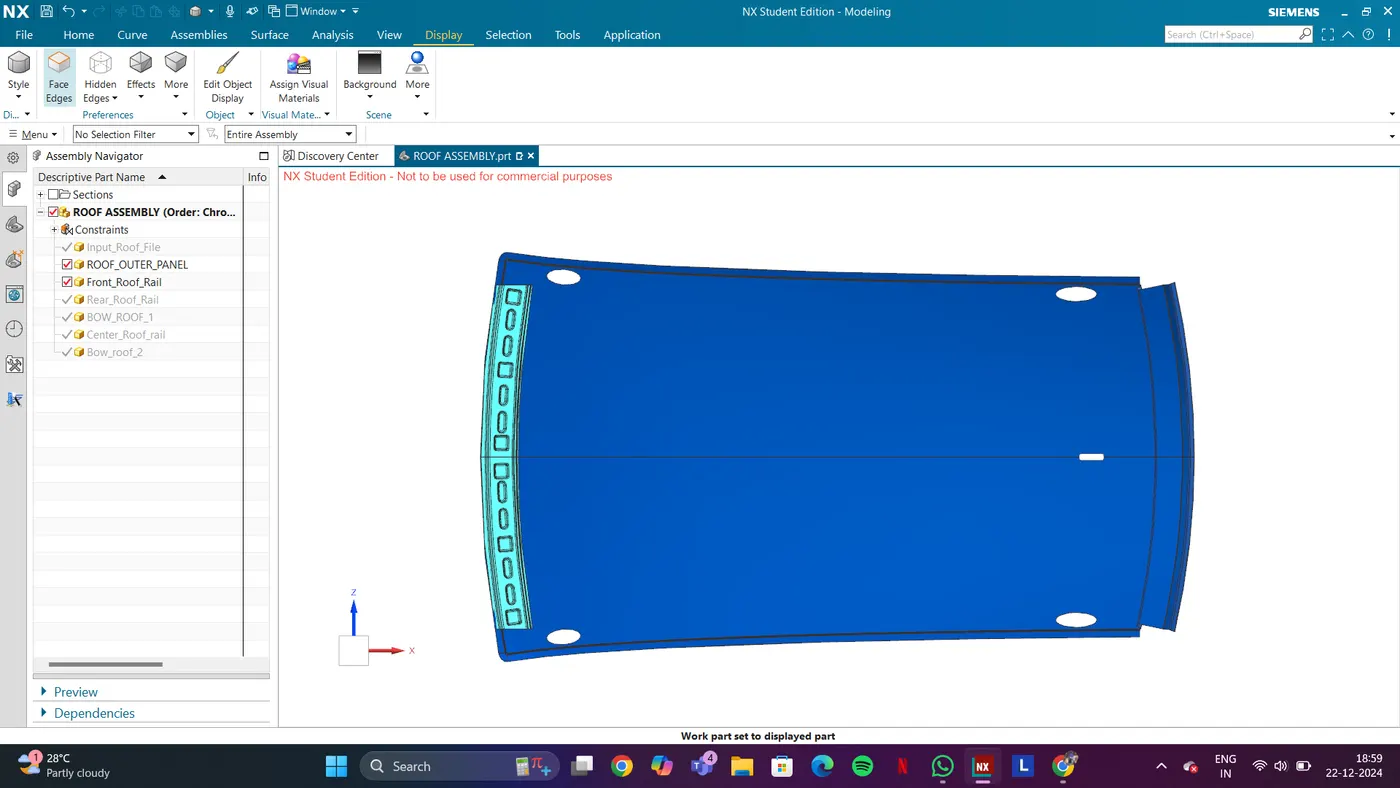
The front side of the roof outer panel is supported with the help of a reinforcement railing called front roof rail . The front roof rail provides additional strength to the roof outer panel. The cars windshield is attached to the front roof rail with the help of a rubber sealant.
Rear Roof Rail:
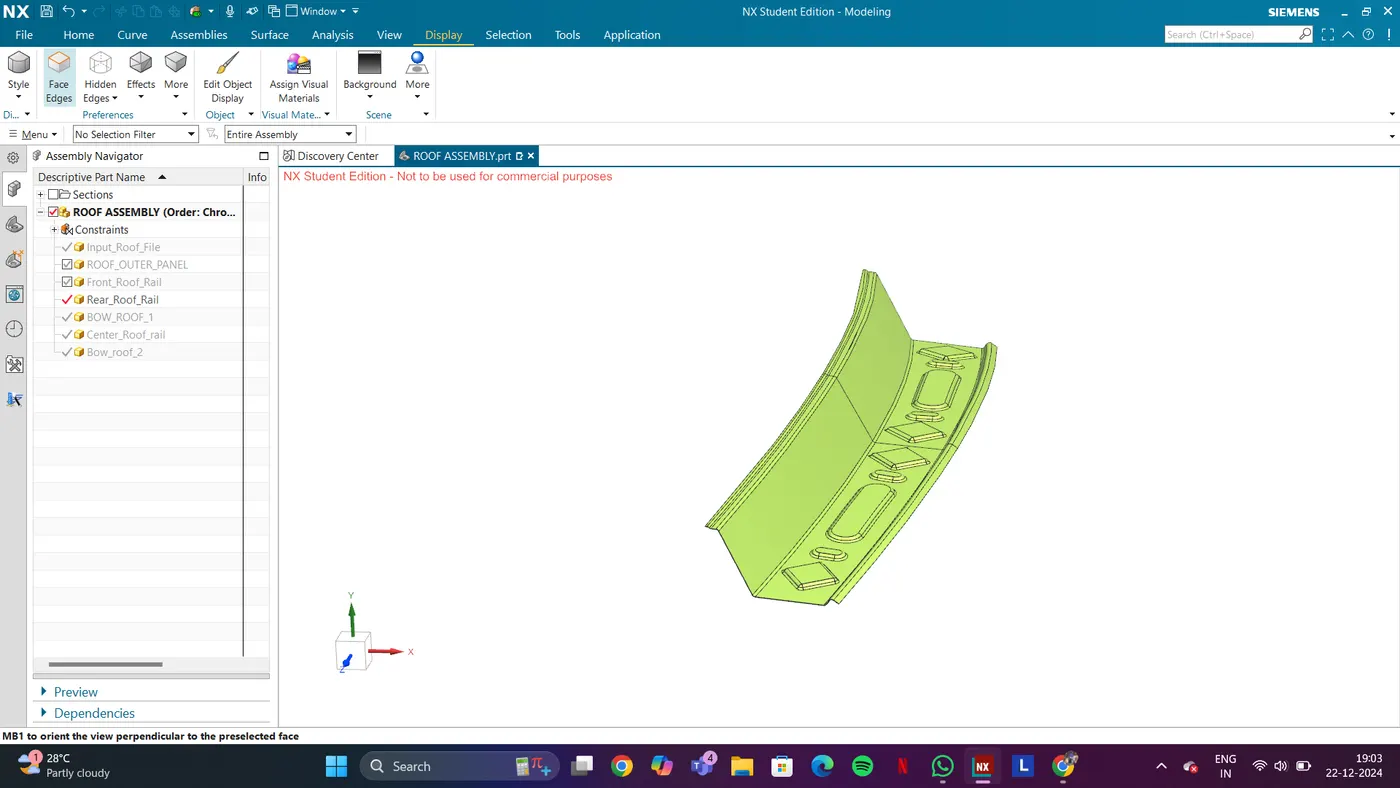
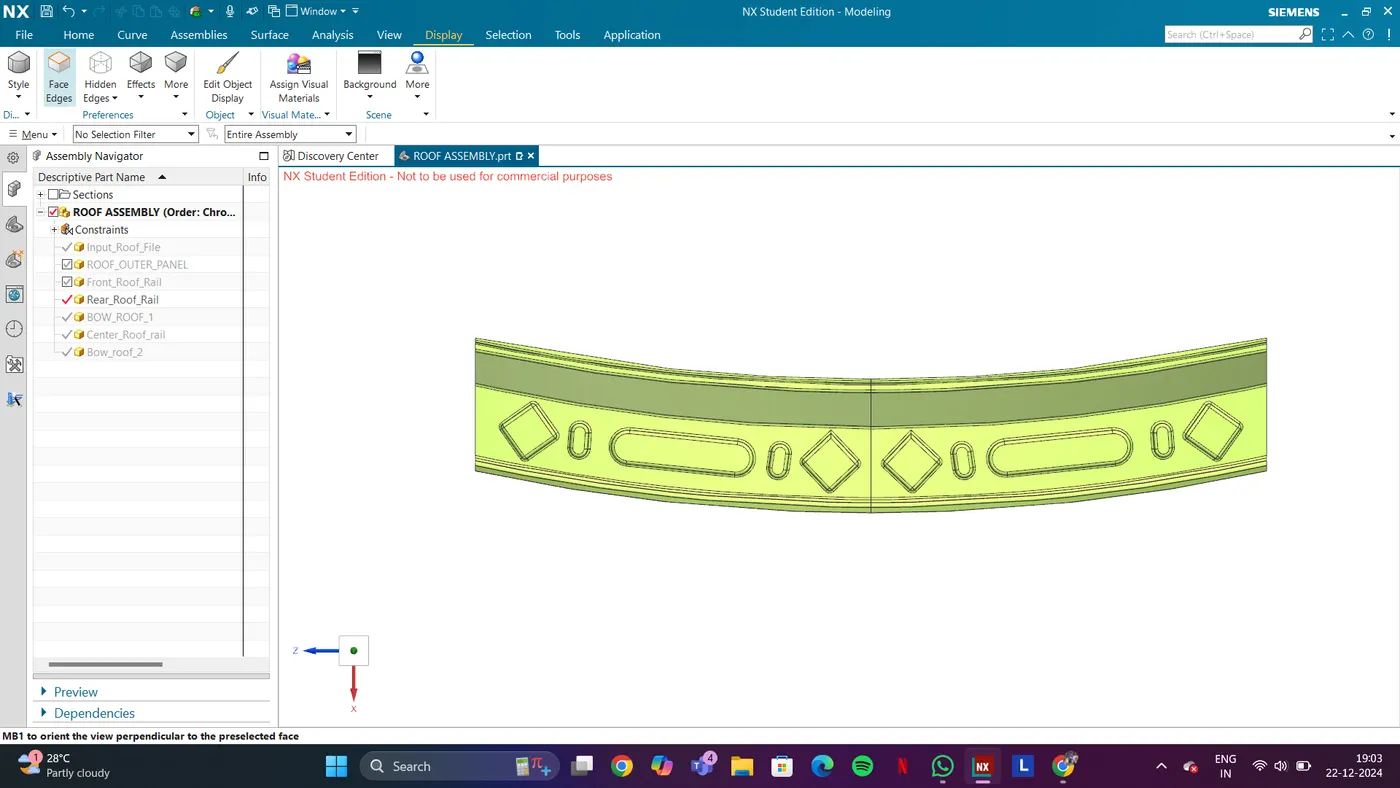
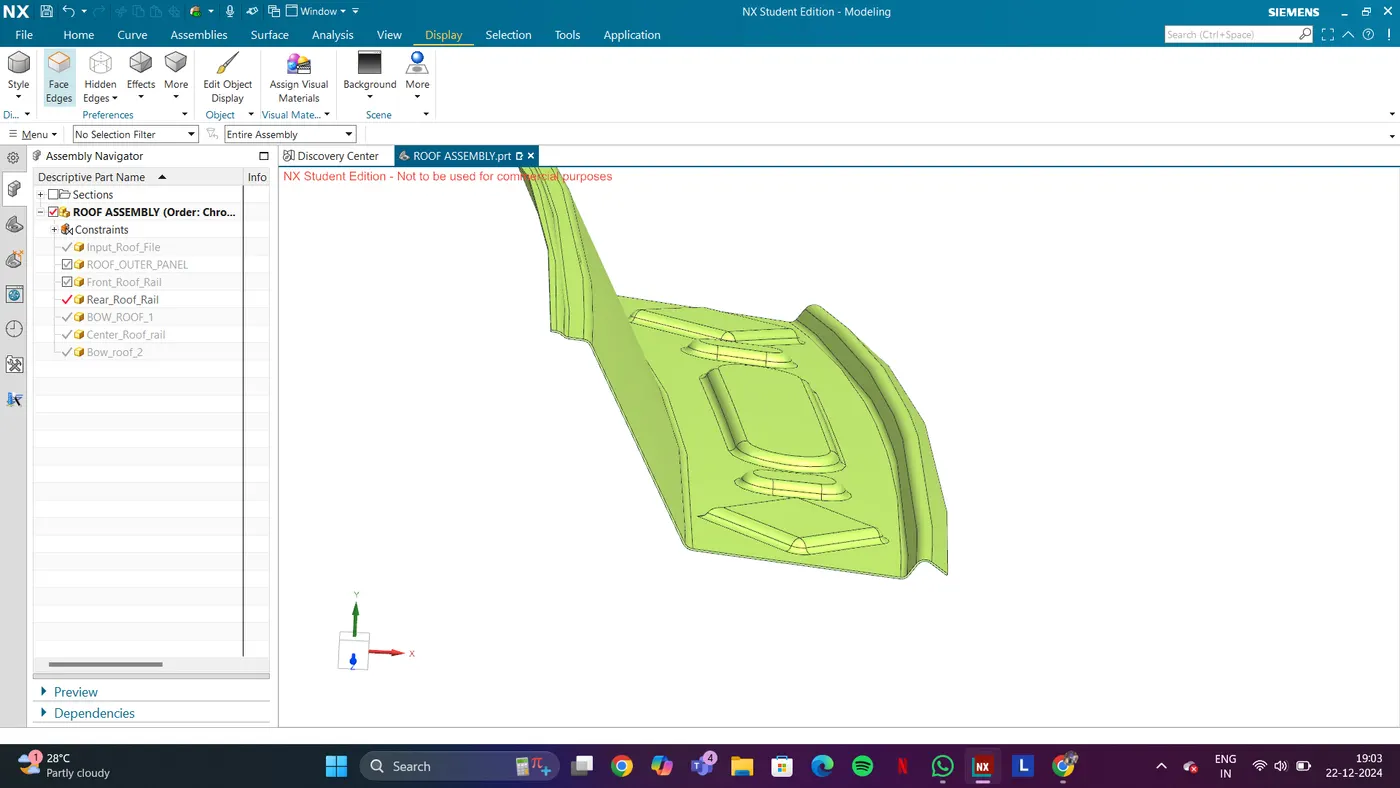
The rear side of the roof outer panel is supported with the help of a reinforcement railing called rear roof rail . The rear roof rail provides additional strength to the roof outer panel. The rear door is attached to the rear roof rail with the help of a hinges, rubber sealants and gourmets for harness safety .
Bow Roof:
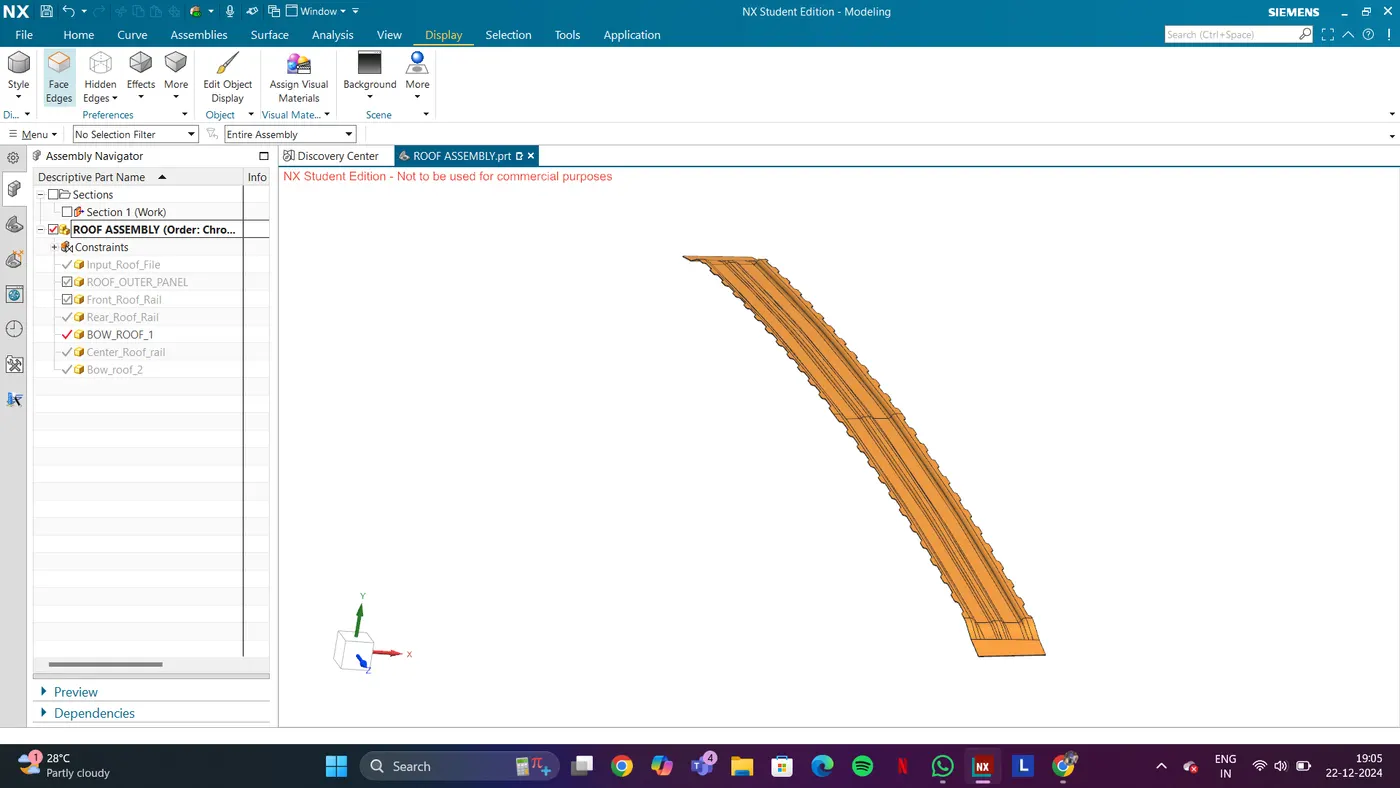
It is a additional structural element that provides support and stability to the roof surface. The bow roof is placed in where the roof is found to be week to add strength.
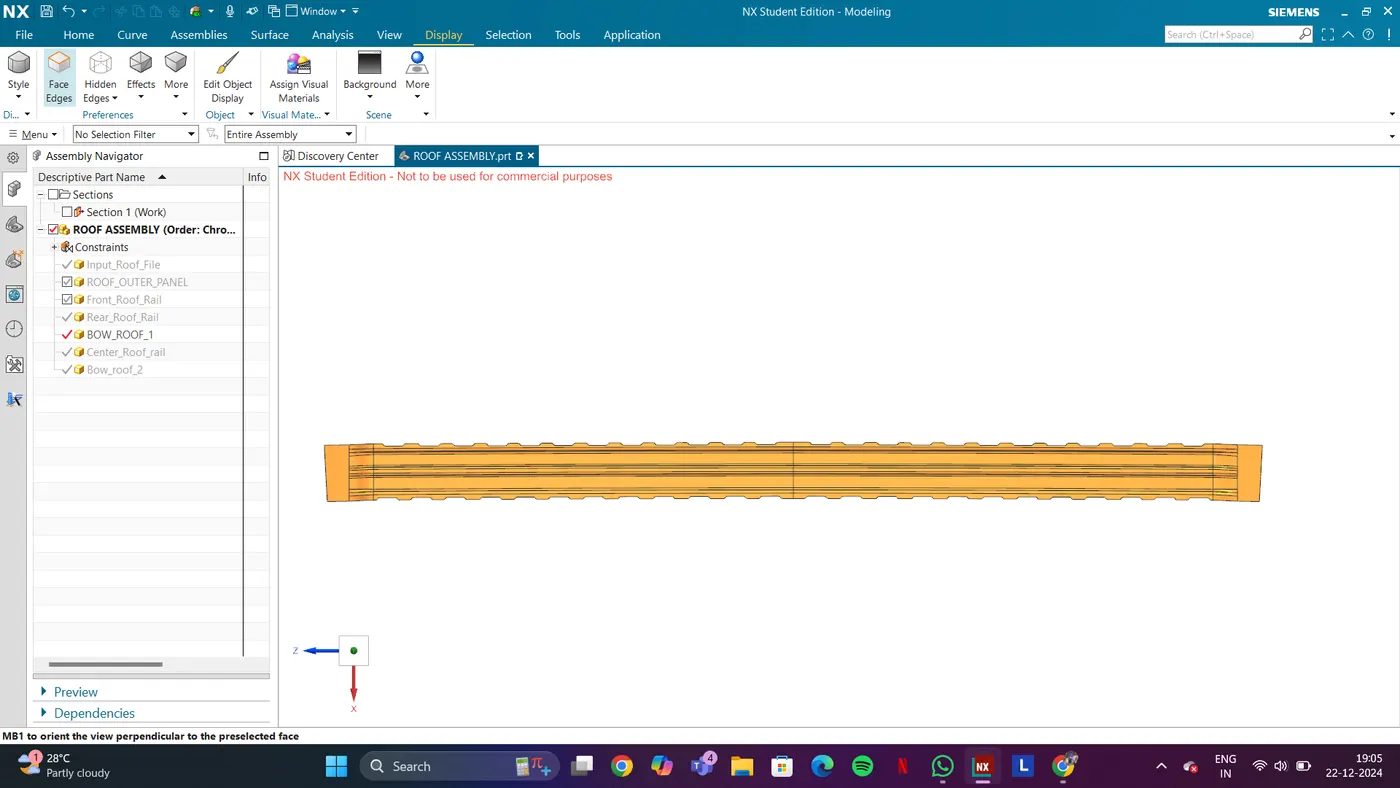
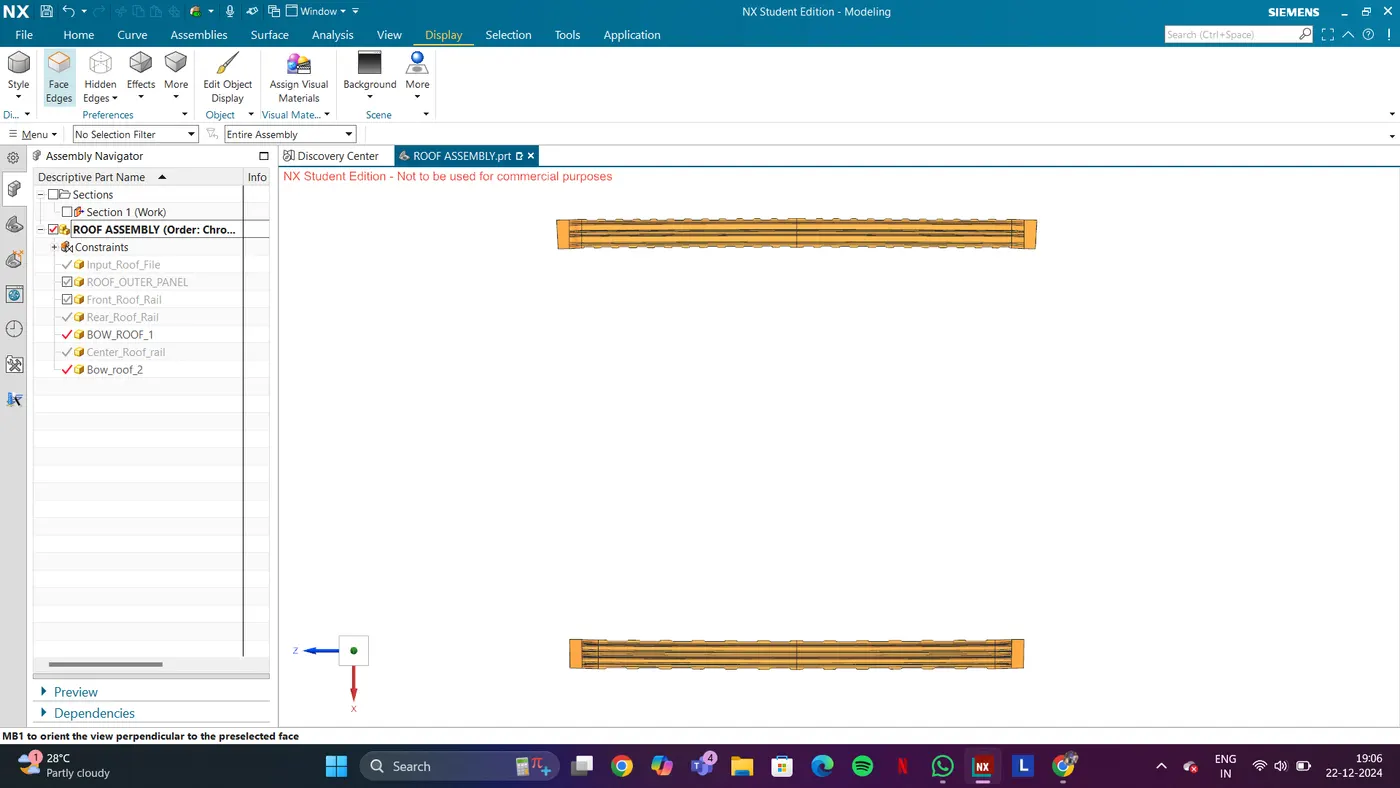
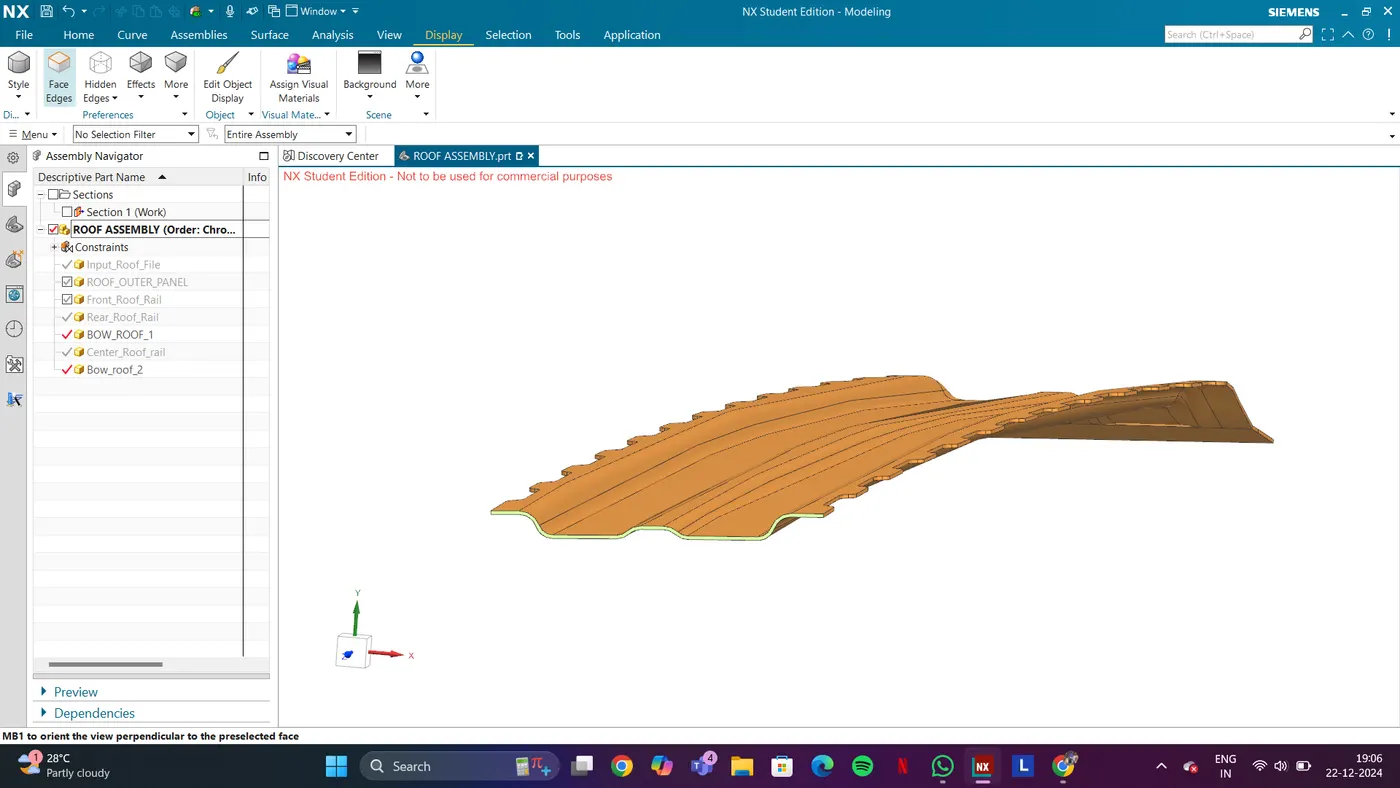
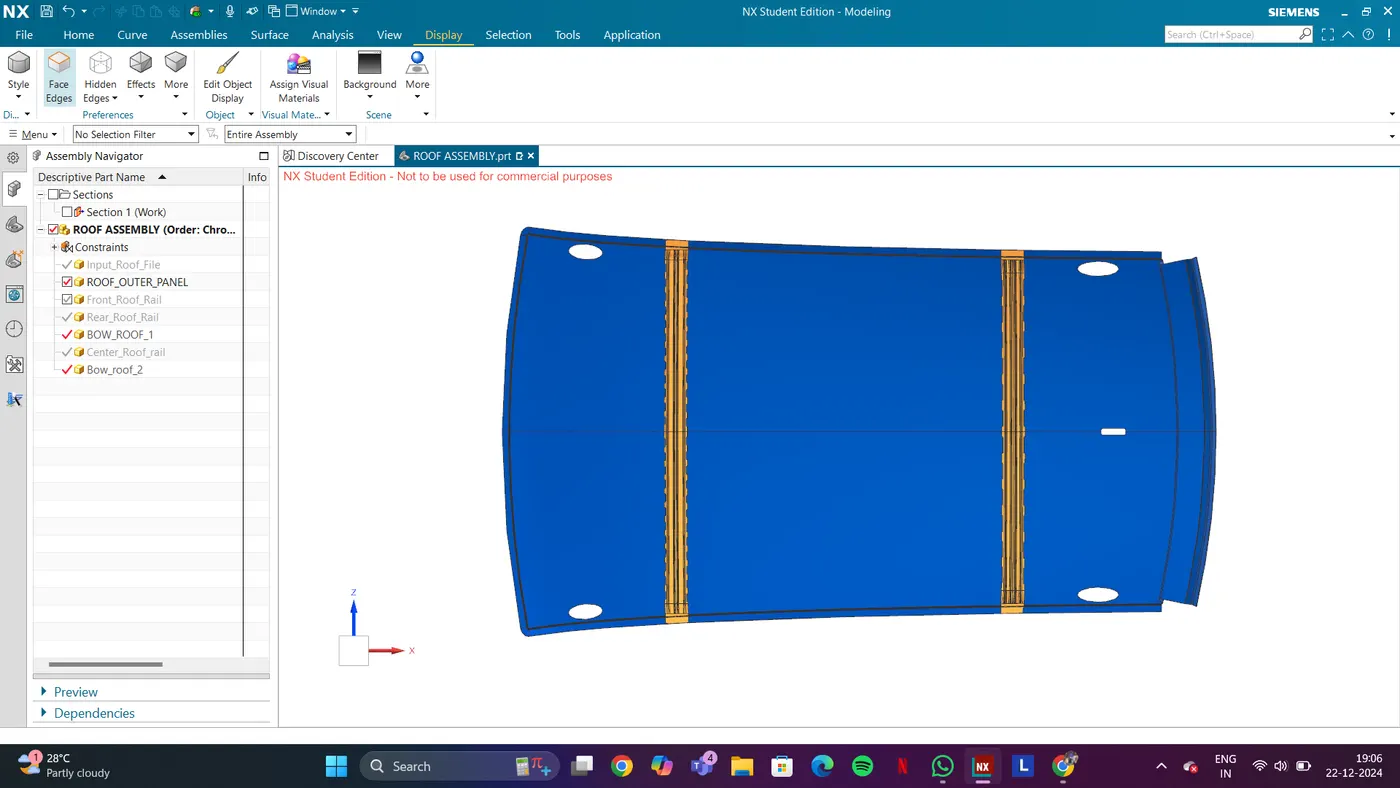
Center Roof Rail:
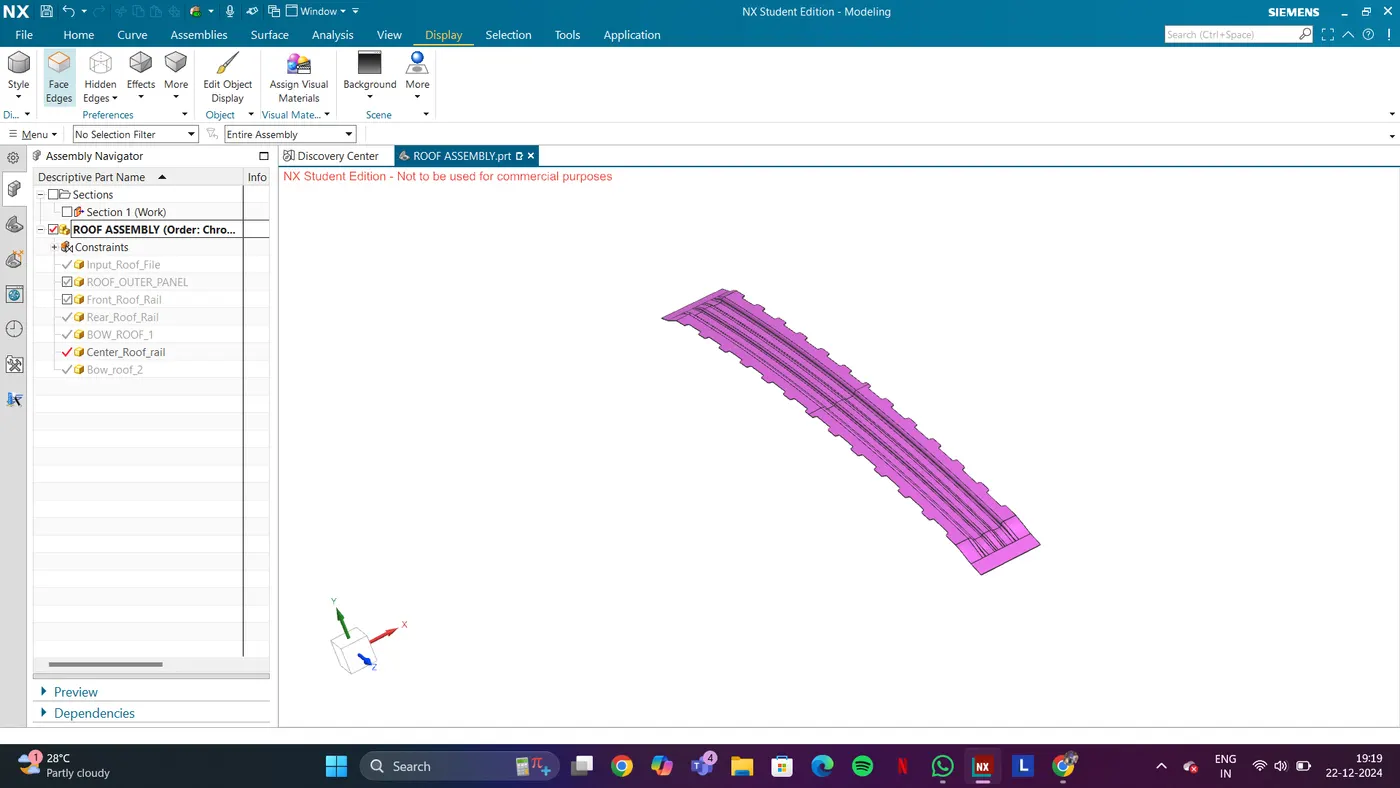
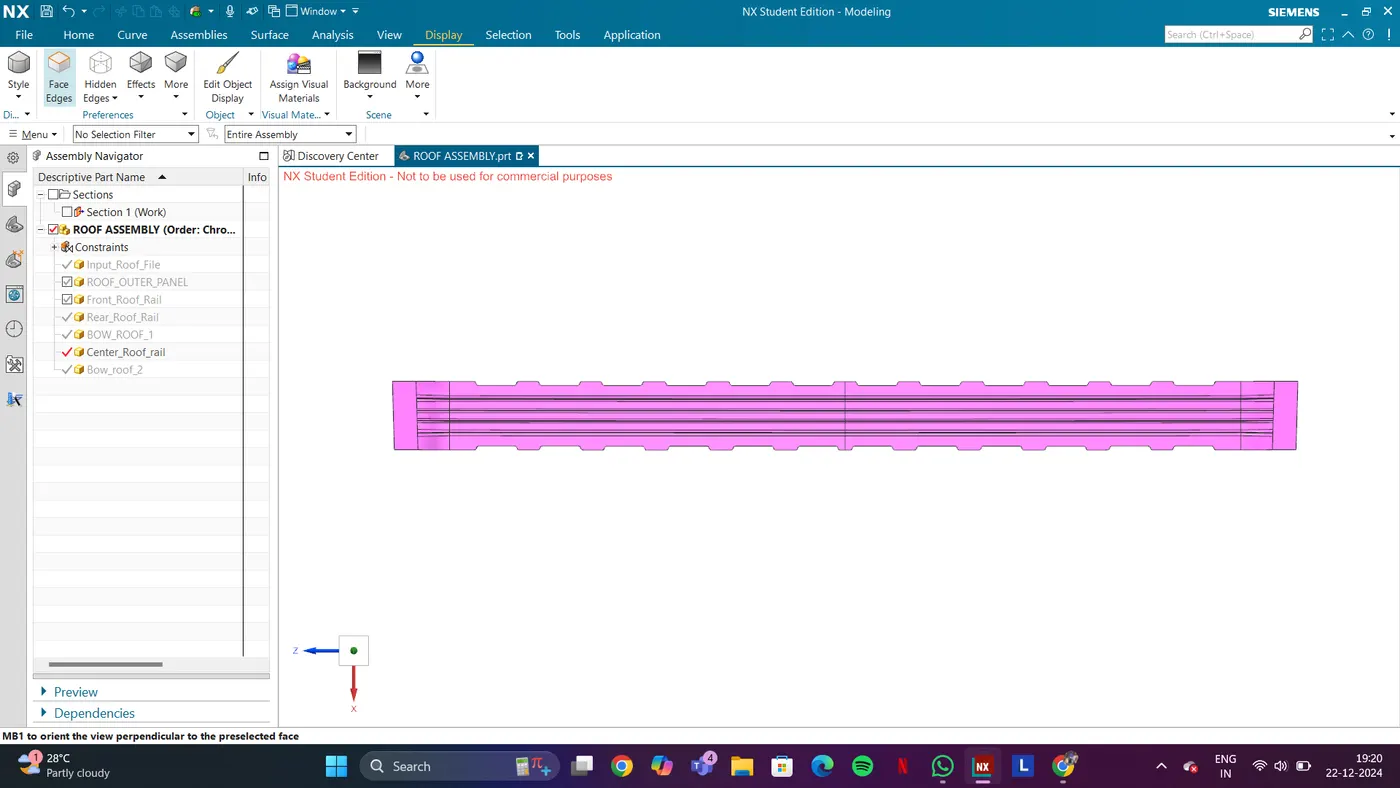
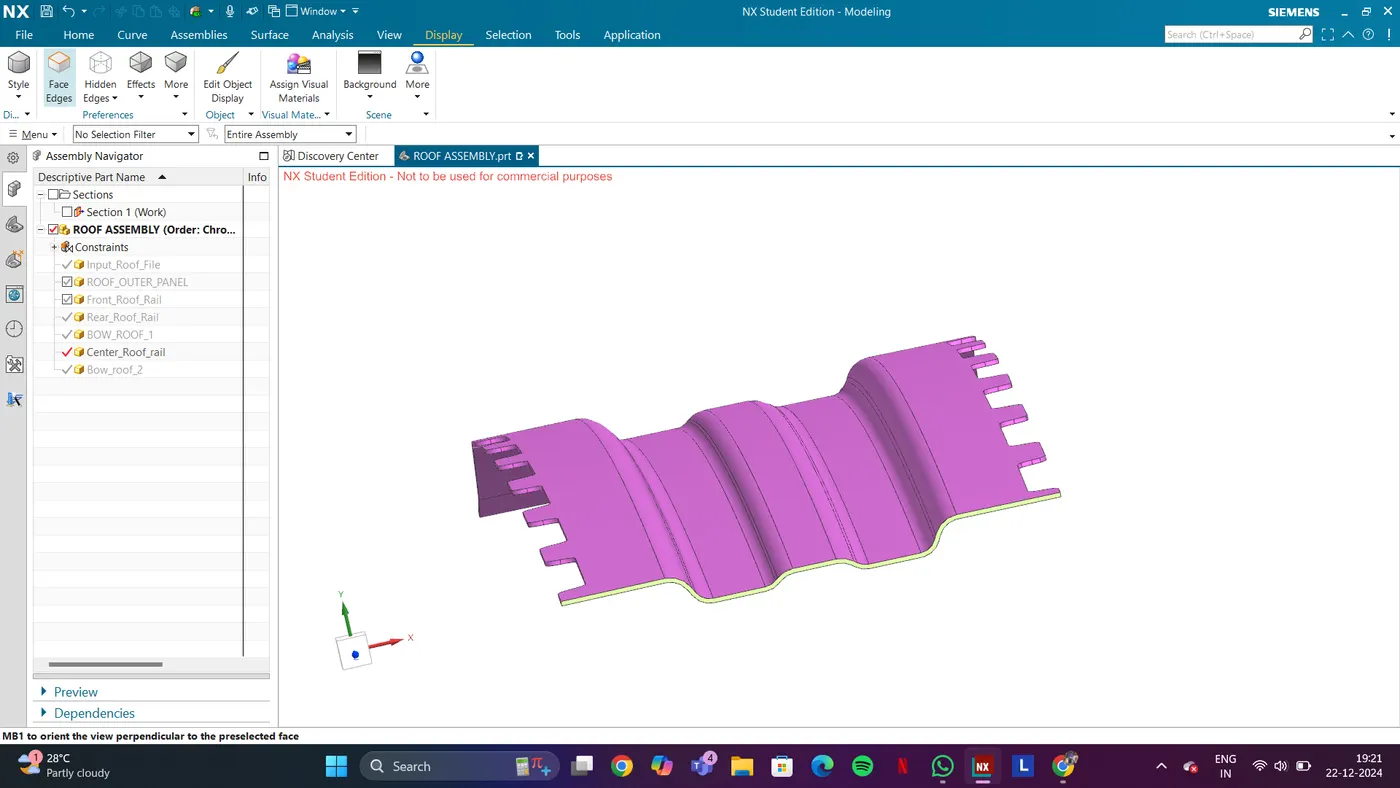
The center reinforcement also provides additional support to the roof structure. If sunroof is provided the center reinforcement is slightly moved backwards towards the rear rail. The center reinforcement aids in providing additional support during when bending and twisting action takes place.
Draft Analysis:
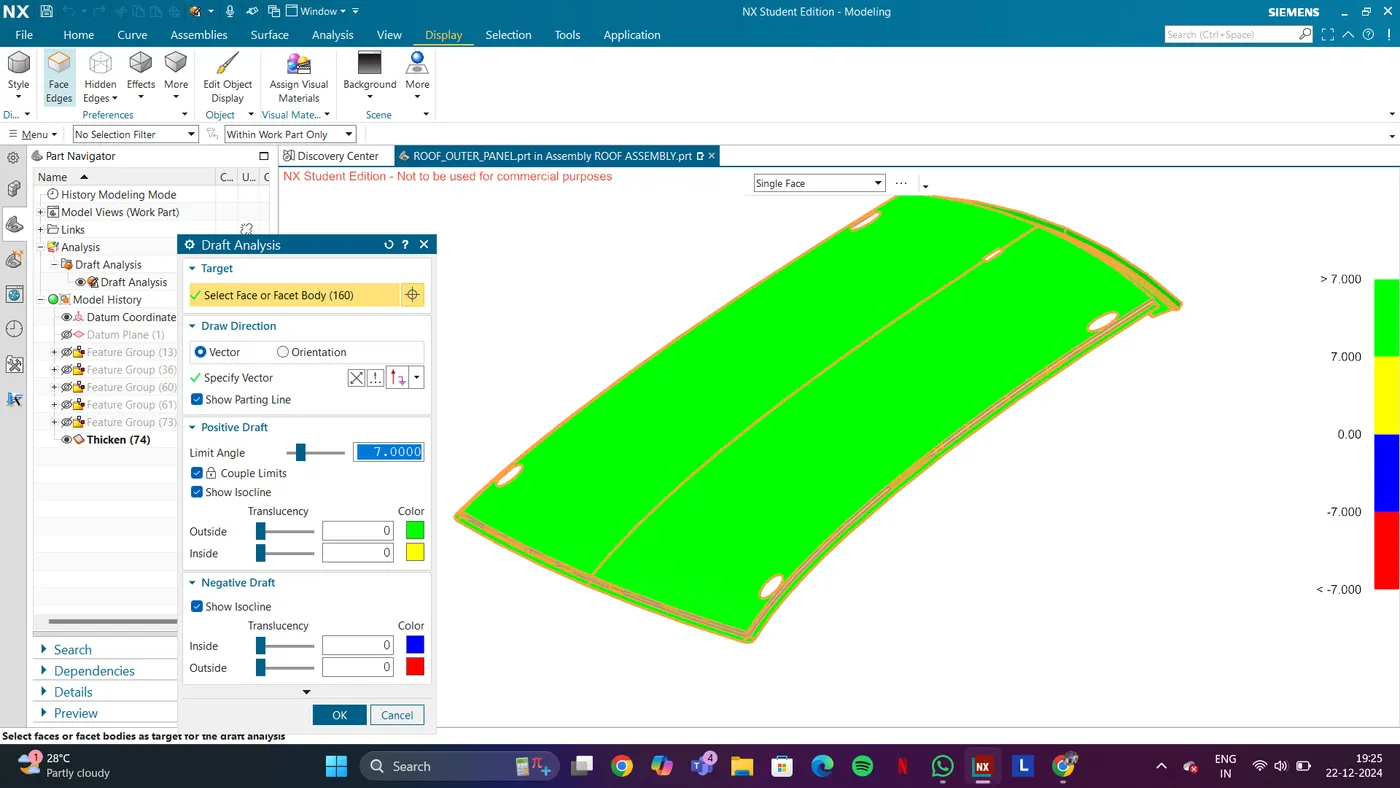
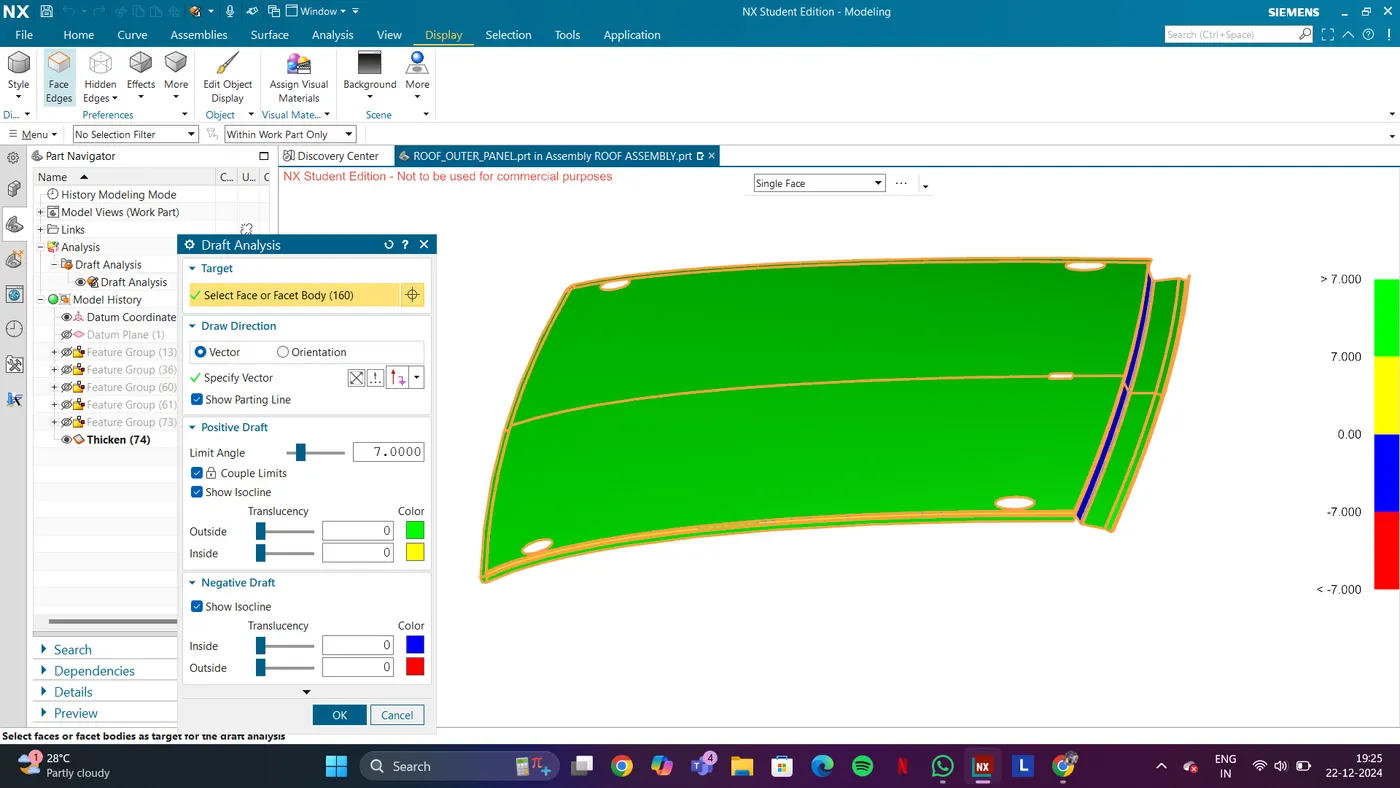
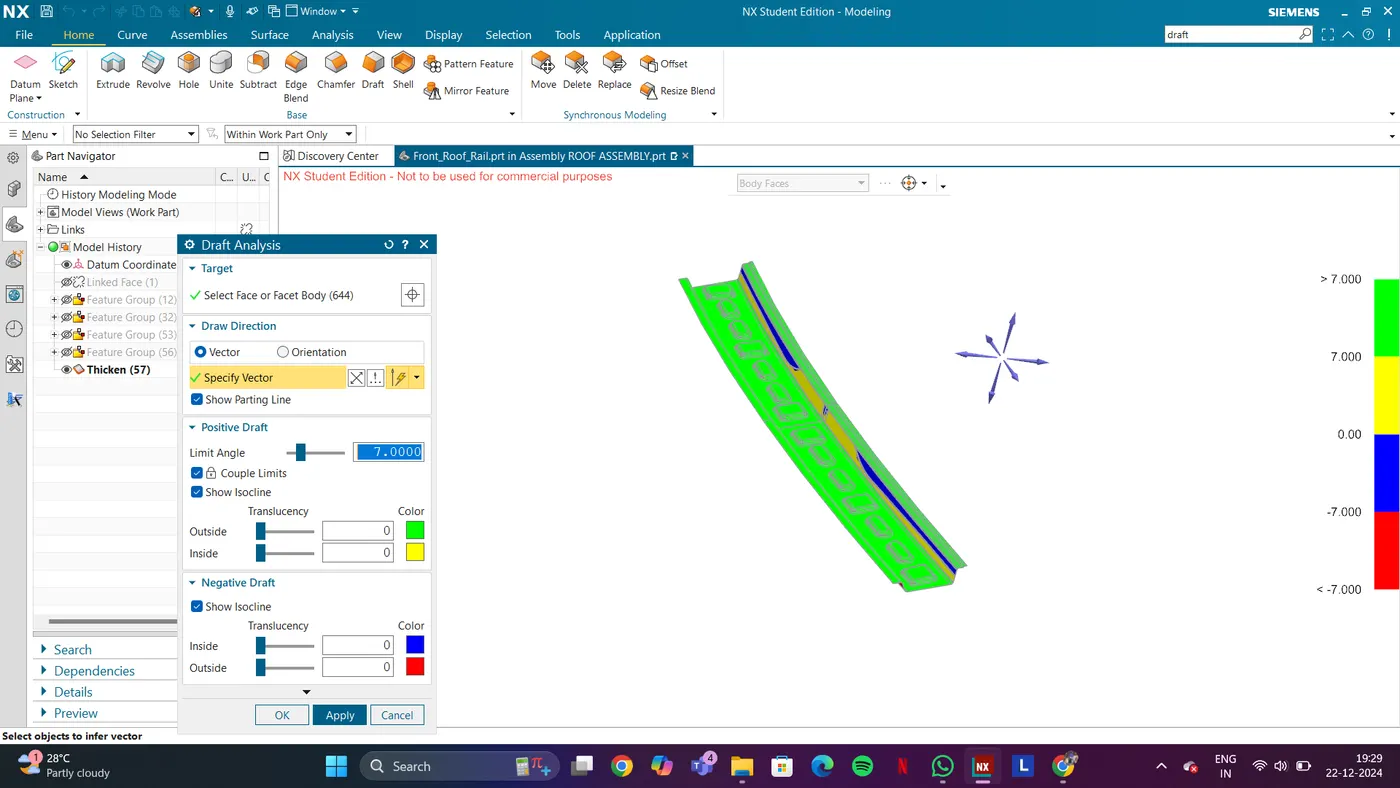
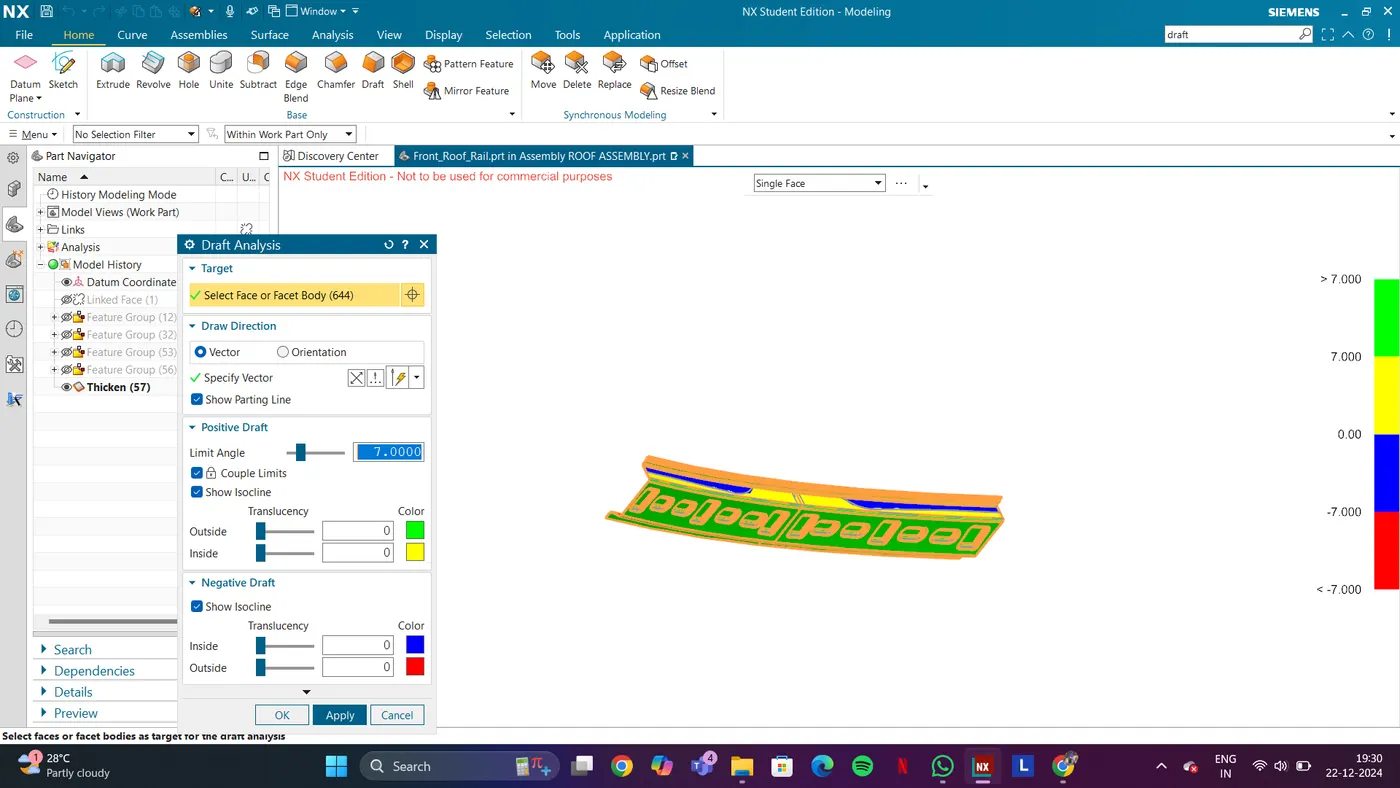
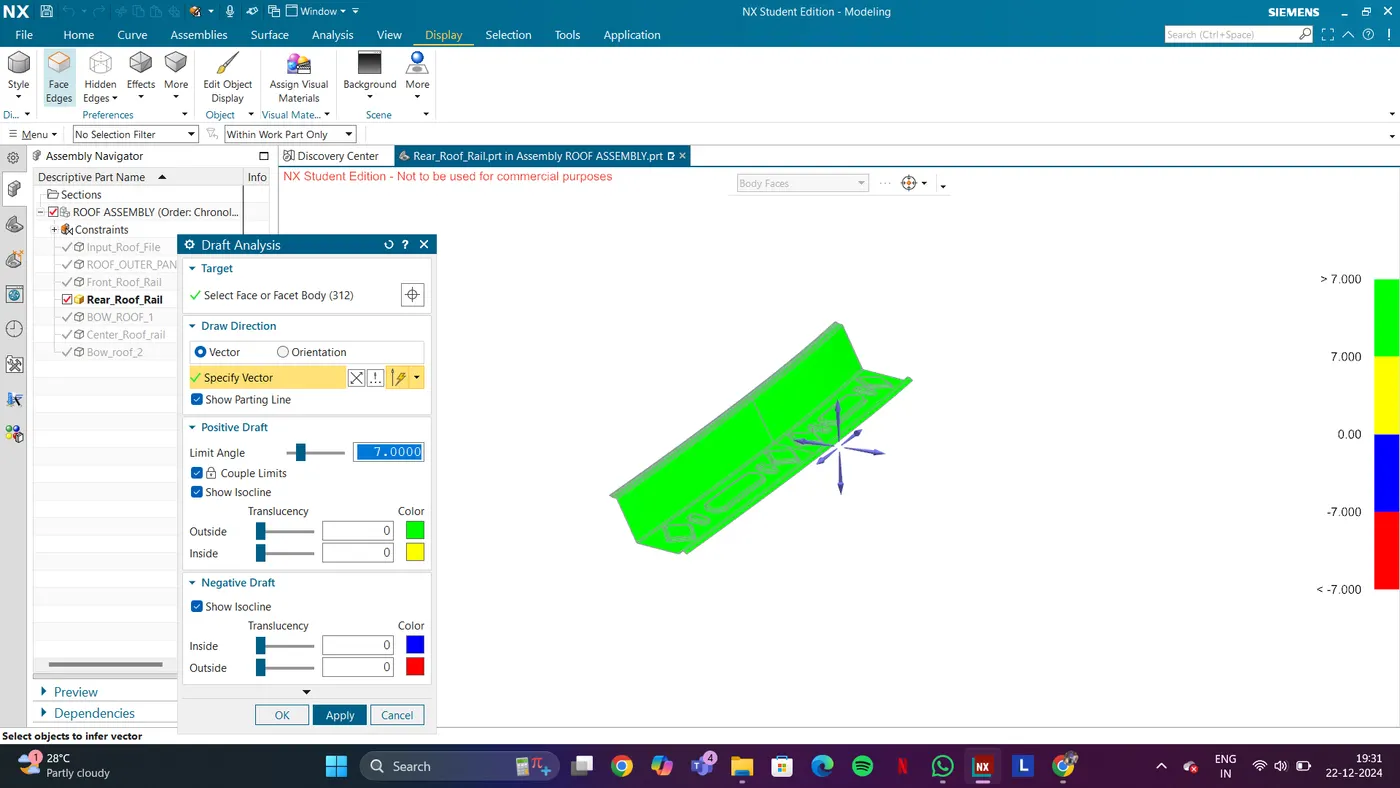
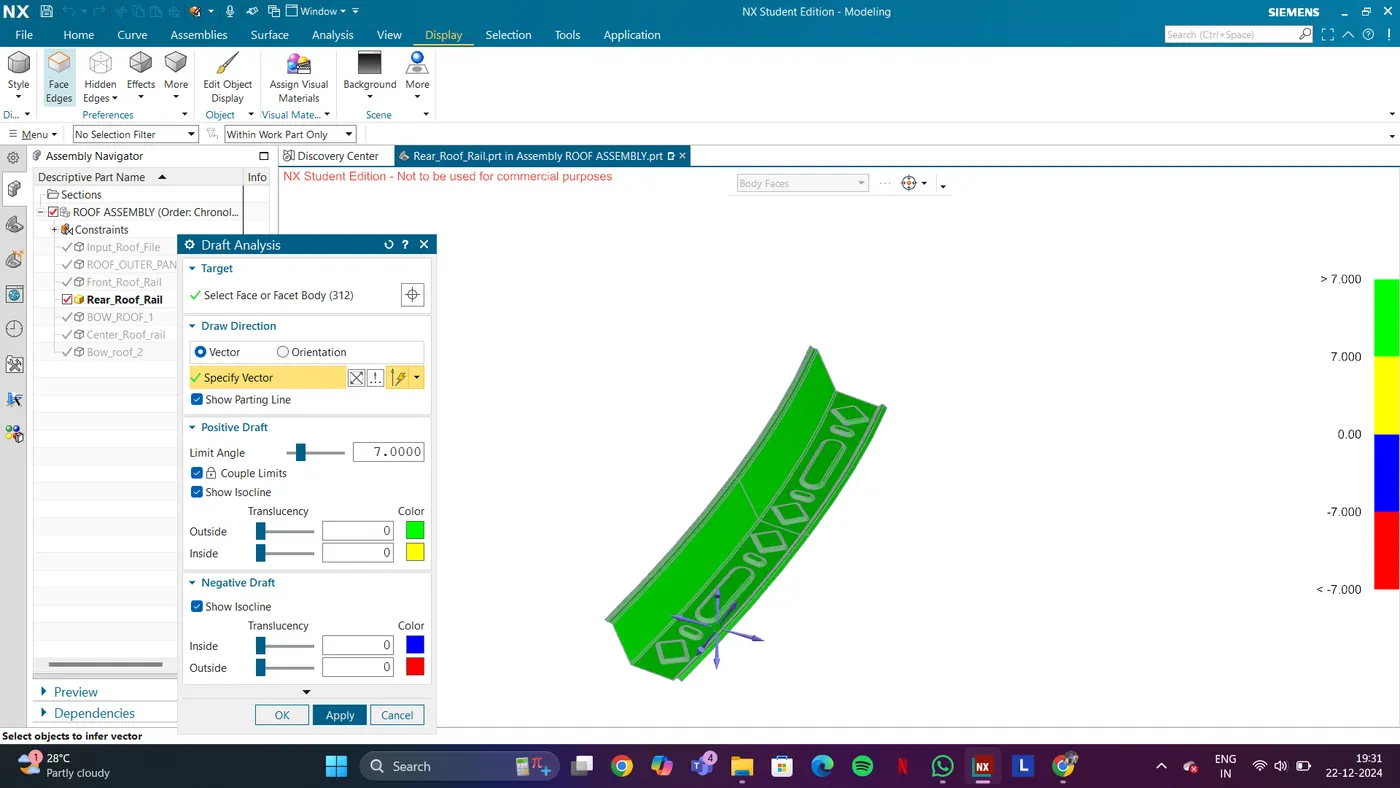
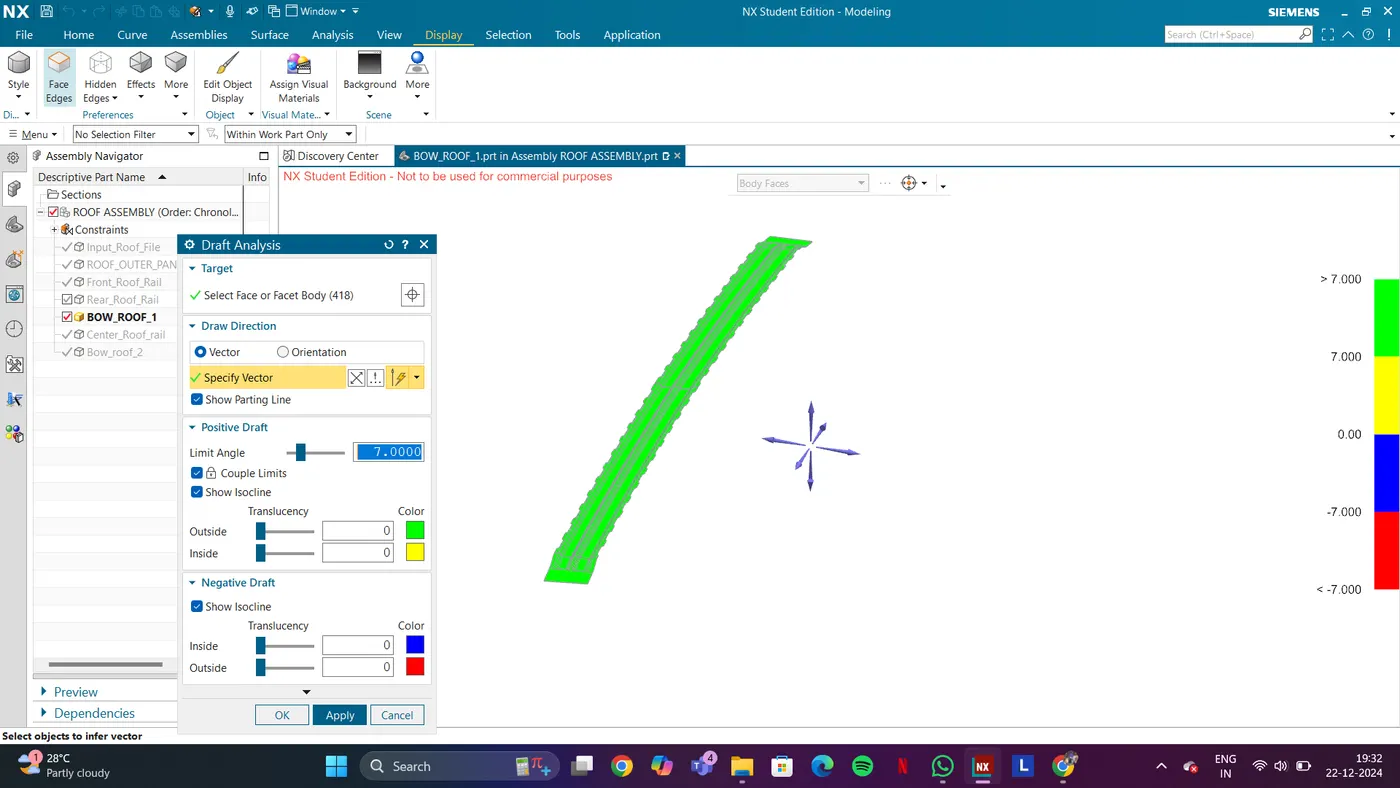
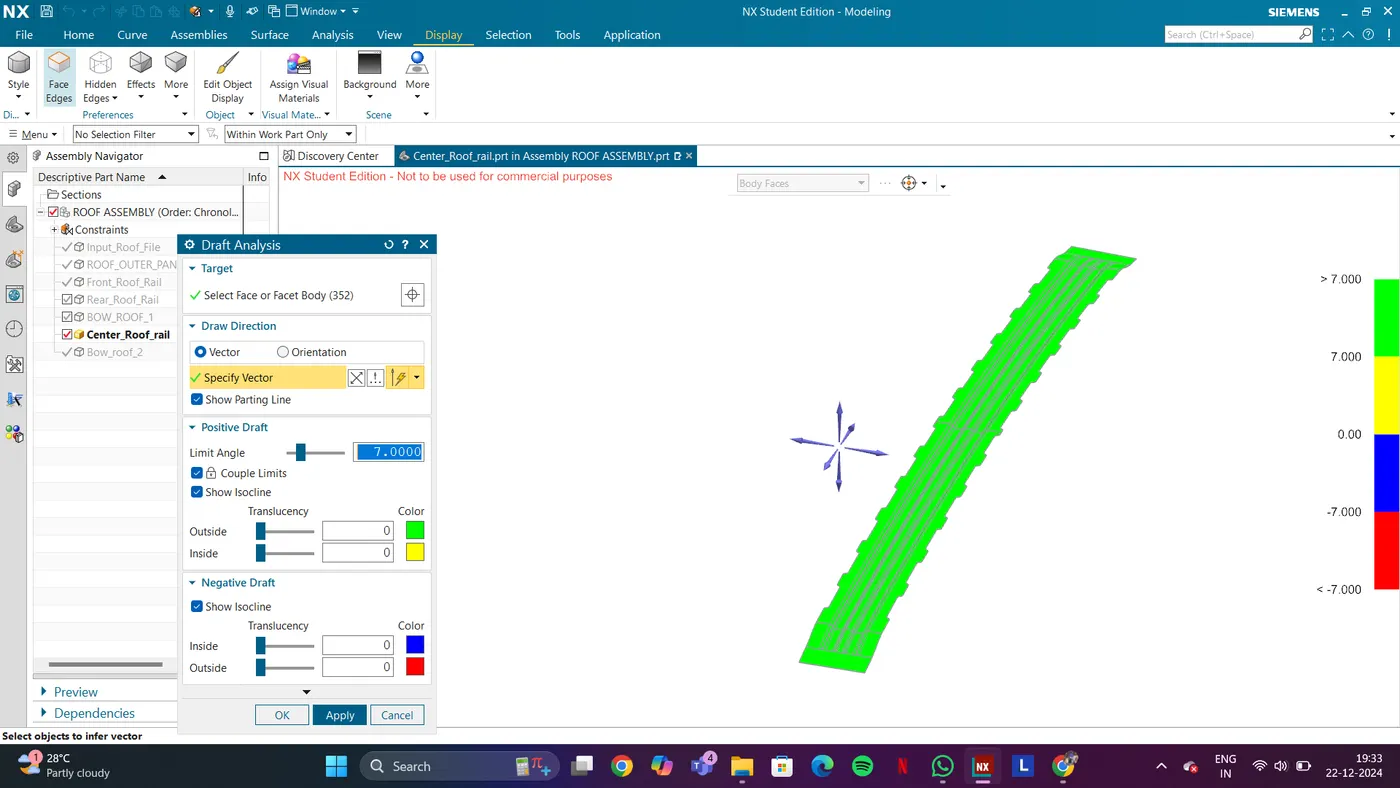
Draft analysis is done to check weather the part is feasible to manufacture and does not gets jammed with the pattern or mold. Minimum draft angle that is to be provided is 7 degrees.
Heat Distortion Criteria:
W = [1.73 x 10^(-3) x L] + [1.85 x 10^(-8) x (R^2)/t] + [ 1.10x10^(-3) x l] - 2.68
Where,
L = Roof Length in X-Direction[mm](Roof dimension in 0-Y)
R = Roof curvature
R = 2(Rx*Ry)/(Rx+Ry)
Rx = X curvature
Ry = Y curvature
t = Roof plate thickness [mm]
l = Bow Roof Span [mm]
Judgment Condition
OK< 2.7
| Description | Rx | Ry | R | L | T | I | r2/t | W | RESULT |
| Front rail - bow 1 | 5525.99 | 1073.04 | 1797.115 | 2033.7 | 0.75 | 379.65 | 4306164 | 1.335579028 | PASS |
| Bow1 - center rail | 4719.45 | 1073.04 | 1748.526 | 2033.7 | 0.75 | 433.42 | 4076456 | 1.390476433 | PASS |
| center rail - bow 2 | 3937.274 | 1073.04 | 1686.462 | 2033.7 | 0.75 | 433.5 | 3792206 | 1.385305815 | PASS |
| Bow2 - rear | 3310.21 | 1073.04 | 1620.71 | 2033.7 | 0.75 | 387.87 | 3502266 | 1.329748929 | PASS |
Snow Load Criteria:
Qr = [Iy x t2] / [α x s x [(Rx + Ry)/2]2 x 10-8]
Note: The Qr value given over here is correct. There was a typo error in the formula given in the video.
Where,
α = My x Lx2 x 10-12 , My = Y(Ly-Y)
t = Roof plate thickness [mm]
Ly = Distance between the front and rear roof Rails on the Vehicle along with 0Y[mm]
Length of Roof panel with the center point between Roof rail Front /Rear as the front and rear reference point.
Lx = Distance between the Left and Right end of the roof on the Roof BOW [mm]
The width of the roof panel is exposed on the surface.
Y = Distance front Front Roof Rail to Roof BOW[mm]
s = Distance for which Roof BOW bears divided load [mm]
s = L1/2 + L2/2
Iy = Geometrical moment of inertia of Roof BOW (Y cross-section )[mm4]
Rx = Lateral direction curvature radius of roof panel Y cross-section on Roof BOW [mm]
Roof panel curvature Radius of the Length Lx in Front view
Ry = Longitudinal Direction curvature radius of the Roof panel X cross-section on Roof BOW [mm]
Roof panel X curvature radius of length s in Side view
Judgment condition
Qr ≥ 3.1
250 ≤ s ≤ 380
| Description | Rx | Ry | Rx+Ry/2 | squar value | Ly | Lx | L1 | L2 | s | Y | My | Alpha | Iy | Qr | Result |
| Front rail - bow 1 | 5525.99 | 1073.04 | 3299.515 | 10886799.2 | 1922.32 | 1129.32 | 379.65 | 433.42 | 406.535 | 379.65 | 585674.6655 | 0.746948 | 725.36 | 12.34206 | pass |
| Bow1 - center rail | 4719.45 | 1073.04 | 2896.245 | 8388235.1 | 1922.32 | 1090.04 | 433.42 | 433.5 | 433.46 | 813.07 | 901897.8975 | 1.071624 | 1737.81 | 25.08782 | pass |
| center rail - bow 2 | 3937.274 | 1073.04 | 2505.157 | 6275811.85 | 1922.32 | 1069.02 | 433.5 | 387.87 | 410.685 | 1246.57 | 842369.6775 | 0.962663 | 730.15 | 16.55318 | pass |
Result:
From the given styling the roof is developed and reinforcements and bow roofs are created to provide additional strength to the roof surface.