Roof Design
Roof Design
Objective:
- Design of automobile roof with proper Bow roofs and reinforcements for the input class A Surface
- Draft Analysis of all sheet metal components
- Perform Heat distribution & Snow Load calculations
Description:
A car roof is the uppermost part of a vehicle's body that covers the passenger compartment. It can be made of various materials, including metal, fiberglass, or fabric, and can be fixed or retractable. The design of a car roof can vary greatly depending on the type of car, its purpose, and its intended use.
A typical car roof consists of two main parts: the roof panel and the roof rails. The roof panel is the flat surface that covers the passenger compartment, while the roof rails are the support structures that attach the roof panel to the car's body.
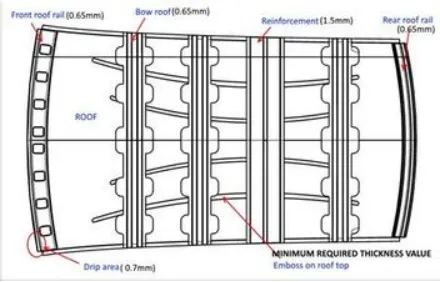
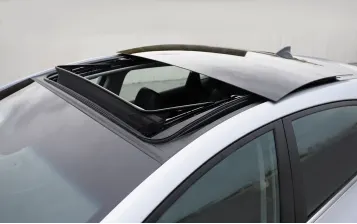
Some car roofs have additional features such as a sunroof or moon-roof, which allow light and air into the passenger compartment. A convertible car has a retractable roof that can be lowered or removed entirely, while a hardtop car has a fixed roof that cannot be removed.
Car roofs can also be designed with different shapes and styles. For example, some cars have a sloping roofline, which gives them a sporty and aerodynamic look, while others have a boxy roofline that maximizes interior space.
Materials used for Roof:
Steel: Steel is a common material used for car roofs due to its strength, durability, and affordability. However, it can add weight to the vehicle, affecting its fuel efficiency.
Aluminum: Aluminum is a lightweight material that can be used to make car roofs, which can help improve fuel efficiency. It is also resistant to corrosion, making it a good choice for cars in areas with harsh weather conditions.
Fiberglass: Fiberglass is a lightweight and durable material that is commonly used for sports cars and other high-performance vehicles. It can be molded into different shapes and designs, making it a popular choice for car roofs.
Carbon fiber: Carbon fiber is a strong and lightweight material that is often used for high-end sports cars and luxury vehicles. It is expensive, but its high strength-to-weight ratio can improve a car's performance and fuel efficiency.
Glass: Glass can be used to make sunroofs and moonroofs, which allow light and air into the passenger compartment. Tempered glass is commonly used for car roofs due to its strength and resistance to breakage.
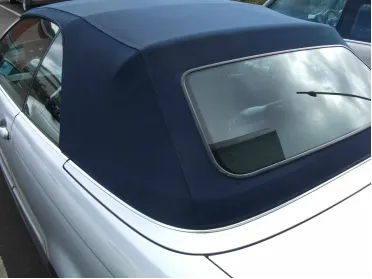
Fabric: Some convertible cars have fabric roofs that can be raised or lowered, providing an open-air driving experience. These roofs are typically made of vinyl or canvas and are lightweight and easy to fold.
Different types of roofs car:
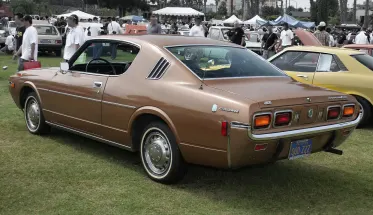
Hardtop Roof
Convertible Roof
Sunroof
Targa Roof
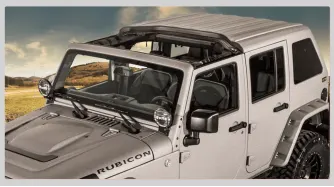
Panoramic Roof
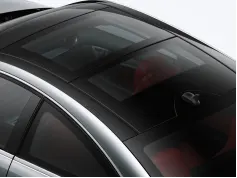
Retractable Hardtop
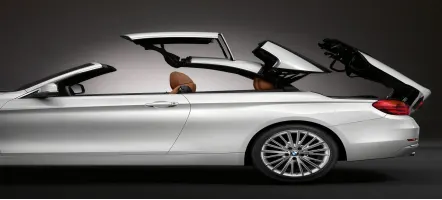
Roof Crush Test:
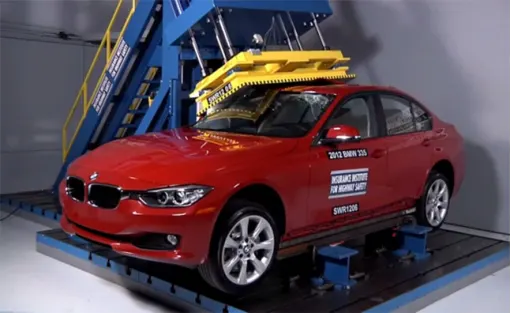
A roof crush test is a safety test that measures a vehicle's ability to withstand a rollover accident without the roof collapsing. During the test, the vehicle is placed on a specialized machine that applies a force to the roof to simulate the weight of the car in a rollover accident.
The roof crush test is designed to ensure that a vehicle's roof can withstand the weight of the car and protect the occupants from serious injury in the event of a rollover accident. The National Highway Traffic Safety Administration (NHTSA) requires that all passenger vehicles sold in the United States pass a roof crush test to meet federal safety standards.
The NHTSA's roof crush test measures a vehicle's strength-to-weight ratio, which is calculated by dividing the maximum force applied to the roof by the weight of the vehicle. The test measures both static and dynamic forces to ensure that the roof can withstand the weight of the car in both scenarios.
The results of the roof crush test are used to rate a vehicle's safety and assign it a star rating based on its performance. Vehicles that perform well in the roof crush test are more likely to protect the occupants in a rollover accident and are considered safer.
National Highway Traffic Safety Administration testing parameters for Car Roof
Roof Crush Resistance Test:
The roof crush resistance test measures the ability of a vehicle's roof to withstand the weight of the car in a rollover accident. During the test, a metal plate is pushed against the roof of the vehicle at a rate of 0.5 inches per second until a specified force is reached. The force varies based on the weight of the vehicle, and the roof must not deform more than 5 inches during the test.
Head Impact Criterion Test:
The head impact criterion (HIC) test measures the likelihood of head injuries in a rollover accident. During the test, a headform is dropped onto the roof of the vehicle from a specified height. The roof must provide a certain level of cushioning to reduce the likelihood of head injuries.
Static Loading Test:
The static loading test measures the ability of a vehicle's roof to support a static load without collapsing. During the test, a weight is placed on the roof of the vehicle and held for a specified period of time. The roof must not deform more than 1 inch during the test.
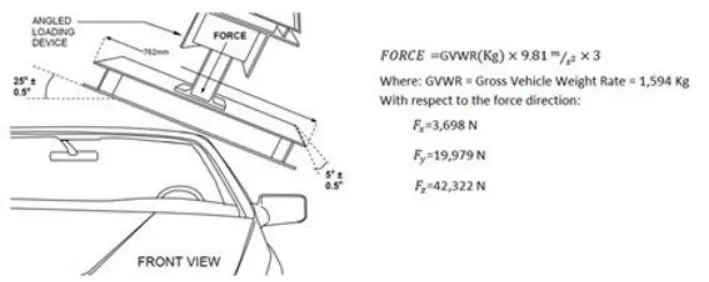
Design Methodology used in Roof Design:
Inputs: Class A Surface
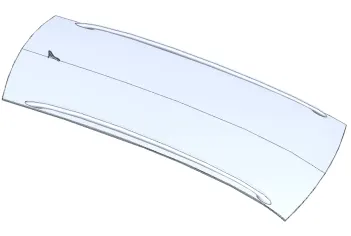
Roof Top:
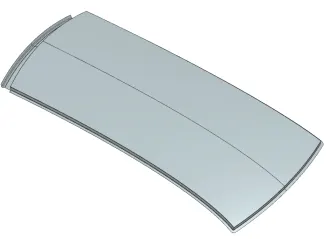
Roof Rails:
Roof rails are structural components that run along the length of a car's roof, from the front, middle to the rear. They are typically located on either side of the roof, and may be integrated into the design of the car's body or added as an aftermarket accessory.
The primary purpose of roof rails is to provide a mounting point for various types of cargo carriers and roof racks, allowing the driver to transport items such as bikes, kayaks, luggage, or skis on the roof of the car. Roof rails may also serve as attachment points for other types of accessories, such as awnings or cargo nets.
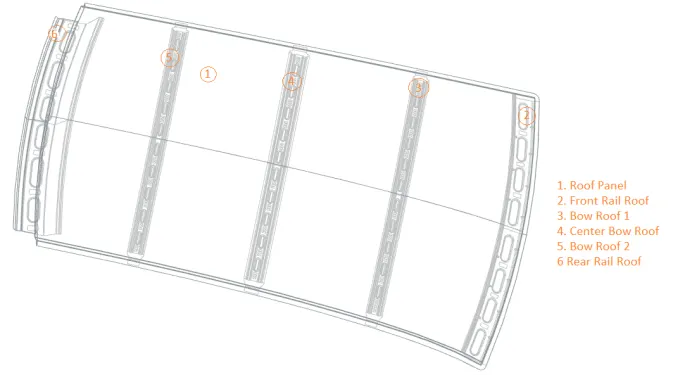
Front Roof Rail:
The front roof rail is a structural component of a car's roof that runs along the front edge of the roofline, connecting the A-pillar (the vertical support that connects the roof to the front of the car) to the B-pillar (the vertical support that connects the roof to the center of the car). The front roof rail provides support for the roof and helps to distribute the force of an impact in the event of a collision or rollover.
Master Section Input:
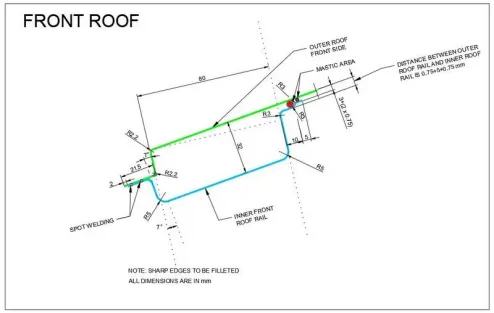
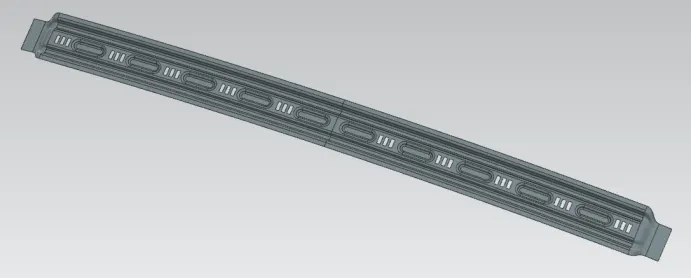
The Front rail roof is designed according to the given master section. Darts and Embosses are added in the front rail roof model to increase the strength of front rail. 5mm gap has been provided between the roof surface and the rail roof flange & thickness of 0.75mm maintained.
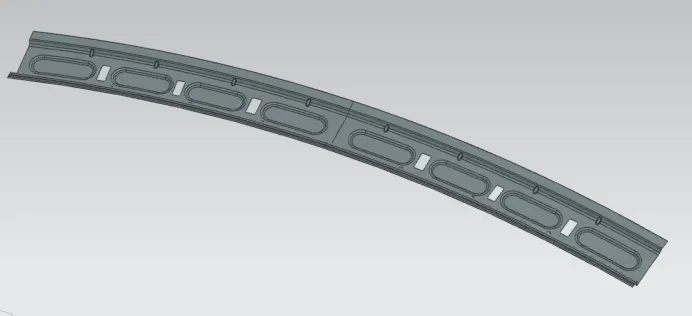
Rear Roof Rail:
The rear roof rail is a structural component of a car's roof that runs along the rear edge of the roofline, connecting the C-pillar (the vertical support that connects the roof to the rear of the car) to the roof panel. Like the front roof rail, the rear roof rail provides support for the roof and helps to distribute the force of an impact in the event of a collision or rollover.
Master Section Input:
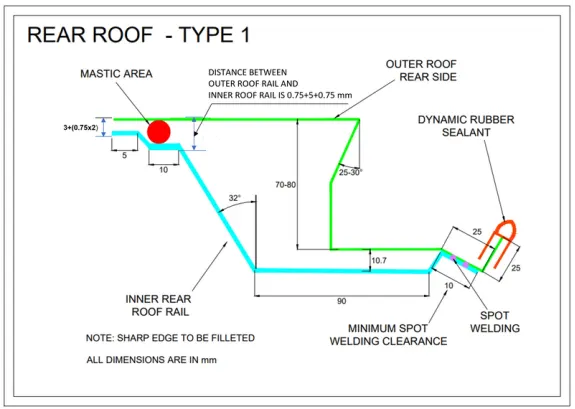
Embossing are done on the surface to provide the strength to the rear rail and maintaining the thickness of 0.75mm.
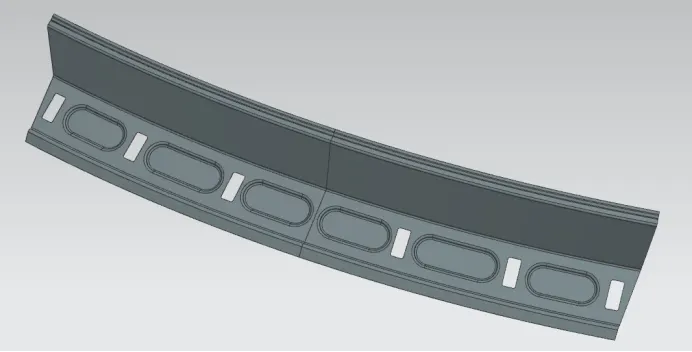
Bow Roof-1 & Bow Roof-2:
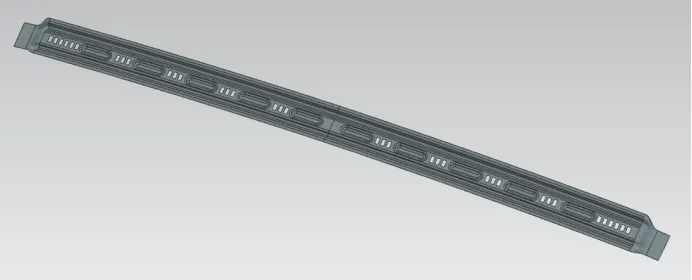
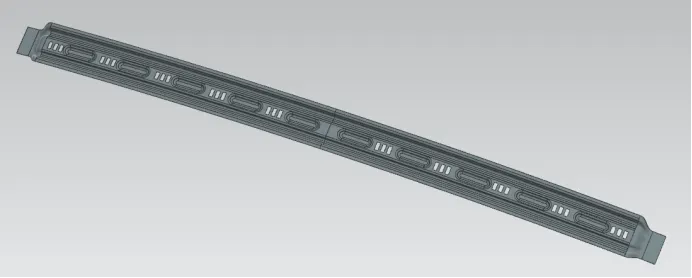
Bow roof is a type of Center roof rail which is been added to increase the additional strength of roof.
Master Section of Bow Roof:
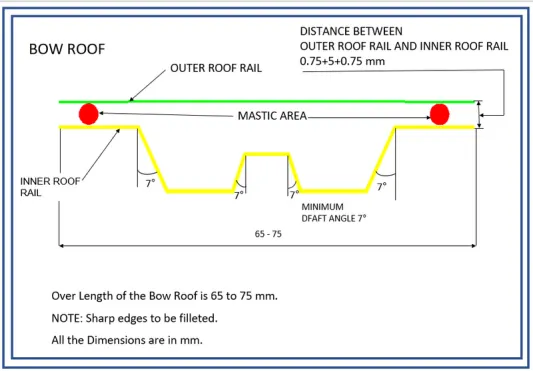
The rear side of the rail is spot welded with the ditch area of the roof and the other side is attached with the mastic sealant. Thickness of 0.75mm is added for both Bow roofs.
Bow Roof-1
Bow Roof-2
Center Roof Rail & Reinforcement:
The design and construction of the center roof rail may vary depending on the make and model of the car. Some cars may feature a single center roof rail that runs along the center of the roofline, while others may feature multiple center roof rails or additional reinforcement components in the center roof section i.e. Bow roof.
Master Section of Center Roof Rail:
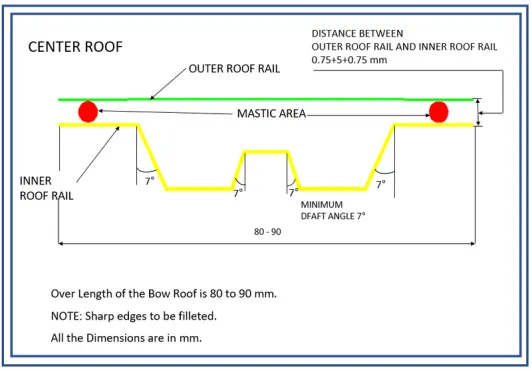
The rear side of the rail is spot welded with the ditch area of the roof and the other side is attached with the mastic sealant. Thickness of 0.75mm is maintained.
Draft Analysis:
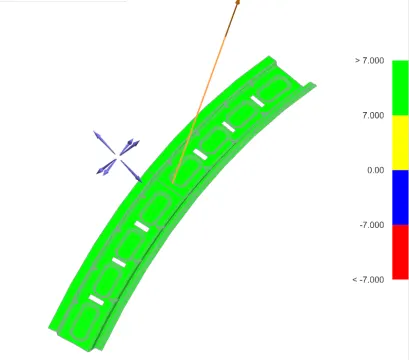
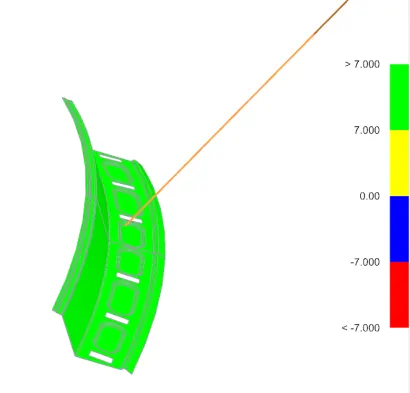
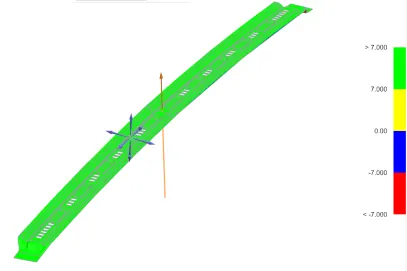
We have performed on each and every sheet metal component with minimum 7 degree draft angle and the results are satisfied.
Front Fender
Rear Fender
Bow Roof-1
Bow Roof-2
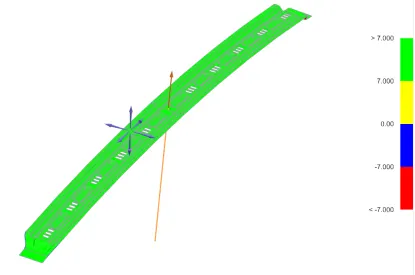
Center Bow Roof
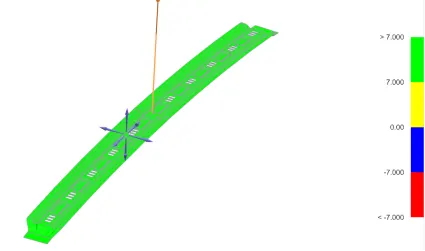
Roof Top
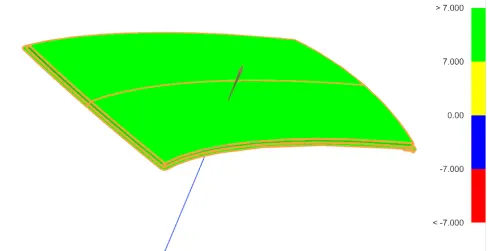
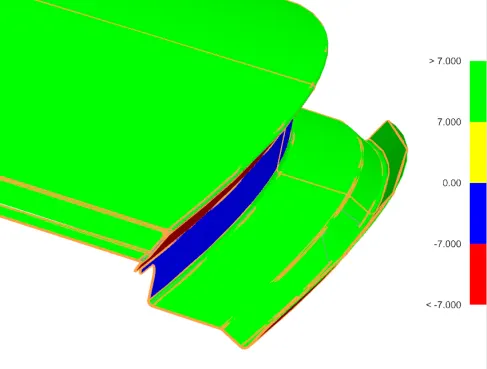
Curvature Study:
In this study we are going to perform two types of calculations
- Heat Distribution Study
- Snow Load Distribution Study
Heat Distortion Calculation:
A heat distortion study is essential for automotive roof design because the roof panel is exposed to high temperatures, especially when the vehicle is parked in the sun or when driving under hot weather conditions. Heat can cause the material of the roof panel to expand and deform, leading to various problems such as leaks, wind noise, and structural failure. Therefore, understanding the behavior of the roof panel under high temperatures is crucial for ensuring the safety, comfort, and durability of the vehicle.
A heat distortion study can help designers and engineers predict how the roof panel will behave under different thermal conditions, including how it will deform, how it will affect the overall structural integrity of the vehicle, and how it will impact the vehicle's aerodynamics. This information is used to optimize the design of the roof panel, including the choice of materials and structural components, to ensure that it can withstand the high temperatures it is likely to be exposed to during its life cycle.
In addition, a heat distortion study can help designers and engineers identify potential issues with the roof panel's design before the vehicle goes into production. This can save time and costs associated with manufacturing and testing prototypes, and ultimately improve the overall quality of the vehicle.
HEAT DISTORTION CRITERIA:
W = [1.73 x 10^(-3) x L] + [1.85 x 10^(-8) x (R^2)/2] + [1.10 x 10^(-3) x I]-2.68
Where,
L= Roof Length in X- direction [mm](Roof Dimension in 0-Y)
R = Roof curvature
R = 2(RX*RY)/(RX+RY)
RX = X Curvature
RY = Y Curvature
t = Roof plate thickness [mm]
I = Bow roof span [mm]
Thickness for the Roof(t):
Roof Outer Panel, t= 0.75mm
Front Roof Rail, t = 0.75mm
Rear Roof Rail, t = 0.75mm
Bow Roof Rail Front, t = 0.75mm
Bow Roof Rail Rear, t = 0.75mm
Reinforcement roof rail, t = 0.75mm
Judgement Condition: OK<2.7>3.1
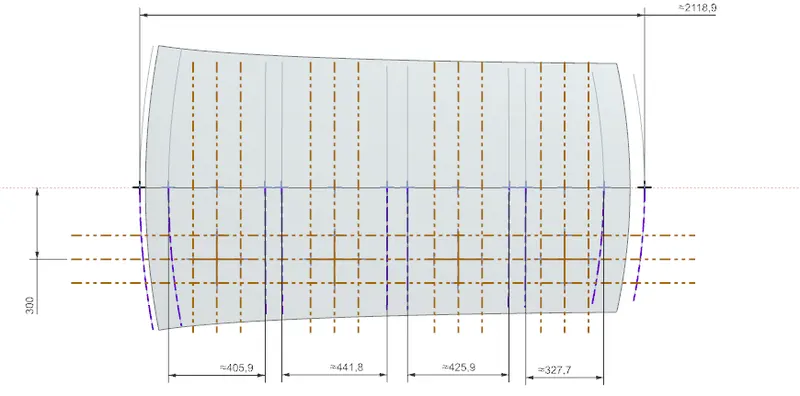
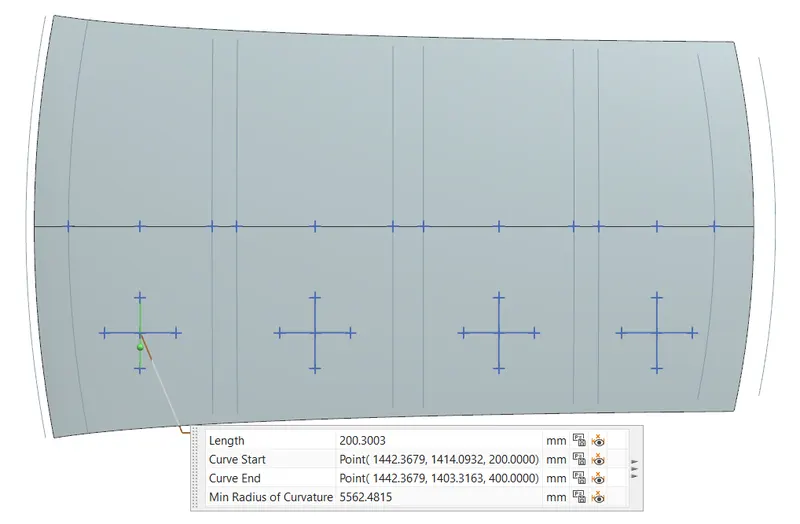
Ex. of Checking the radius of Curvature
| Location | Rx (X - Curvature) (mm) | Ry (Y - Curvature) (mm) | R= 2*Rx*Ry/Rx+Ry (mm) | L (Roof Length in X - Direction) (mm) | I (Bow Roof Span) (mm) |
t (Roof Plate Thickness) (mm) | W | Result |
| Between Front Rail Roof & Bow Rail Roof 1 | 5562.481523 | 1973.466925 | 2913.335563 | 2118.925735 | 405.8686729 | 0.75 | 1.195100449 | OK |
| Between Bow Rail Roof 1 & Center Rail Roof | 4755.186613 | 5670.290595 | 5172.576639 | 2118.925735 | 441.8104872 | 0.75 | 1.645711732 | OK |
| Between Center Rail Roof & Bow Rail Roof 2 | 3768.080467 | 10068.42655 | 5483.846662 | 2118.925735 | 425.8646899 | 0.75 | 1.727531685 | OK |
| Between Bow Rail Roof 2 & Rear Roof Rail | 3114.397093 | 13935.22154 | 5091.001082 | 2118.925735 | 327.6760007 | 0.75 | 1.625059391 | OK |
Snow Load Calculation:
A snow load study is important for automotive roof design because heavy snow loads can cause the roof of a vehicle to deform, leading to various issues such as leaks, cracks, and structural damage. Therefore, it is necessary to understand the impact of snow loads on the vehicle's roof and design it to withstand the expected snow loads in the region where it will be used.
A snow load study involves calculating the weight of snow that the roof is likely to bear based on the expected snowfall in the region, the roof's dimensions, and its structural properties. This calculation takes into account the density of snow, which varies depending on the type of snow and the temperature conditions.
The snow load study helps designers and engineers to determine the appropriate structural components and materials needed to support the weight of the snow load. For example, if the expected snow load is high, the roof design may require additional supports or reinforcements to ensure that it can withstand the weight of the snow without deforming or collapsing
Qr = [IY x t2] / [α x s x [(RX + RY)/2]2 x 10-8]
Where,
α = My x LX2 x10-12, My = Y(Ly–Y)
Judgement condition = Qr > 3.1
250 < s < 380
t = Roof plate thickness[mm]
LY = Distance between the front and rear roof rails on the vehicle along with 0Y[MM],
Length of roof panel with the center point between roof rails front/ rear as the front and rear reference point.
LX= Distance between the left and right end of the roof on the roof bow[mm],
With of the roof panel exposed on the surface.
Y = Distance between Front roof rails to roof bow [mm],
s = Distance for which roof bow bears divided load [mm],
s = L1/2 + L2/2
Iy = Geometrical moment of inertia of roof bow (Y cross – section) [mm4],
RX = Lateral direction curvature radius of roof panel Y cross section on roof bow [mm4]
Judgment condition
Qr ≥ 3.1
250 ≤ s ≤ 380
| Location | Rx (X - Curvature) (mm) | Ry (Y - Curvature) (mm) | Ly (Roof Length in X - Direction) (mm) | Lx (Roof Length in Y - Direction) (mm) | Iy(mm4) | L1 | L2 | Y(mm) | My | t (Roof Plate Thickness) (mm) | Rx+Ry/2 | ἀ | S | Qr | Result |
| Between Front Rail Roof & Bow Rail Roof 1 | 5562.481523 | 1973.466925 | 2118.925735 | 1124.258297 | 677.766 | 500.934923 | 519.6377758 | 500.934923 | 810508.1028 | 0.75 | 3767.974224 | 3.639056782 | 510.2863494 | 1.44605122 | OK |
| Between Bow Rail Roof 1 & Center Rail Roof | 4755.186613 | 5670.290595 | 2118.925735 | 1103.190723 | 864.393 | 519.6377758 | 503.7480804 | 1020.572699 | 1120949.122 | 0.75 | 5212.738604 | 5.032889236 | 511.6929281 | 0.694824439 | OK |
| Between Center Rail Roof & Bow Rail Roof 2 | 3768.080467 | 10068.42655 | 2118.925735 | 1083.884517 | 685.36 | 503.7480804 | 448.5009808 | 1524.320779 | 906368.6894 | 0.75 | 6918.253507 | 4.06945608 | 476.1245306 | 0.415710902 | OK |
Snow load calculation when sun roof is present:
| Location | Rx (X - Curvature) (mm) | Ry (Y - Curvature) (mm) | Ly (Roof Length in X - Direction) (mm) | Lx (Roof Length in Y - Direction) (mm) | Iy(mm4) | L1 | L2 | Y(mm) | My | t (Roof Plate Thickness) (mm) | Rx+Ry/2 | ἀ | S | Qr | Result |
| Between Front Rail Roof & Bow Rail Roof 1 | 5562.481523 | 1973.466925 | 2118.925735 | 1124.258297 | 677.766 | 500.934923 | 519.6377758 | 500.934923 | 810508.1028 | 0.75 | 3767.974224 | 3.639056782 | 510.2863494 | 1.44605122 | OK |
| Between Bow Rail Roof 1 & Center Rail Roof when sun roof Present | 4755.186613 | 5670.290595 | 2118.925735 | 1103.190723 | 3525.844 | 519.6377758 | 503.7480804 | 1020.572699 | 1120949.122 | 0.75 | 5212.738604 | 5.032889236 | 511.6929281 | 2.834176793 | OK |
| Between Center Rail Roof & Bow Rail Roof 2 | 3768.080467 | 10068.42655 | 2118.925735 | 1083.884517 | 685.36 | 503.7480804 | 448.5009808 | 1524.320779 | 906368.6894 | 0.75 | 6918.253507 | 4.06945608 | 476.1245306 | 0.415710902 | OK |
Result: The roof model has passed both the criteria.