Roof Design
Roof Design
The roof is the top section of the vehicle's body. It provides protection, safety, and structural support to the car. It also helps with passenger comfort, provides a mounting area for accessories, and improves aerodynamic performance.
Objective
This project aims to create an assembly for a roof styling design that includes developing essential flanges for the outer roof, designing reinforcements, conducting a curvature study, and ensuring compliance with specified load criteria. Additionally, the project aims to perform draft analysis and suggest design remedies if necessary.
We are going to design a car roof based on the given data. The roof is not only one panel it also has reinforcements like front roof rail, rare roof rail, bow roof 1, and bow roof 2. Front roof rail and rare roof rail have their functionality, Front roof rail is connected to the windshield glass and body outer side whereas rare roof rail is connected to the back door and body outer side. These designs are considered as per the design concept sheet. to which region we are going to present the roof what is going to be its material where we are going to produce the part and what thickness of the part. the roof is the same for all cars but it is different from one another some cars have a large roof so they have more roofs and some cars have sunroofs these will all be in the design concept sheet.
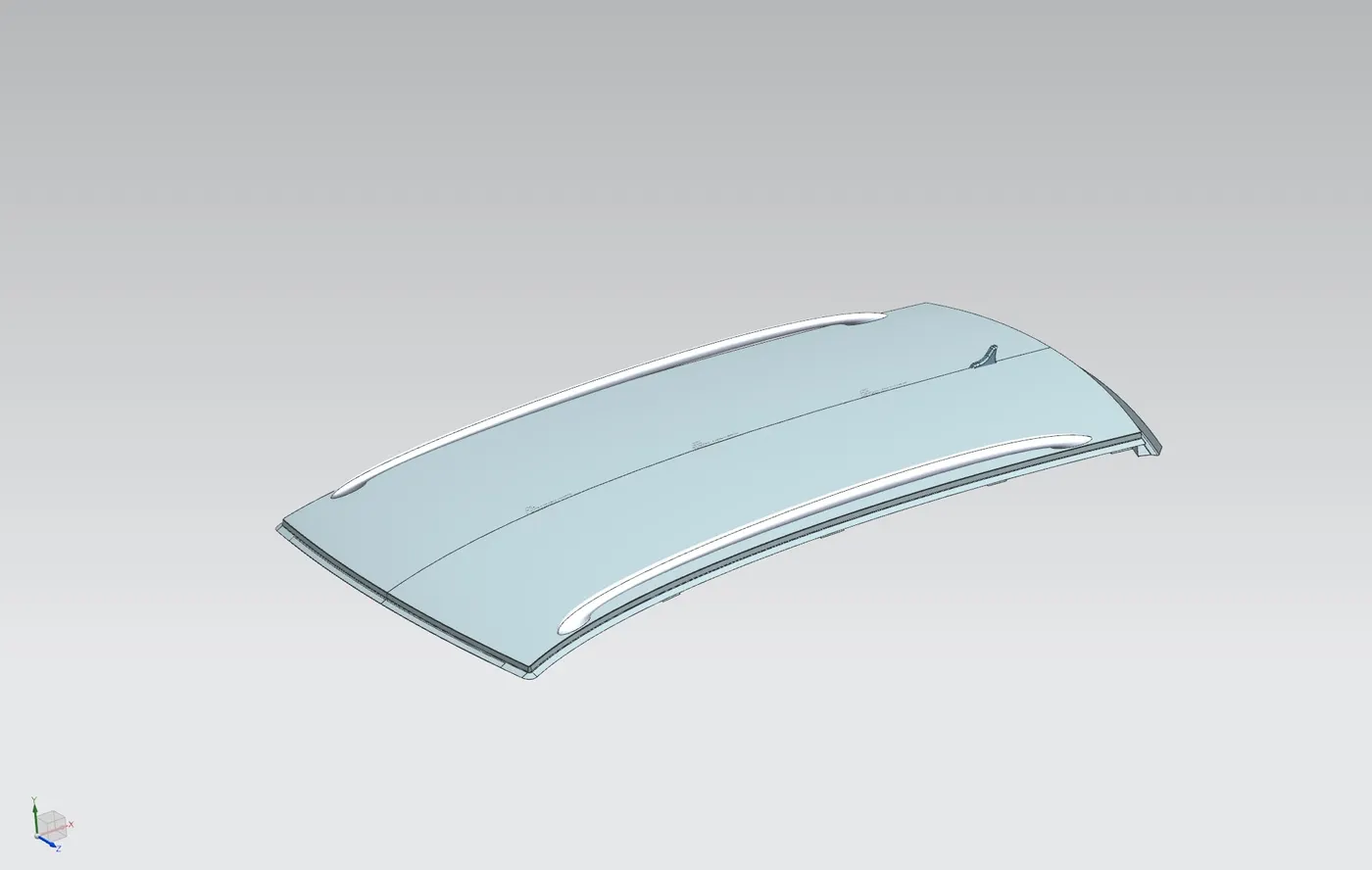
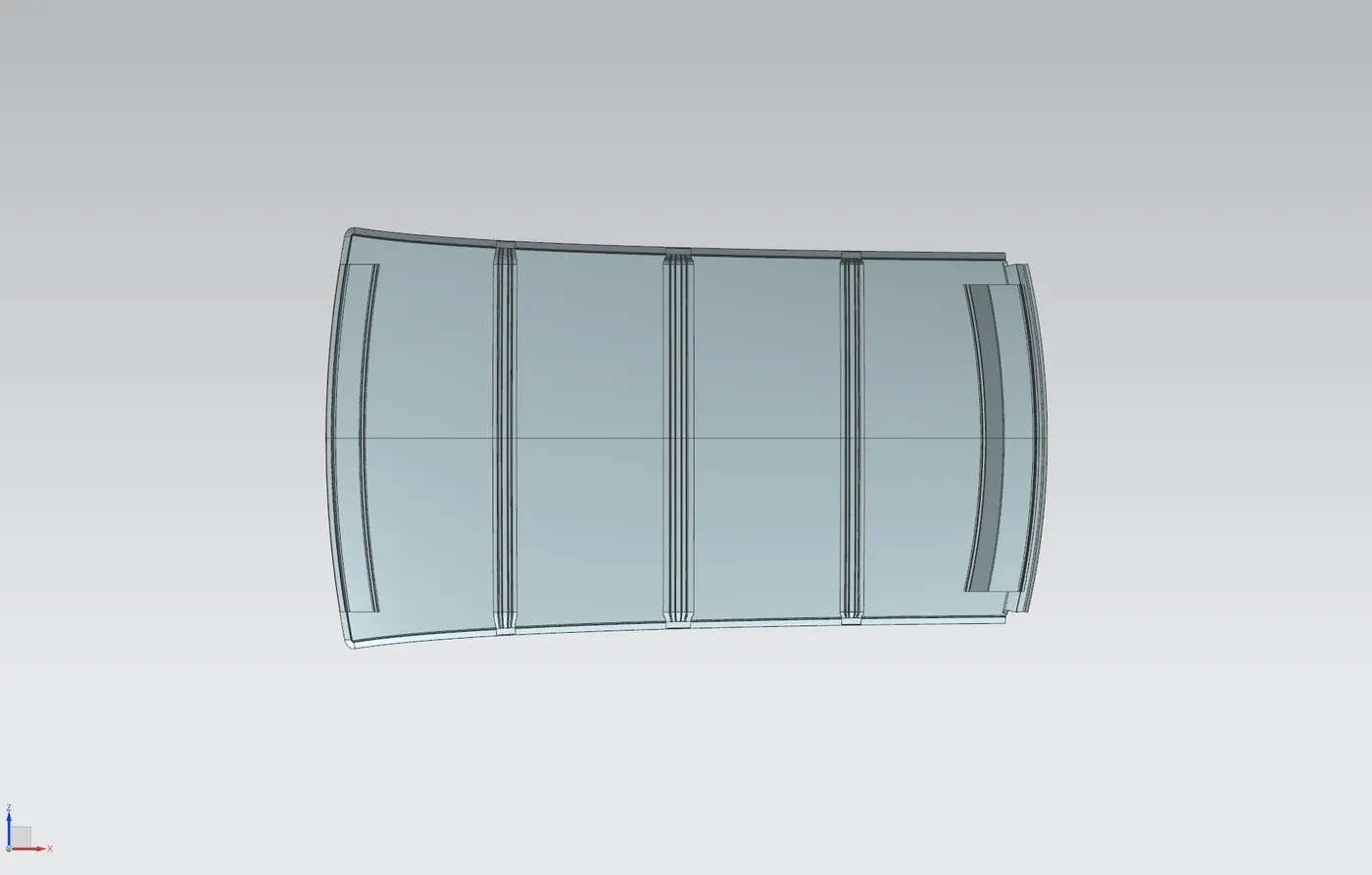
Ditch area
In car design, the ditch area refers to the recessed groove or channel along the edges of the car roof, where the roof panel meets the side body panels. The ditch area provides structural reinforcement to the roof, making it more rigid and resistant to flexing or bending. This is especially important for maintaining the car's structural strength during impacts or rollover situations. The ditch line can help streamline airflow over the car.
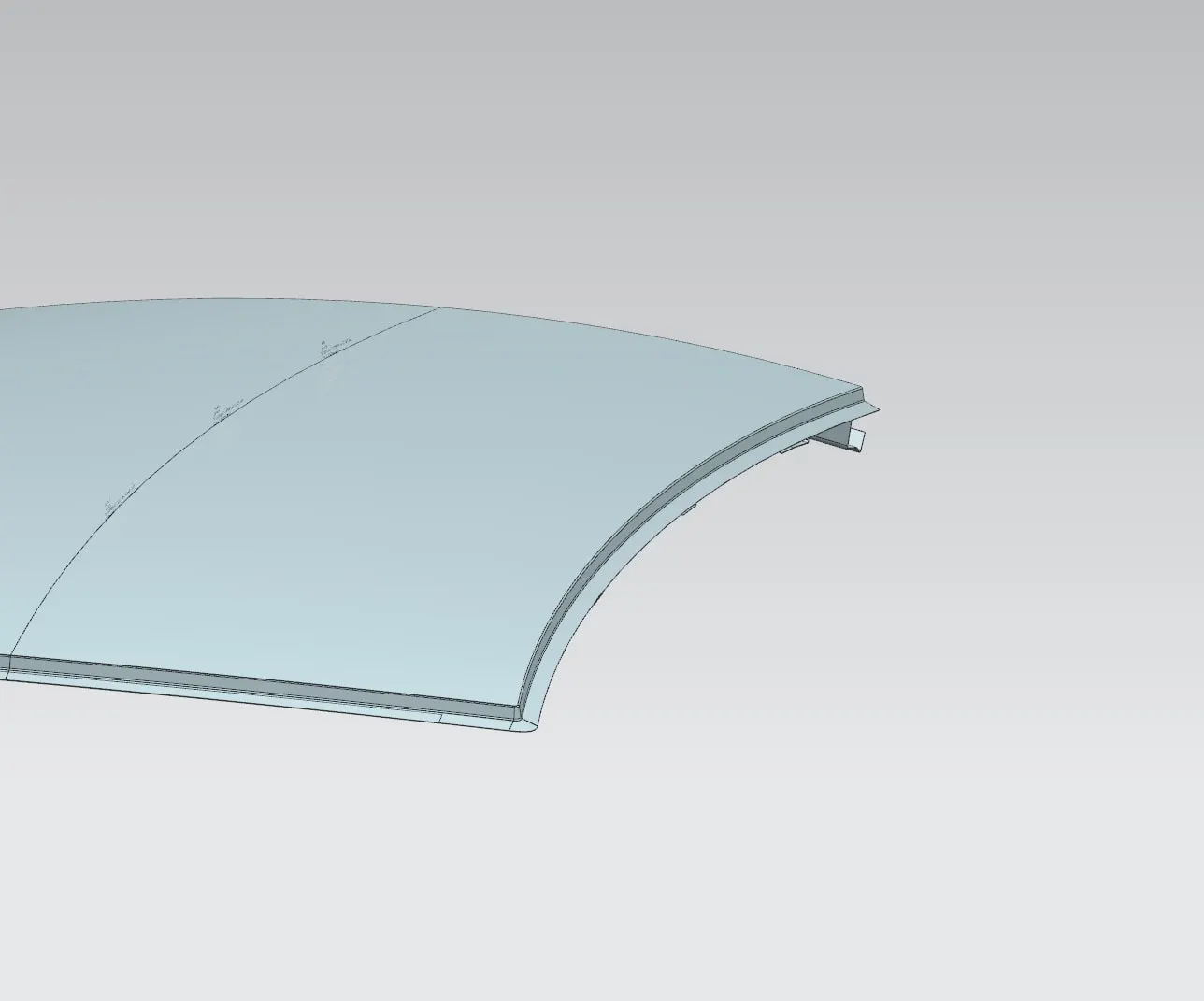
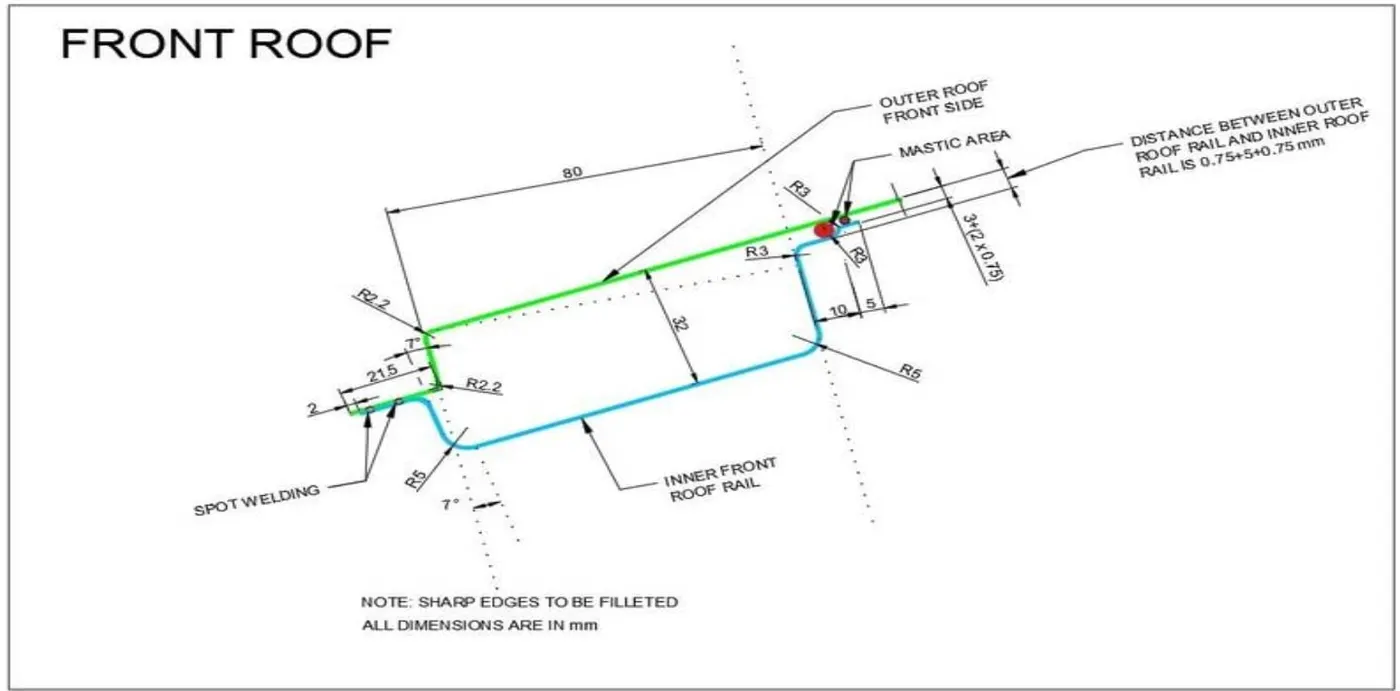
Front Row rail
Front roof rail It helps to strengthen the overall roof structure. This is crucial for safety, especially during rollover accidents. It helps to prevent leaks and water accumulation inside the vehicle. It often serves as a mounting point for various components, such as sunroofs, roof racks, or antennas. It can help maintain the integrity of the passenger compartment, protecting occupants from impacts.
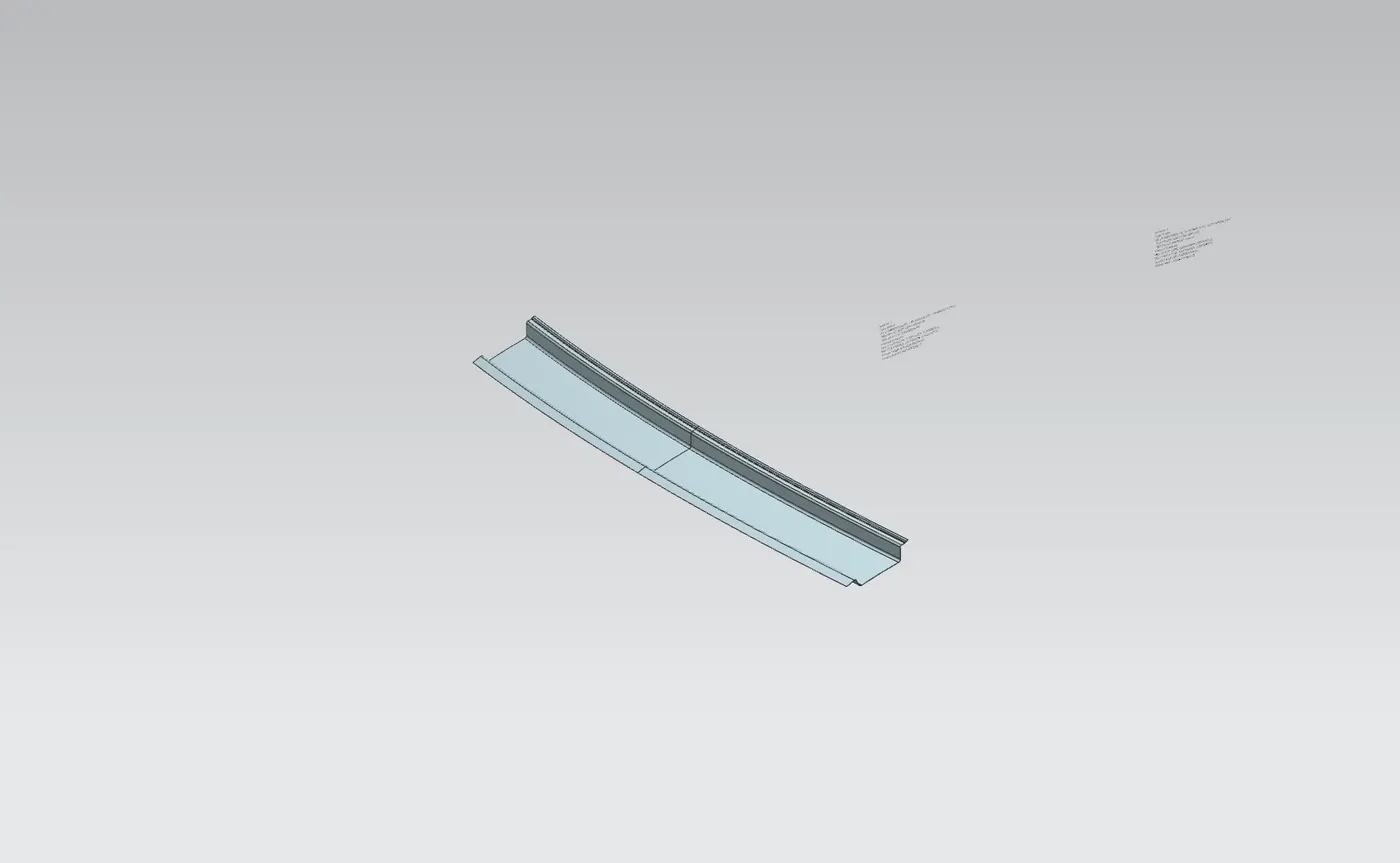
Bow roof 1&2
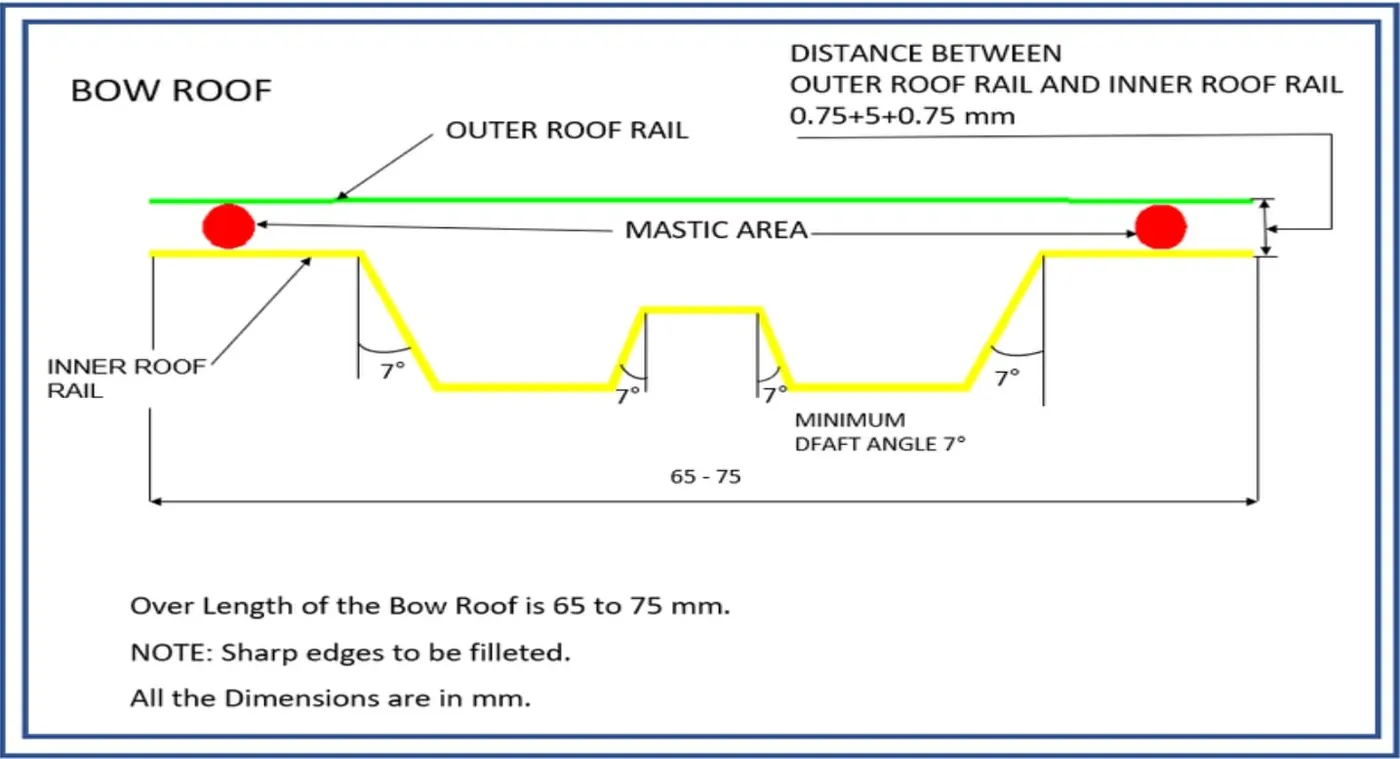
Bow roofs act as reinforcement, providing additional rigidity to the roof curvature. They help distribute loads evenly. By dividing the roof into sections, bow roofs help distribute weight and external forces more evenly. In the event of rollover or collision, Bow roofs enhance the structural integrity of the passenger compartment, helping to protect occupants by maintaining the shape of the roof and preventing intrusion.
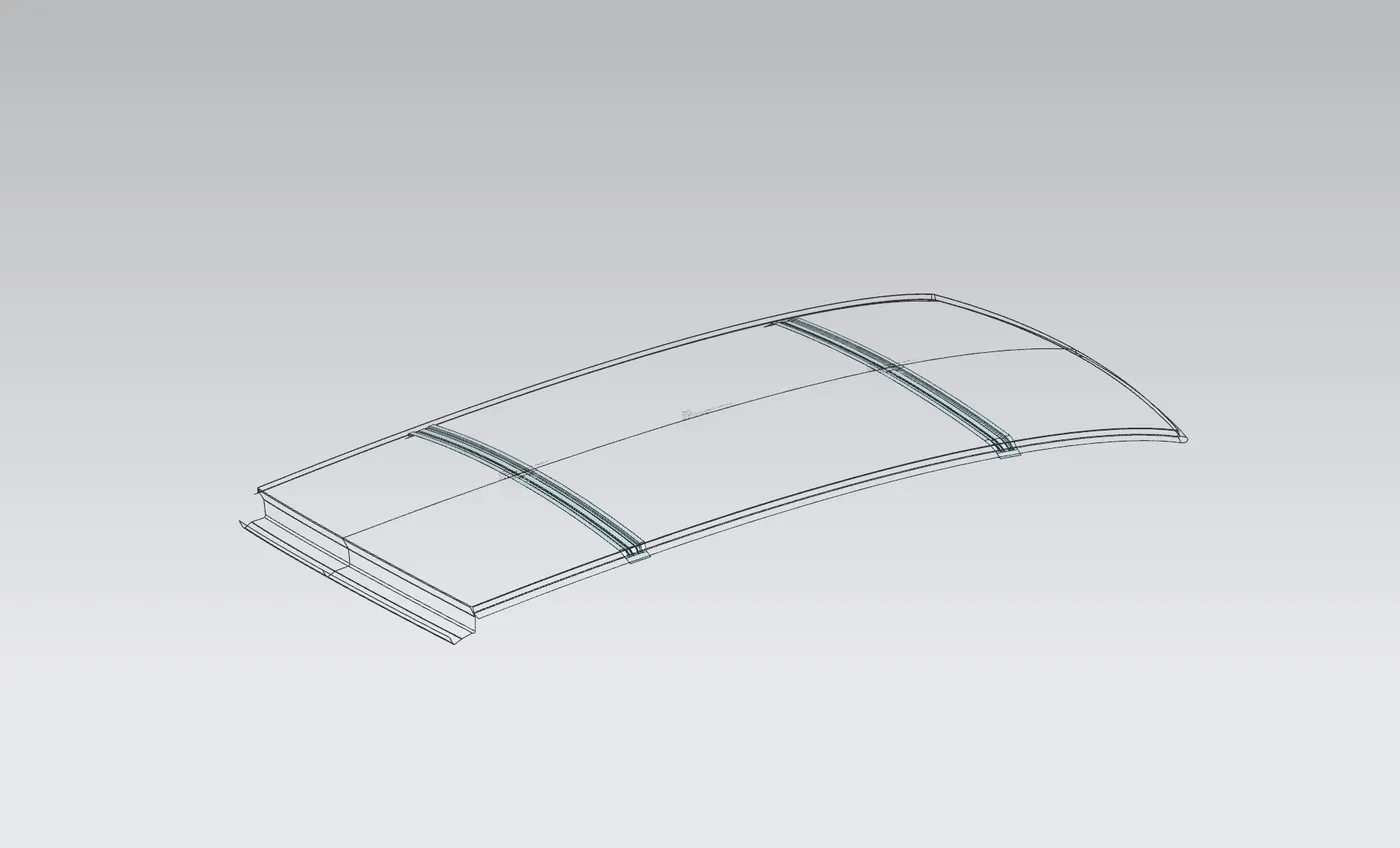
CTR bow roof
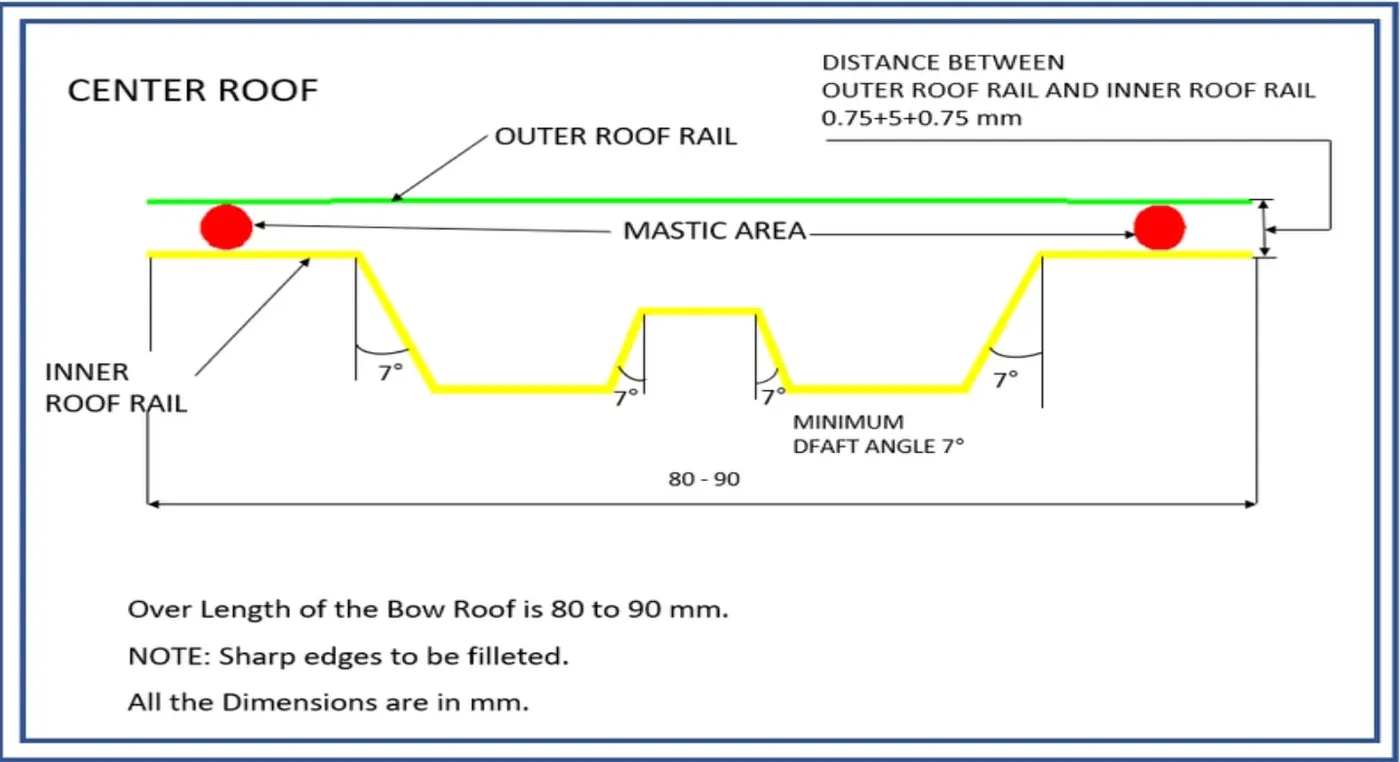
The centre bow roof provides significant strength and rigidity to the roof structure. By being positioned centrally, it helps distribute loads evenly across the roof, The centre bow roof enhances the vehicle's crashworthiness by maintaining the integrity of the passenger compartment during collisions or rollovers. It helps to prevent roof collapse, providing better protection for occupants.
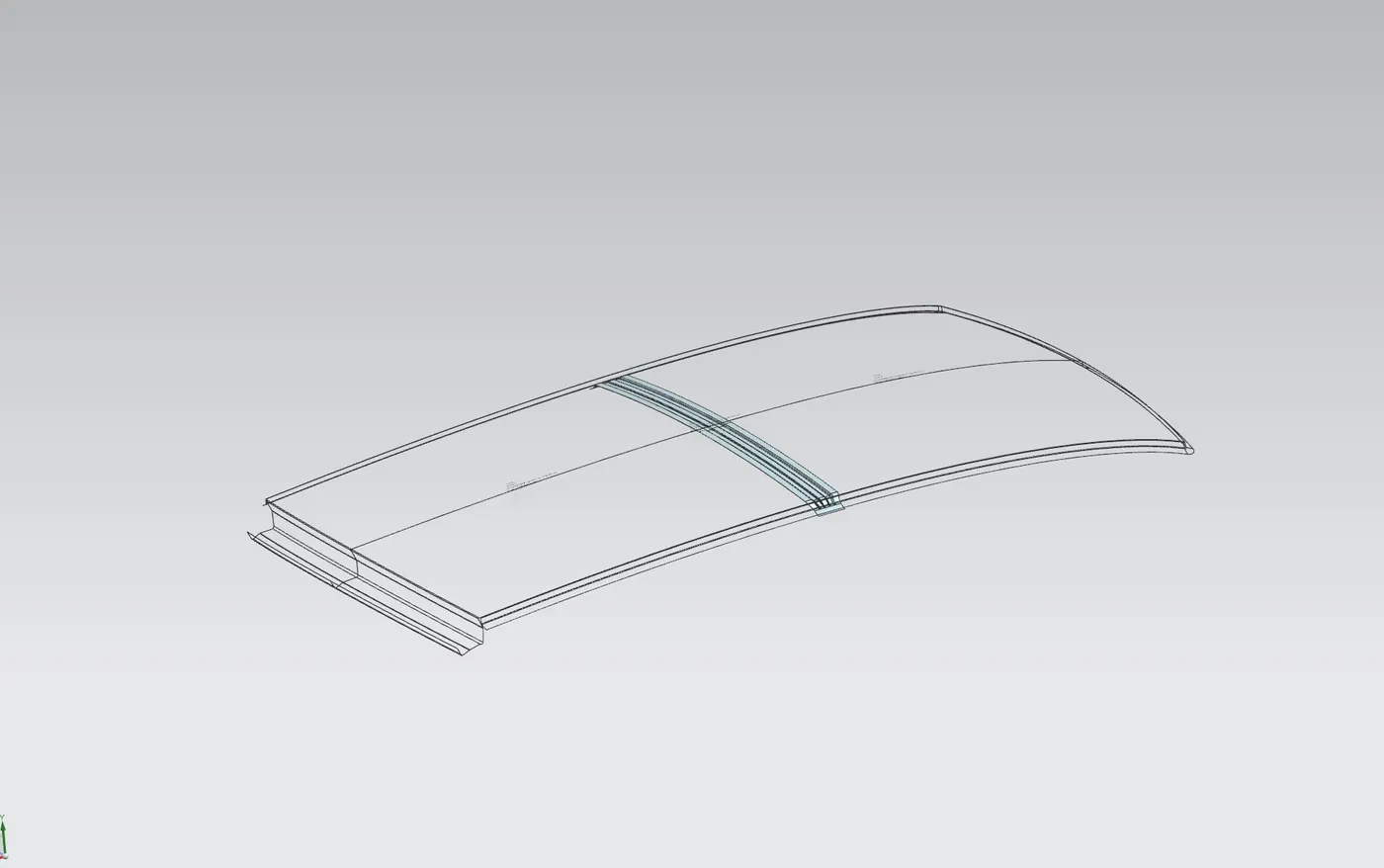
Rare roof rail
It provides additional strength and rigidity to the rear section of the roof, enhancing overall structural integrity. The rear roof rail helps distribute loads evenly across the roof structure, preventing stress concentrations that could lead to deformation or failure under heavy loads, directing rainwater away from the cabin, and helping to prevent leaks and water accumulation inside the vehicle.
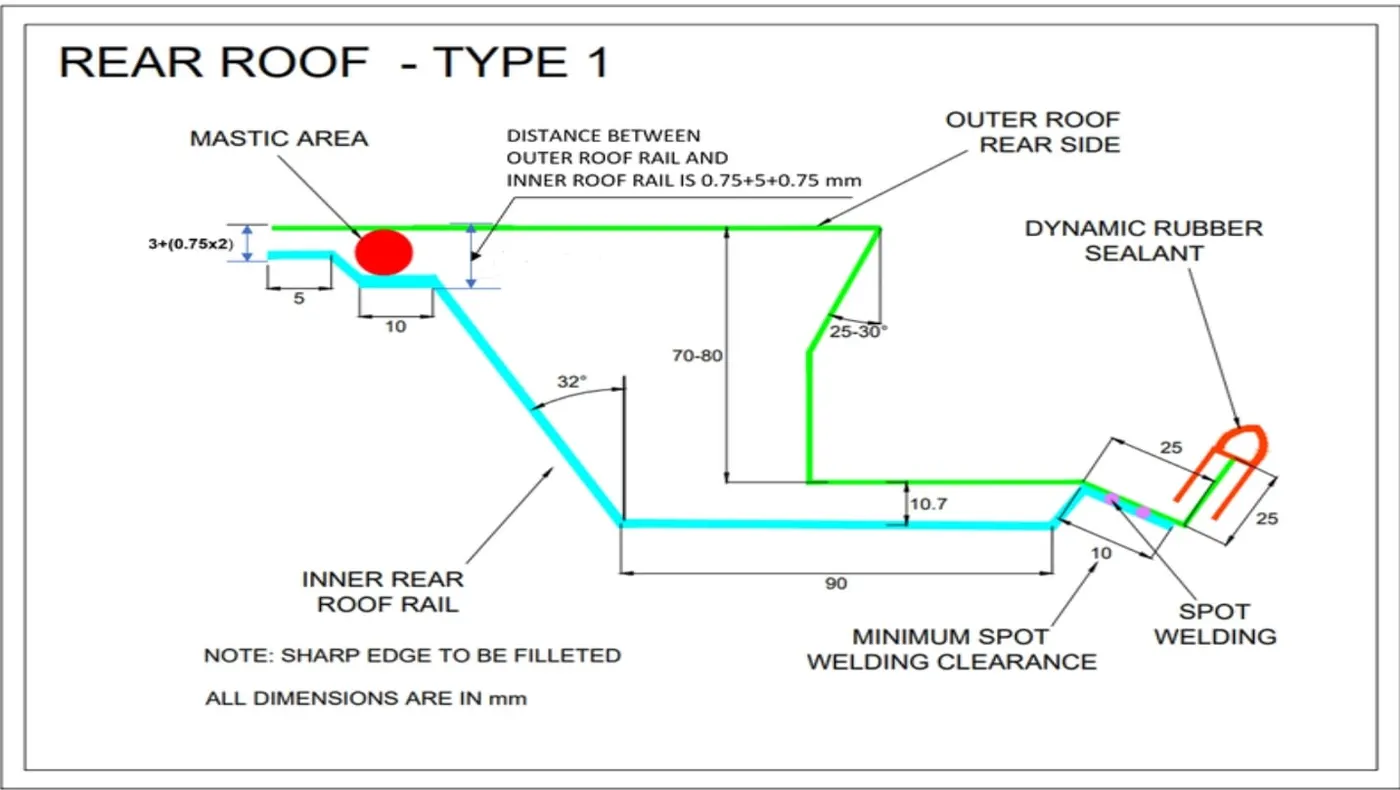
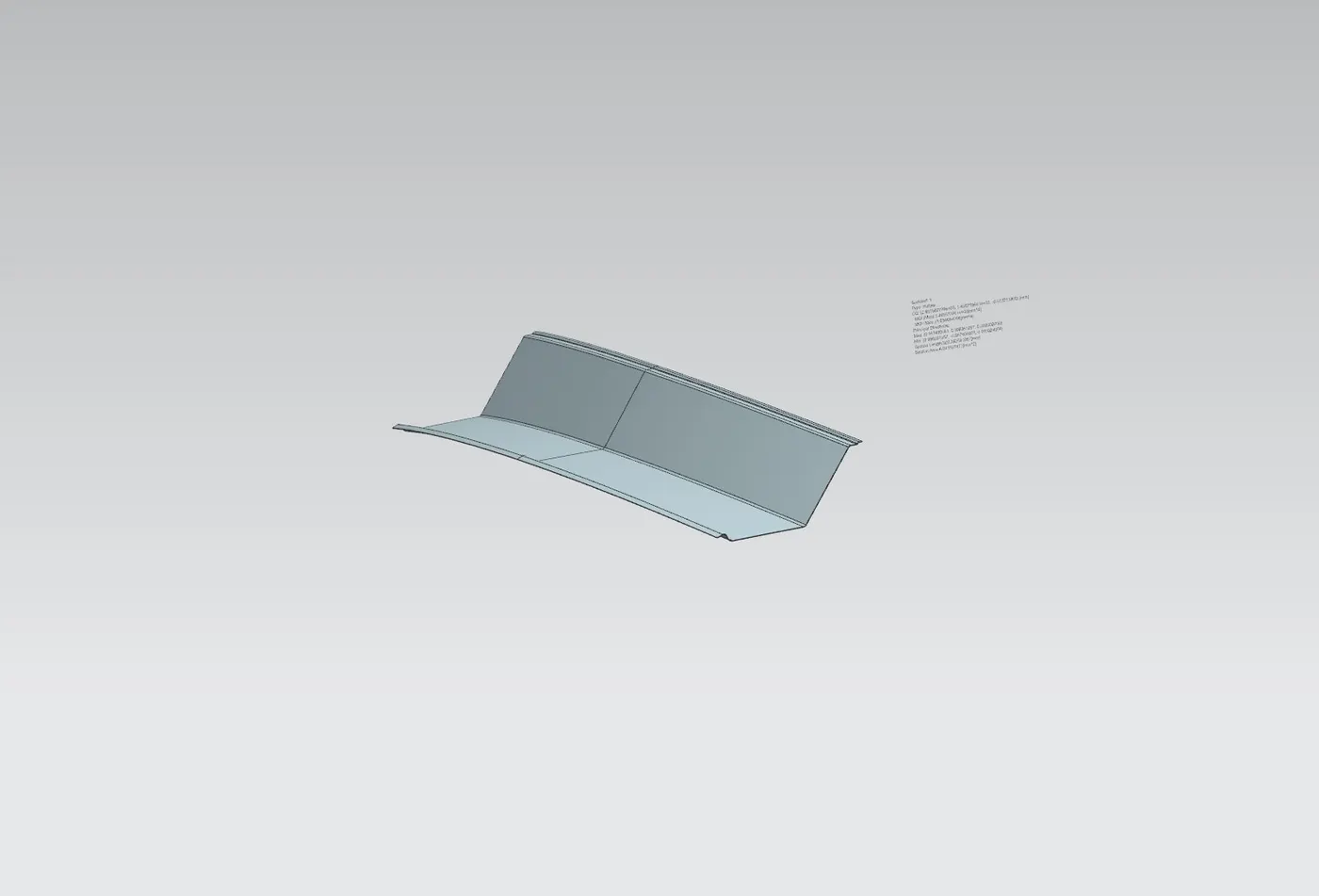
According to the design concept document, the rate roof rail must meet the rare headroom clearance and visibility characteristics. Need at least 85mm clearance from the headline. This varies per car, project, and region.
Justification for Bow Roof Placement in Car Roof Design
- To achieve structural integrity, load distribution, and overall vehicle performance, it is essential to design a car roof with reinforcements like Bow Roof 1, Centre Roof Rail (CRT Roof), and Bow Roof 2 at particular percentages of the roof length.
- Bow Roofs as Components That Support Weight: The Bow Roofs and the CRT Roof are positioned at 25%, 50%, and 75% of the roof length, respectively, such that the roof is essentially divided into four equal portions. By distributing loads uniformly throughout the roof structure, this arrangement helps to reduce stress concentrations that can cause deformation or failure.
- To provide reinforcement along the roof's edges, where stresses from external forces are likely higher, Bow Roof 1 should be placed at 25% and Bow Roof 2 at 75%. This aids in preserving the roof's structural soundness under varied loading scenarios.
- Because bending moments are usually greatest in the middle of the roof, the 50% CRT roof serves as a central support, adding strength there.
- Bow Roofs and the CRT Roof are strategically placed to improve the vehicle's crashworthiness in the case of a rollover or accident. They improve occupant protection by preserving the integrity of the passenger compartment.
- The roof can better absorb and disperse impact energy due to the reinforcements' distribution, which lowers the possibility of incursion into the cabin area in the event of an accident.
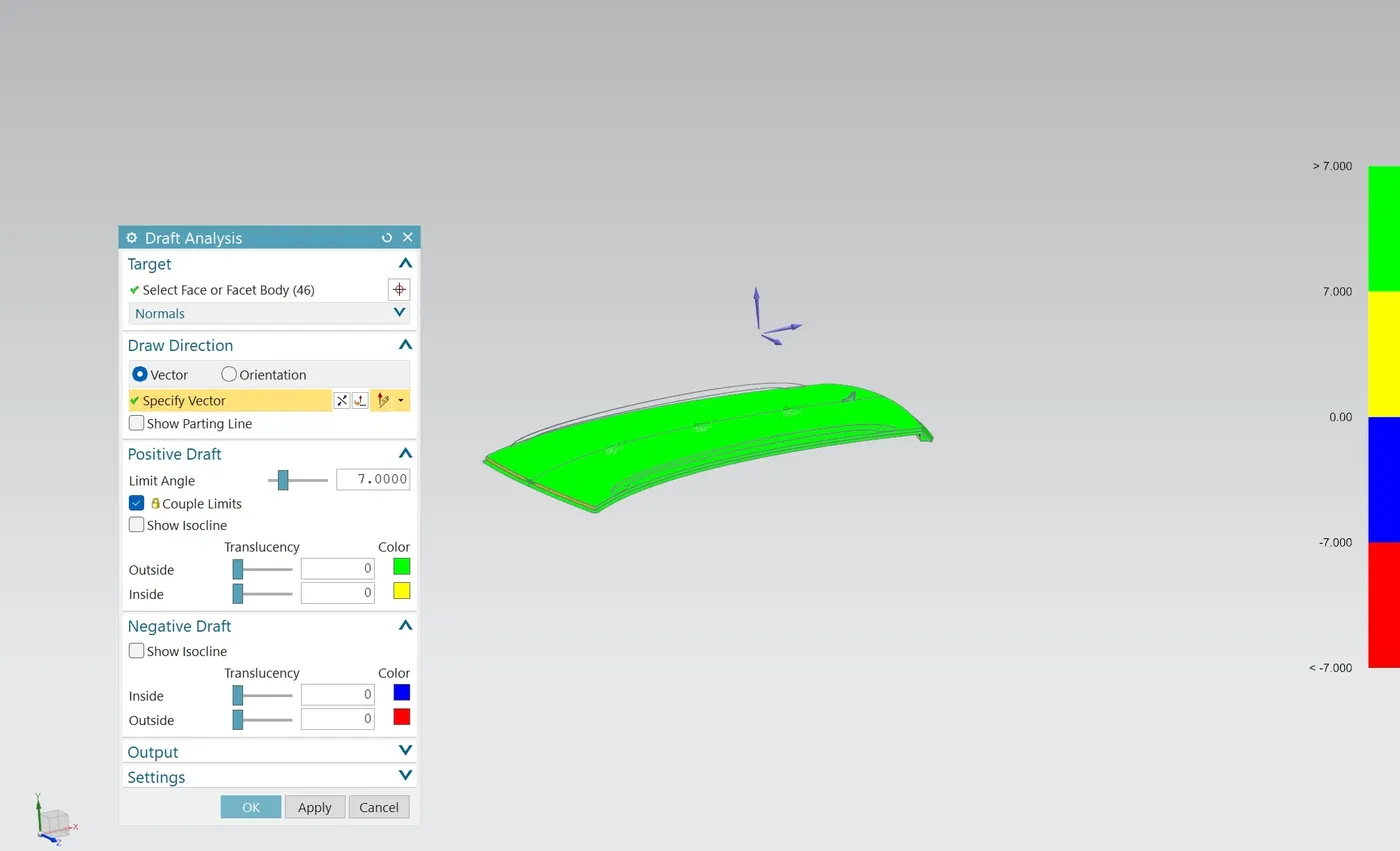
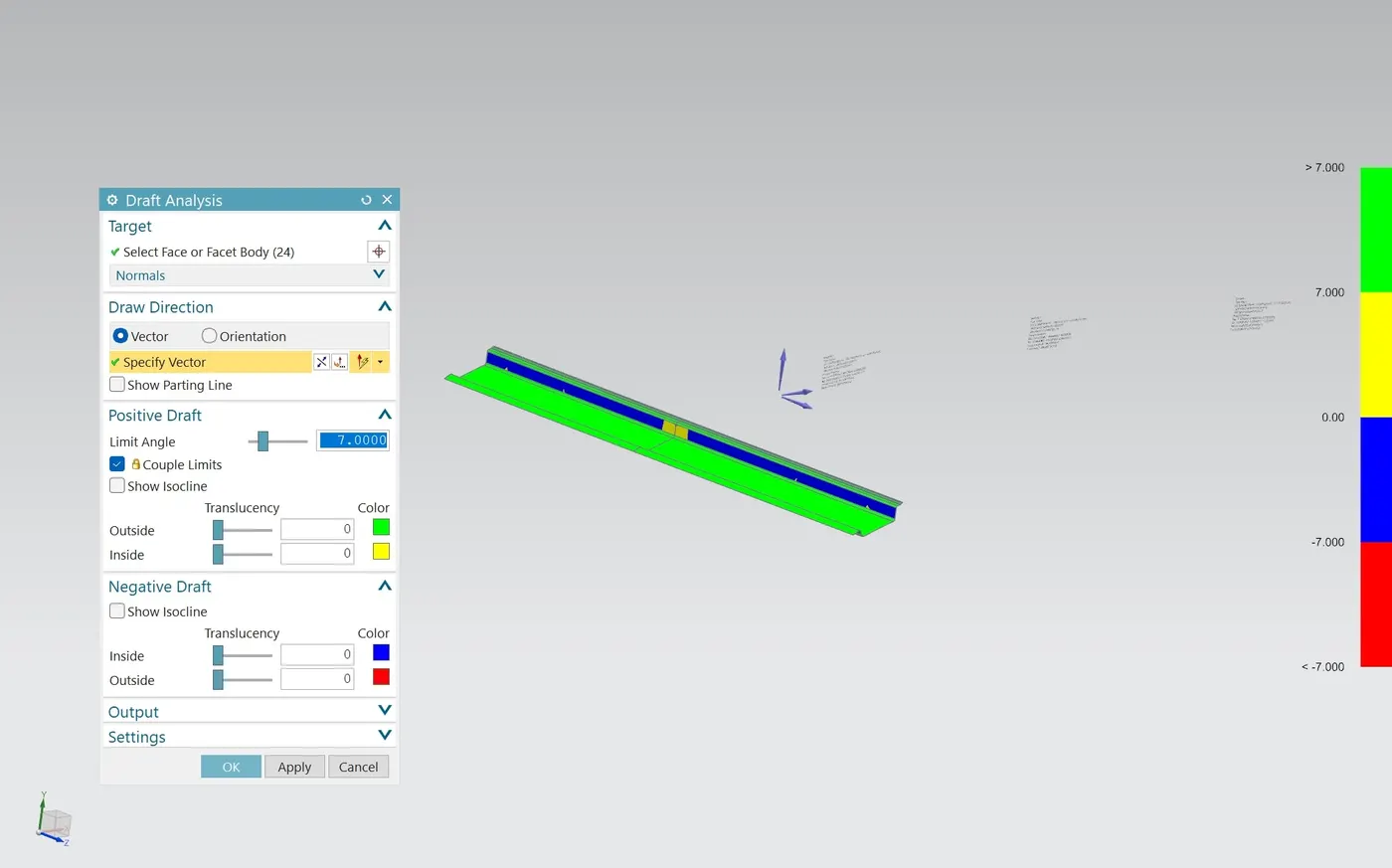
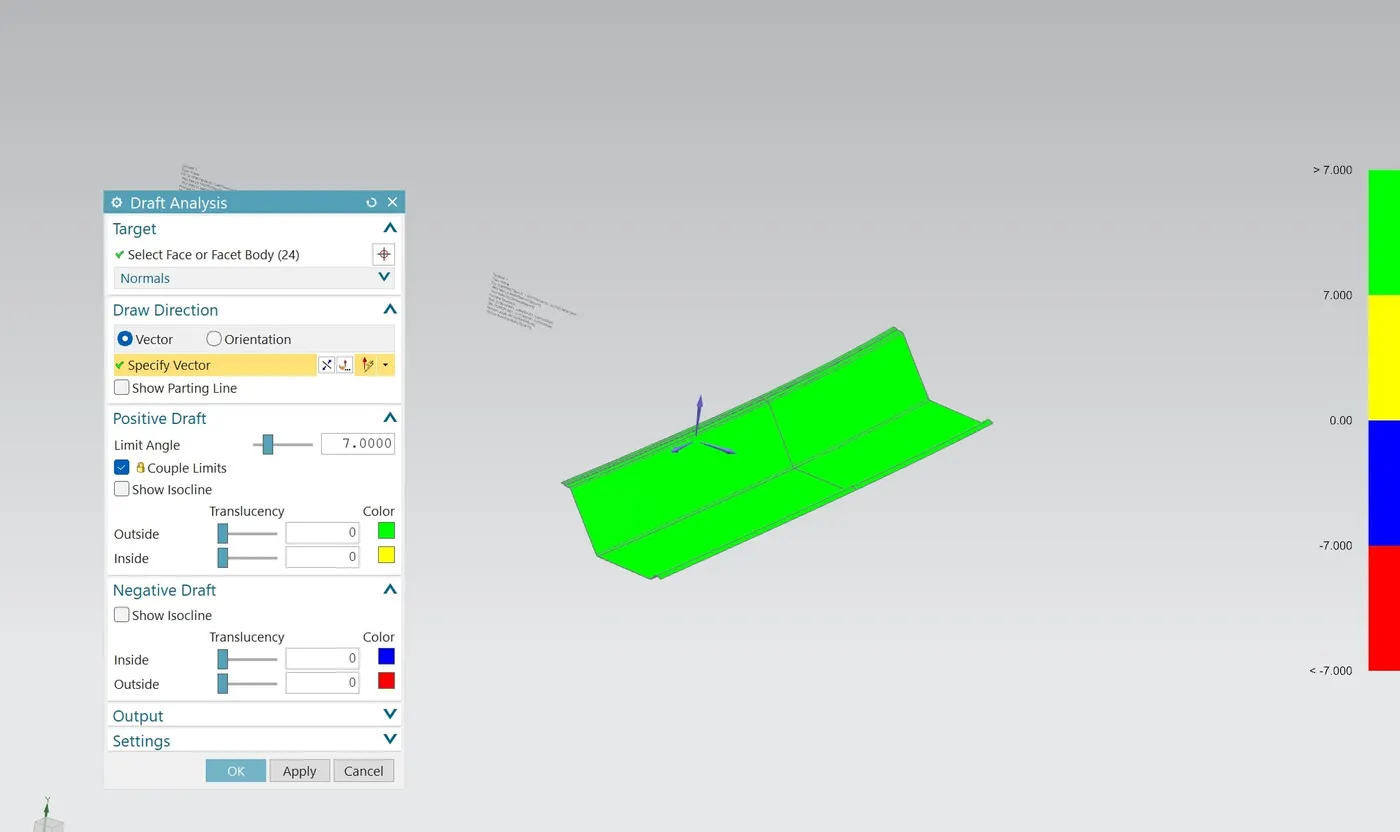
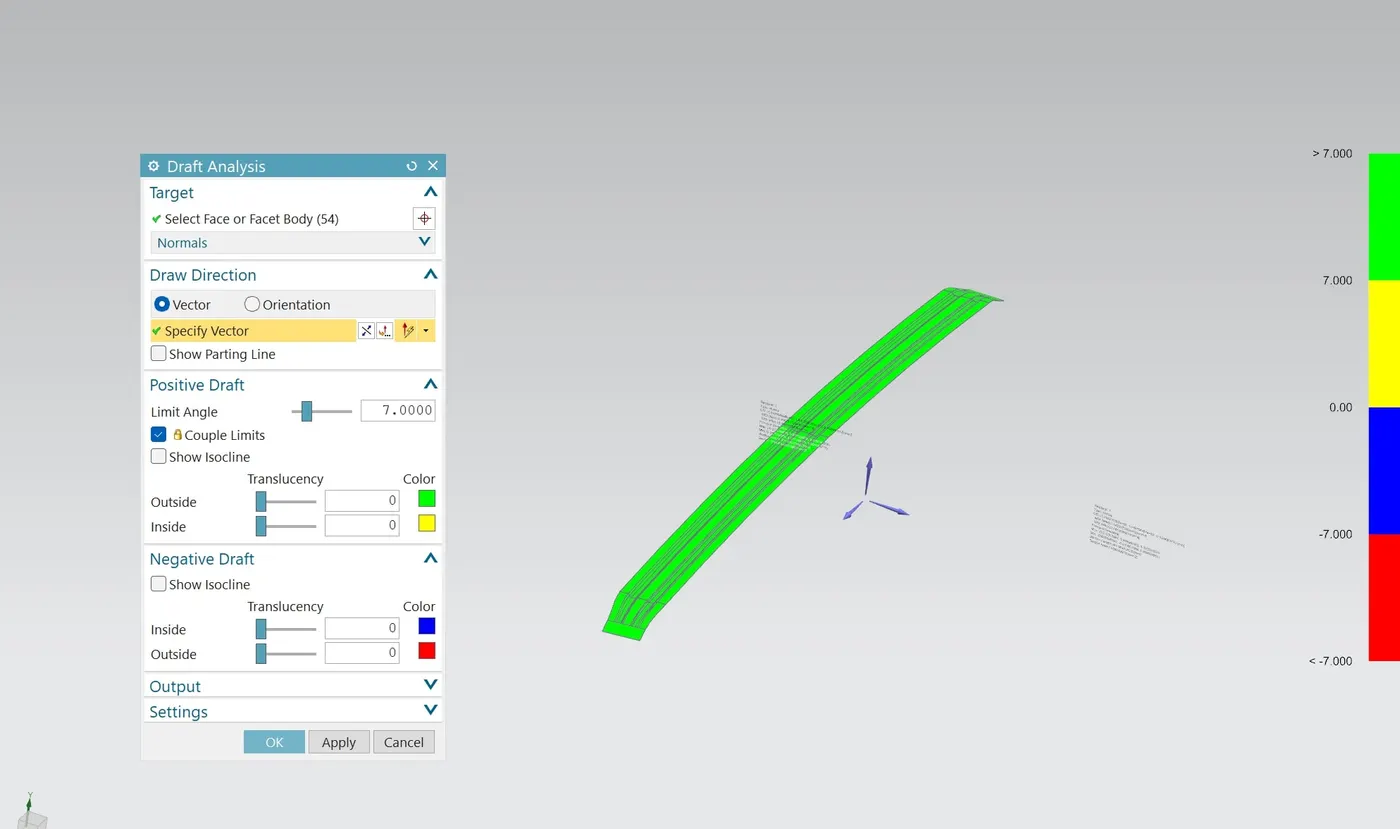
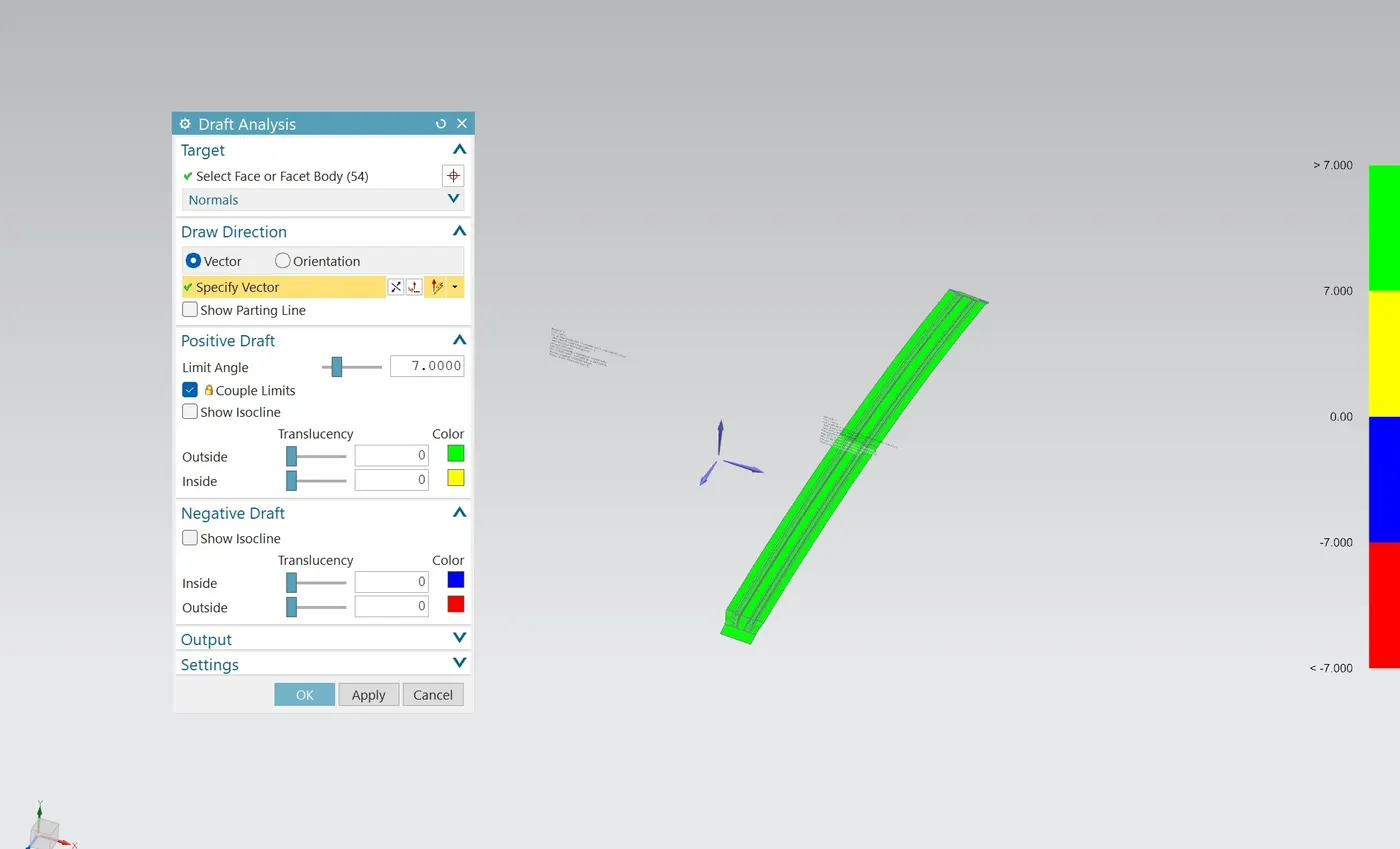
Draft analysis
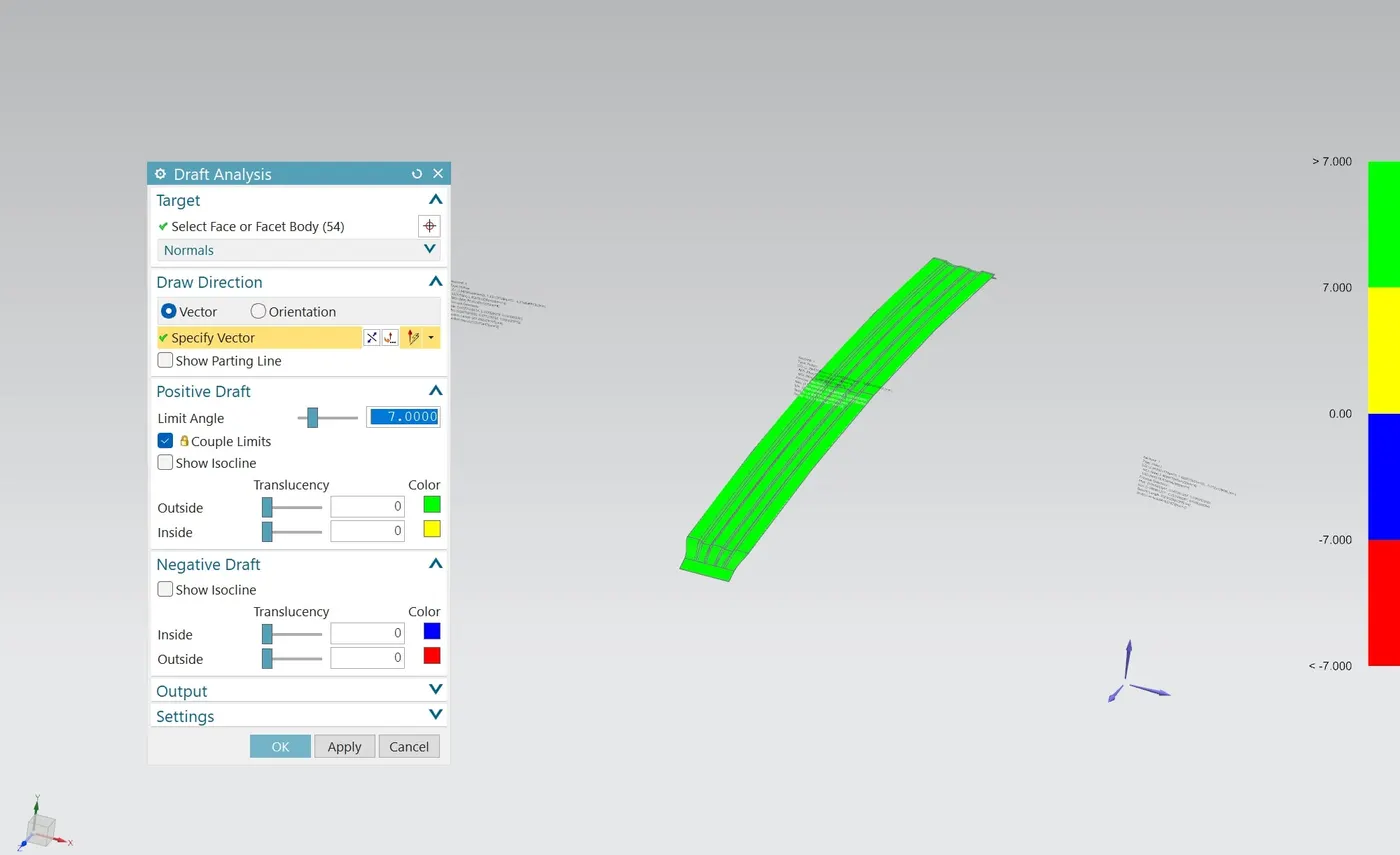
Draft analysis is used in the roof design to help make sure that the surfaces have sufficient draft angles to facilitate easy removal without harming the casting or the part. The quality and manufacturability of the roof may be impacted by problems like part sticking, distortion, or difficulties ejecting, which can be caused by incorrect draft angles. Performing a thorough draft analysis is essential in the design of a car roof to ensure that it is manufacturable, meets quality standards, and maintains aesthetic integrity. By addressing draft issues early in the design process, manufacturers can save time, reduce costs, and enhance product reliability.
Roof
Front roof rail
Rare roof rail
Bow roof 1
Bow roof 2
CTR Bow roof
Heat Distortion Criteria
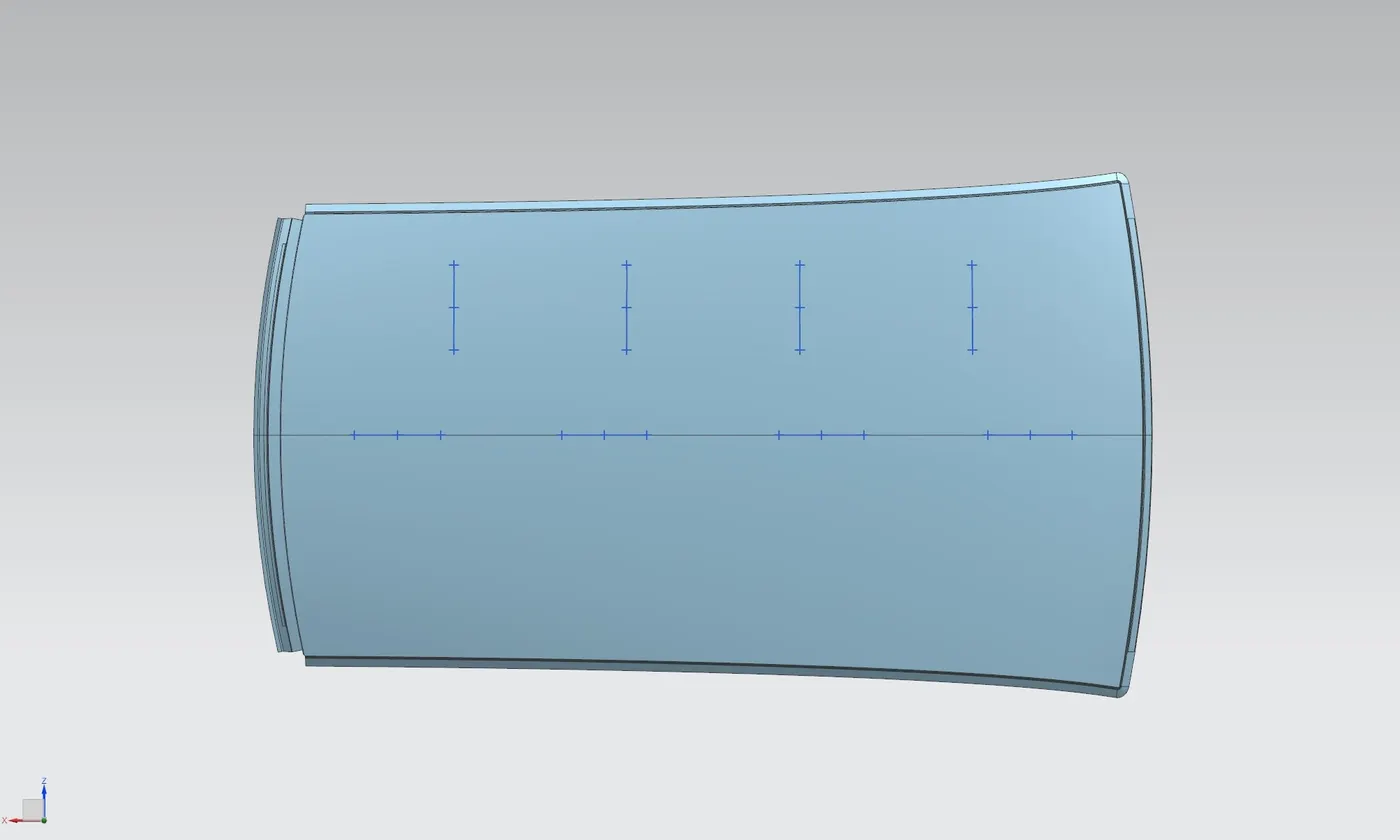
Heat distortion criteria refer to the specific standards and measurements used to evaluate how materials behave when subjected to elevated temperatures. It focuses on the temperature at which a material begins to deform under a specified load, indicating its ability to maintain structural integrity when exposed to heat.
Bow-Roof Prediction Formula
W = [1.73 x 10^(-3) x L] + [1.85 x 10^(-8) x (R^2)/t] + [ 1.10x10^(-3) x l] - 2.68
Where,
L = Roof Length in X-Direction[mm](Roof dimension in 0-Y)
R = Roof curvature
R = 2(Rx*Ry)/(Rx+Ry)
Rx = X curvature
Ry = Y curvature
t = Roof plate thickness [mm]
l = Bow Roof Span [mm]
Judgment Condition
Ok<2.7
| S.no | BOWs | Rx | Ry | R | I | L | t | w | OK/NG |
|---|---|---|---|---|---|---|---|---|---|
| 1 | FR&1st | 5653.78 | 2466.02 | 3434.49 | 336.49 | 1920.8 | 0.75 | 1.3 | OK |
| 2 | 1st&CTR | 4865.03 | 6116.53 | 5419.46 | 428.07 | 1920.8 | 0.75 | 1.84 | OK |
| 3 | CTR&2nd | 4074.38 | 11038 | 5951.8 | 429.19 | 1920.8 | 0.75 | 1.99 | OK |
| 4 | 2nd&RR | 3446.37 | 16661.16 | 5711.34 | 293.95 | 1920.8 | 0.75 | 1.77 | OK |
Heat distortion criteria are OK
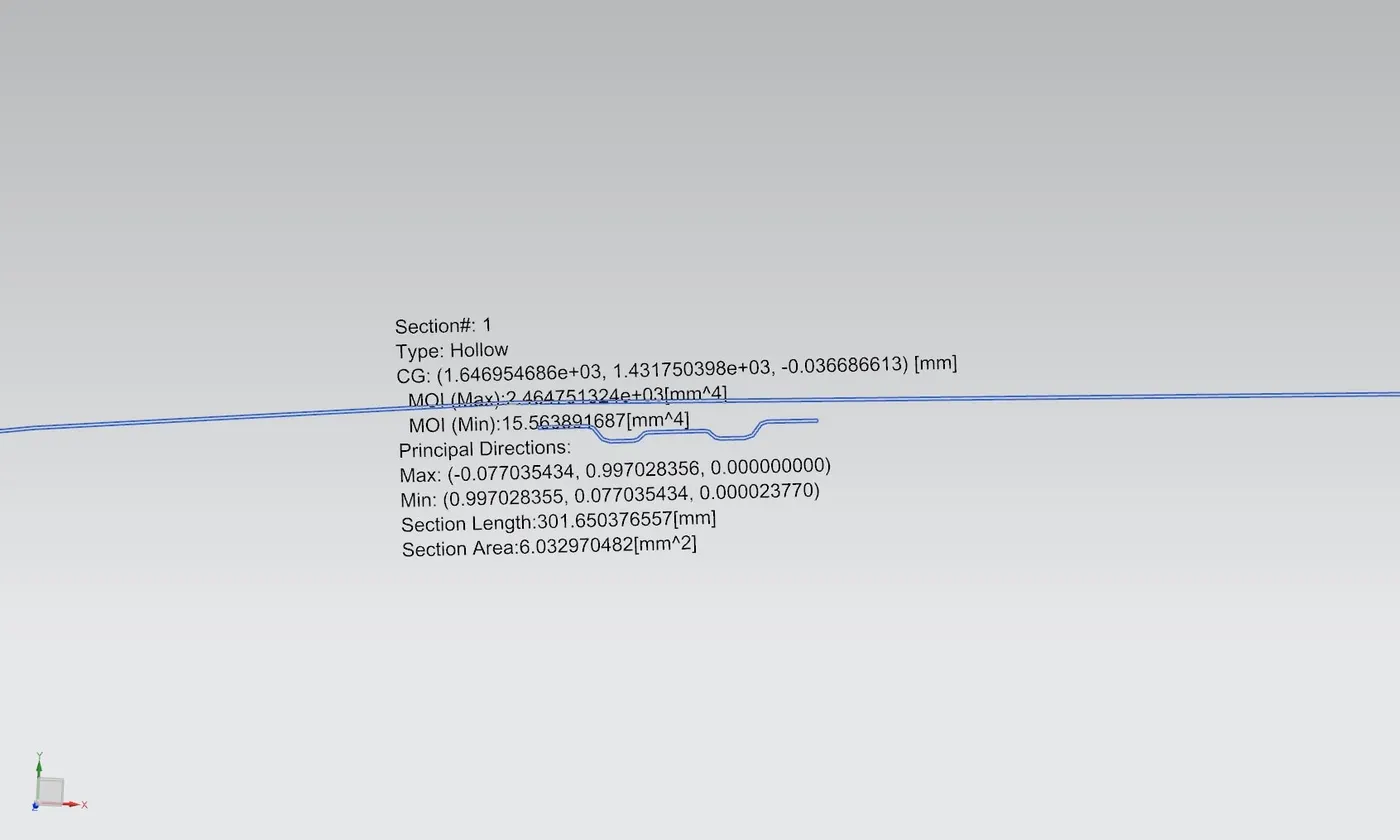
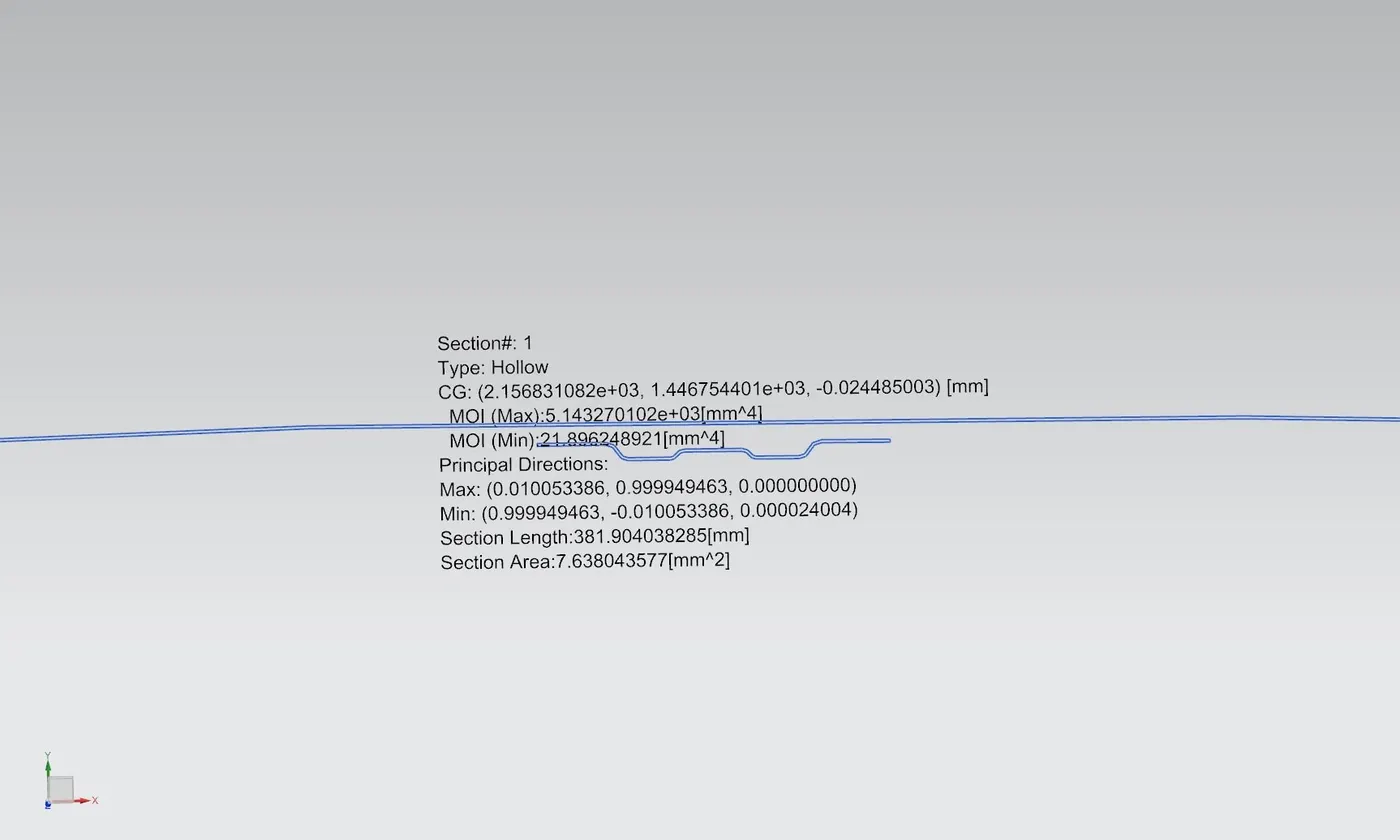
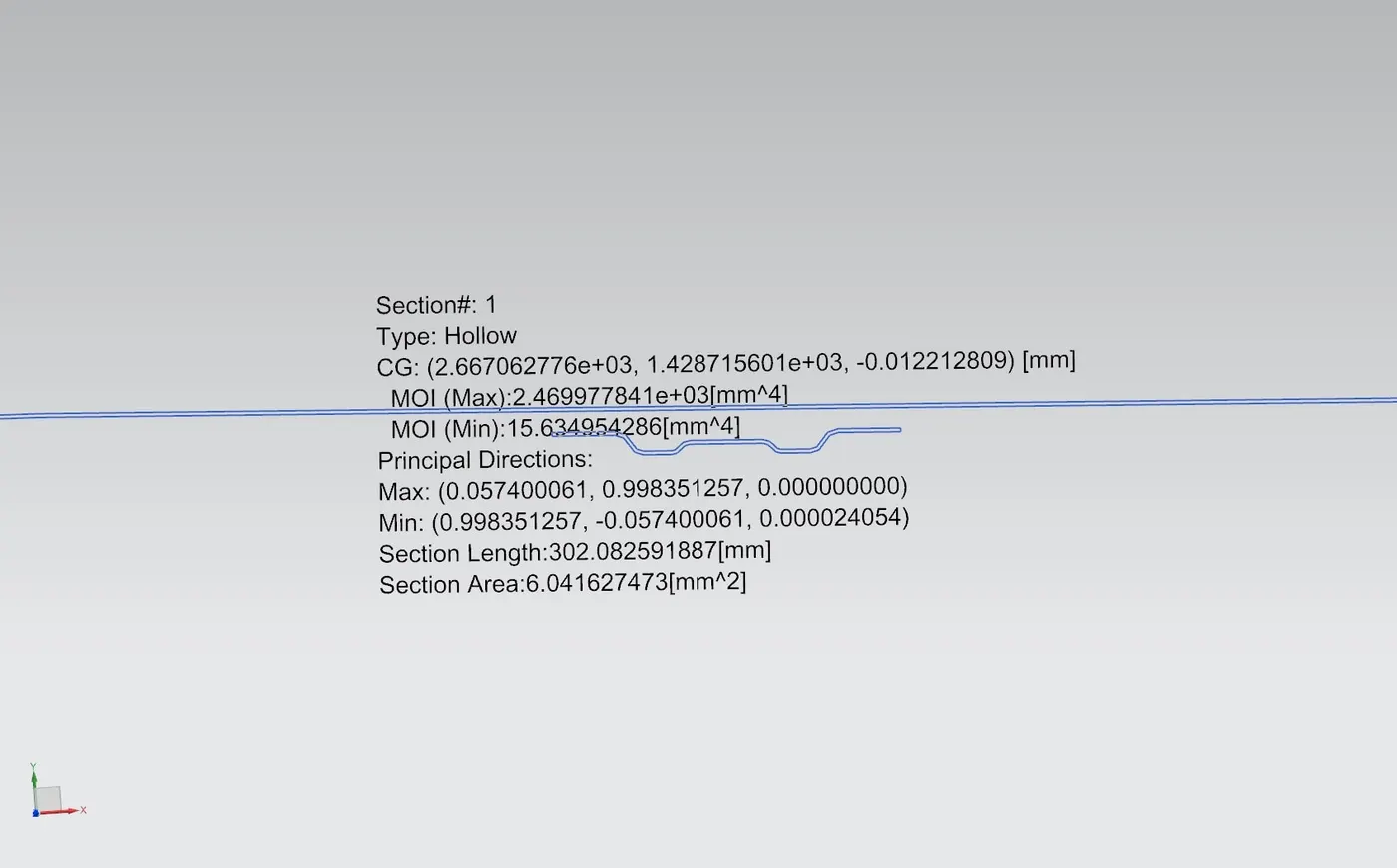
Section modulus
It is referred to as the relation between area moment of inertia and resistance to bending. It is the ratio of the area moment of inertia about the neutral axis and to the distance of the outermost from the neutral axis.
Bow roof 1
CTR Bow roof
Bow roof 2
Snow load criteria
Snow load criteria refer to the standards and calculations used to determine the amount of snow that a car roof must be able to support without structural failure or deformation. This is particularly important for ensuring the safety and integrity of the vehicle in regions that experience significant snowfall. Snow load criteria are essential for the safe design and performance of car roofs, especially in regions prone to heavy snowfall. By considering these criteria during the design and engineering process, manufacturers can ensure that the vehicle roofs are capable of withstanding the weight of snow, maintaining structural integrity and passenger safety.
Qr = [Iy x t2] / [α x s x [(Rx + Ry)/2]2 x 10-8]
Note: The Qr value given over here is correct. There was a typo error in the formula given in the video.
Where,
α = My x Lx2 x 10-12, My = Y(Ly-Y)
t = Roof plate thickness [mm]
Ly = Distance between the front and rear roof Rails on the Vehicle along with 0Y[mm]
Length of Roof panel with the centre point between Roof rail Front /Rear as the front and rear reference point.
Lx = Distance between the Left and Right end of the roof on the Roof BOW [mm]
The width of the roof panel is exposed on the surface.
Y = Distance front Roof Rail to Bow Roof[mm]
s = Distance for which Roof BOW bears divided load [mm]
s = L1/2 + L2/2
Iy = Geometrical moment of inertia of Roof BOW (Y cross-section)[mm4]
Rx = Lateral direction curvature radius of roof panel Y cross-section on Roof BOW [mm]
Roof panel curvature Radius of the Length Lx in Front view
Ry = Longitudinal Direction curvature radius of the Roof panel X cross-section on Roof BOW [mm]
Roof panel X curvature radius of length s in Side view
Judgment condition
Qr ≥ 3.1
250 ≤ s ≤ 380
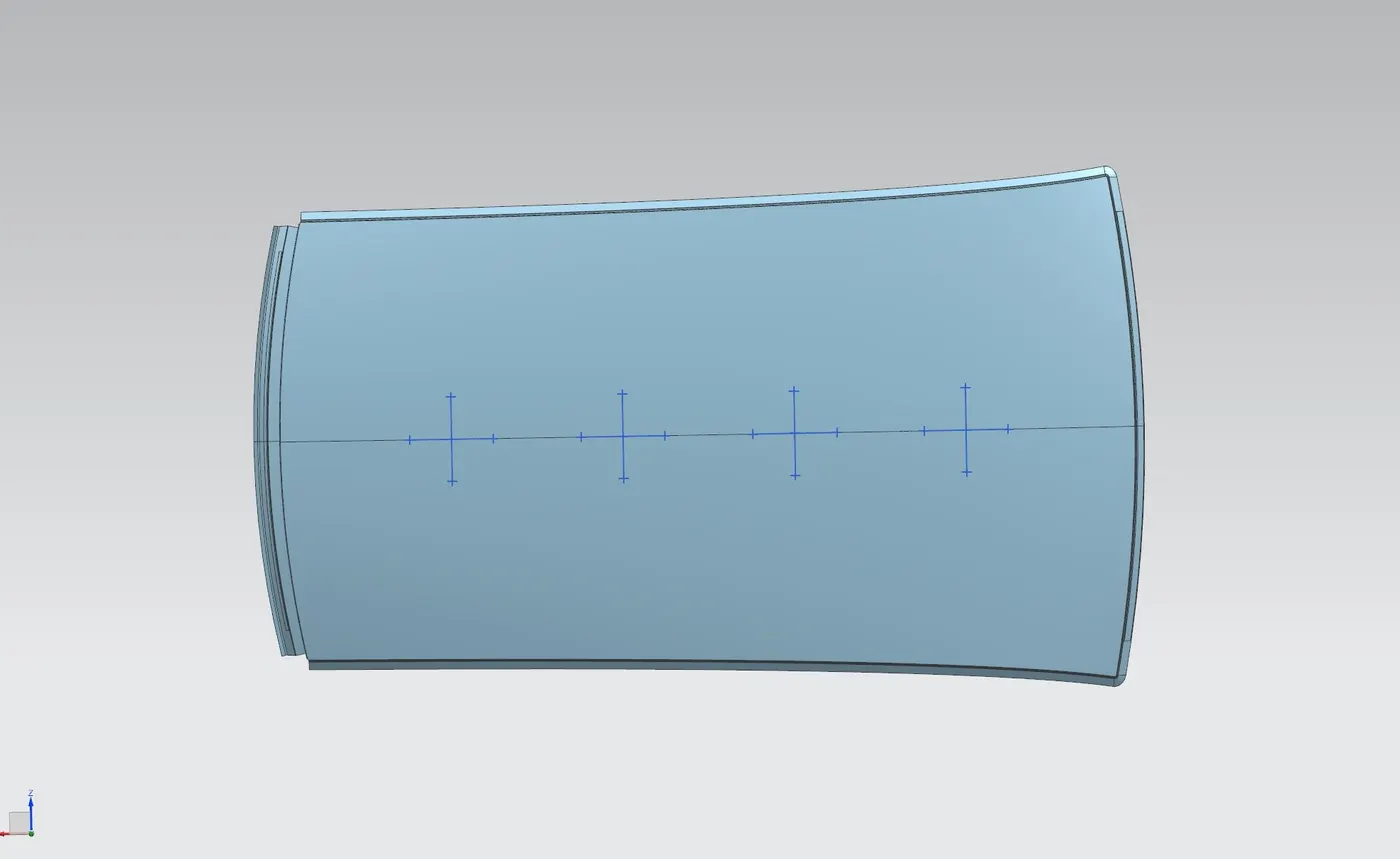
| S.no | BOWs | α | Iy | Lx | Ly | y | s | RX | RY | t | Qr |
|---|---|---|---|---|---|---|---|---|---|---|---|
| 1 | FR&1st | 0.85 | 1536.4 | 1120.99 | 1920.8 | 465.81 | 493.15 | 2666.6 | 3350.11 | 0.75 | 22.78 |
| 2 | 1st&CTR | 0.83 | 2189.6 | 1080.35 | 1920.8 | 507.77 | 508.87 | 3789.46 | 6568.31 | 0.75 | 10.87 |
| 3 | CTR&2nd | 0.8 | 1556.3 | 1057.63 | 1920.8 | 509.05 | 479.53 | 4224.23 | 10475.7 | 0.75 | 32.85 |
| 4 | 2nd&RR | 1043.96 | 1920.8 | 411.16 | 4214.51 | 15050.1 | 0.75 |
Snow load criteria are OK
Roof Crush Test
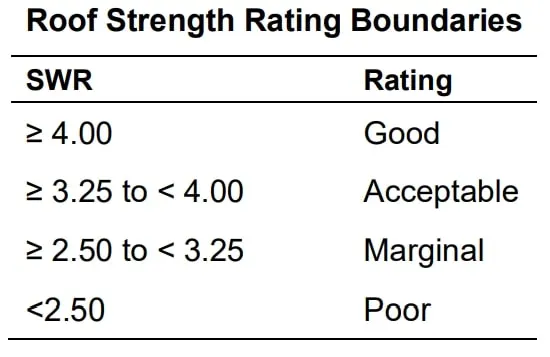
We need to examine whether the roof is correct. The rollover test is extremely crucial for the roof. In this case, we conduct a roof crush test. This design is provided by the Insurance Institute for Highway Safety, which after analyzing the numerous events that occurred, established some regulations for how to conduct the test and also assigns ratings based on the test. Examine and rate the roof strength of automobiles. Roof strength evaluations involve conducting a quasi-static test on a vehicle's roof, similar to those used to assess compliance with Federal Motor Vehicle Safety Standard FMVSS. The IIHS roof strength test differs from the FMVSS 216 test in several ways.
- Tests only one side of a vehicle’s roof.
- Does not require headroom.
- Tests to a specific displacement rather than force level.
- Sets the vehicle’s pitch angle during testing based on measured on-road pitch angle.
An overall rating is based on the peak strength-to-weight ratio (SWR) measured within 127 mm of plate displacement.
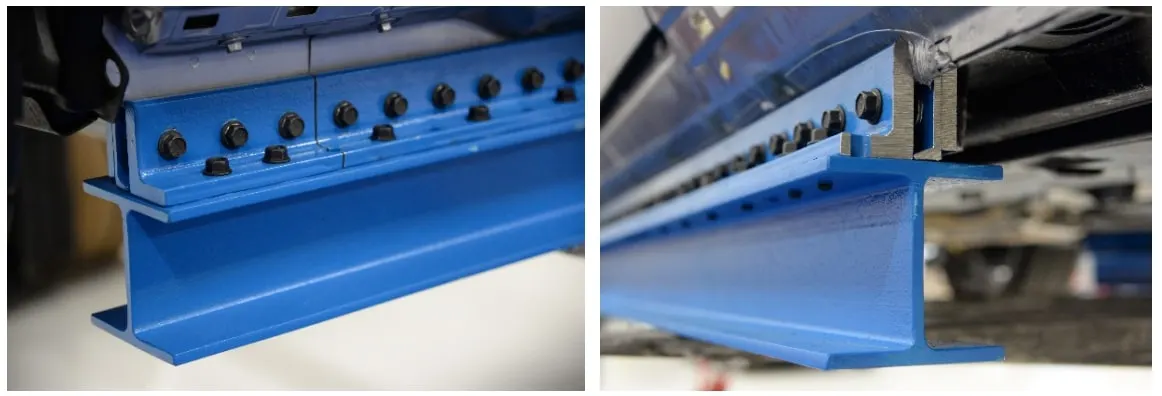
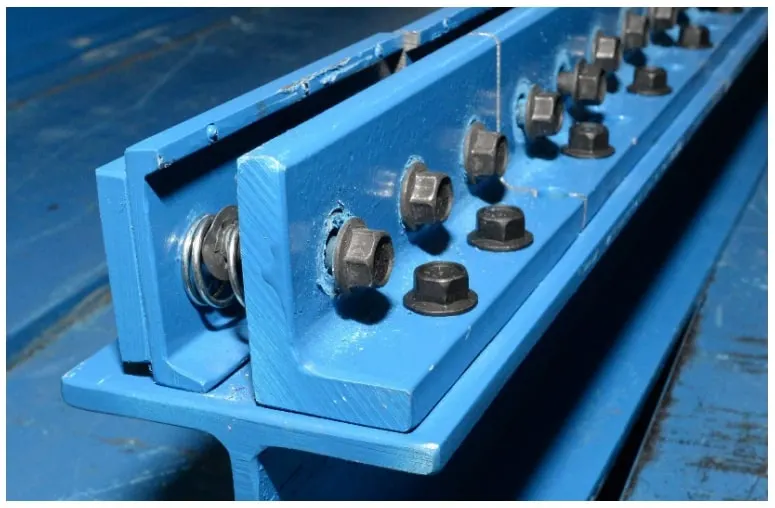
Rocker Panel Support System Attached to the Vechicle
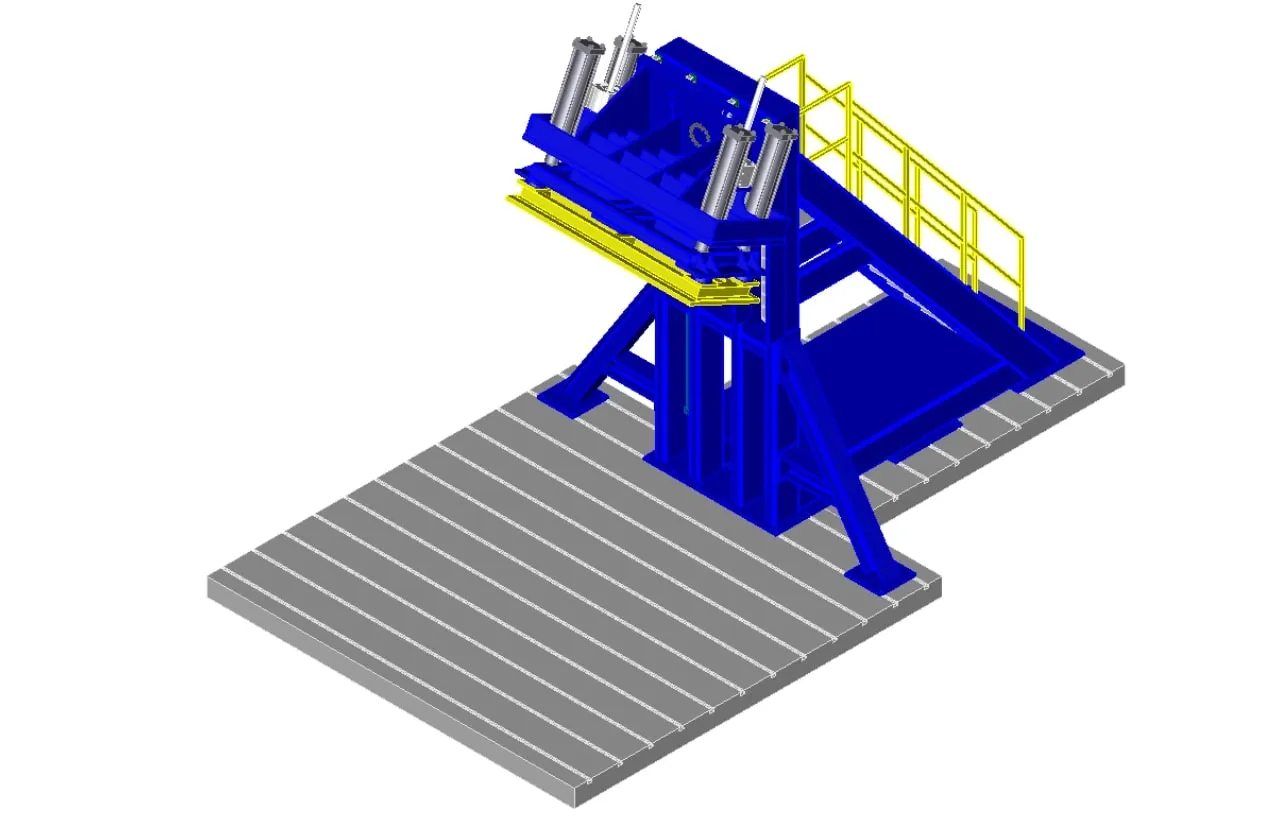
Rush Crush Test System
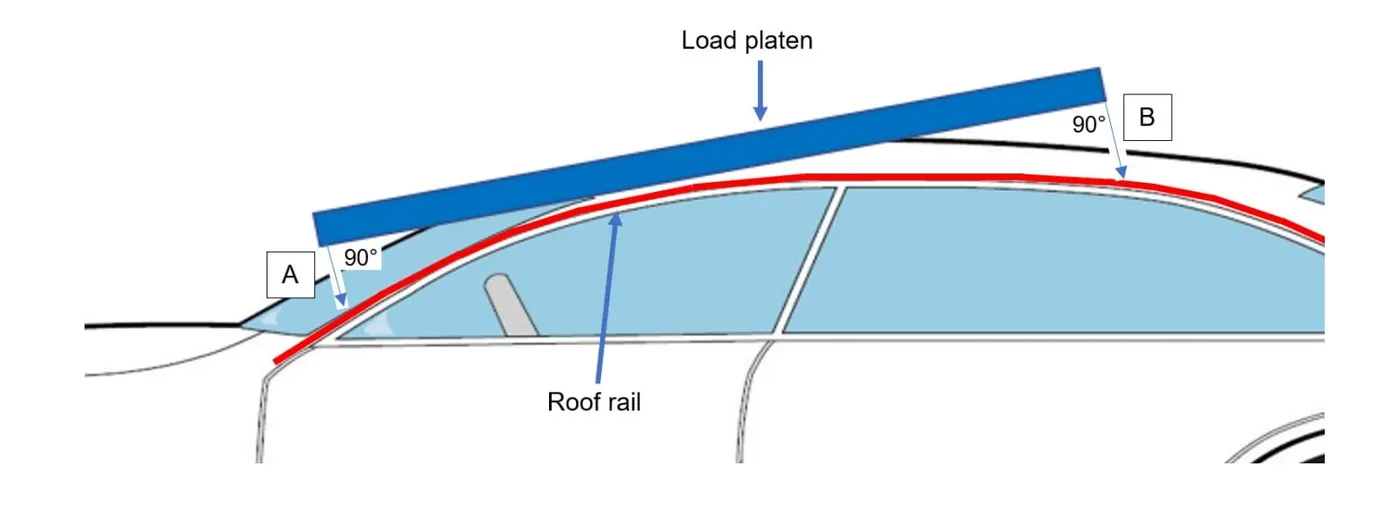
Vehicle Position at the Initial Contact Point
Conclusion
In conclusion, this project successfully developed a comprehensive roof design for a car, incorporating key structural reinforcements such as front and rear roof rails, bow roofs, and centre bow roofs. These elements enhance the roof's strength, ensure load distribution, and improve passenger safety, particularly in rollover or collision scenarios. Draft analysis, heat distortion, and snow load criteria were applied to validate the roof's manufacturability, durability, and safety. Meeting these criteria ensures the design can withstand environmental and structural demands, offering a reliable, safe, and efficient roof assembly for automotive use.