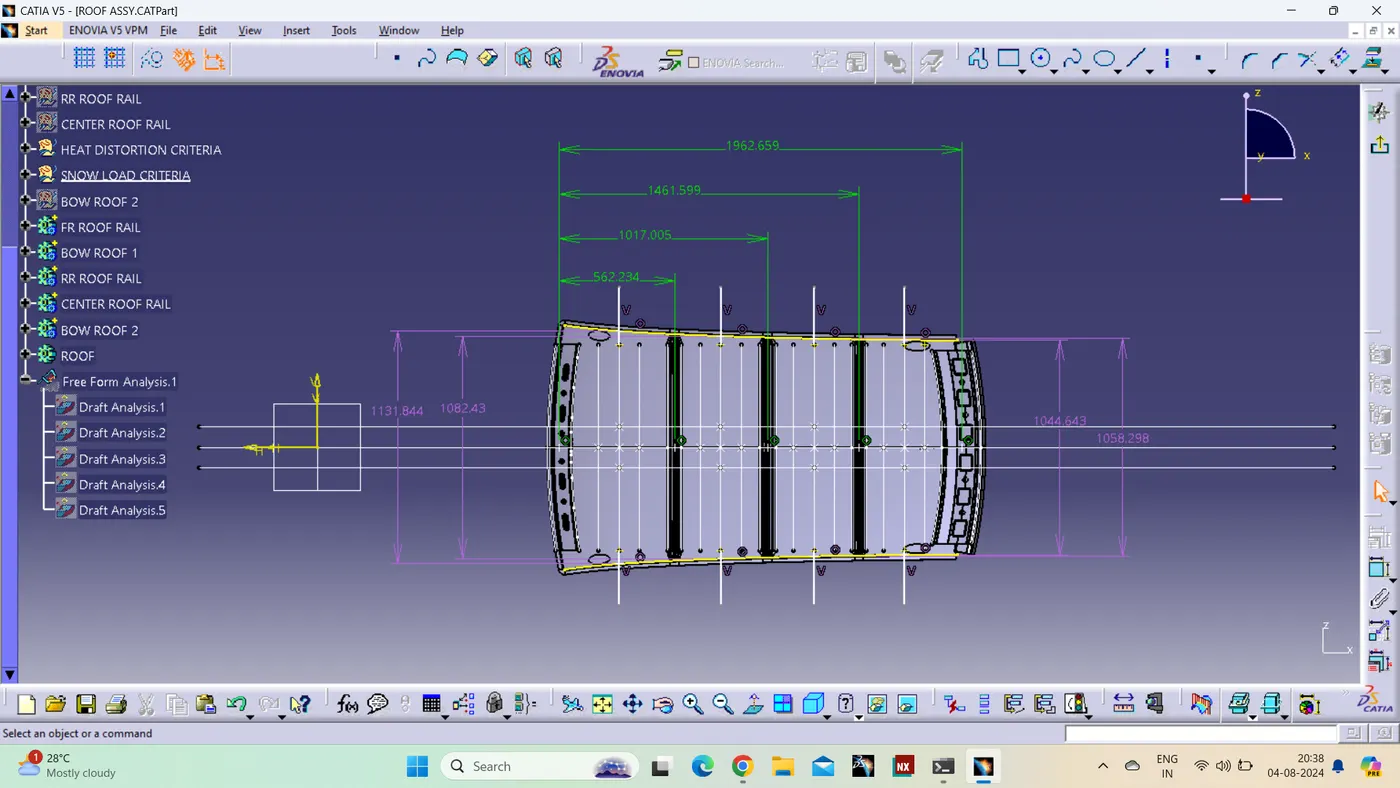
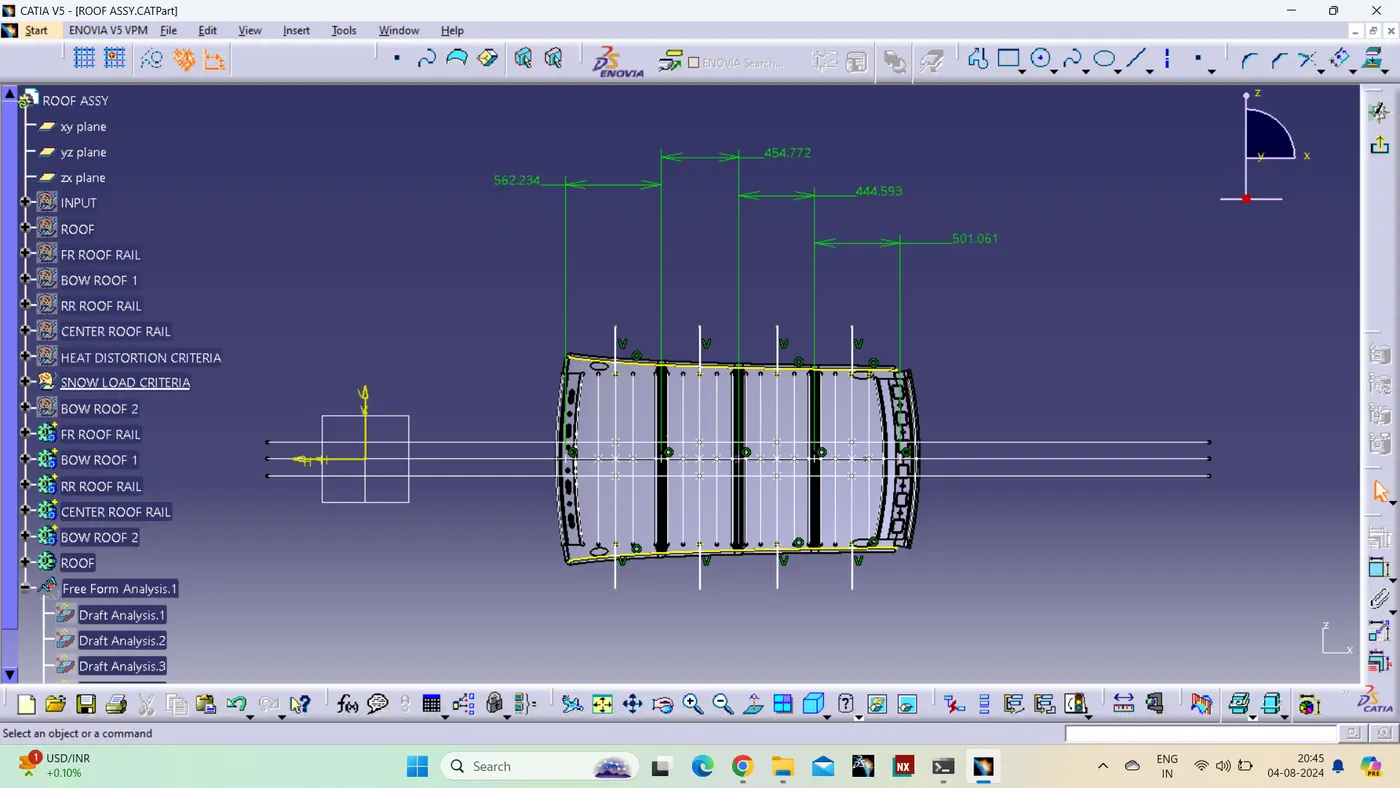
Roof Design
WHAT IS ROOF?:
The roof of a car is a crucial structural component, providing several important functions:
1. PROTECTION AND SAFETY: The roof shields passengers from external elements such as rain, snow, and sunlight. In the event of a rollover accident, a well-designed roof helps maintain the structural integrity of the vehicle, offering protection to occupants.
2.STRUCTURAL INTEGRITY: The roof contributes to the overall strength and rigidity of the car's body. It helps distribute impact forces and maintains the vehicle's shape, which is vital for both safety and performance.
3.AERODYNAMICS: The shape of the car roof can significantly affect the vehicle’s aerodynamics. A well-designed roof helps reduce drag, which can improve fuel efficiency and overall driving performance.
4.DESIGN AND STYLE: Car roofs come in various styles and designs, including fixed roofs, sunroofs, and convertible tops. The design can impact the car's aesthetic appeal and the driving experience.
TYPES OF ROOF:
1. Fixed Roof
2. Sunroof
3. Moonroof
4. Convertible Roof
5. Targa Roof
6. Hardtop
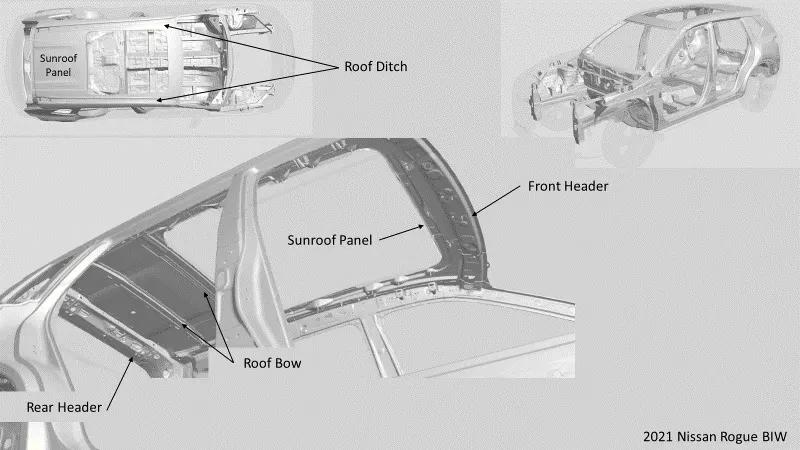
ROOF LAYOUT IN NISSAN:
ROOF CRUSH TEST SETUP:
According to the Federal Motor Vehicle Safety Standard (FMVSS), rollover crashes are some of the most dangerous automobile accidents. About 35% of occupants involved in rollover crashes die, which is more than 7500 people a year. This is because seatbelts on passenger seats are not effective at protecting occupants during a rollover because of their geometry.
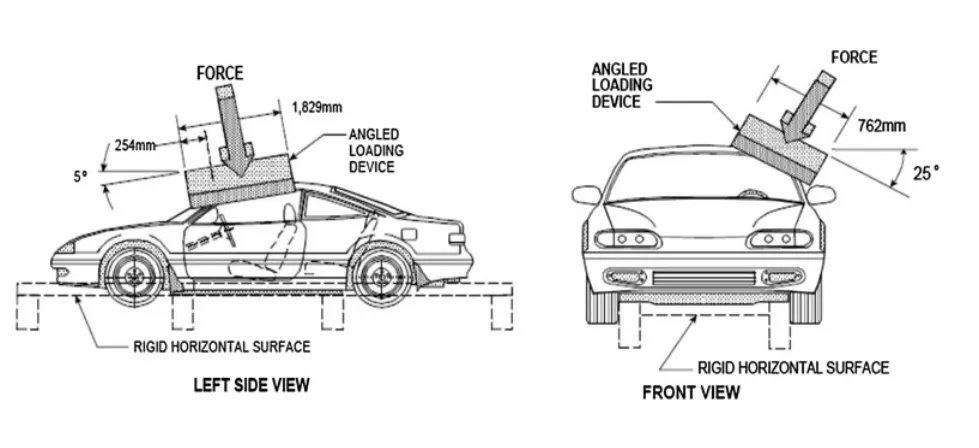
As a result, the FMVSS has developed a standardized test to check vehicle roof structure performance. The latest standard, FMVSS 216a, states that a vehicle that weighs over 6,000 pounds, should be able to withstand a force equal to 3 times the unloaded vehicle weight (UVW) without the roof collapsing (less than 5 inches of deformation). This test also needs to be conducted on both driver and passenger sides. Since the loading platen is placed forward of the C pillar, the main load-bearing structures during a roof crush test are the A-pillars, B-pillars, front header, and roof rails.
ROOF ASSEMBLY METHOD:
PARTS OF ROOF:
MASTERSECTIONS:
Front Roof Rail Master section
Master section of the Rear Roof Rail
Master section of Bow Roof
Master section of Center Reinforcement Rail
DESIGN:
ROOF ASSEMBLY DESIGN:
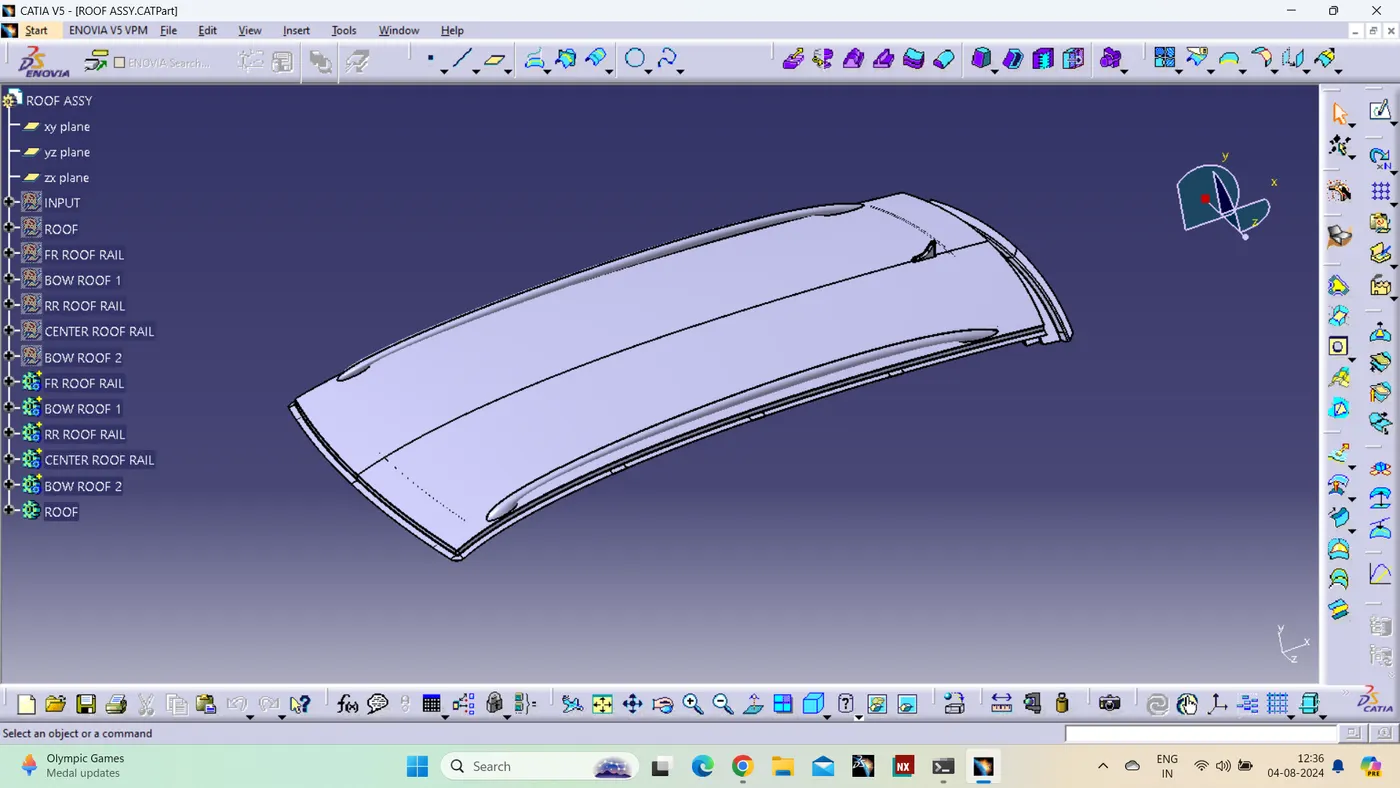
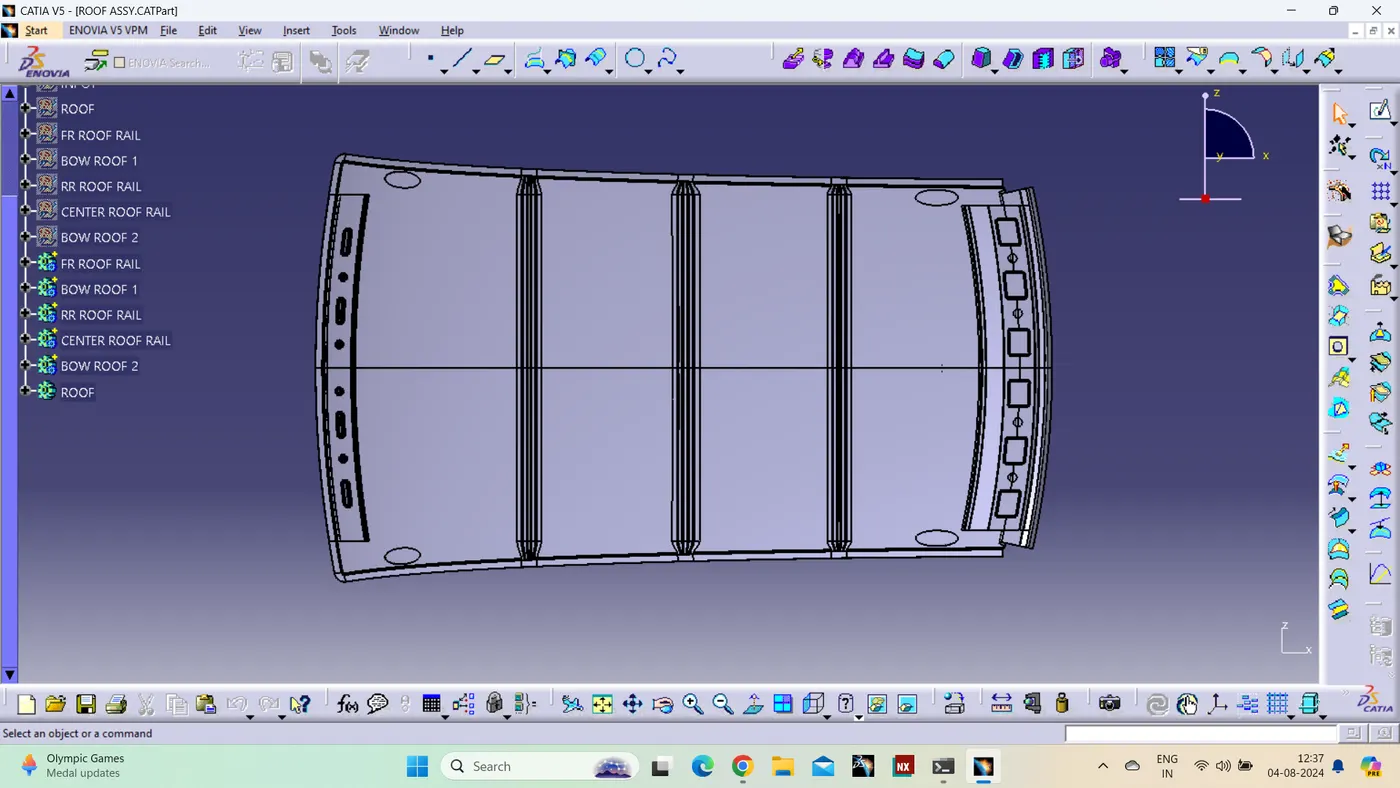
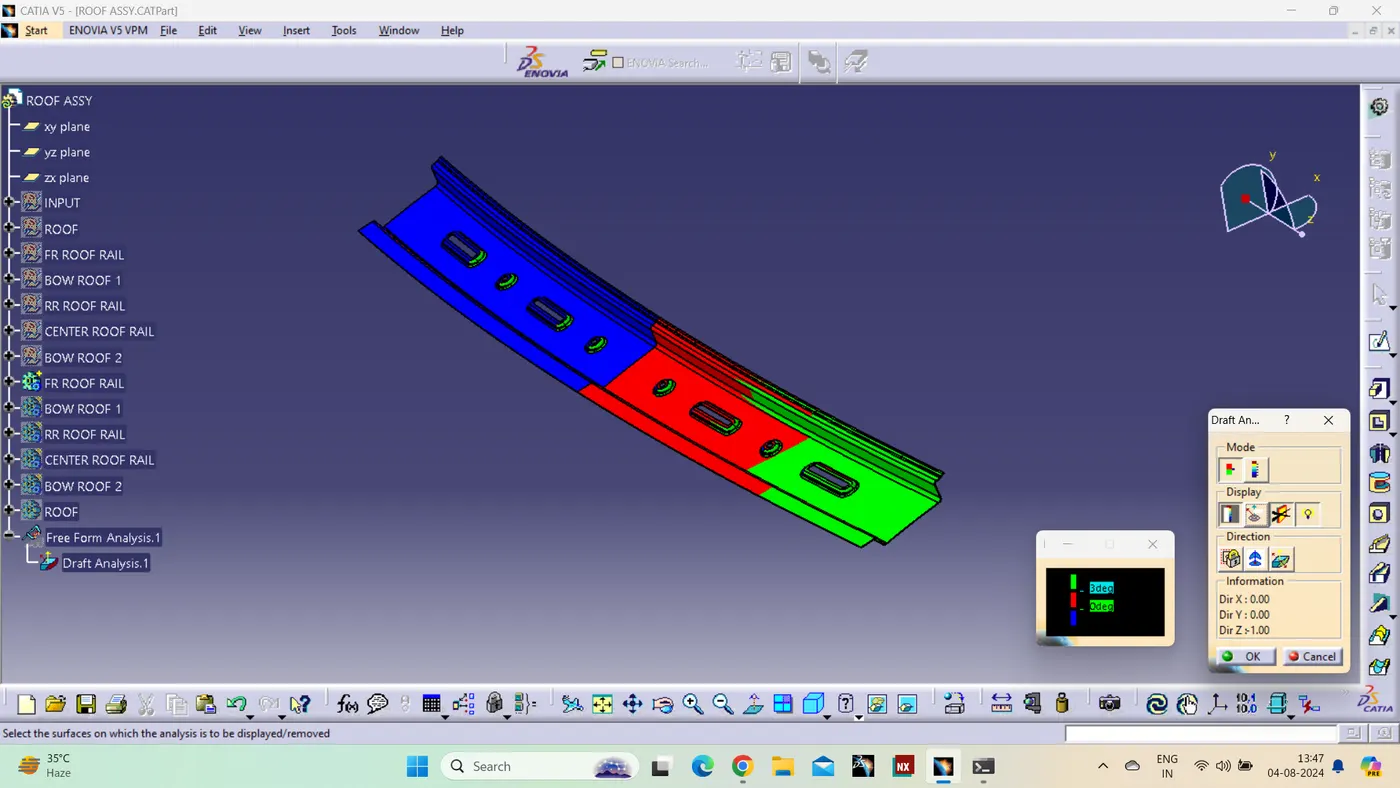
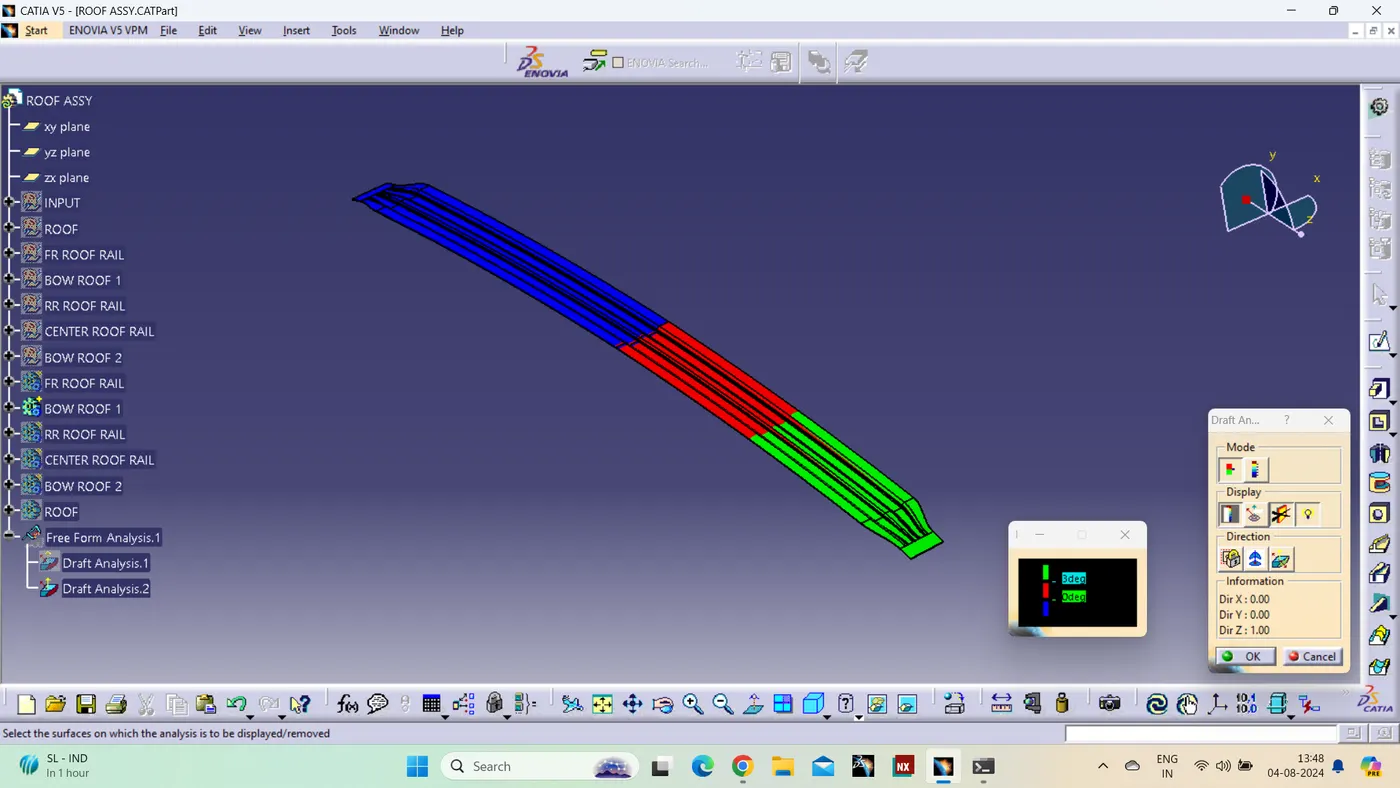
DRAFTANALYSIS:
FRONT ROOF RAIL:
BOW ROOF 1:
CENTER ROOF RAIL:
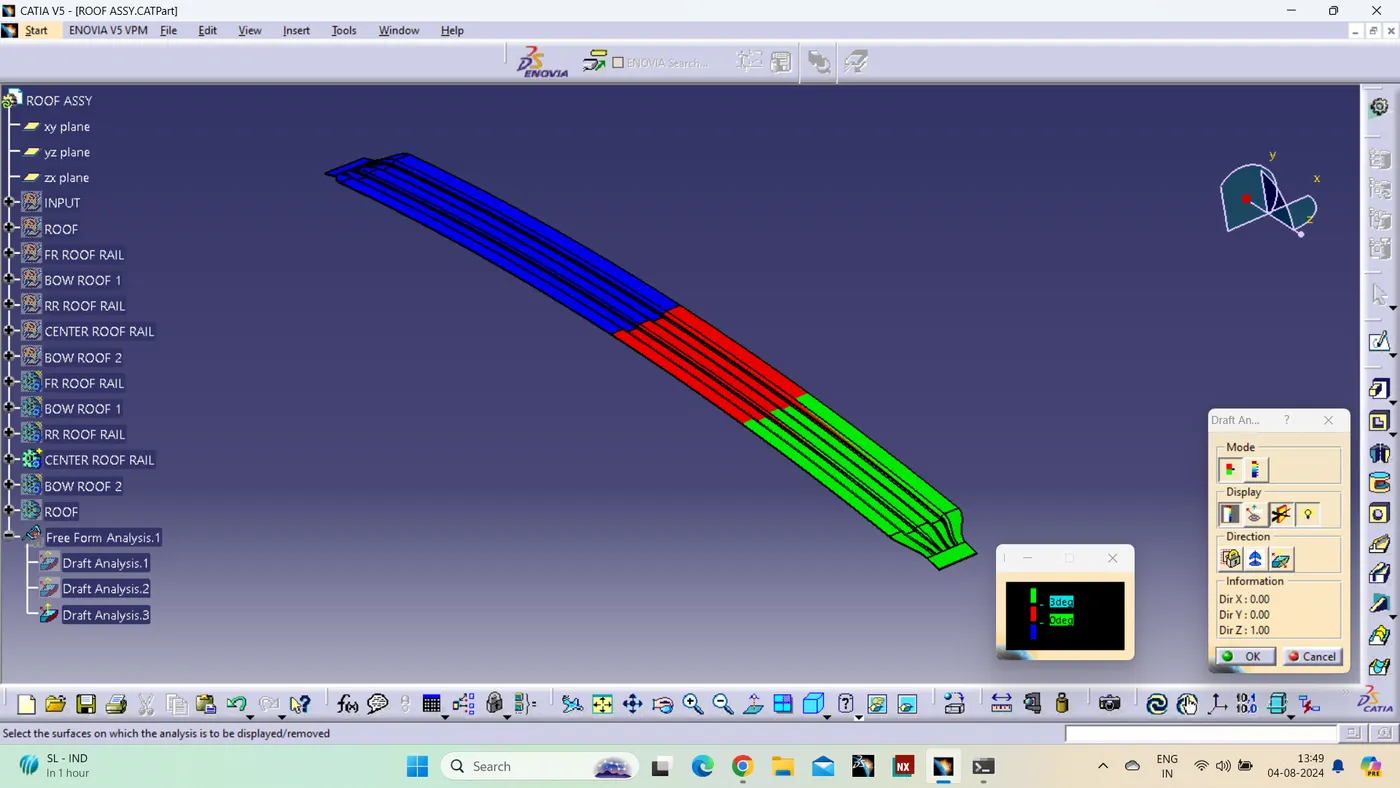
BOW ROOF 2:
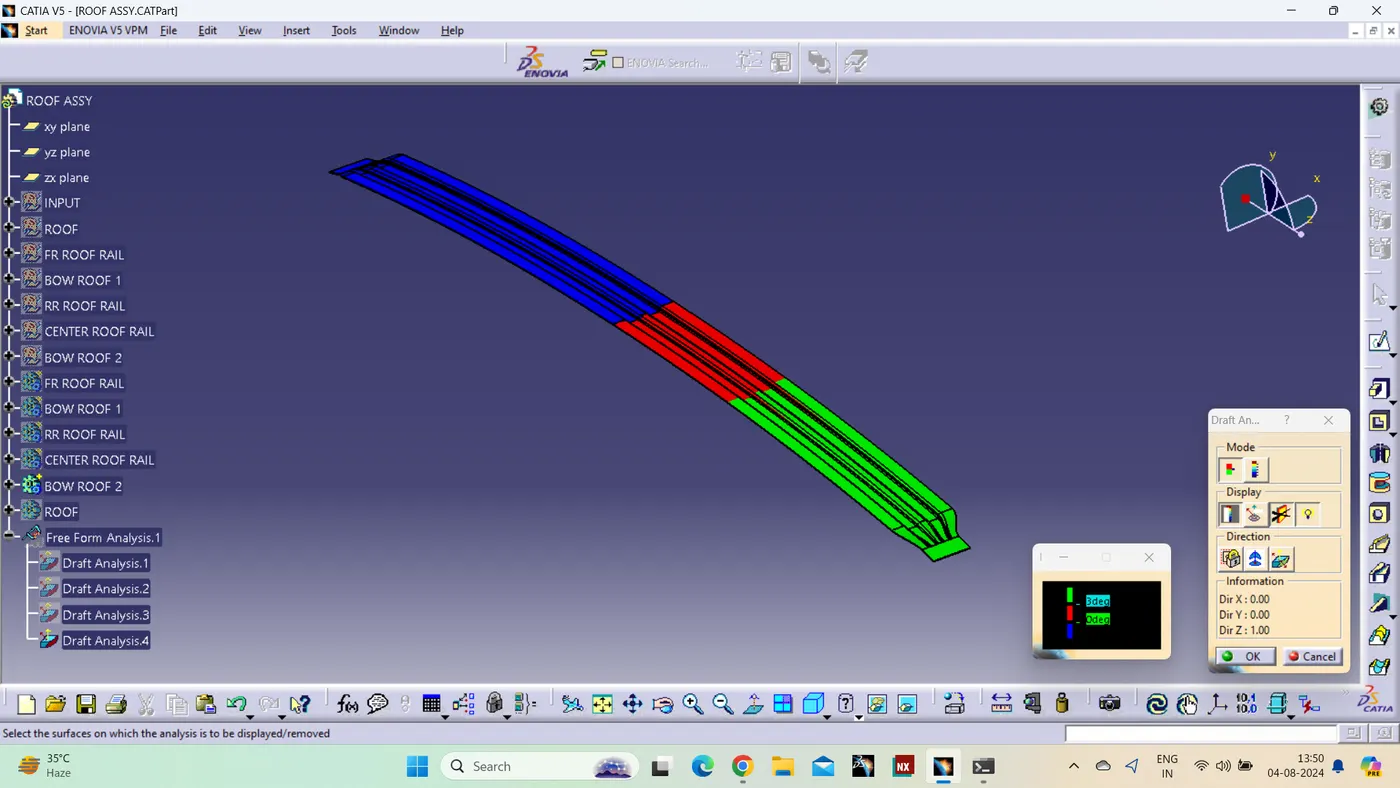
REAR ROOF RAIL:
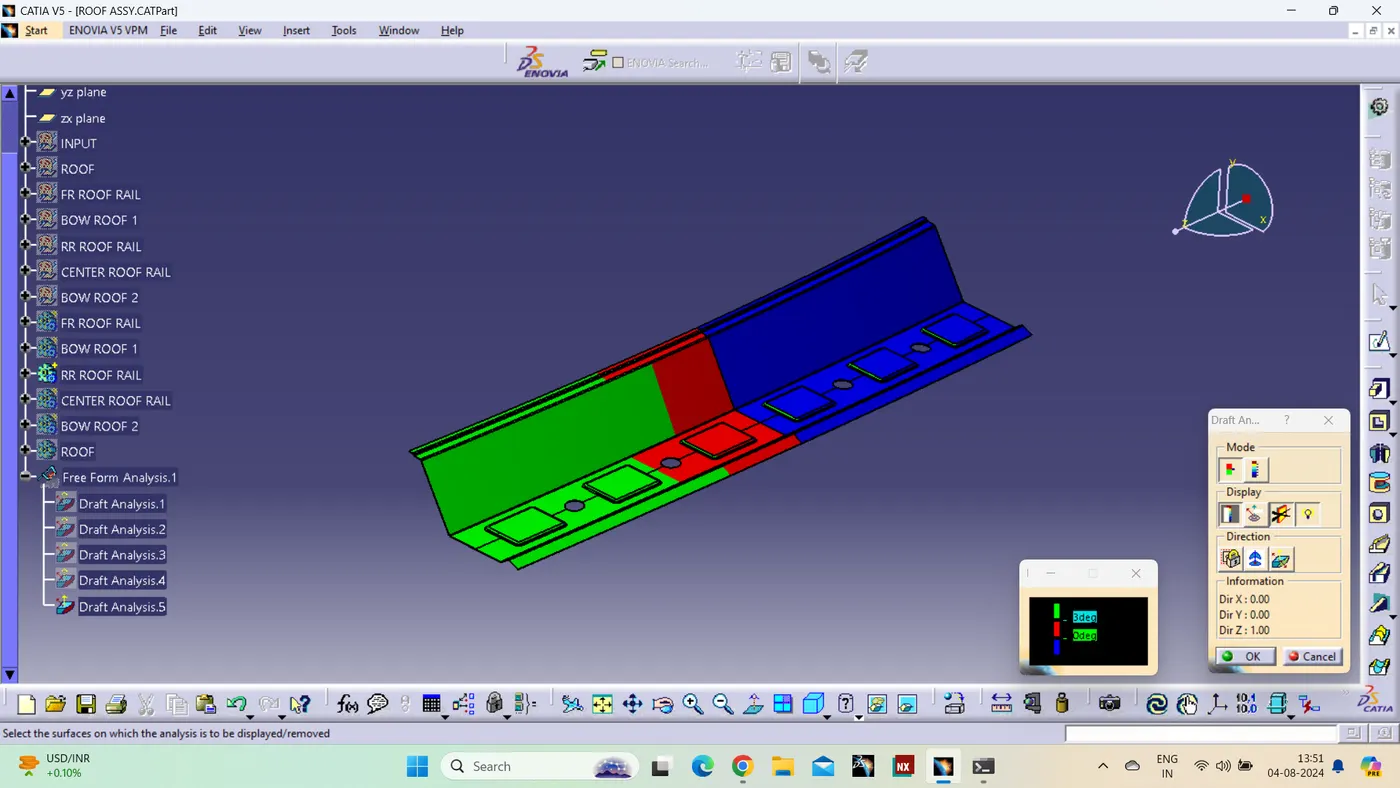
Roof design calculations
- Heat Distortion Criteria
- Snow Load Criteria
Heat Distortion Criteria:
Introduction
Heat distortion temperature is the temperature at which the metal softens and deforms under a specific load.
This study is done to check the ability of the roof to withstand high temperature with respect to the positioning of the reinforcements which contribute to increased strength.
HEAT DISTORTION CRITERION:
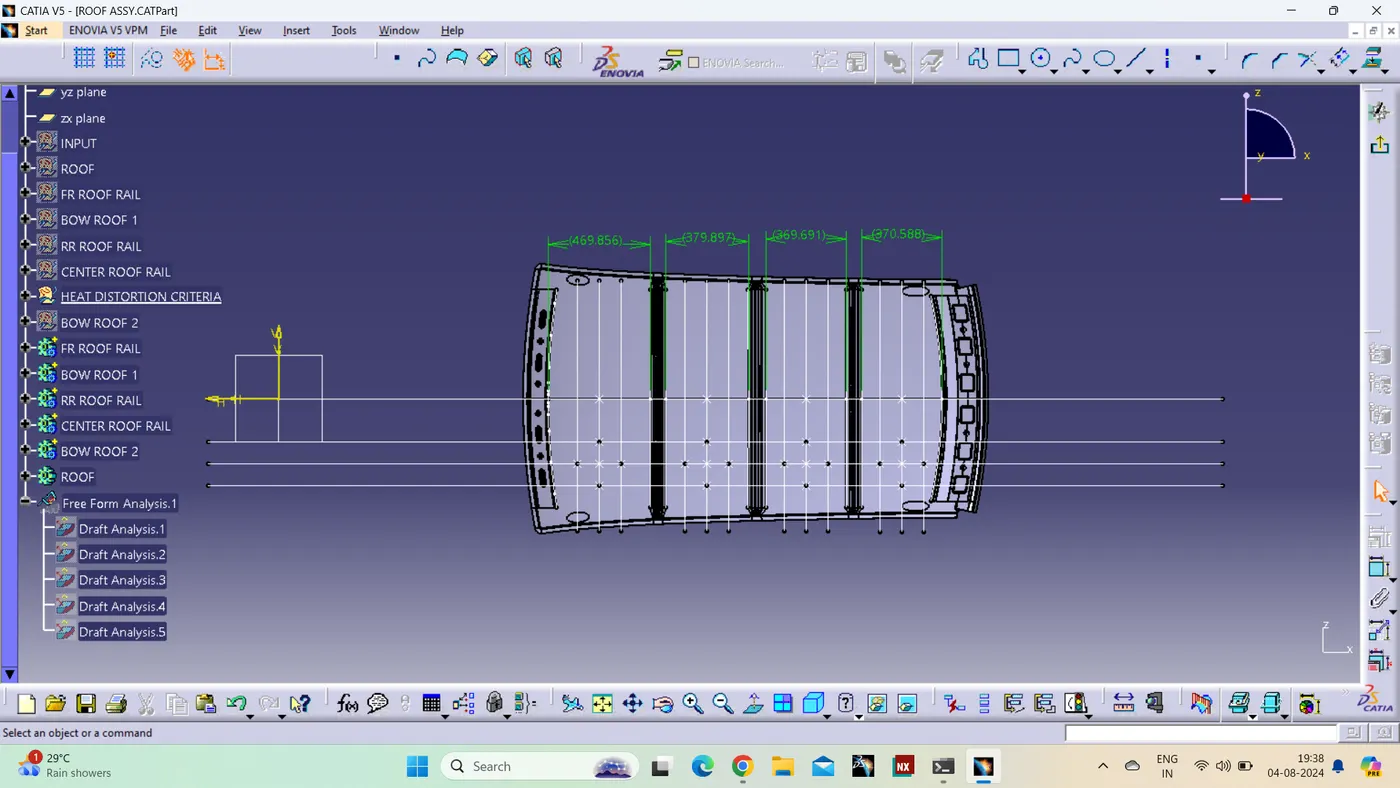
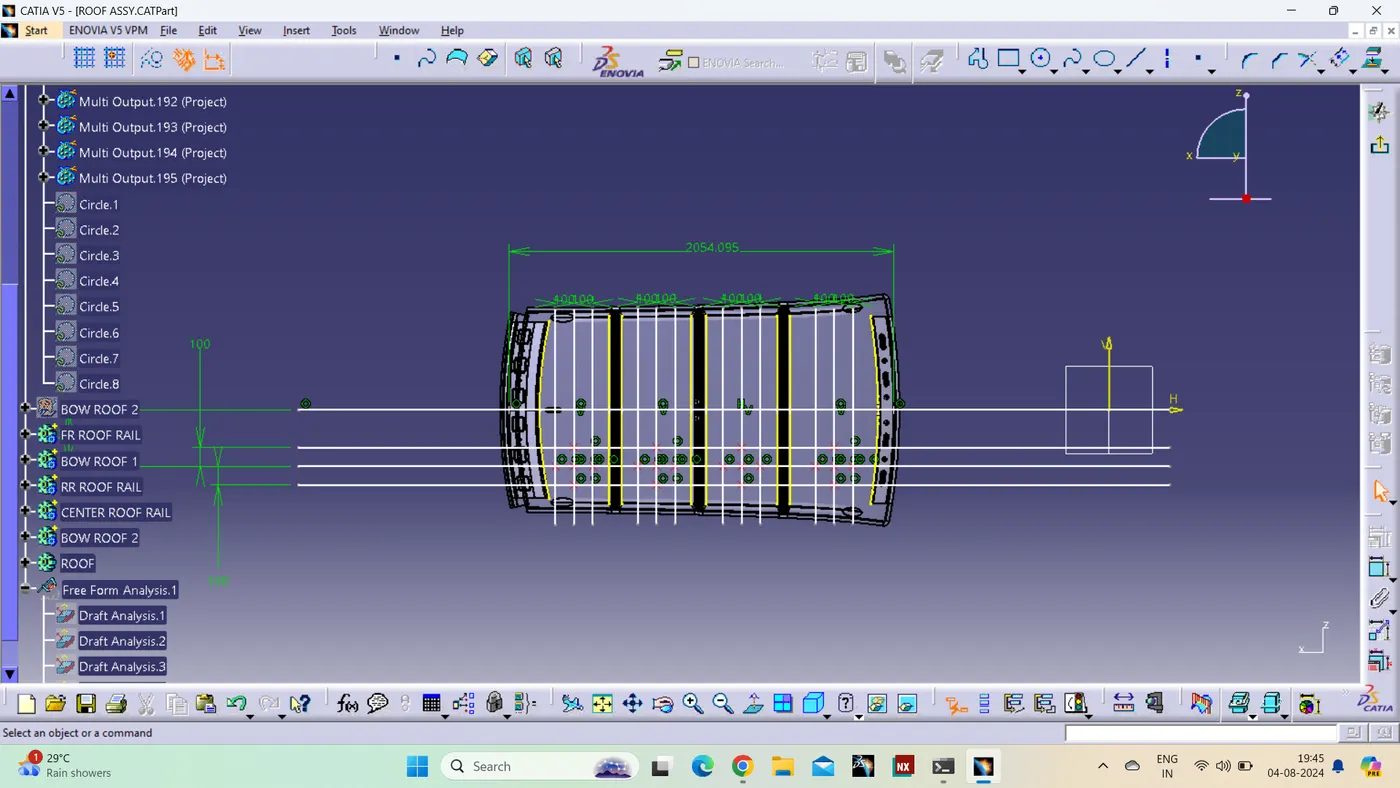
Bow–Roof Prediction Formula
Bow–Roof Prediction Formula
W = [1.73 x 10^(-3) x L] + [1.85 x 10^(-8) x (R^2)/t] + [ 1.10x10^(-3) x l] - 2.68
W = [1.73 x 10^(-3) x 2054.095] + [1.85 x 10^(-8) x (100^2)/0.75] + [ 1.10x10^(-3) x 370.588] - 2.68
W = 1.2814778167
Where,
L = Roof Length in X-Direction[mm](Roof dimension in 0-Y)
R = Roof curvature
R = 2(Rx*Ry)/(Rx+Ry)
Rx = X curvature
Ry = Y curvature
t = Roof plate thickness [mm]
l = Bow Roof Span [mm]
Judgment Condition
OK< 2.7
SNOW LOAD PREDICTION:
- Snow Load Criteria study is done to check the withstand ability when the snow loads over the roof during winter in snow fall regions. This study will also analyze the roof that whether the permanent deformation occurs after removing the snow load. That it may bend but needs to be bounce back to its original position.
- roof design must pass through these calculations to ensure that it has sufficient stiffness to withstand the load due to accumulation of snow over the roof.
Snow Load Prediction Formula
Qr = [Iy x t2] / [α x s x [(Rx + Ry)/2]2 x 10-8]
Note: The Qr value given over here is correct. There was a typo error in the formula given in the video.
Where,
α = My x Lx2 x 10-12 , My = Y(Ly-Y)
t = Roof plate thickness [mm]
Ly = Distance between the front and rear roof Rails on the Vehicle along with 0Y[mm]
Length of Roof panel with the center point between Roof rail Front /Rear as the front and rear reference point.
Lx = Distance between the Left and Right end of the roof on the Roof BOW [mm]
The width of the roof panel is exposed on the surface.
Y = Distance front Front Roof Rail to Roof BOW[mm]
s = Distance for which Roof BOW bears divided load [mm]
s = L1/2 + L2/2
Iy = Geometrical moment of inertia of Roof BOW (Y cross-section )[mm4]
Rx = Lateral direction curvature radius of roof panel Y cross-section on Roof BOW [mm]
Roof panel curvature Radius of the Length Lx in Front view
Ry = Longitudinal Direction curvature radius of the Roof panel X cross-section on Roof BOW [mm]
Roof panel X curvature radius of length s in Side view
Judgment condition
Qr ≥ 3.1
250 ≤ s ≤ 380